A federal judge toured an Immigration and Customs Enforcement (ICE) detention facility in Broadview, IL, on Thursday, November 13, in the latest development in a federal class-action lawsuit alleging inhumane conditions at the site.
U.S. Magistrate Judge Laura McNally visited the Broadview facility along with attorneys representing both the class action’s plaintiffs and the federal government. Press and a small group of protestors watched as the legal inspection team began entering the building after 11 a.m.
“Hold them accountable!” one protestor repeatedly shouted from the designated protest zone about a block north of the facility as the attorneys entered the building.
“They had a week to clean things up, remember that!” another protestor told the attorneys through a megaphone.
The protestor referred to a temporary restraining order issued by U.S. District Judge Robert Gettleman on November 5 that compels the Broadview center to maintain adequate facilities for detainees.
That order came after former Broadview detainees, including the class action’s plaintiffs Felipe Agustin Zamacona and Pablo Moreno González, offered sometimes emotional testimony on the poor conditions and treatment they endured inside the facility. They described overcrowded, foul-smelling holding rooms with little space to comfortably sleep, where they were given little food and water and faced pressure to sign deportation forms.
“It’s too much, it’s just too much,” Moreno González said through a Spanish-language interpreter, breaking out in tears and placing his face in his hands while testifying to the court on November 4.
Plaintiffs also accused federal immigration agents of denying attorneys, clergy, and lawmakers access to the site, deeming it a “black hole” in their complaint.
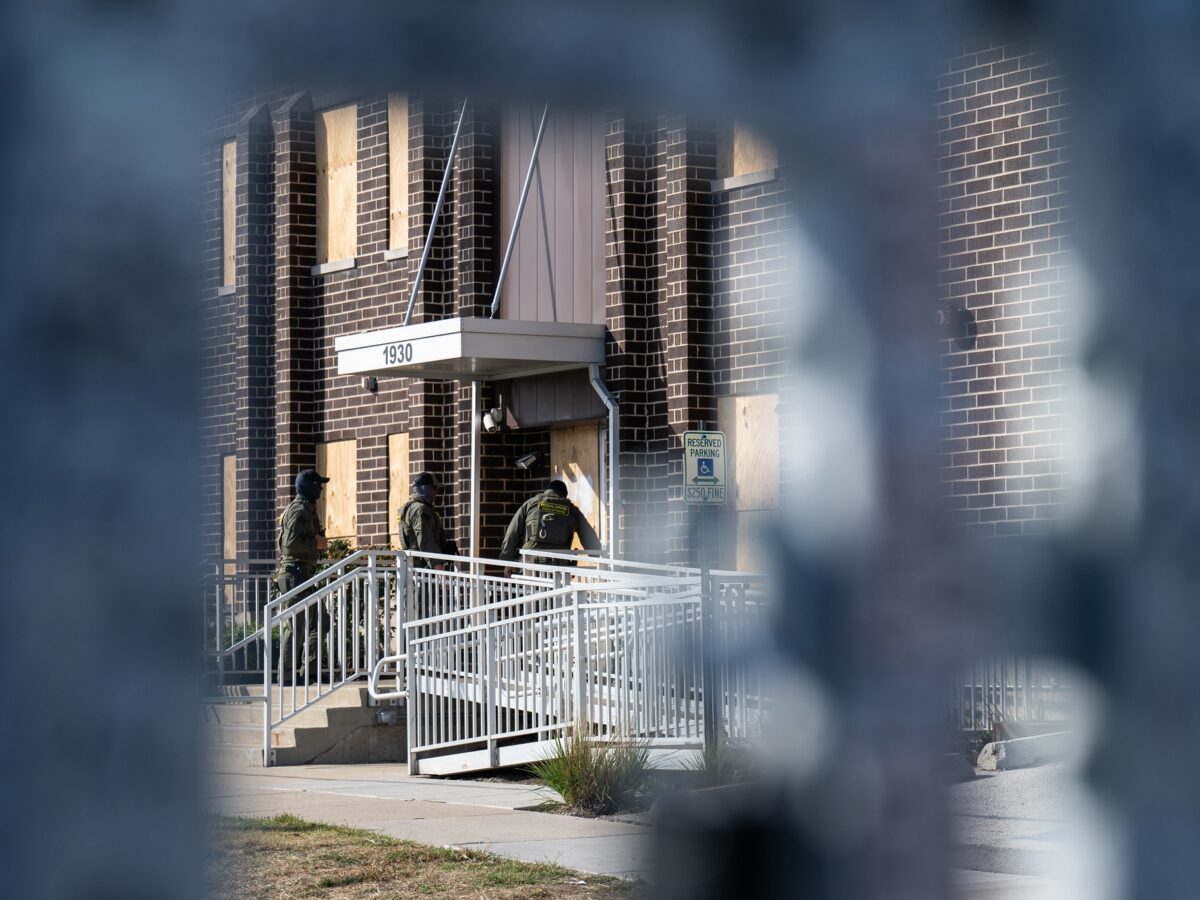
The exterior of the facility does little to assuage that perception. Plyboard covers the squat brick building’s front-facing doors and windows, and green mesh obscures the view inside its main vehicle bay. Illinois state, Cook County, and local police departments have meanwhile secured the area around the center and prevented anyone from approaching too closely.
I think the evidence has been pretty strong that this facility is no longer just a temporary holding facility… it has really become a prison.
U.S. District Judge Robert Gettleman
Thursday’s visit was a win for the plaintiffs and an important element of discovery for the class action. Judge McNally, who is assisting Judge Gettleman with the discovery process, allowed plaintiffs’ attorneys to take photos during their visit—with the caveat that the photos be kept “attorneys’ eyes only” until the government had a chance to review the images and the parties could confer over any potential redactions.
At press time, no photos the attorneys took inside the facility had been made publicly available. Attorneys with the MacArthur Justice Center, one of the groups representing the plaintiffs in the case, declined to comment on what they witnessed.
“We will reserve any detailed observations for our legal filings and presentations in the weeks ahead,” the MacArthur Justice Center said in a joint statement with the ACLU of Illinois and the Chicago law firm Eimer Stahl, who are also representing the plaintiffs. “We encourage anyone detained at Broadview and lawyers facing complications communicating with their clients at the facility to let us know about problems at the facility.”
Thursday’s visit also took place as federal immigration enforcement appears to be winding down in the Chicagoland area following a two-month-long surge dubbed “Operation Midway Blitz.”
ICE agents remain in the Chicago area, but multiple news outlets reported last week that Border Patrol chief Greg Bovino and many Border Patrol agents were set to depart. The Tribune further reported on November 14 that the Department of Homeland Security had closed its immigration “command center” at Naval Station Great Lakes in North Chicago, which had been operational since the first week of September.
Charlotte, North Carolina has emerged as the Trump administration’s next target for its mass deportation campaign; DHS announced “Operation Charlotte’s Web” on Saturday. Bovino claimed on social media on Sunday that federal immigration agents in Charlotte had already arrested 81 people. Another federal judge in Chicago, District Judge Sara Ellis, has previously accused Bovino of being untruthful.
It remains unclear what impact the apparent slowing of federal immigration activity will have on conditions inside the Broadview facility or on the still-developing class action. Judge Gettleman has opined the case resulted from the impact of heightened immigration enforcement on the Broadview facility.
The Broadview facility is officially designated as a “short-term staging facility” meant to hold up to 236 people for no more than twelve hours, according to Department of Homeland Security Audits from 2018 and 2023.
But an ICE memo dated June 24 revised that policy by pushing the time limit people can be held to 72 hours, and plaintiffs claimed in court that individual detainees have been held for even longer.
Moreno González, while testifying on November 4, claimed there were 150 men in the area where he was held, with little space to sleep.
“I think the evidence has been pretty strong that this facility is no longer just a temporary holding facility… it has really become a prison,” Gettleman said later that day.
On Monday, Gettleman certified the plaintiff class that can pursue claims against the federal defendants. The judge defined the class as “all immigration detainees who are detained and those who will be detained in the future at the Broadview ICE facility at 1930 Beach Street, Broadview, Illinois.”
On Tuesday, the Tribune reported that only four people were being held in the Broadview facility. The new figure was revealed during a court hearing that morning.
Gettleman’s restraining order compelled the government to provide detainees in the facility with, among other things, clean bedding, “adequate supplies” of hygiene products, three full meals per day, and phone services for speaking with their attorneys in private.
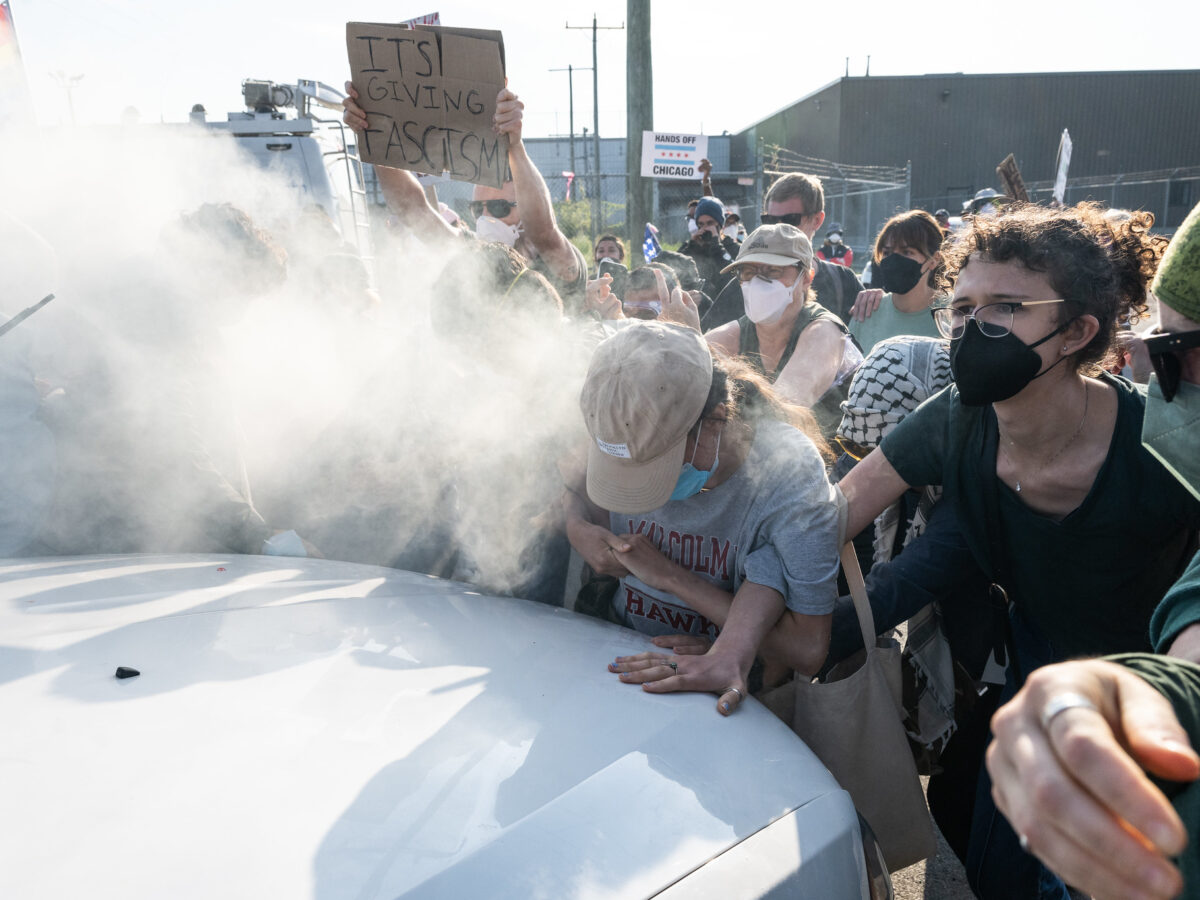
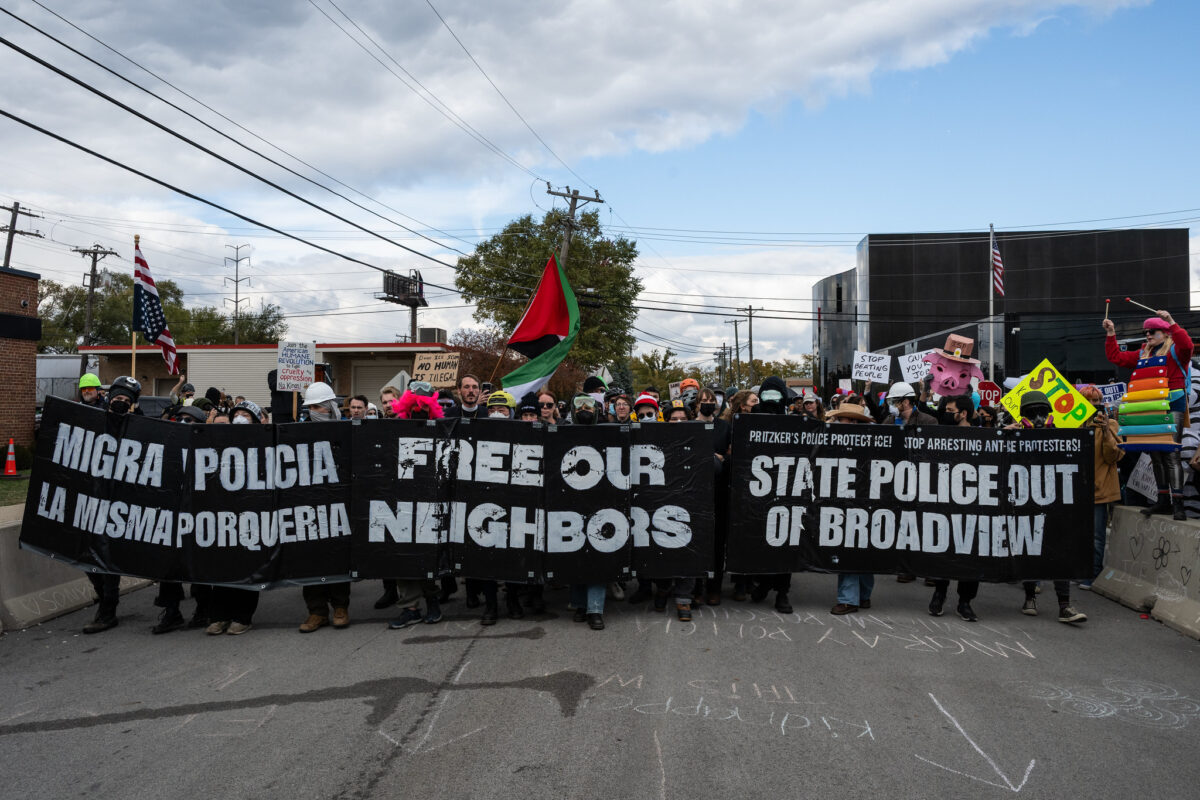
It does not, however, compel the government to allow clergy access to the facility. That point became the focus of a major protest outside the Broadview facility on November 14, during which Illinois police forces arrested twenty-one people, including faith leaders. Illinois state, county, and local police have arrested about 100 people since their so-called “unified command” secured the area around the Broadview facility in early October.
Agustin Zamacona and Moreno González have meanwhile been released from federal custody. The pair were moved from Broadview across multiple state lines leading up to their day in court on November 4, for which Gettleman ordered them returned to Illinois. They were subsequently placed in Chicago’s Metropolitan Correctional Center, until Judge Ellis ordered them released on November 7 pursuant to their separate habeas case.
Ellis found the pair’s detention violated due process law, as they had not been given bond hearings before an immigration judge.
“The Due Process Clause applies to non-citizens, regardless of whether ‘their presence is lawful, unlawful, temporary, or permanent,’” Ellis wrote in her order releasing the pair, citing a 2001 U.S. Supreme Court precedent.
Dave Byrnes is a Chicago-born independent journalist currently covering immigration enforcement issues in the Chicago area. He lives in Lincoln Square, but is a lifelong White Sox fan.