

On a cold, gray Tuesday in March, Jorge Chavez and Cristian Ilgor Moreno stood on the roof of a high-rise condominium complex in the Loop, steeling themselves for another long day of keeping our skyline sparkling.
The pair are window washers, two of 32 full-time employees at Ascent Building Services, who work year-round to polish the windows of everything from street-level storefronts to towering skyscrapers like this one.
High-rise season is just starting. It typically runs from March to November, even on clouded mornings like this one.
“We don’t need so much visibility as we need good wind conditions and good rain conditions,” said Weldon Rogers, Ascent’s vice president of sales. “It’s got to be above freezing.”
On a typical workday, Chavez and Moreno get to a job site by 7am and are clambering inside a rig resembling the industrial claw of an arcade game to wash windows by 8am.
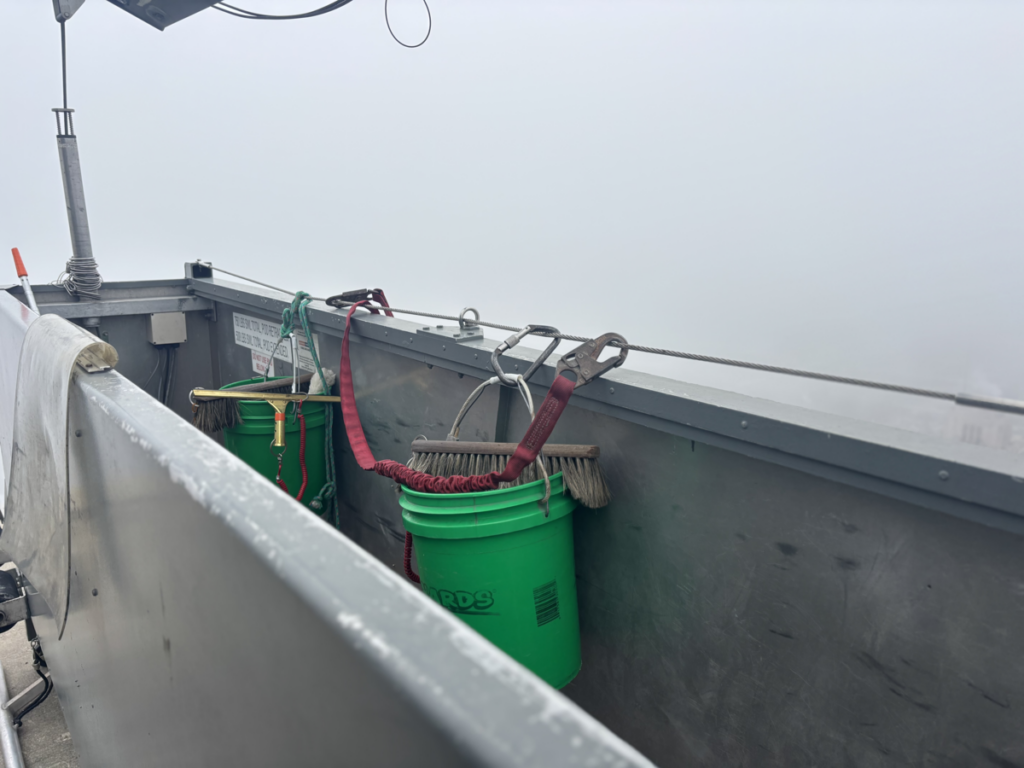
Each rig, Rogers explained, is specifically designed for a building and all its idiosyncratic corners, edges and overhangs. The rigs—some of which date back to the 1960s—are incredibly temperamental and require constant fixing, he said. From within the rig, Chavez and Moreno control the motorized system of pulleys. They raise and lower themselves along the skyscraper’s facade to clean windows, suspended by cables running from the roof-anchored rig.
Window washers always work in pairs, in case “something happens” to one, Rogers said. And something could happen. Suspended at dizzying heights and strapped into decades-old machinery, risks include falls, equipment failure, storms and falling debris.
“Because the job carries such great risk, you’ve got to be very focused without distractions,” said Chavez. “You’ve got to trust in your equipment and your capabilities on the job.”
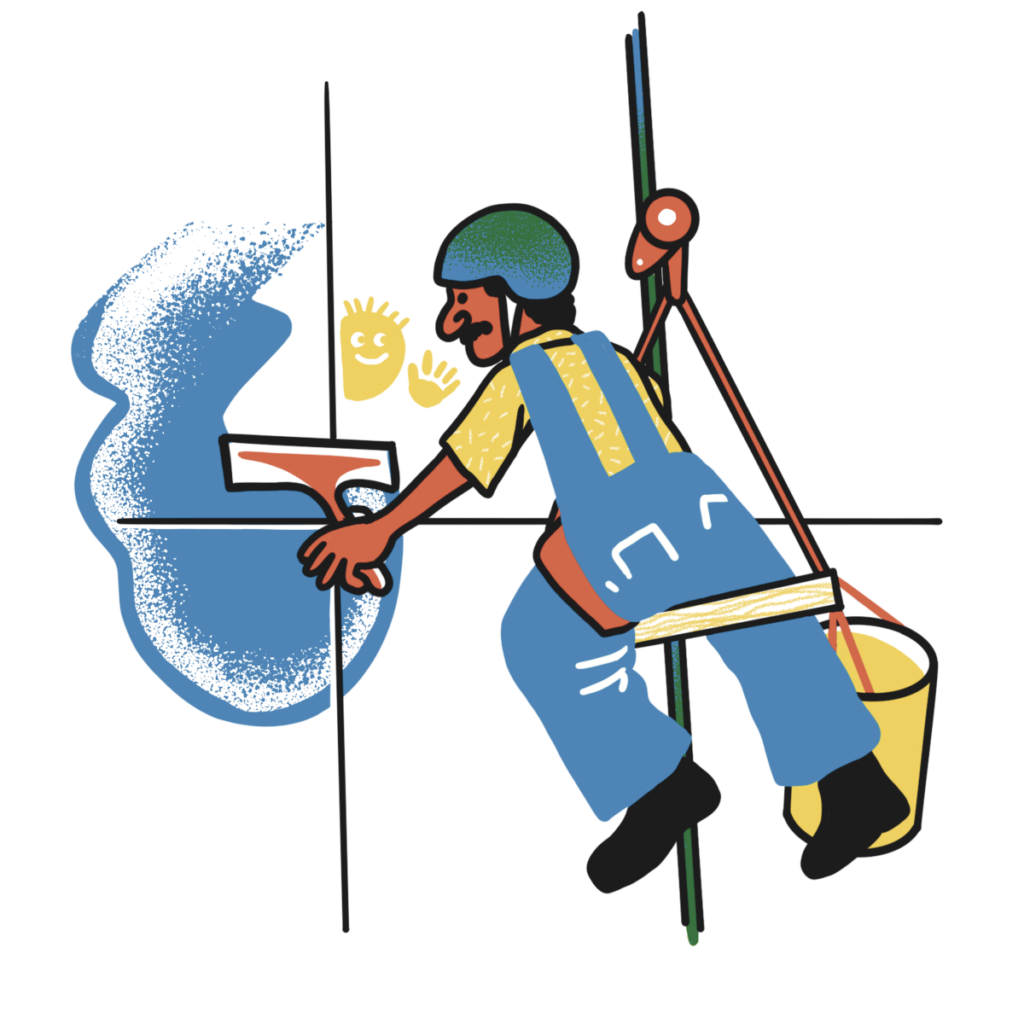
Chavez, a 45-year-old journeyman who owns his home in Cicero, has the assurance in his capabilities that accompanies nearly three decades of experience. He immigrated to Chicago from Mexico in 1997, and learned about a window-washing job through a newspaper advertisement. He joined Ascent when the company started, ten years ago.
Chavez is physically spent by the end of each seven- or eight-hour workday. The skyscraper the pair worked on that Tuesday would typically call for a month of long days to get to each window. They take breaks to go to the bathroom or eat snacks by returning to the roof.
But Chavez finds his job satisfying and far more exciting than his previous one as a landscaper. He has long gotten over his fear of falling, made $120,000 last year as a senior technician, and takes pride in being able to point out different buildings within Chicago’s skyline—like the John Hancock Center—and say: “I did that one.”
“[People] say it’s a very dangerous job. And it’s actually not, if you’re following the rules safely.”
Jorge Chavez
Moreno, a 23-year-old apprentice who joined Ascent last year, is still finding his legs and biting back fear. Moreno immigrated from Mexico in 2023 and rents a room in Archer Heights. He learned about this job through a friend.
“If you get off balance due to slipping or a wind, that can be scary,” Moreno said. “I just don’t look down.”
Window washing companies like Ascent—of which there are a handful in Chicago—put a huge premium on safety for that reason. All technicians wear personal protective gear including hard hats, harnesses and rope grabs. Equipment is to be inspected before each use.
What Moreno has found most reassuring, though, is being paired with veterans like Chavez who can literally show him the ropes.
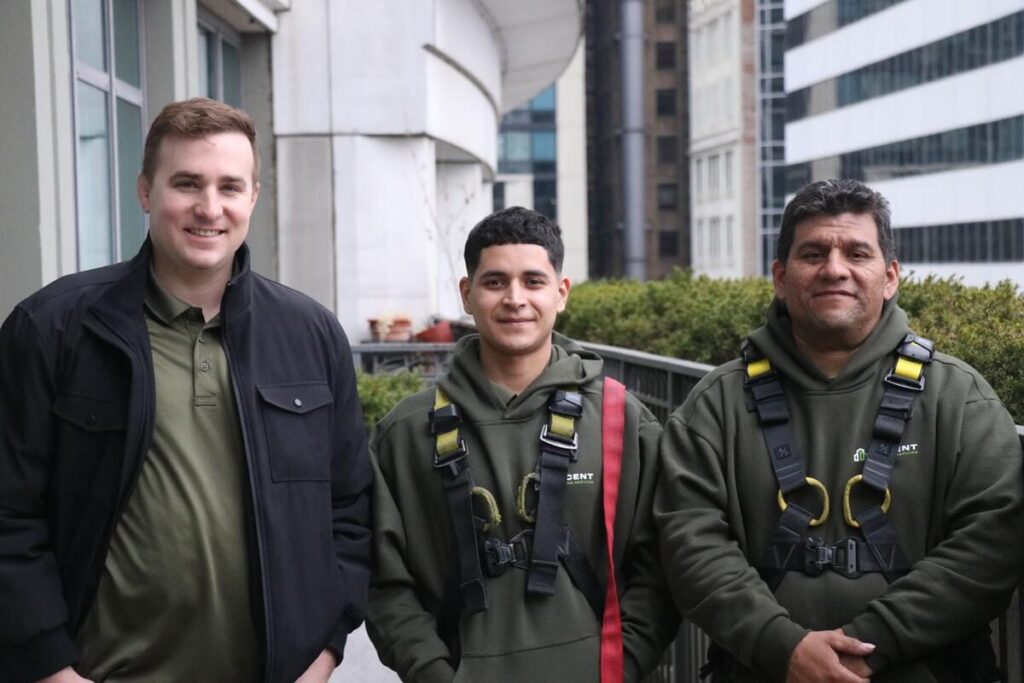
Apprenticeships are at least three months long, Rogers said. Moreno has been doing one for a year, but aspires to become a skilled technician like Chavez soon. Around two-thirds of Ascent’s staff are classed as “highly skilled” and can make up to low six-figures, Rogers said.
That points to the biggest misconception people might have about their job.
“They’re surprised that people, the window washers, have such skill,” said Chavez.
Zara Norman is a reporter, fact-checker and graduate student at Northwestern University’s Medill School of Journalism. She previously covered housing statewide for the Bangor Daily News in Maine.
What an interesting article! I had no idea how much skill was involved in window washing – seems sort of obvious now! Wonderful read, really enjoyed it! Well done Ms Norman!
Ms. Norman, thank you for highlighting this amazing and humble profession. Which is risky and yet so satisfying, for the humble and hard-working window washers. It is impressive to see high-rise window washers perform their craft as they wash each window in detail and smoothly glide or descend from window to window. I am privileged to be their Union Representative.