

Reppin’ your high school is so Chicago, no matter how many years it’s been since you attended.
Chicagoans take pride in where they graduated; this pride is usually very apparent during summertime Chi as proud alumni show up and out for their class picnics. Many of them are all-class affairs, which act as an open invitation for former attendees of notable Chicago high schools such as Morgan Park, Whitney Young, and Simeon to have a good time with those of various graduating classes. Veteran reporter Natalie Y. Moore summed up how significant Chicago high school reunions are in a column for the Sun-Times last year, noting “even alumni with advanced degrees lean into braggadocious high school smack-talking.”
The love that Chicagoans, particularly Black Chicagoans, have for their high schools has been captured by the Chicago-based streetwear brand Pillars. Last summer, the brand began showing up at those famed high school reunions to sell shorts that featured high school logos, in what Frank Dukes, co-owner of Pillars, described as “guerrilla marketing.”
“We grabbed a rack, took a rack out there, put them on the rack, and just walked around the parks with it,” Dukes said inside the brand’s shop at Roosevelt Collection in the South Loop. “We realized shorts was an untapped market. Most people don’t make bottoms; you just get a lot of shirts, but you don’t really get bottoms.”
This year marks ten years in business for Pillars, founded in 2016. The streetwear boutique has had storefronts across the city, including locations in Ford City and Chicago Ridge malls, the West Loop, and Avalon Park. The company currently has one operating location, the shop in the Roosevelt Collection at 1137 South Delano Court. According to Dukes, the downsizing is to focus on building the company’s online presence.
A 2006 graduate of Chicago Vocational High School (CVS) in Avalon Park, Dukes said he regularly sold Pillars merch during school reunions. Pillar co-owners Michael Willis and Cedric Watson also sold merch at their high schools, Curie Metropolitan High School in Archer Heights and Thornton Township High School in the south suburb of Harvey, respectively, but the creation of the shorts took the sales to another level.
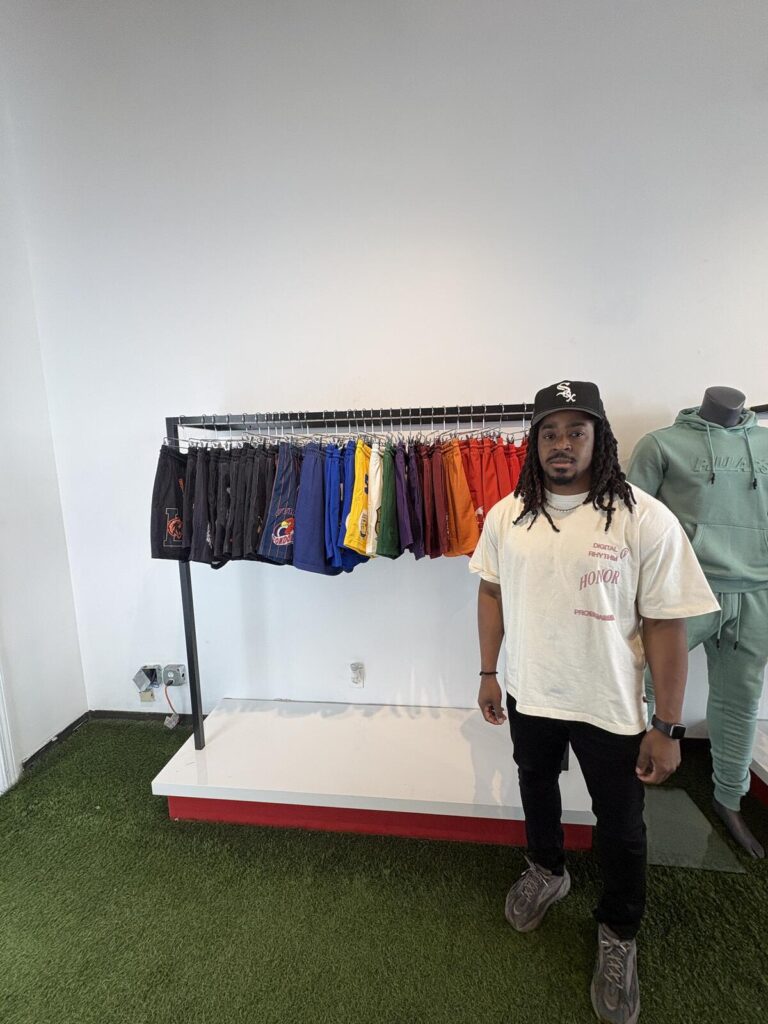
“It started off with just our schools, and everybody just started requesting it,” Dukes said.
With Pillars using Instagram as a promotional tool, requests for the shorts soon came in for schools like Hirsch Metropolitan High School in Grand Crossing and Percy L. Julian High School in Washington Heights. Dukes said he and the other Pillars co-owners decided on a minimum of 20 requests for determining when to create apparel for a specific school.
According to Dukes, some of the more popular schools for sales were Kenwood Academy High School and Dunbar Vocational Career Academy in Bronzeville, where he sold out of the shorts and had multiple preorder sales.
Anise Anderson graduated from Dunbar Vocational Career Academy in 1986. She also served as the dean of students at CVS while Dukes was a student. Anderson said Dukes showed up to sell the shorts during Dunbar’s high school reunion picnic last year, where the shorts were a big hit.
“We have vendors out there, and they have to pay a fee to be able to sell to our alumni,” Anderson explained. “Frank paid right then and there. Sent me the money and he sold out of his Dunbar shorts at our picnic.”
This year, Pillars is introducing its capsule concept, featuring various packages that include shirts, shorts, socks, jogging pants, and hats. The capsules also feature varsity jackets with names of high school mascots. Capsule prices range from $90 to $295, and varsity jackets are $110. Presales lasted until April 5, with orders expected to arrive in early summer.
Dukes explained that with its unique concept, Pillars has created a quality product for a celebrated culture in Chicago.
“We have an HBCU (Historically Black College and University) culture without having HBCUs,” Dukes said of the celebration of high schools in Chicago. “We embrace our city so much that we take pride in everything we do. You take pride in the school you went to, you take pride in your neighborhood, your friend(ships), your community.”
Dukes added that some customers who aren’t native to Chicago are attracted to the apparel just because of certain colorways, which give the merchandise a more universal appeal.
“We had a guy from Washington, he came in and bought like ten pairs of shorts because he just liked the color and he liked how they fit,” Dukes said.
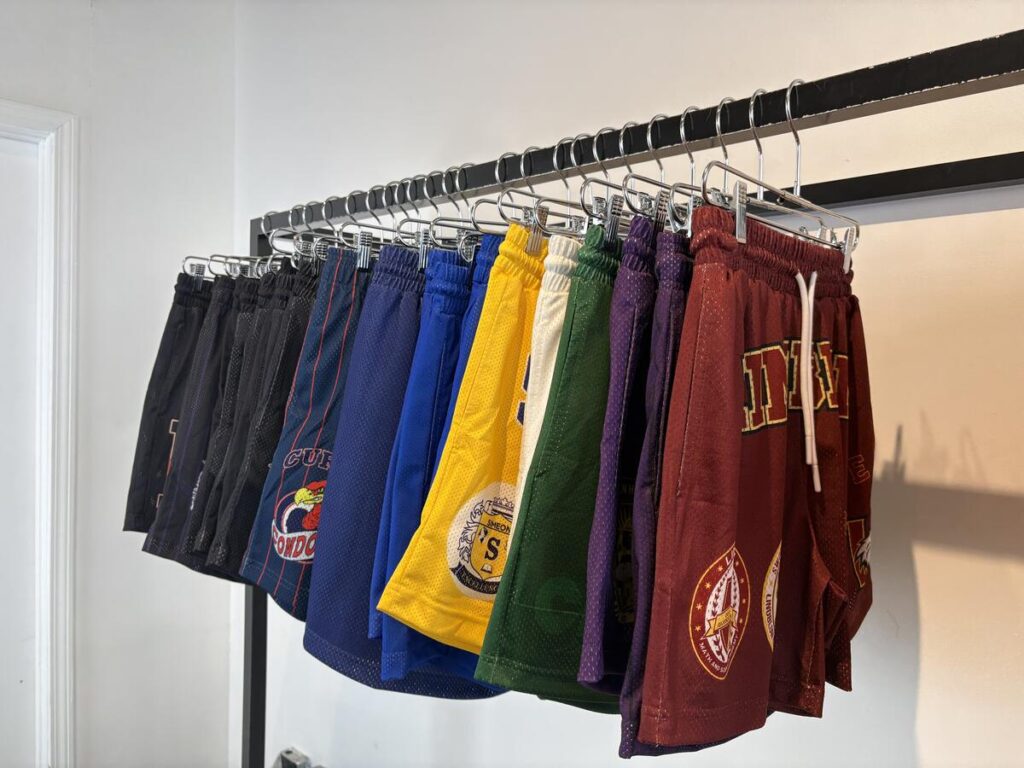
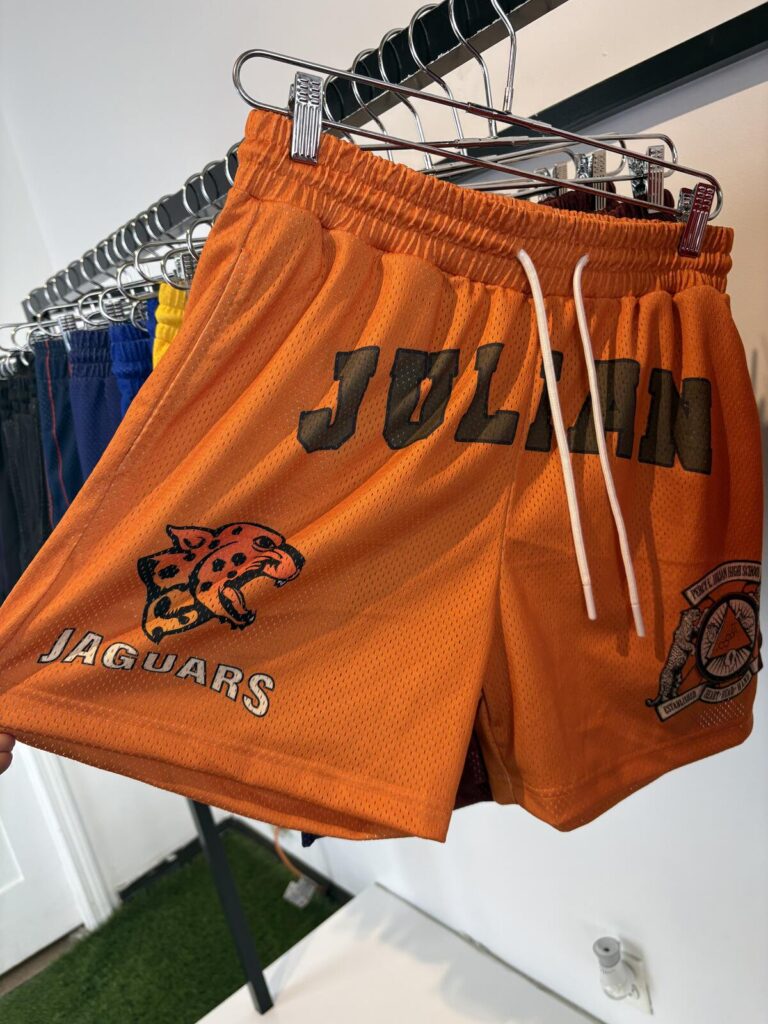
Since the creation of the high school-themed shorts, Pillars has started working with alumni associations at select schools to give money back in scholarships based on the sales, Dukes explained.
“It’s based off the schools that preordered really well, and then we noticed they had good reunions, good alumni support, and good student involvement,” Dukes said. “So we wanted to kind of make it make sense using their network to sell merchandise and then they get an investment back at the end of the program.”
Some capsules feature specialty items; Dunbar’s collection includes a lawn chair.
“I think we’re the only school with the chairs because we, again, come with a business plan,” Anderson said of the Dunbar Alumni Scholarship Foundation. “They said all we have to do is post daily, get the alumni to support them, and they will give back so much percent to our scholarships.”
Due to the popularity of Pillars’ high school apparel, Dukes said they have gotten requests to create college merchandise, with alumni predominantly from Chicago State University reaching out. The brand has done work for Phi Beta Sigma, one of the Divine Nine historically Black Greek-letter organizations, with expectations to do more Greek apparel soon.
Andeson expressed pride in the work that Pillars and her former student are doing to give back to the community.
“It’s all about reaching back and helping the next generation, because one day we have to sit down and then our former students are the ones that’s going to have to run this world,” Anderson said. “So we pour into them all the knowledge that we can. We know we can’t reach them all, but evidently Frank’s listening.”
[break]
Corli Jay is a South Side native who has written for various Chicago publications, including Chicago Magazine and the Chicago Reader, and has worked on staff for Crain’s Chicago Business, The TRiiBE, and the Hyde Park Herald. Corli’s most recent piece for the Weekly was a collaboration piece about teen trends entitled “What Happened to Chicago’s Third Spaces?”
Did not even realize this was a “thing”–well, outside the normal school-connection source. This is an amazing and, apparently, well-managed/researched idea and team. I wish these cats all the luck in the world; although, it doesn’t appear luck is even in play!