
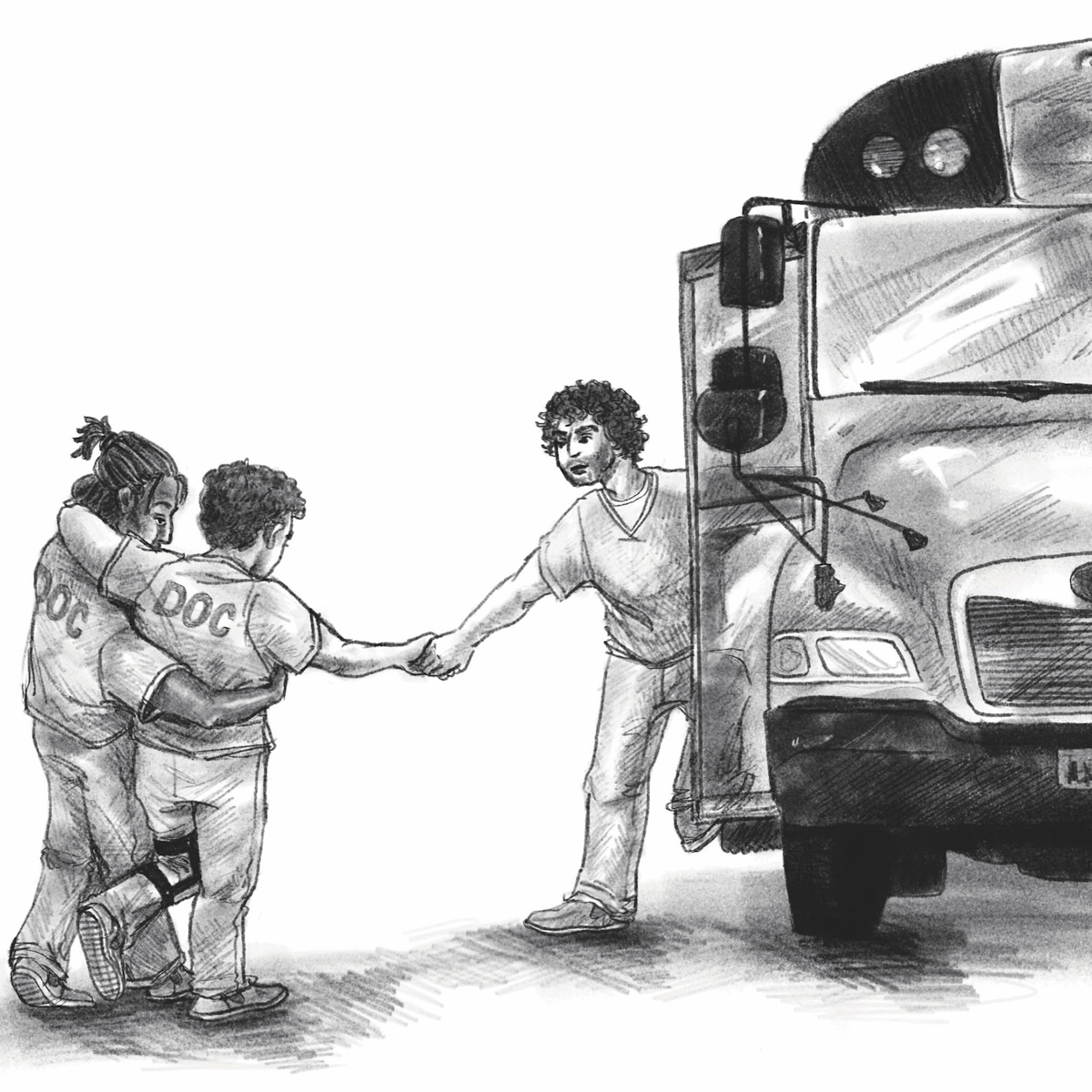
Since Kenan tore his ACL last March, his knee has been hurting. Two weeks after a flare-up, he found it difficult to board the transport bus to court, from Cook County Jail. But despite filing medical slips, he had not been authorized to use mobility aids. Between his injury and being shackled, Kenan could not step onto the bus. “It was either refuse to go to court because I can’t bend my knee, or force myself to walk like this. I pretty much have to force myself to walk like that.”
Kenan said other people helped him board the bus: “I had two people hold my right arm, hold my left arm. I stepped up there with the left as much as I could and they just helped lift me up. It’s a struggle. My friends, they’re just holding my arms, hoping they can hold me up and I don’t fall backwards.”
Though his knee was injured, Kenan faced several obstacles to receiving accommodations. Protocol is that health issues and disabilities are identified by healthcare workers either upon intake, or request by an insider. Healthcare workers then alert correctional staff to the issue, and communicate how it’s supposed to be accommodated. Importantly, jail healthcare is managed by Cook County Health and Hospitals System (CCHHS), not the Cook County Sheriff’s Office (CCSO). But day-to-day accommodations are managed by correctional officers, and insiders say healthcare workers’ decisions are not always implemented, and formal accommodations are delayed or prevented from being carried out.
Cook County Jail is home to nearly 6,000 people. 117 insiders are currently classified as disabled and/or use mobility aids. But the CCSO employs only one ADA compliance officer who is responsible for ensuring that the jail is compliant with the law. The 1990 Americans with Disabilities Act (ADA) sets legal standards for disability discrimination, from employment protections to requiring access to activities and spaces. Though prisons and jails are required to comply with ADA standards, correctional facilities are not always fully accessible to people who are forced to live there.
Anthony met a blind man while he was staying in the jail’s Residential Treatment Unit, a division for insiders with higher psychiatric support needs. “My blind homie, he’s amazing. This guy walks around here like he’s not blind,” he said. “But at the end of the day, there’s nothing for blind people. The grid paper, the phones, caretakers—there’s none of that for him. I do all that basically stuff for him, me and some other brothers. I do a lot of dialing his phone numbers out, going to grab this, going to grab that, walk him into the showers.”
According to a CCSO spokesperson, the ADA coordinator is responsible for “reviewing accommodation requests, coordinating reasonable modifications and communication aids, and ensuring individuals in custody have equal access to services and programs.” The Cook County Department of Corrections (CCDOC) handbook indicates that people needing accommodations should tell a staff person, and submit a request to meet with the ADA compliance officer. The spokesperson said that in addition to interpretation services, the jail provides access to “visual aids to supplement oral communication, whiteboards and markers to exchange written notes, a teletypewriter (TTY) located in each division, hearing aids, assistive listening devices to amplify sound, and tablets with headphone plug-in capabilities, text, and video call options, to name a few.”
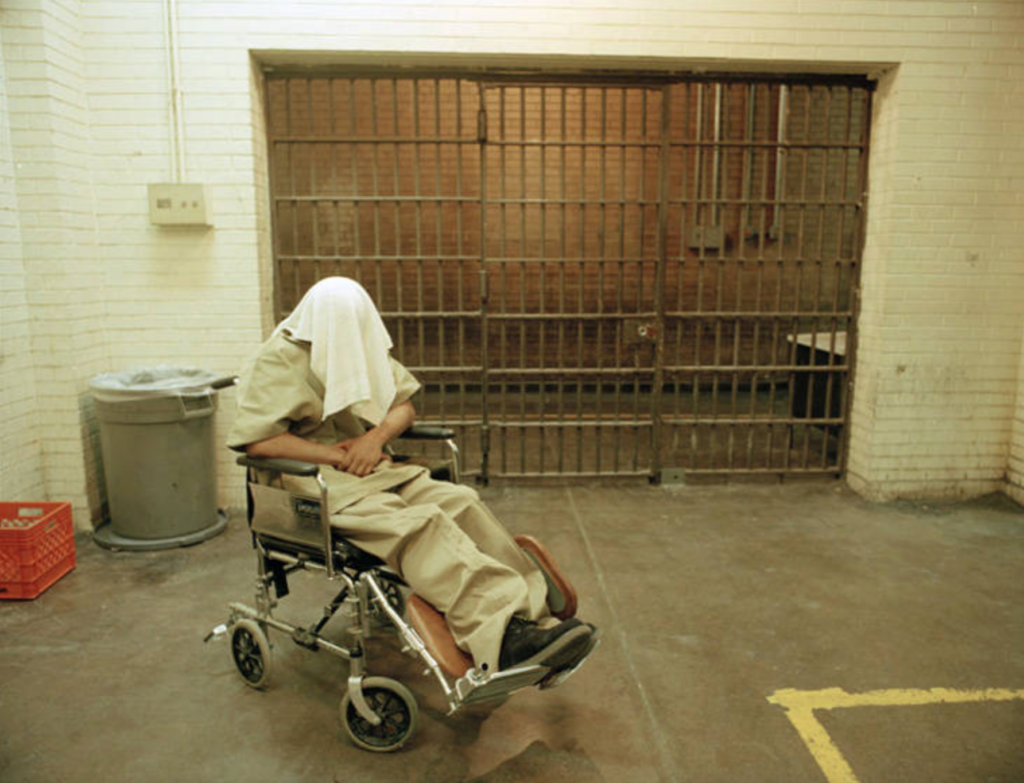
But lawsuits against the jail indicate that meeting with an ADA officer does not necessarily lead to accommodations. In 2019 Gerald Hacker, a deaf/hard-of-hearing inmate, sued the jail for ADA noncompliance, saying he was given an assisted listening device only during his drug treatment and at court, but left to scrounge the money for the batteries himself. Because he couldn’t show physical injuries from this treatment, the court declined to hear Hacker’s case.Though ADA requirements were technically met because he had access to a device during his drug treatment program, Hacker still did not receive his prescriptions for months because he could not hear his name being announced when nurses verbally called up inmates for their prescriptions.
A 2022–23 audit by the Office of the Cook County Auditor revealed that sign language interpretation was paid for by commissary profits. Even though three insiders were classified as deaf at the time, interpretation paid for at a typical hourly rate would yield less than ten hours of interpretation per person over more than six months.
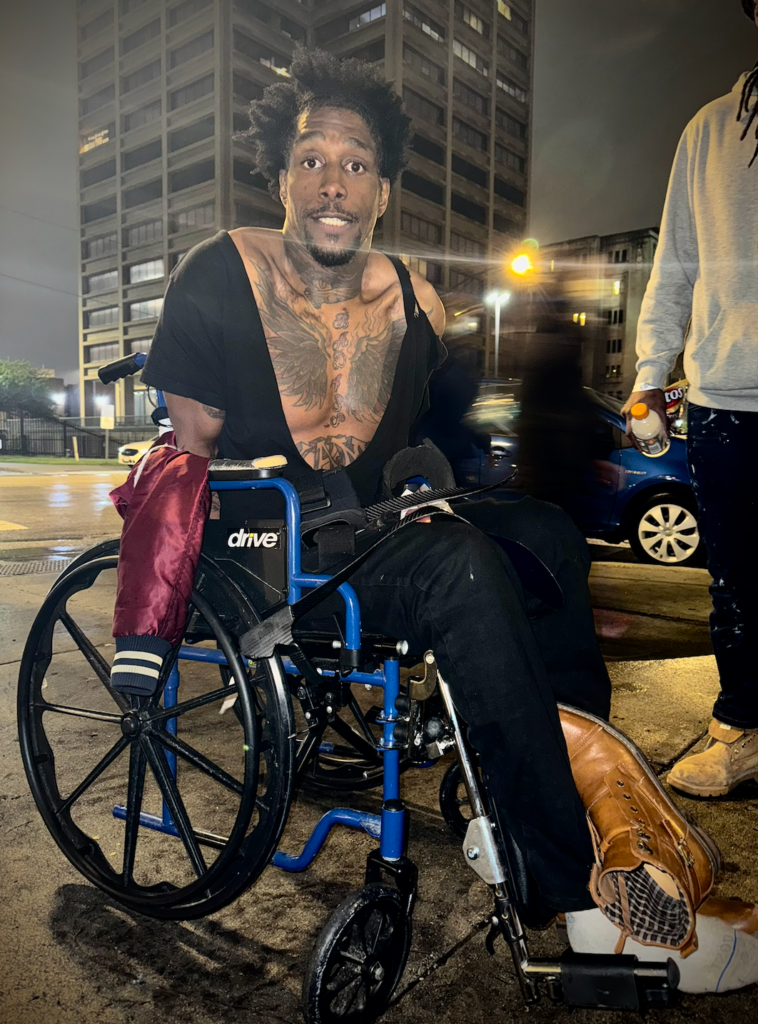
When Lou was released from CCDOC past 11:00pm, another insider was pushing his wheelchair. He described being left in the bullpen for 11 hours after court: “I cannot run and I cannot walk, so this is very unsafe for me, getting out of the County Jail at this time when the judge been freed me. They have no respect for us. I asked for medical, and they wouldn’t even give me medical attention, neither at the police station or at the County Jail.” Lou held out his fiberglass mobility aids, which he says were broken during his arrest: “They cared nothing about me being in a wheelchair, because they letting me out when they know folks out here are robbing and doing wrong.” When the man next to him said that he had multiple toes missing too, Lou explained, “Least you can stand. If you push me over, I’m beat. Ain’t nothing I can do.”
Some disabled insiders also feel that the physical infrastructure of the jail is difficult to navigate. The policy manual says that “Individuals with mobility disabilities shall be permitted to maintain the use of their auxiliary aids as prescribed (e.g., long distance only, full time).” Since 2021, Saint has been authorized to use a cane while traveling “long distances,” which means walking outside of his tier to other divisions for court, video visits, and programs. But he says that infrastructure problems and pushback from correctional staff mean he often goes without assistance. As Saint explained in a previous story, using a cane has also affected his employment within the jail.
From January to February of 2026, 14 work orders were filed by correctional staff for elevators in Division 9, one of which indicated that every elevator in the division was down simultaneously. In that same order, a staff person wrote that “having no working elevators will greatly increase response times to medical emergencies […] prevents day to day operational needs from being conducted such as laundry […] potential for an ADA violation for impaired members of staff.” After both South Tower elevators broke down on January 29th, Saint said he had to walk up and down 96 stairs most days of the week for video and in-person visits, as well as programming. Even though he’s authorized to use a cane, that prescription is only for when he leaves the division, so he had to walk those stairs without assistance. “It’s always easier going down than it is coming up,” Saint said. Saint filed a grievance wherein he said that it was “uncontrollable” that he was unable to use his cane due to the long-distance status. In response, the jail administration denied his grievance, saying that he can choose to “readdress with medical.”
Hernandez and Mathis v. Dart, a case brought by two disabled insiders which was won earlier this year, succeeded in requiring the jail to repair two accessibility ramps that had been broken since 2021. The ramps noted in Hernandez were flagged for repairs years before the lawsuit took place.
People who use mobility aids say that correctional officers don’t always believe them. Saint said that when he asks correctional officers to get his cane, they tell him “‘Cane? You don’t need no cane. There’s nothing wrong with you.’ They make faces like I’m lying […] Then they smack their lips and roll their eyes […] A lot of these officers want to try to make it hard, they keep us uncomfortable.” Last April, Saint was forced to walk from his tier to the video visit room located elsewhere in the division while handcuffed: “My hip is already bothering me, and now I’m handcuffed and trying to balance myself, walking with my feet around the cane. […] I can’t lean on the wall—the walls are nasty in the hallways, and I feel like I’m finna fall over. I gotta take my time. I gotta slow down.” In response to a grievance, Saint said he was given a memo to show officers stating that he isn’t supposed to be handcuffed while using a cane. In his subsequent grievance, he wrote: “How can you tell a person when and how they need a cane?”
Saint filed two grievances regarding the lack of shower bars in the bathrooms that people use while waiting for their hearings at Skokie Courthouse. After filing his second grievance, Saint said that two people came to interview him about the ADA compliance issue, without explaining to him what they were there to do..“[Other insiders] tell me, since they were ADA, they were supposed to be on my team,” Saint said. “But… it didn’t seem like they were on my team.” He described the experience as an “interrogation.”
After his difficulties trying to get accommodations for his injury, Kenan started to learn sign language to communicate with a deaf man on his tier. “One of my friends is deaf. A lot of people don’t really know sign language, but I know a little bit, so we be laughing and talking.” Kenan said that other people “don’t know what he’s saying. So I help out. It’s like I’m a translator for him some days.”
Harley Pomper is a PhD student in social work at the University of Chicago. They organize across jail walls to report on carceral injustices and political repression. Ruby Velez is a master’s candidate at the University of Chicago, researching immigration and post-conflict corporate accountability.