

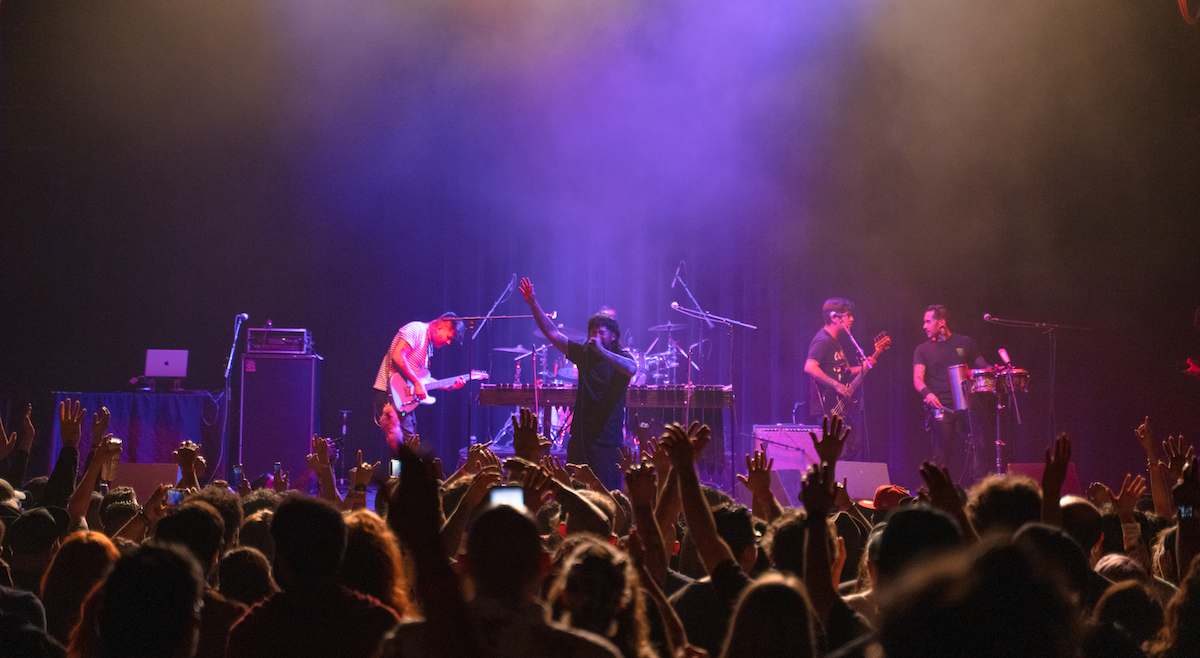
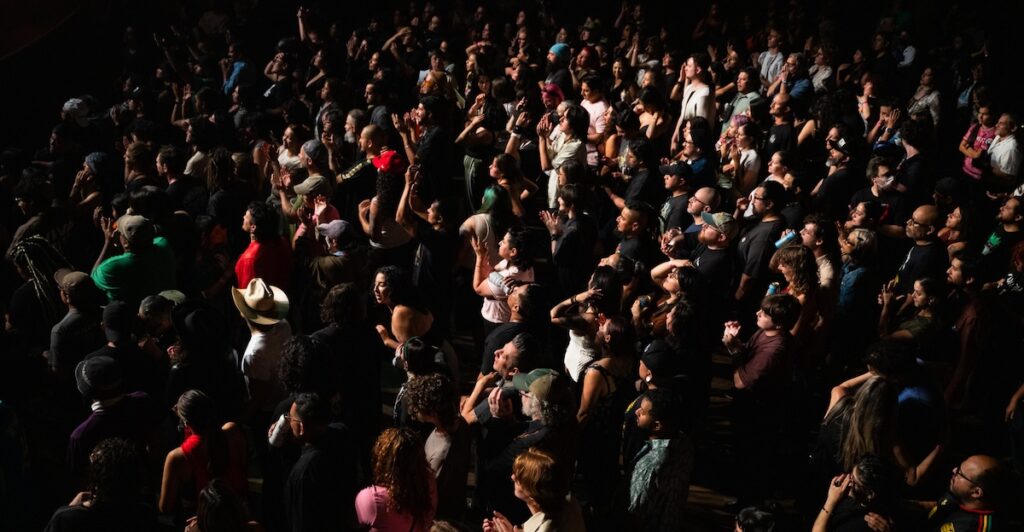
Son Rompe Pera, a five-piece band from Naucalpan, right outside of Mexico City, is on a mission to declare cumbia as a sound that is here to stay. Leading the creation of a new sound, they remind us that modernizing folk music can move a crowd on any given Friday night. On June 19, Pilsen’s Thalia Hall was packed to the brim, with a diverse audience that began dancing cumbia before the set even started.
“Cumbia is the new punk,” one of the band’s slogans printed on their official merchandise spells out, hinting at a genre that’s over a century old, planning an uprising.
Credit: Mateo Zapata
Punk originated in counterculture.It was born out of illegally organized shows in tiny garages and basements, and relied on a do-it-yourself spirit instead of corporate marketing teams. Cumbia, made by Afro-Colombians and born from resistance, has recently been embraced by a new generation of listeners and musicians. Son Rompe Pera naming cumbia the new punk foreshadows a bright future for the genre.
More than two decades ago, cumbia was reimagined through the lens of hip-hop by Mexican rappers when Celso Piña collaborated on “Cumbia Sobre el Rio” with Toy Selectah and Control Machete. DJs like Deorro conjure the memory of “Cumbia Sobre el Rio” two decades later, with songs like “La Bandera” featuring Santa Fe Klan. El Dusty has been pushing electro-cumbia for years with songs like “Niño de Cumbia” featuring Clips X Ahoy. Chicago native Boi Jeanius is also consistently exploring how to reignite cumbia with tracks like “Cumbia-La-La” and “Pon Di Cumbia.” Son Rompe Pera sees a different route for cumbia to dominate the dancefloor, just as powerful and charged with more energy, by fusing cumbia with rock and roll and positioning an African instrument as the centerpiece—the marimba.
Credit: Mateo Zapata
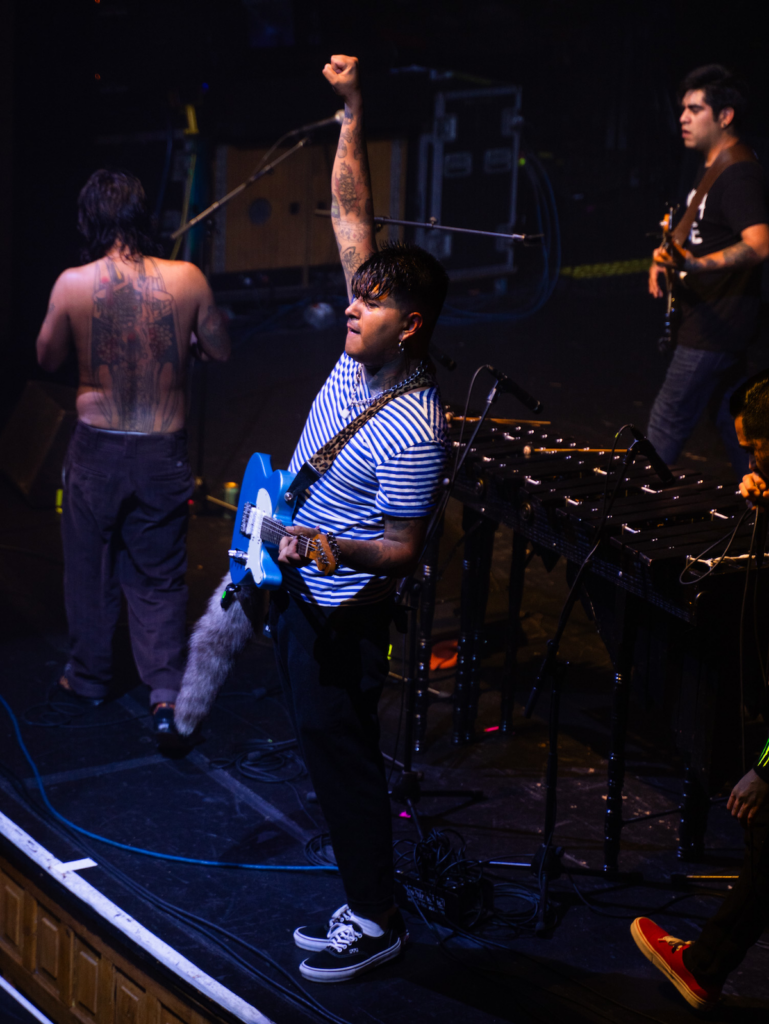
Son Rompe Pera’s distinct sound is completely shaped by the marimba. Two band members play the marimba alongside each other while also switching off to deliver delicious riffs from their electric guitars. At one point, the crowd gathered to form a mosh pit, but what really transcended was a traditional circle dance reminiscent of the ancestral use of cumbia and the marimba in ceremonial practices.
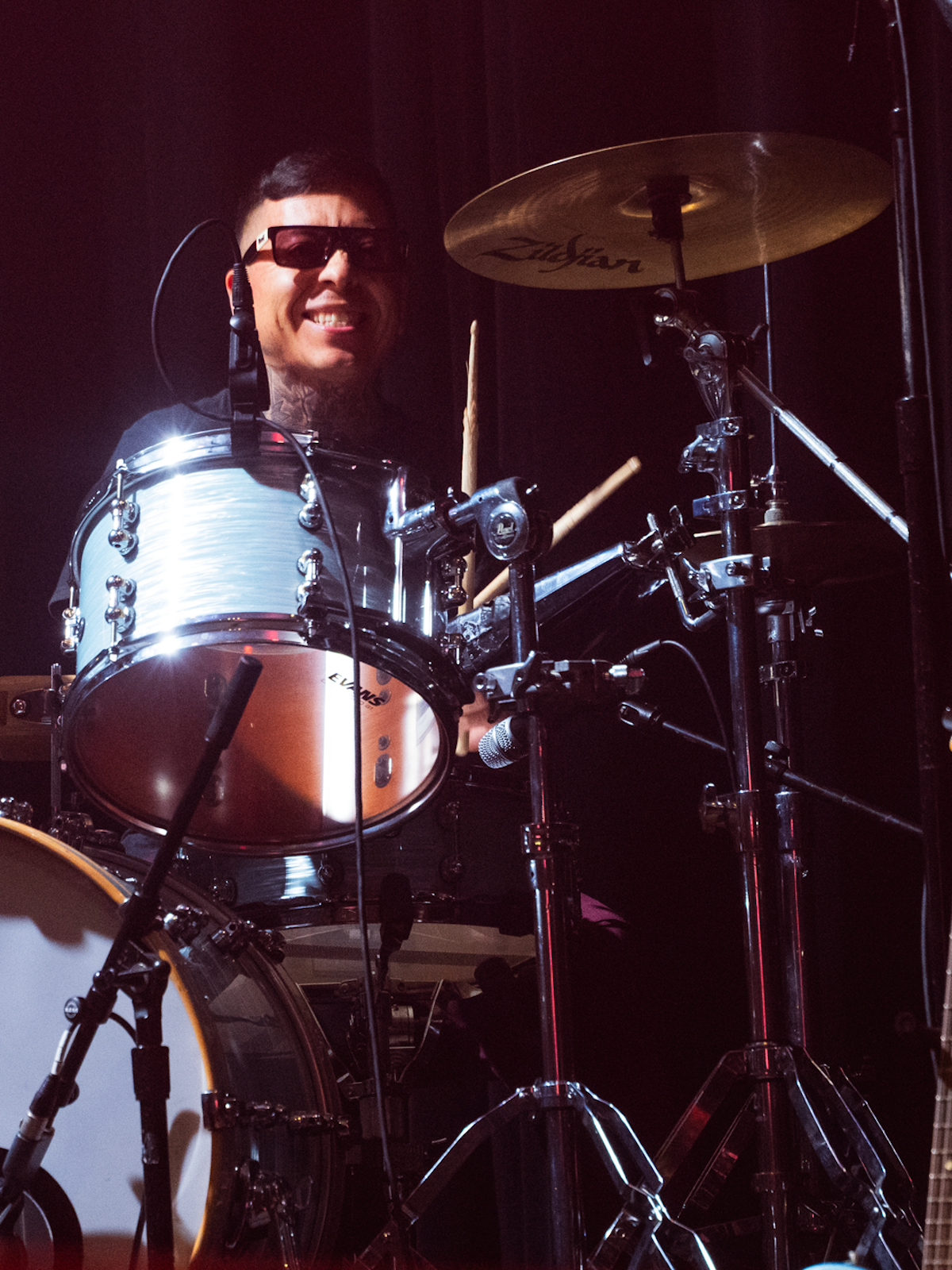
Mid-concert, the band thanked the audience for continuing to support their tour despite the recent persecution of immigrants nationwide. Every band member had their solo moment to show they’ve got what it takes to command the stage, not only as a group, but also as individual musicians.
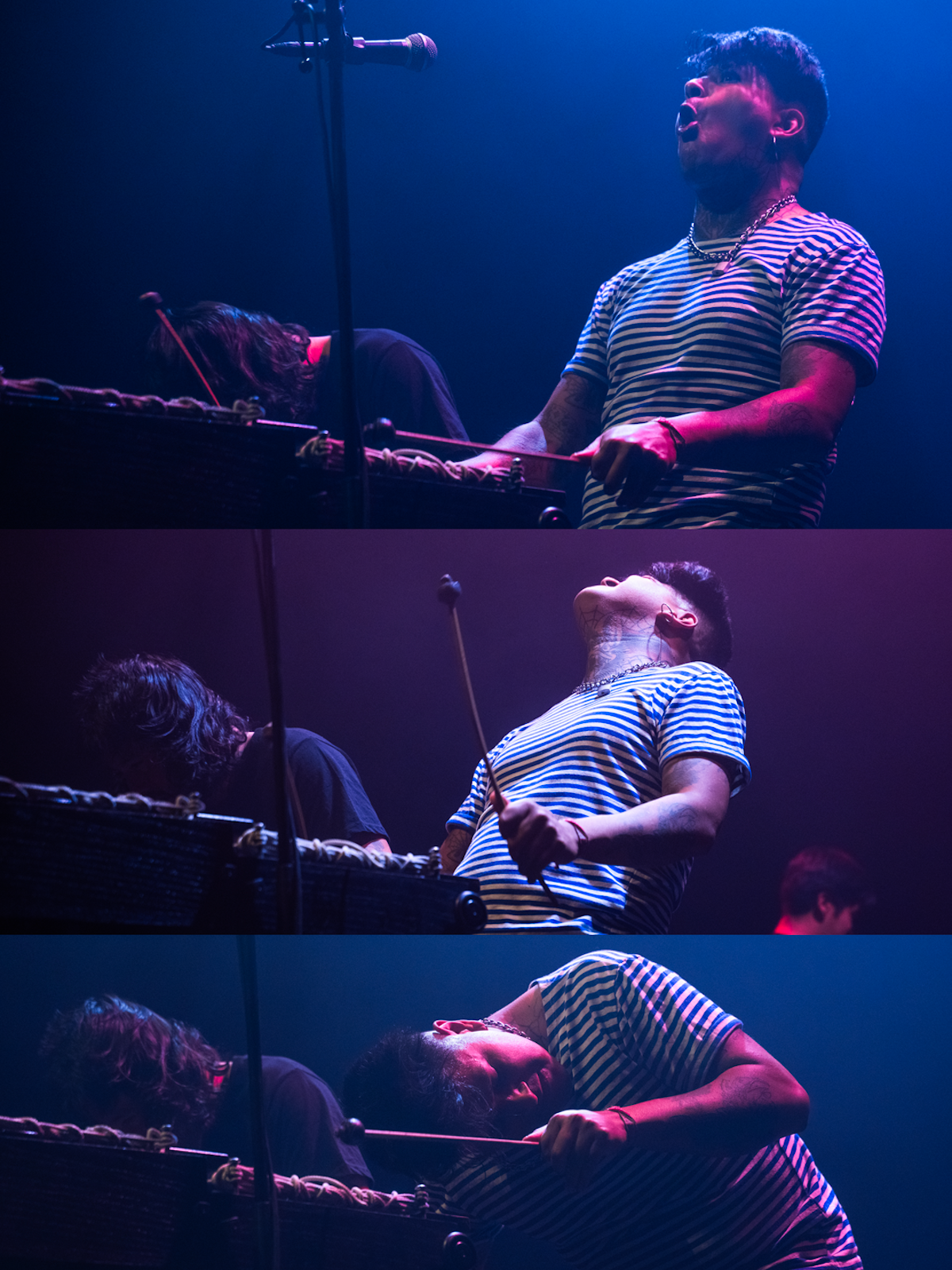
Son Rompe Pera just set off on the European leg of their tour. They’re keeping cumbia alive and carrying on its tradition of being born from resistance on the other side of the world.
Mateo Zapata, a Chicago-based photojournalist and artist, documents narratives to uplift voices from his community. Find him on Instagram @mateoxzapata.