
Teen trends, also dubbed teen takeovers, have been making citywide and national headlines. They involve large gatherings of young people in public spaces—like beaches, landmarks, or malls—and are often coordinated on social media. They have sparked calls for stricter curfew laws, fines for parents whose teens break those laws, and accountability measures for social media platforms used to advertise trends.
Mayor Brandon Johnson vetoed a “snap curfew” ordinance last summer that would have allowed the police superintendent to declare localized youth curfews with 30 minutes notice. This summer, he announced the “Get Summer” program, which offers free memberships to seven YMCA centers for Chicago residents ages 12 to 18 during July and August, to expand safe places for young people to gather. Johnson told the Investigative Project for Race and Equity, “You’ve got to make sure that young people know that they are loved and supported.”
The Weekly sat down with Mari Lee, youth leader at the Chicago Freedom School, and Cathy J. Cohen, professor at the University of Chicago, to discuss these gatherings, how Black and Brown youth have been criminalized, and the importance of creating systems for youth to experience agency, power, and purpose.
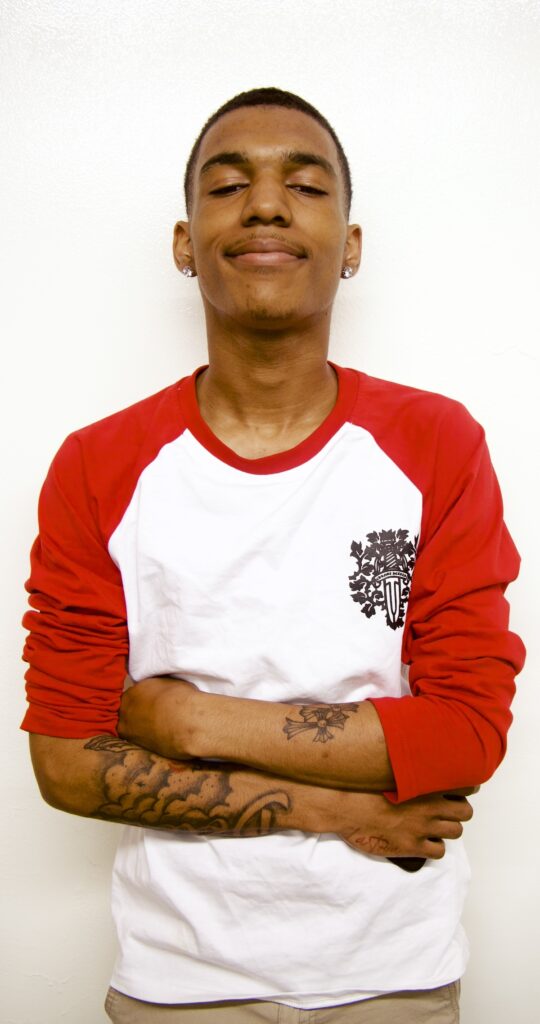
Camarion (Mari) Lee is a dedicated logistics coordinator and youth leader at the Chicago Freedom School. Since 2023, Mari has evolved from a participant to a key facilitator specializing in transformative justice, know-your-rights, and anti-oppression workshops. Driven by an energetic and outgoing spirit, he is passionate about community building and empowering others to recognize the unique value in every individual.
Ellie Gilbert-Bair: What is a teen trend?
Mari Lee: A teen trend is a space where teens can make connections and enjoy themselves. But after a while of us being there, it starts turning into chaos a little bit. I’m not even gonna try to fabricate that.
I wouldn’t say it’s just police by itself [creating the chaos], but I would say they’re one thing. I understand they’re there for safety precautions and protocols, but they take their job to the extent where it is excessive force. They just use their badge and how they’re seen as [a] presence to dominate us. But at the same time, it’s not dominating us. I wouldn’t say it makes us act out, but it does make us act a certain way, because it makes people think that you’re not finna talk, you’re not finna say nothing to me, and I’m not finna say nothing to you. I’m finna be here, and I’m finna do this.
But I also would say we have to hold accountability on ourselves, because we kind of create dangerous spaces for ourselves.
Do you think there are enough spaces for young people in Chicago right now?
No, not really. Some spaces are just shut down, period. We don’t even get the chance to enjoy ourselves because it’s too late—now we don’t even have the building. We don’t have the proper resources, and I’d say the city uses their money to fund different things that shouldn’t be funded.
Because we don’t have that type of funding, I would say the best spaces right now are nonprofit organizations like the Chicago Freedom School, because we have the space to hold people, where we keep you busy after school, try to keep you in safety, and make sure we also teach you about things that’s going on in the real world.
We got three frameworks: anti-oppression, healing justice, and transformative justice. We take them frameworks and basically make them our grounding practices of how we teach other youth how we do.
I just recently taught a transformative justice workshop, where basically, I’m teaching to not just restore the problem and say “I’m sorry, it won’t happen again,” but also change your actions.
What do you think young people need, and what are you organizing for?
I think young people would have a better chance if they had job opportunities. But also, I think that if we just had more resources to hold these spaces, or even if city council will let us hold some spaces, I feel like that’ll be better. Because that’s an even chance for us to enjoy ourselves and make connections with other people, rather than just take our hatred out on everything, anything. If we did have an area where we know we could be safe and all get along, I feel like that would definitely help, 100%.
I would like to see a change in police enforcement, because I feel like they use their badge as dominance. They take their control to an extent where it doesn’t need to be taken. So I feel like a new training or a new policy would be helpful.
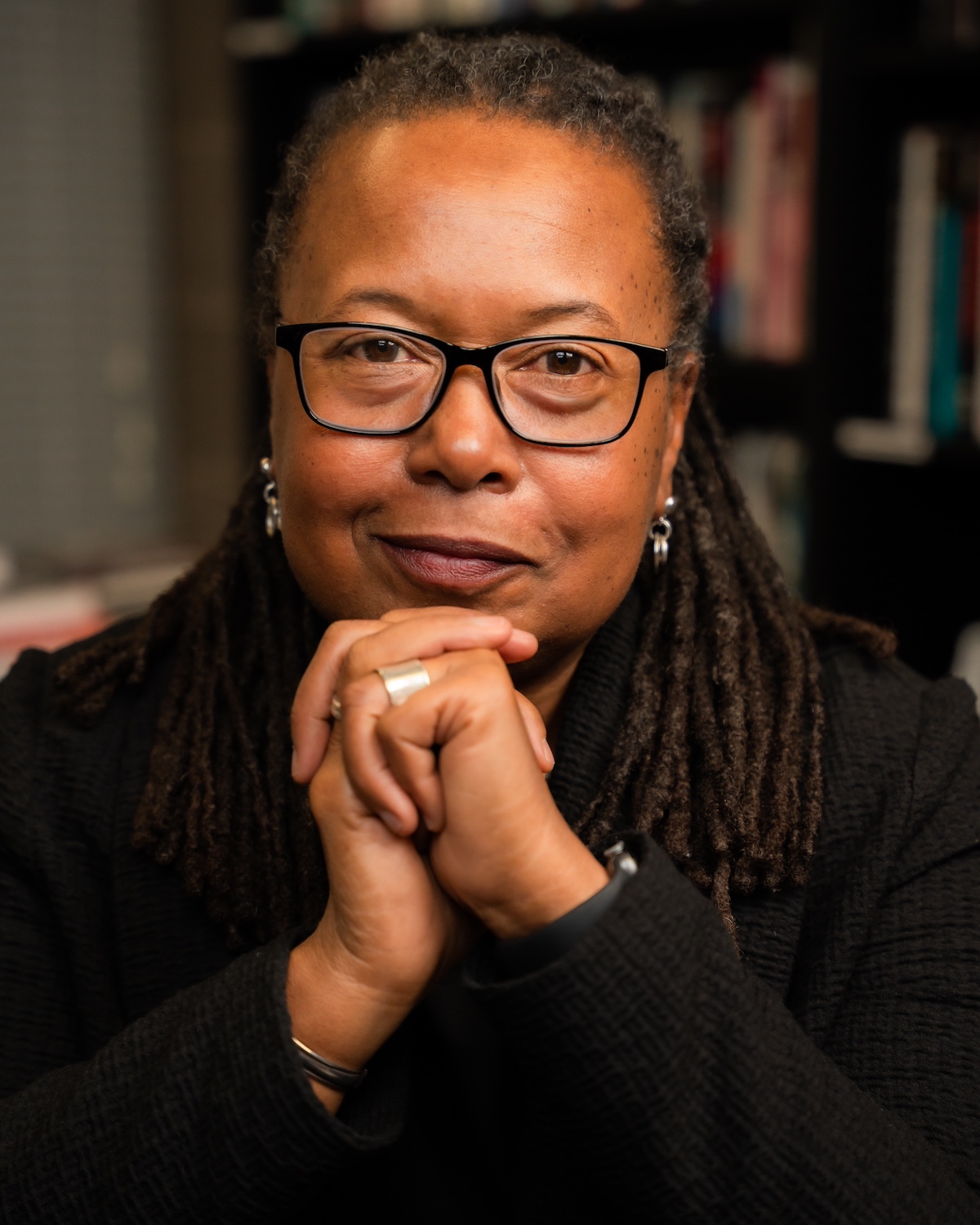
Cathy J. Cohen is the D. Gale Johnson distinguished service professor at the University
of Chicago in the department of political science. She is the author of two award-winning books, The Boundaries of Blackness: AIDS and the Breakdown of Black Politics and Democracy Remixed: Black Youth and the Future of American Politics. Cohen is currently the founder and director of two public-facing research projects, the Black Youth Project and the GenForward Survey, and was a founding board member and co-chair of the board of the Audre Lorde Project.
Cathy J. Cohen is the D. Gale Johnson distinguished service professor at the University
of Chicago in political science. She is the author of The Boundaries of Blackness: AIDS and the Breakdown of Black Politics and Democracy Remixed: Black Youth and the Future of American Politics. Cohen is currently the founder and director of two public-facing research projects, the Black Youth Project and the GenForward Survey.
Ellie Gilbert-Bair: What are some of the systemic contexts that lead to youth seeking large public gatherings?
Cathy J. Cohen: One of the things I always say is, I wish we spent as much time on the depletion of resources—for example, for educational school systems, or recreational opportunities in neighborhoods, or job and training opportunities—which I think have a much more extended impact on young people’s opportunities and experiences, as we do on this thing that has been labeled “teen takeovers,” but most young people would call “teen trends.”
I think there are a number of things that we could pay attention to in trying to understand why we might see young people gather collectively in urban spaces to make themselves seen, and also to have a good time. And in some cases, those spill into activities that can be detrimental to their condition and to the condition of certain neighborhoods.
One is, people want to get together to socialize. The data and the research says that, especially since COVID, we have an epidemic of loneliness among young people; that there is superficial connection, largely through social media; and that people, and in particular young people, are seeking out ways to connect and to socialize in spaces that they control.
It’s different to be in a school system that is largely authoritarian—that tells you when you can talk and when you can’t; that tells you who you can be in conversation with and who you can’t—than to say, “Hey, we’re going to go downtown and make ourselves visible.” I think these questions of socialization, engagement, [and] being in community should not be dismissed as an important driver.
I think there is also this question of collective power that drives some of the teen trends. And what I mean by that is, we often structure adolescence as a space that [should be] controlled, because we have lots of ideas about young people being [uncontrollable]. “Their brains are not fully formed.” “We don’t trust their decision-making.” What I think some of the teen trends tell us, is that there is a way in which young people are coming together collectively to engage together and to define how they will behave.
And some of it, for older people, you might not like. We bring in a whole level of respectability politics when we’re viewing these things. But I think collectively, young people are saying, “We’re going to create a space that we control,” and “We’re going to have visual representation in ways that you often don’t see us.”
A while ago, I was doing this research and interviewing young people, and I would ask about downtown. Often they would say either they had never been downtown, or they didn’t feel comfortable being downtown, because there was a hyper-surveillance, there was a criminalization of their bodies and their behaviors downtown. And I do think the collective power of 300 or 500 young people allow[s] them to be in spaces where generally they are expected not to be.
And this also speaks to even the language of “takeover.” The idea of “takeover” is that there’s a group taking over a space that they’re not generally supposed to be at, or that is controlled by another group. And I think these young people understand that “I’m not supposed to be downtown,” or “I’m not supposed to be in Hyde Park,” or “I’m not supposed to be at the University of Chicago,” and “The way that I can be there is to come together in a group.”
Why do these gatherings draw such a massive police presence?
I would argue that, in fact, there’s a long history of responding to young people in urban spaces, whether they’re parks or beaches or the mall, that has always generated a level of carcerality and criminalization, especially when those young people are Black and Brown people.
So, the history of criminalizing large groups of people of color who gather is not new. In many ways … this response—to mobilize carcerality, to mobilize the police, to engage in arrests, to punish parents—should not be that surprising. It is the go-to governing structure that exists generally in this country, and often in urban cities where Black and Brown people live.
What are some other ways in which public space use is policed?
I do think there is a way in which, if we think about the history of segregation, the expectation is that, in fact, Black people [and] Brown people will stay in their designated areas. That those areas will often be overpoliced. That there will be cameras everywhere. There are systems of surveillance that have evolved over time. And the expectation is that, if you stay there, then you can do whatever you want in those spaces. You can destroy those spaces. But public spaces, in fact, are spaces that can be populated by white individuals, and those spaces have to be maintained often for the use of, in particular, white residents.
So, it is not teen trends in predominantly Black or Latine neighborhoods that end up with lots of police presence, because there’s already police presence [in those neighborhoods]. It is when those teen trends move out of Black and Brown neighborhoods, into what are thought [of] as predominantly white spaces or public spaces, that they generate the reactions that we’ve seen, where there’s massive police influx, where there are news stories. There are regulations that we don’t see when young people are gathering in certain segregated neighborhoods on the South and West Sides.
What are some ways you think youth can access a feeling of agency and collectivity in the city?
Yeah, this is hard, right? Because we have to be real. There aren’t a lot of spaces and platforms and opportunities for young people—we’re talking about teens here—to access power in the city. They don’t vote, and that’s one way people exert power. They often go to schools—schools that are highly authoritarian, meaning there’s no democracy. There aren’t young people helping [make decisions] in the schools. They don’t hire and fire in the schools. They are meant to be subjects in the schools.
So, if we’re serious about taking the voices, and the ideas, and the agency of young people as things that can help guide policy and programs, then we really have to build systems that allow for that. … There can’t just be a teen advisory group that gets motivated to say, “Hey, how do we stop teen trends?” [The question should be], “how do we think about the governing policies of the city impacting young people, and what is their voice in that policy-making process?”
These are not little interventions. It has to be that we take seriously the agency, the insights, and the expertise—the lived experiences—of teens, and incorporate that into how we govern a city. And it means changing our framework for how we respond to teen trends. It means we think of them as opportunities to reimagine and engage with young people about their needs. How do we invest in their communities, how do we create opportunities for collective engagement, how do we nurture their agency and empowerment, and how do we lift up their voices? These are very different processes than how do we jail them and how do we jail their parents to make them accountable for moving into spaces where they are not wanted?
Is there anything else you think would benefit the larger conversation around teen trends?
The only other thing, I think, is to emphasize the history of racializing Black bodies and spaces. I was reading about how, after the Central Park jogger, there was this language of “wilding,” that young Black people were out there wilding. And malls [also public spaces] began to regulate how many young Black people and Latinos could be in certain stores at a time.
Editor’s note: The Central Park jogger case was a 1989 criminal case concerning the rape of a white woman running in New York City’s Central Park at night. Five Black and Latino teenagers were wrongfully convicted, served time, and later exonerated. The term “wilding” was used in a media frenzy over Black and Brown teens causing mischief (i.e., partying).
There’s always [been] the racialized fear of teen Black and Brown bodies, [especially] in establishments meant to generate profit. So, in the same way that we want to contextualize all the things that are happening here, we also want to pay attention to that history of racialization, and the ways it replicates itself and continues to evolve today.
These interviews have been edited for clarity and length.
Do you have a topic you would like to ask an expert about? Email us at elliegilbertbair@southsideweekly.com.
Ellie Gilbert-Bair is the Weekly’s assistant managing editor.