

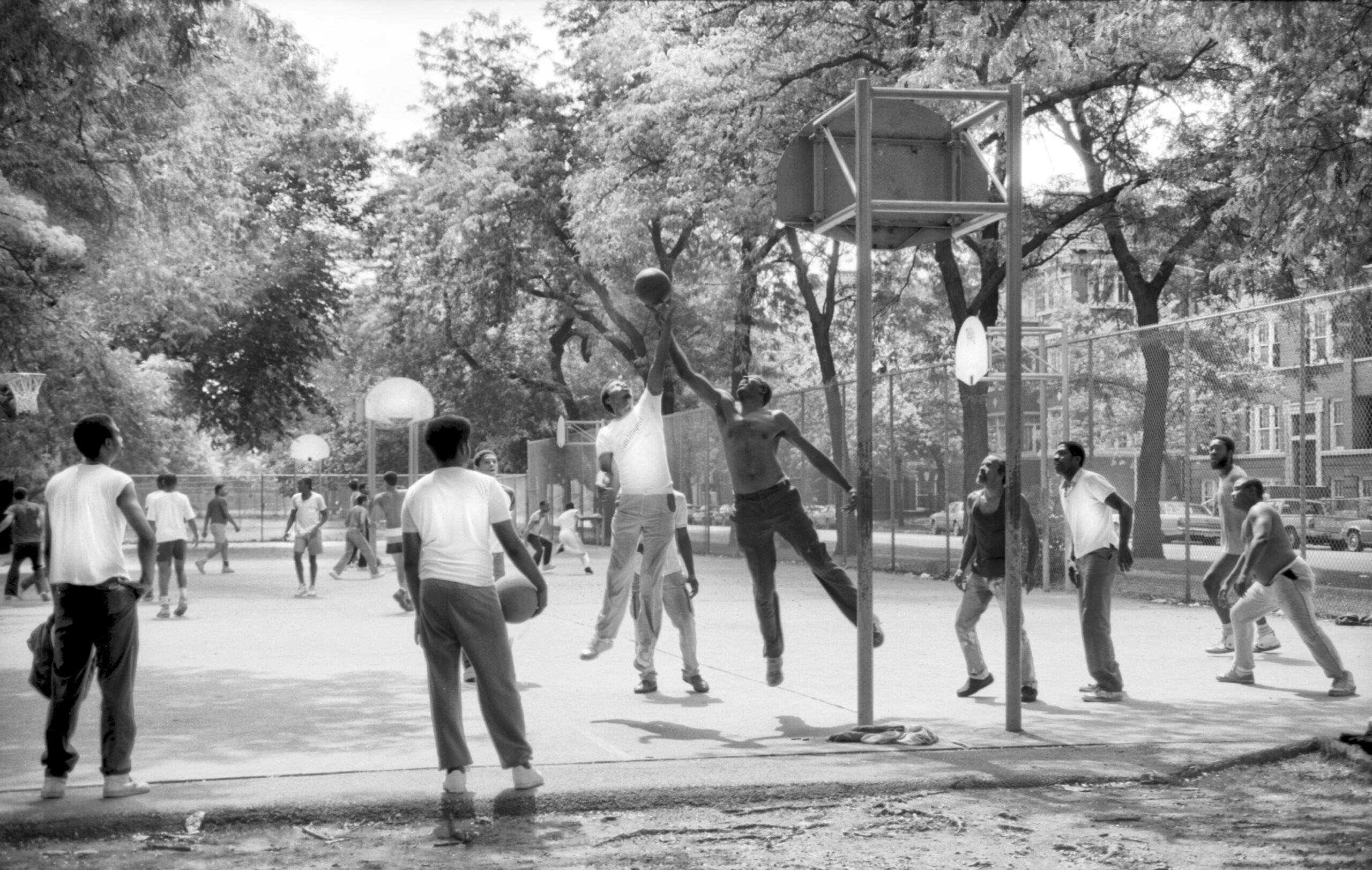
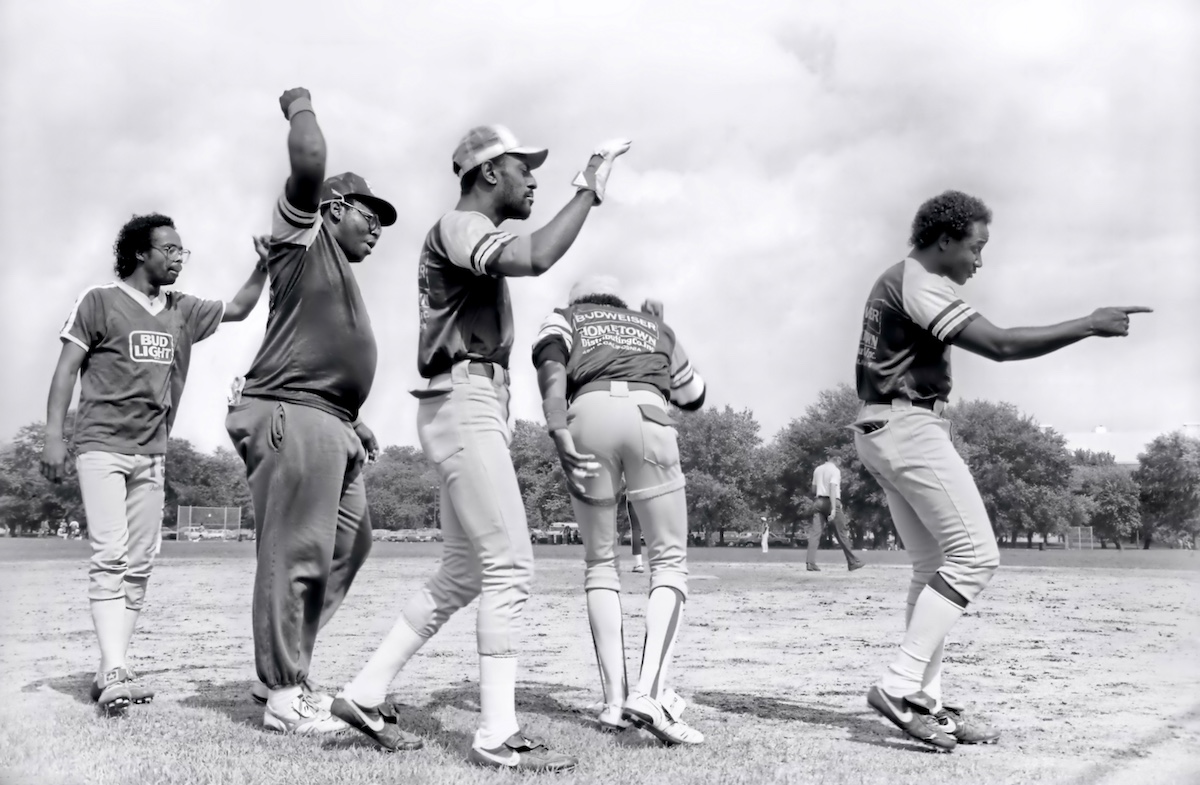
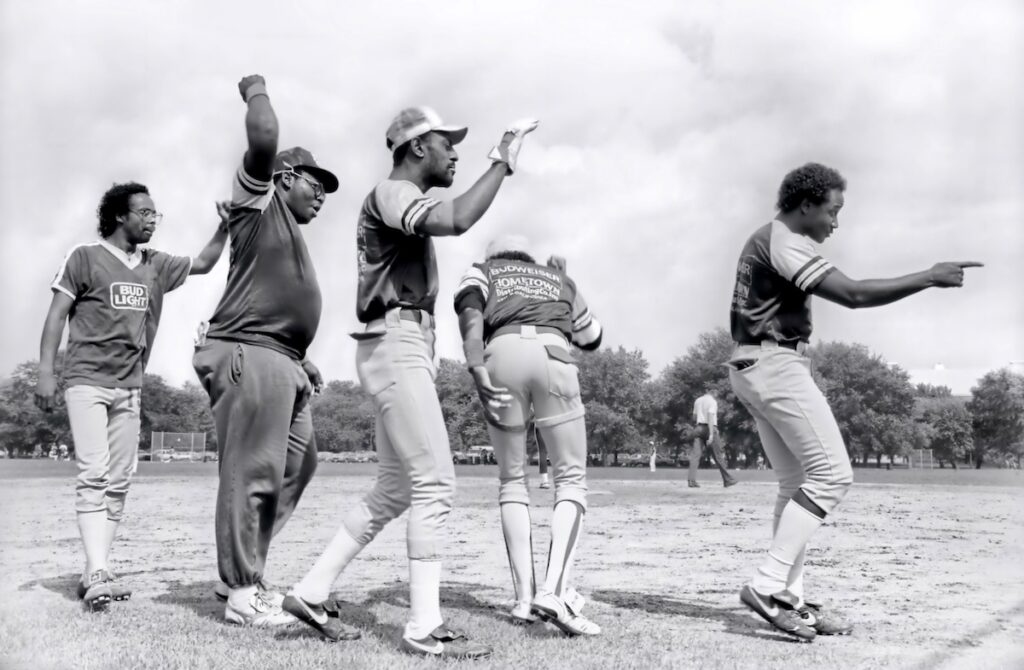
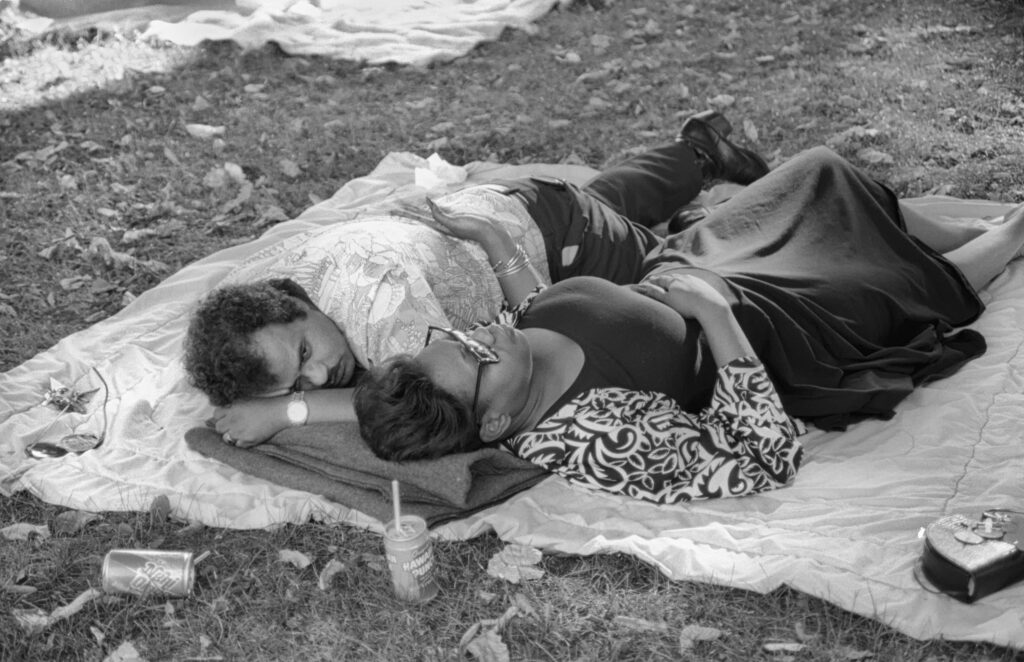
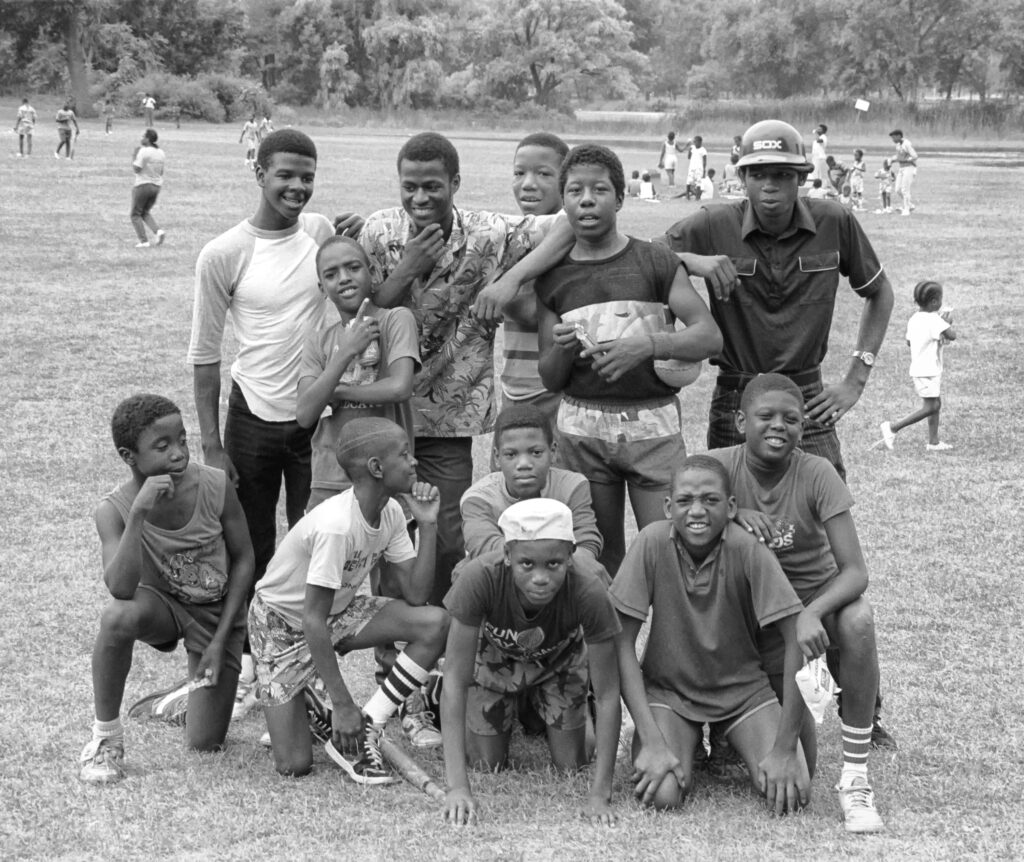
I gasped out loud the first time I saw one of Rose Blouin’s photos. In the summer of 1987, Blouin, a local photographer, set out to Washington Park almost every day to photograph the beautiful and the mundane. Picnics, festivals, baseball games, couples cuddling in the grass. The photos are astounding. My poet brain loves them as portraits of the human experience. My Chicagoan brain loves them as historical artifacts of one of my favorite places in the city. But when my sociologist brain sees them, I can’t help but think…dang, when was the last time you saw that many people in Washington Park?
According to 2026 data from the Chicago Metropolitan Agency for Planning, Chicago is home to about 740,000 Black residents. In 2000, that number was over a million. Among other American cities that historically had substantial Black populations, guess what were the only other two to see similar declines over that same period? New Orleans is one. Detroit is the other. Which provokes a startling question: what disaster has befallen Black people in Chicago that’s comparable in scope to the devastating impacts of Hurricane Katrina or the collapse of the Detroit automotive industry?
We usually think of a “disaster” as something that happens acutely, a single event that you can pinpoint in time like a tornado or a flood. But some scholars have come up with the concept of a “slow-motion disaster,” and that’s a pretty good descriptor of what’s happened to Black Chicago. Cumulative attacks from every direction, little pinpricks that become bigger strikes. The world weathers away at home and community and family, eroding the shore little by little until you find yourself drowning and you didn’t even know you were standing in the water.
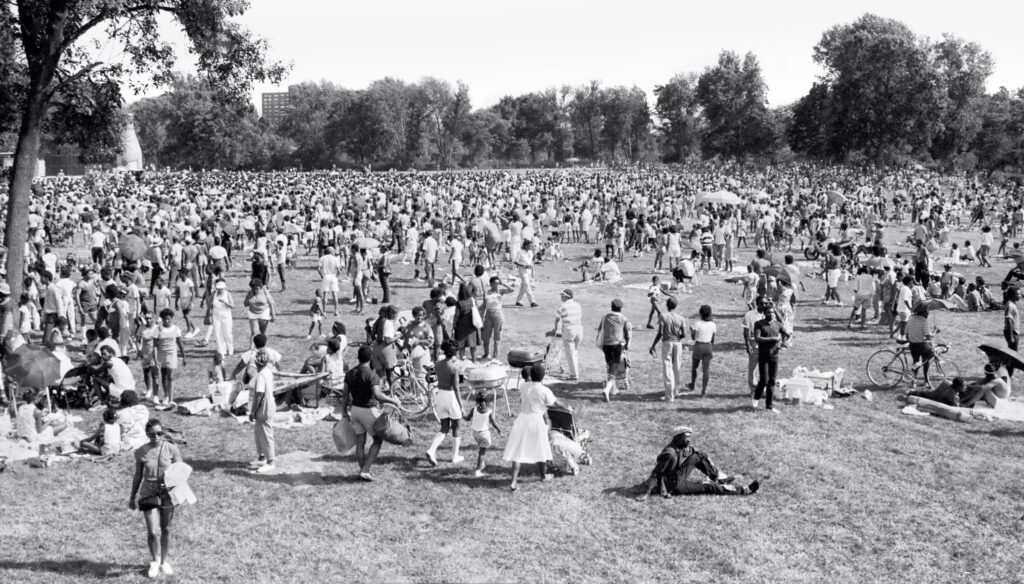
Researchers and reporters have been putting forth theories for years to explain where over a quarter of a million Black folks have gone. Some have argued that we’re seeing a “reverse Great Migration,” with people going back to the places in the South that our parents or grandparents left behind. But data suggests that most Black folks who leave Chicago stay close by. Slightly more than half stay in Illinois or Indiana. The next most popular destination is Georgia (where about 5 percent of people go) and Mississippi (2 percent). So while there are indeed a few people catching that midnight train, going back to a simpler place and time, that’s not the most common story.
For Black folks who leave the city for the surrounding suburbs, they might be chasing the stability, safety, and amenities that we traditionally think of when we think “suburbia.” But the suburban dream isn’t what it once was. In 2010, the scale officially tipped, and the population of low-income people living in the suburbs in the United States surpassed the number living in cities. In Chicago, Black folks who move to the suburbs move, on average, to counties that have lower educational attainment, lower median wages, lower levels of school funding, and lower income than Chicago does. In other words, movin’ on out may not always mean movin’ on up.
Why have so many Black folks left? How do people navigate the tricky decision of whether to stay or go? For those of us who remain, how do we make meaning of the city changing around us? To better understand, throughout 2020 my research team and I led conversations with 80 Black Chicagoans. To participate, the people we spoke to had to have lived in Chicago for most or all of their lives (sorry, transplants!) and either considered leaving or had close friends and loved ones who have left. Everyone hosting the conversations was themselves a born-and-raised Black Chicagoan…with the exception of one person from Mississippi who we claim hard. (Mississippi being the South South South Side and all.)
We started with a simple question: “What factors have made you think about moving away?” In response, we heard complex and overlapping feelings, but four topics came up over and over again: education, employment and financial stability, public safety, and retail goods and services.
Despite gains made by Chicago Public Schools in recent years, some people we spoke with felt that historically Black neighborhood schools are struggling. Keanna (a pseudonym, as are all the participant names I’ll include here) lives in Morgan Park. She described her disappointment at her neighborhood high school, Fenger, seeing a steep drop in enrollment. Fenger was home to over 1,100 students at the start of the 2005 school year and has 167 students as of this writing.
“It’s a culmination of a lot of things that ended up messing with the enrollment,” Keanna told us, “but it’s not promoted in a way that helps bring the kids back, bring people back to the neighborhood.”
For people like Keanna, questions about school quality were not just about the needs of their individual families. They felt that even if school choice worked out for them individually, the fact of <i>having</i> to choose felt unfair. Requiring the special knowledge to navigate the system rather than being able to count on an equitable district with high-quality schools for all was seen as an indictment against the idea that the city itself was a sustainable choice for Black people long-term.
Inequality in employment opportunities arose as another issue. Black unemployment in Chicago is over 4 times the White unemployment rate. Some participants in our study felt like they could only get a chance at a job opportunity if someone knew them personally.
“Chicago is a really prejudiced city,” said Laura. “So it’s hard to stay. Chicago, it’s almost like you got to know somebody. You got to let one of us get in and, hopefully, that person remembers the next, and we move forward like that.”
For others, prior involvement in the criminal-legal system limited their eligibility for desirable jobs. Chrystelle, who lives in Morgan Park, told us she felt a deep sadness at her mother and all of her siblings moving to Wisconsin. “The reason why they left is because all of them have backgrounds,” she explained. “I don’t have a background so it’s not hard for me to get a job, whereas, for them, it’s very hard for them to get a job. And of course, it affects them financially with housing and just daily living situations.”
In 2021, Illinois passed the Employee Background Fairness Act, which largely prohibits Illinois employers from disqualifying job applicants with conviction records. But as sociologist Reuben Miller—himself a child of the South Side—points out, the accumulated social stigma still faced by formerly incarcerated people means that “we’ve inaugurated an alternate form of citizenship for people with criminal records… prison follows people, like a ghost.”
The idea that Chicago is an unsafe city due to high rates of violent crime is a well-trafficked national narrative. Rhetoric aside, Black communities in Chicago <i>are</i> disproportionately impacted by violence. In 2025, 416 Chicagoans died by homicide; 75 percent of them were Black. The severity of this crisis was reflected in our conversations with participants, many of whom listed safety as a significant factor that made Chicago potentially unlivable.
Shevaun, who lives in Douglas, described losing a community member who had been part of her everyday life. While working as a nonprofit partner at a local school, she became close to “a favorite lunch lady” with whom she felt a sense of connection and camaraderie. “We used to take the same bus together,” she told us. “I got off work a little later than she did this particular day, so she was gone before I was. I get to work the next day and my coworkers tell me she got shot and killed at the gas station up the street.”
Shevaun struggled to process the loss. “Like, she was somebody’s wife, she was a mom, her kid was like 14 years old . . . and I literally had saw her the day before.” These are the intangible ripple effects of gun violence. Shevaun is one of countless mourners, beyond the nuclear family, who may grapple with the wake of each loss.
“I just don’t think that the constant police presence helps anything,” said another participant, Tony, who lives in Bronzeville. “If anything, I think it just makes us more, like, wary of them . . . I don’t get how come they don’t operate more like a fire station, where it’s like you call when you need them as opposed to this constant roaming. Because I feel like so many of these situations happen from cops just roaming around to stop somebody, and then that situation can turn violent.”
In contrast to violence prevention efforts that focus on individual choice—like the repeated urging to “put the guns down”— several of our participants offered a structural critique of violence in Chicago, suggesting that the shootings were actually a symptom of broader long-term disinvestment in Black communities.
Randell cited the Plan for Transformation as a factor that created displacement and brought together rival gangs, wantonly inciting violence. The Plan, enacted by the federal government in 1999, ceded mayoral control of the Chicago Housing Authority to then-mayor Richard M. Daley under an agreement that the city would demolish nearly 22,000 units of public housing. “What are you creating, you know what I’m saying? That is purposely creating war. That is purposely creating Chiraq. This is engineered . . . they’re so slick with it that they will just make it like it’s a natural part of what Black people are. Black people are savages. Black people are going to kill each other just because it’s in them. And it’s like, no, no, no.”
The final theme that emerged in our conversations was the frustration with inconsistent access to retail and service amenities—like groceries, pharmacies, and health care—that are necessary for everyday life. John, a 68-year-old living in Avalon Park, saw the situation as worsening. “We used to have more bigger stores, like Jewel, and Osco, and Food For Less, and CVS, and Walgreens,” he told us, “and just big stores where you can go and you could buy everything at that one store.”
As there have continued to be high-profile grocery chains closing on the South Side, city officials have considered possible solutions, such as municipally-owned grocery stores. In the meantime, South Side residents who saw millions of dollars of tax incentives benefit Whole Foods, Walmart, and Target have seen their locations shut down permanently.
Aside from access to these essentials, our participants also expressed a longing for services and amenities tied to leisure. Irvin, a 46-year-old from Roseland, shared a story of going to the North Side to celebrate a friend’s birthday. “We go to some fancy crab restaurant up North,” he recounted. “Every block that we passed going up North, a ton of businesses thriving. Bookstores and comic book stores, all kind of stuff. Bars on every corner. Then I come back when we’re done eating dinner… then I’m right back into my reality, which looks a lot different.”
Some observers argue that the city’s Tax Increment Financing (TIF) program, which is supposed to encourage development in disinvested areas, has actually worsened the kinds of inequalities Irvin observed. In 2019, the Office of the Inspector General found that the city had largely failed to enact TIF reforms called for in the prior decade, including clear milestones, publicly accessible and transparent TIF data, and mechanisms for oversight of how TIF funds are used. Stacey Sutton, an urban planning expert at UIC, has written that the TIF program “extracts valuable resources from underfunded public entities.”
“While residents leaving Chicago may not blame TIFs, explicitly,” Sutton says, “they are keenly aware of its indirect effects, namely, underfunded public schools, neighborhood libraries with bankers’ hours, the dearth of accessible neighborhood retail amenities, and promises of jobs that never materialize.”
In conducting this research, our team ended all of our conversations with the same hard question:.“What’s the future of Black Chicago?” Participants were often startled by the straightforward question, sighing heavily, looking away, or laughing nervously.
“I think in the future Chicago won’t really reach the Black people,” said Tiffany, a 28-year-old from Douglas. “I think that in the future the suburbs will be where Black people will remain and the city will be for the people who can actually afford to live [in] it.”
For 49-year-old Terry, this outlook was driven by the reality of the city’s deep-rooted financial inequalities. “I think that we’re slowly getting priced out. And there’s nothing to keep us from being pushed out of the city financially as the city gets more and more expensive. So I don’t know what the future holds for Blacks in Chicago. I don’t think we’ll be in Chicago.”
Ashlie, a 22-year-old raised between Hyde Park and South Shore, put it even more directly: “I would say there probably is no future for Black people in Chicago, and that’s really sad to say.”
Everyone who has ever called Chicago’s South Side home can joyfully recite the things that has made our region a vital, durable cultural tour-de-force. We relish our bragging rights over musical legends from blues to house music. We drag our visiting fam to our favorite place to get rib tips, and look on with pride as dancers in the Bud go viral. Black Chicagoans on the South Side proudly claim the intellectual heritage of Richard Wright, Ida B. Wells, Lorraine Hansberry, and Gwendolyn Brooks.
But culture needs people, and people need resources. Slow-motion disaster is… well, slow. But the effects are cascading. Someone feels disenchanted by limited schooling options, and moves on to find her babies something better. Their neighbor, bidding them farewell, feels a little bit more isolated, a little bit more lonely, and moves to where they have stronger family ties. The small business owner down the street, who relied on their patronage, closes up shop. The young person who was looking for a job opportunity sees all their local businesses boarded up, and goes to a state with more employment opportunities. The elderly homeowner on the corner who was a stalwart for decades sees all the vacancies and no longer feels safe holding court on the front porch, watching the world come and go.
And just like that—in a tempest that moves inch by inch down the block—the communities we’ve counted on for generations flit away just beyond the grasp of our memory.
This essay is drawn from research published in the article “‘No Future for Black People in Chicago’: Out-Migration as Slow-Motion Disaster” by Eve L. Ewing, Samhitha Krishnan, and Brianna Lawrence in the journal Socius, volume 10 (2024).
You can read the paper without a paywall here: https://journals.sagepub.com/doi/full/10.1177/23780231241266511
Eve L. Ewing is the award-winning author of several books, including 1919 and Ghosts in the Schoolyard: Racism and School Closings on Chicago’s South Side. She is a professor at the University of Chicago and a co-owner of Build Coffee & Books.