
The neighborhood of Chatham boasts a gorgeous array of architecture, showcasing the creative exuberance of generations of proud South Siders. Yet it’s not just the buildings that deserve our attention, but the stories of the people that made this community their home.
In 1948, as the legal frameworks supporting residential segregation started disintegrating, Black Chicagoans began to move from the “Black Belt” to neighborhoods that had previously been off limits. In response, unscrupulous real estate agents known as blockbusters stoked racial fears and encouraged white flight, snapping up homes from white families for cheap and reselling them to Black people for multiples of the original purchase price, robbing Black families of the chance to create equity and generational wealth.
In Chatham, however, something rare was taking place. Though the neighborhood did quickly transition—its population flipped from nearly 99 percent white in 1950 to 98 percent Black in 1970—contract buying and blockbusting did not occur. Furthermore, it was not unusual for Chatham’s new Black residents to work with architects to build their own homes, or to upgrade those they bought. Remarkably, the Historic Preservation Division of Chicago’s Department of Planning and Development reports that ”property values in Chatham increased after the racial transition as the new residents had resources to maintain and improve the housing stock.”
Credit: Cristen Brown
Two of those residents were Jolyn and Joseph Robichaux, who were living in Chatham by the 1960s. Joseph was an executive at Wanzer Dairy, and had deep connections in Chicago Democratic politics. Jolyn, an excellent self-mythologizer with an ear for a great story, later liked to describe herself as a “stereotypical housewife,” but the record doesn’t quite support this. A 1959 Chicago Defender profile documents her work to “improve interracial relations” locally and a 1956 trip to West Africa on behalf of the U.S. State Department. She was the first Black person employed by Betty Crocker, where she did product demonstrations.
In 1967 the Robichauxs were asked to purchase Baldwin Ice Cream by its ailing owner. At Baldwin, a South Side institution founded by 7 Black postal workers in the 1920s, Jolyn took on a new role as a secretary. But she wouldn’t stay in this role for very long. In 1971, Joseph died suddenly, and Jolyn found herself a widow with two young children and a decision to make. “Two weeks after my husband died, I was out visiting our key accounts to tell them I was going to run the company,” she said in a 1979 Chicago Tribune interview. “They all said, ‘Oh, but you must have a man!’ So I decided I would show them.”
Jolyn worked to get her ice cream into more grocery stores across the city, following her customer base out of the “Black Belt,” and then expanded to airport concessions and national grocery stores. By 1985, she’d taken a company with annual sales of $300,000 and built an empire with annual sales above $5 million.
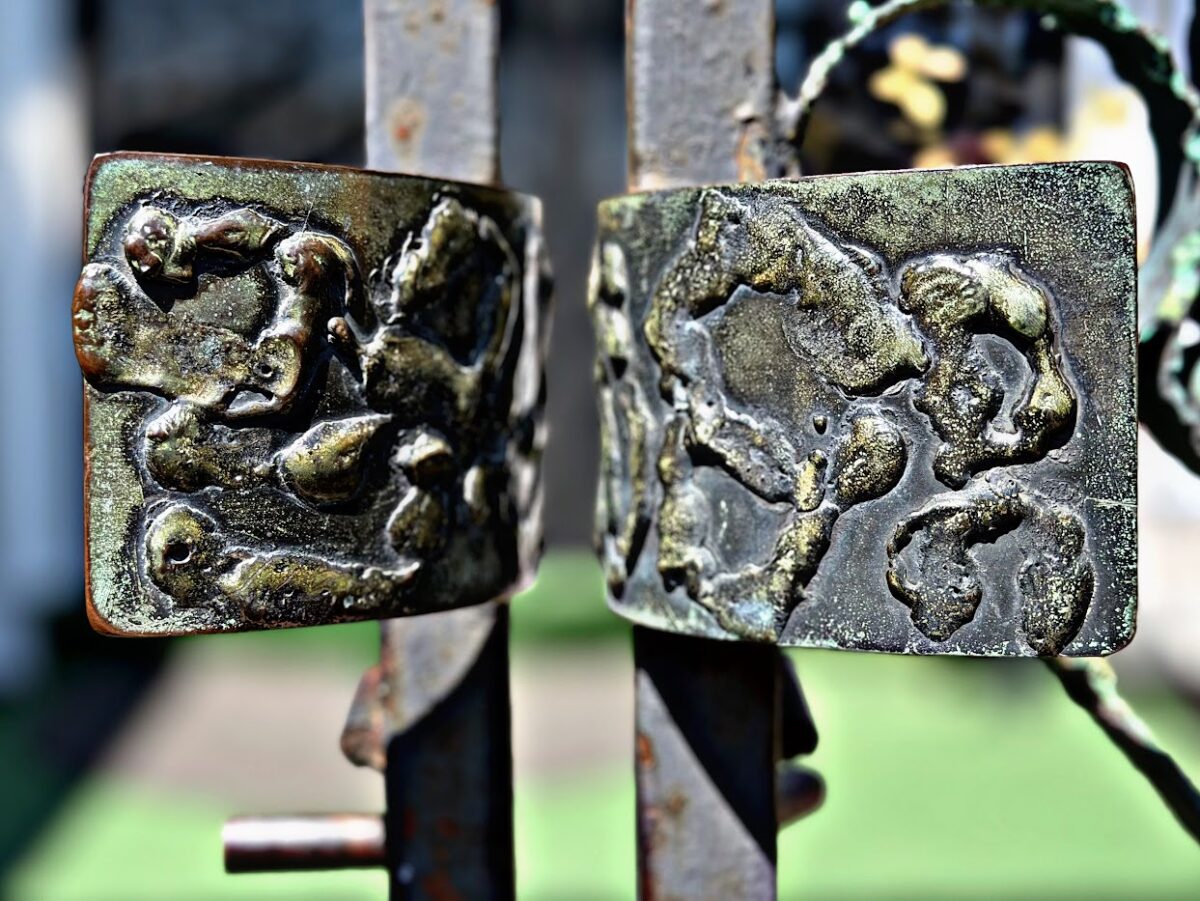
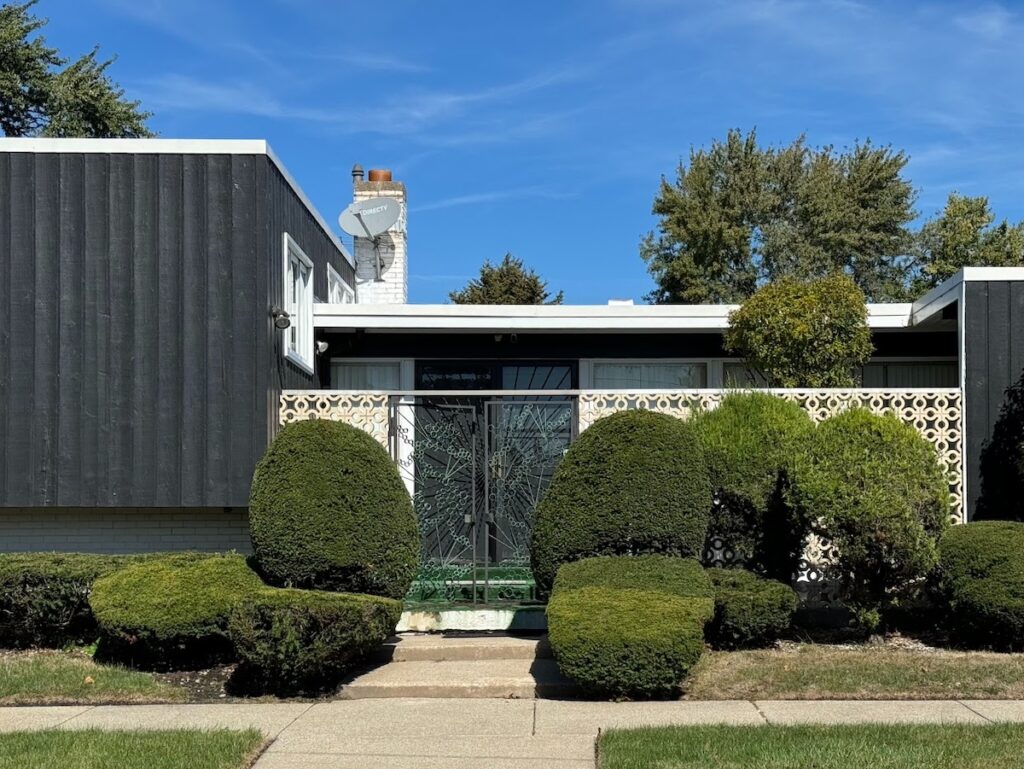
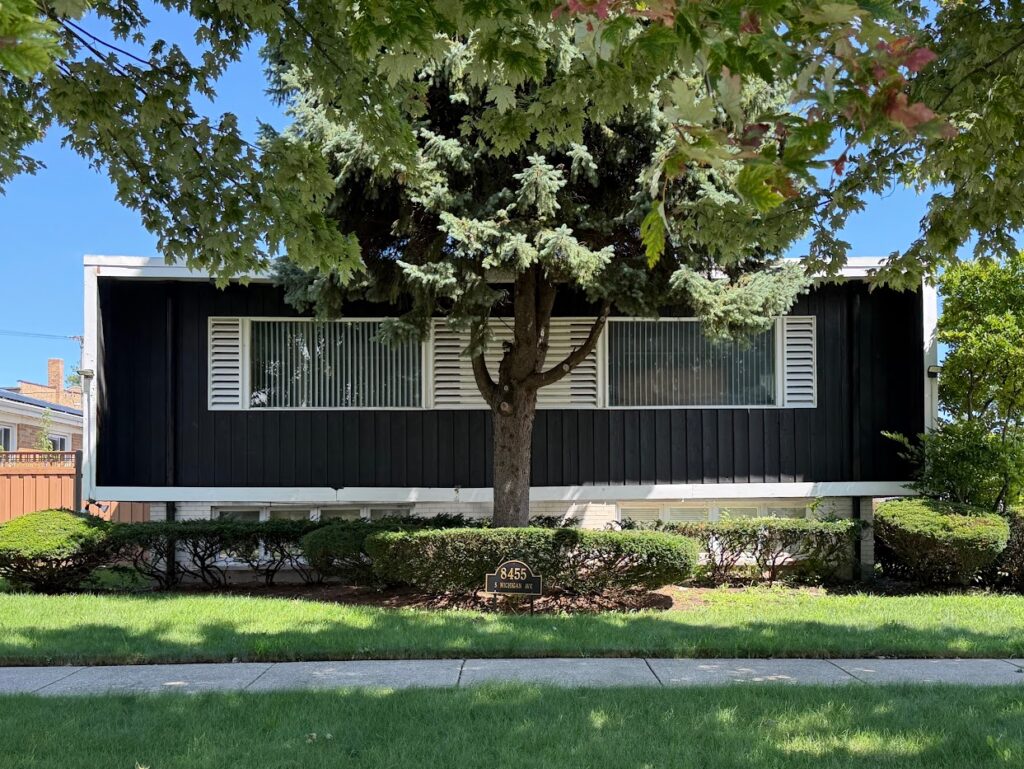
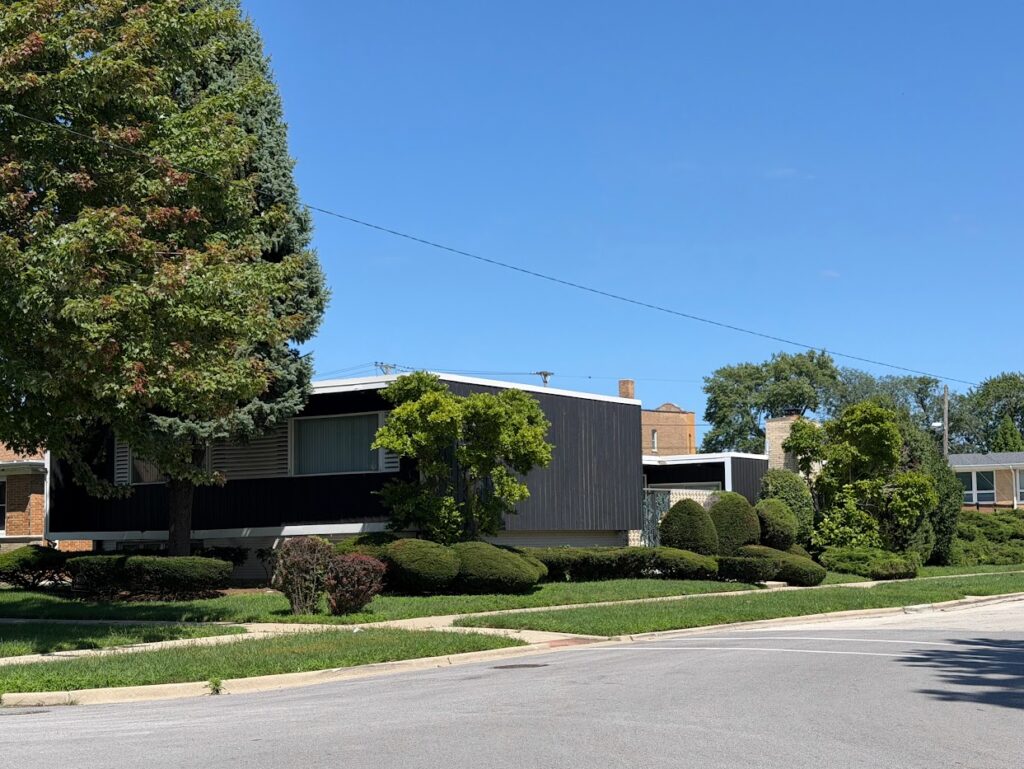
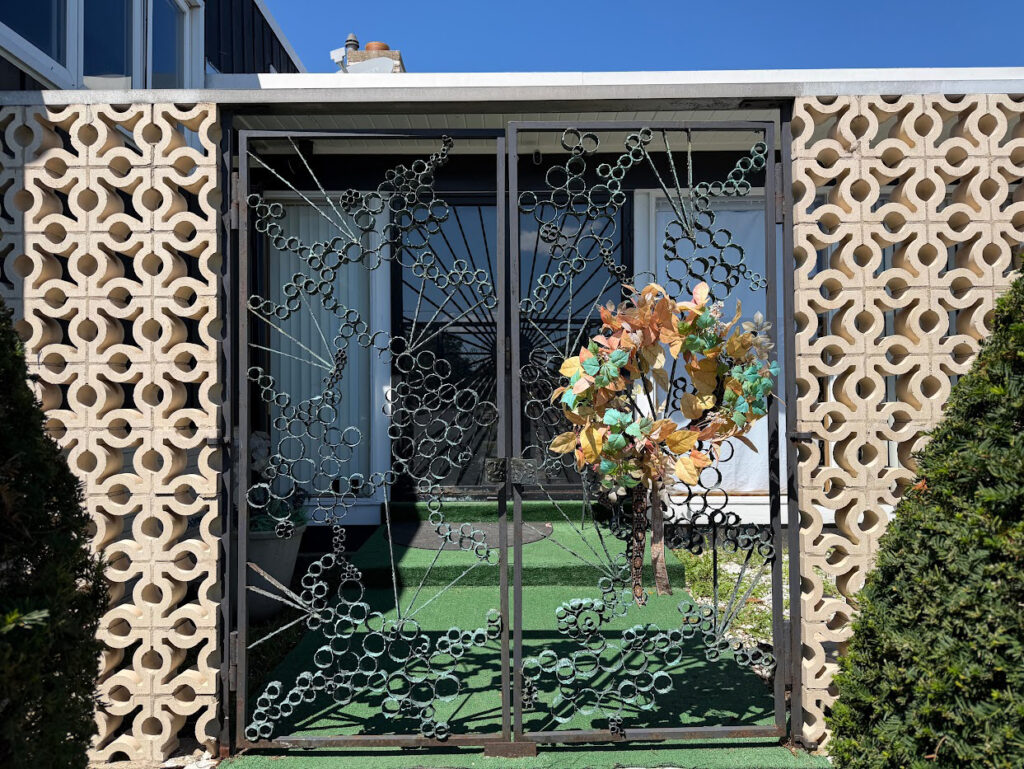
Until she retired in the early 1990s, she did this while living in her gorgeous 1958 home in Chatham. Architect Milton A. Schwartz’s design is deceptively simple: a breeze block-bracketed gateway guarded by two open metalwork gates fastened with engraved handles opens to a recessed entrance. Flanking the one-story entrance are the main living spaces, each clad in black vertical wood siding and sitting on a base of cream brick. This is a home built for socializing, one of the mainstays of mid-century design, but also one of particular importance to the Robichauxs and their neighbors, who used their homes for organizing and community building.
Credit: Cristen Brown
Credit: Cristen Brown
When Reverend Dr. William Lott Sr. and Christine McAllister Lott purchased the property directly from Jolyn in the 1990s, they had not been looking to invest in real estate. Their investments had always been in people, and in keeping themselves and their ministry centered around the needs and hopes of the Black community. In Jolyn, however, they found a kindred spirit whose legacy of service to the community was immediately obvious.
“[The Robichaux Home] had been a gathering place for the community. It was always used to build up this community area,” Christine recalled in a phone interview with the Weekly. When Jolyn sold the home to the Lotts, she also passed them a critical document—contact info for the many local artisans, craftsmen and businesses she patronized—to keep her dollars circulating through Chatham.
Christine is another trailblazer who has dedicated her life to the support and empowerment of women and families. One of only three Black women in her graduating class at Roosevelt University, she is particularly emphatic about the importance of building and maintaining community.
Speaking on the generation of Chatham residents Jolyn belonged to, Christine said, “I distinctly remember them saying, ‘We stuck together. And when we spoke, we spoke as a community.’”
For Jolyn, this meant serving on the board of directors for South Central Community Services, a Chatham-based social service agency founded in 1970 by members of the community to address gaps in services themselves. It meant co-chairing a small business economic development task force, and using this position to advocate for startup funds from the federal government to aid newly launched minority-owned businesses. Having keenly felt her outsider status when she took over Baldwin, she sought ways to install women in executive positions in her company and eventually expanded this work outside of the organization.
Credit: Cristen Brown
The Lotts are determined to share and celebrate the rich strain of Black history that flows through Chatham by “pouring into our people.” as Christine put it. “The knowledge and the wisdom, as it relates to what we are capable of doing for ourselves, and what the history of this area represents—we have got to pass that on.”
Born and raised on the far South Side, Cristen is an educator, local history enthusiast and architecture obsessive. She is deeply invested in discovering the many ways the built environment informs our understanding of Chicago’s past, present and future.