
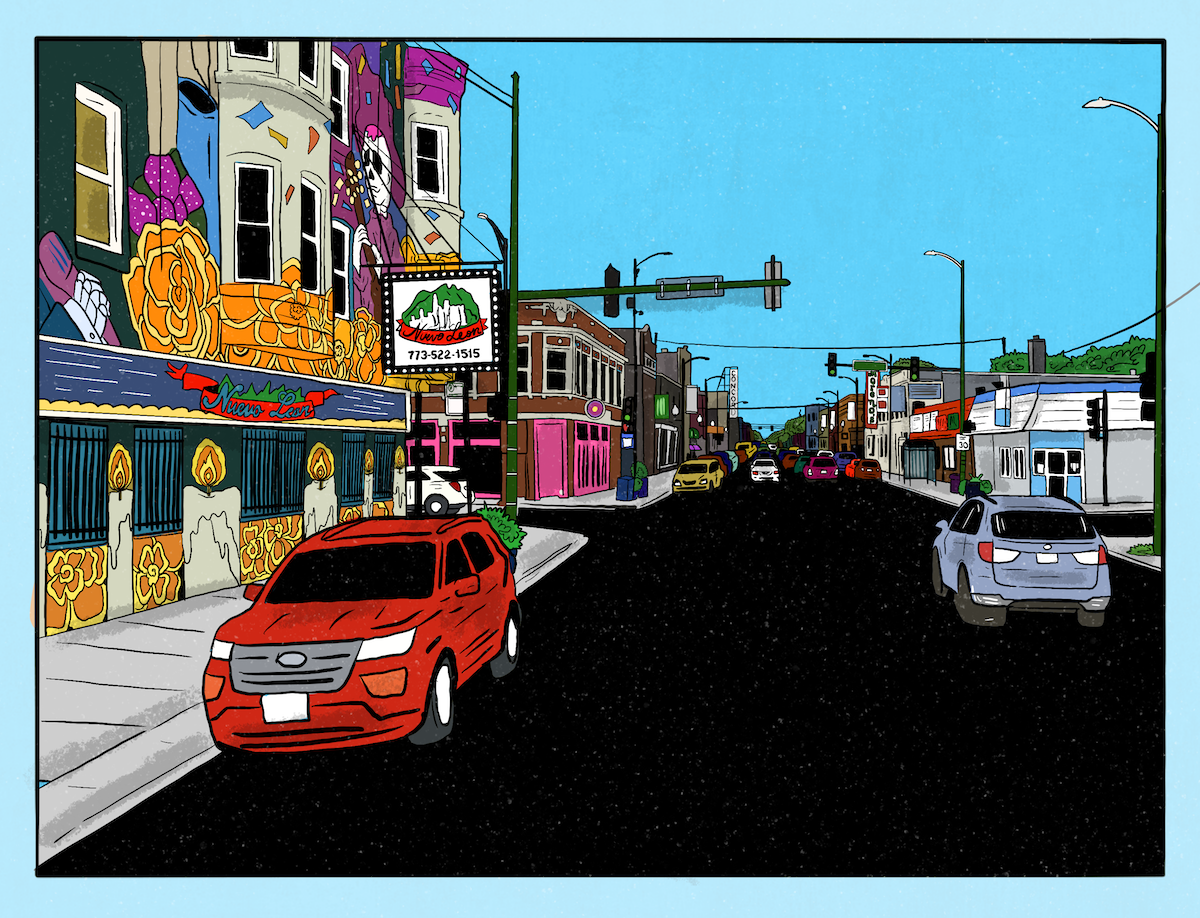
How much change can be discerned from looking at one spot, over time? And what do these small changes add up to?
With shout outs to gifted local street photographers and illustrators we frequently publish—including Paul Goyette, Paul Hoeck, Marc Monaghan, and now Jaz Rodriguez—“street corner photos” can serve as timestamps, as art, as harbingers. They can provide answers, if you look closely enough.
One intrepid photographer, Camilo José Vergara, has set the standard for patient, engaged watching and documentation, over time.
Vergara is a Chilean-born, New York-based writer, photographer, and documentarian, who’s applied techniques of “rephotography” to a series of American cities, including Chicago. His signal intervention has been to photograph the same buildings and neighborhoods from the same vantage points at regular intervals over many years. He is especially interested in built environments, including ruins, housing projects, prison and drug treatment facilities, transportation and industrial corridors, and areas undergoing gentrification.
He intends his work to be interconnected, rather than viewed as singular separate images.
“My work asks basic questions: what was this place in the past, who uses it now, and what are its current prospects? I uncover patterns shaping the nation’s poorest and most segregated postindustrial cities,” Vergara said.
Vergara wrote in a personal statement on the Library of Congress website: “Along the way I became a historically conscious documentarian, an archivist of decline, a photographer of walls, buildings and city blocks.
“Bricks, signs, trees and sidewalks have spoken to me the most truthfully and eloquently about urban reality. For me, a people’s past, including their accomplishments, aspirations and failures, are reflected less in the faces, postures and clothing of those who live in these neighborhoods than in the material, built environment in which they move and that they modify over time.”
Englewood
Decades of disinvestment by the city, withdrawal of resources (including the closure of the 63rd Street Station in 1994), school closures, and redlining continue to shape living conditions for Englewood residents. This corner, at 63rd and Racine, has suffered from vacancy, damage, and disinvestment for many years.
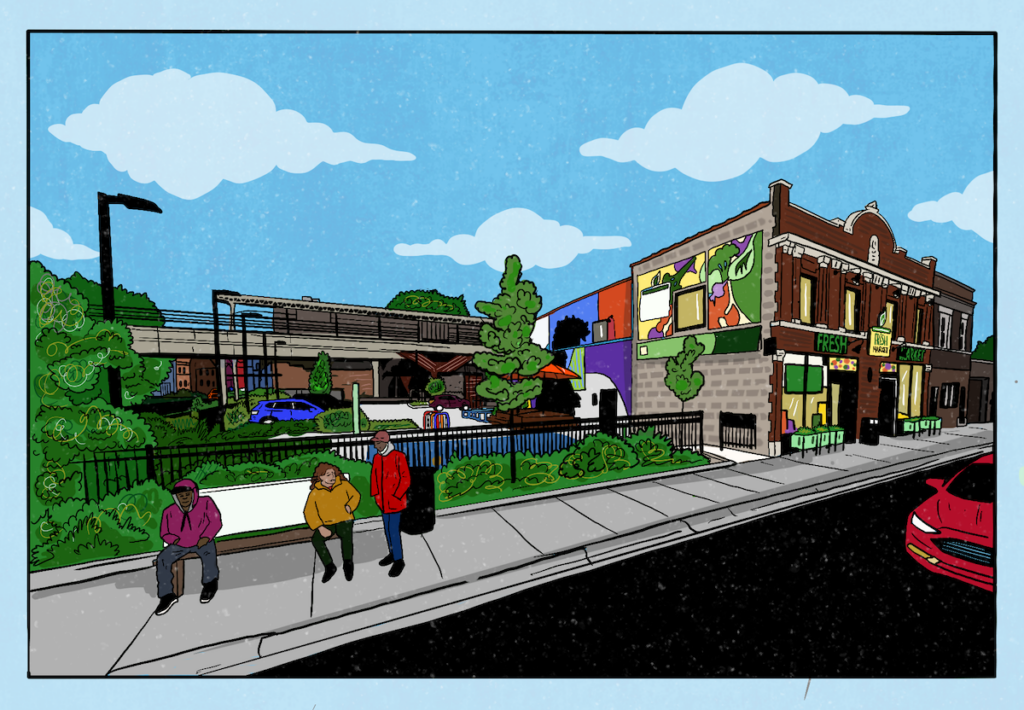
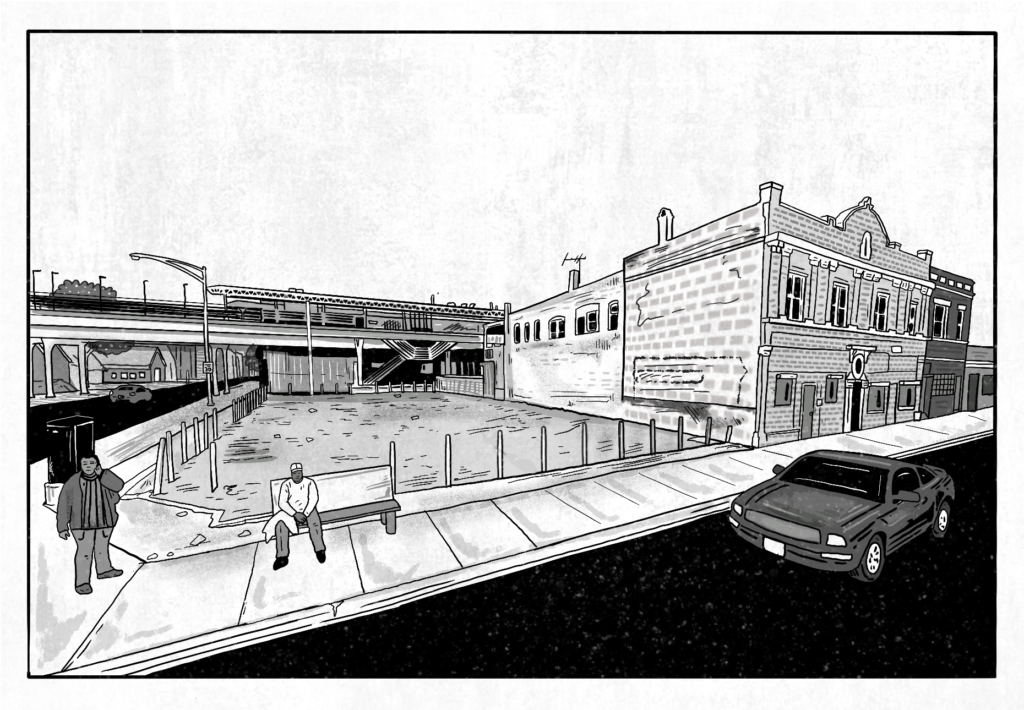
Starting in 2020, the Go Green on Racine Initiative—a collaboration between the Inner-City Muslim Action Network (IMAN), Teamwork Englewood, Resident Association of Greater Englewood (RAGE), and E.G. Woode, a development firm supporting South Side entrepreneurs—began renovating the corner. Their activism has yielded some real benefits. In 2022, they opened the Go Green Community Fresh Market, and in 2024, they opened a connected public art/event space called Go Green Griot Plaza, all within the shade of the still closed CTA station.
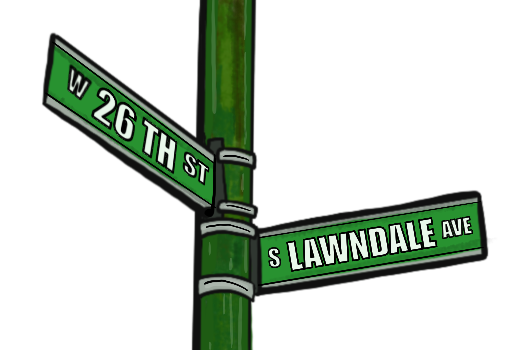
Little Village
Community advocacy made the difference at this corner in Little Village, the site of El Milagro, the beloved tortilla factory headquarters and taqueria founded by Raul Lopez in 1950. In 2021, tortilla factory workers went public with their grievances and organized for improved working conditions, better wages, PPE and reported various labor violations to the NRLB. By 2023, they reached a settlement with the company.
“The organizing of the workers led to somewhere around $2.2 million in wage increases; some other violations of the law were corrected,” Arise Chicago strategic organizer Jorge Mújic said at the time. “The workers now feel a lot more encouraged to fight against those adverse working conditions.”
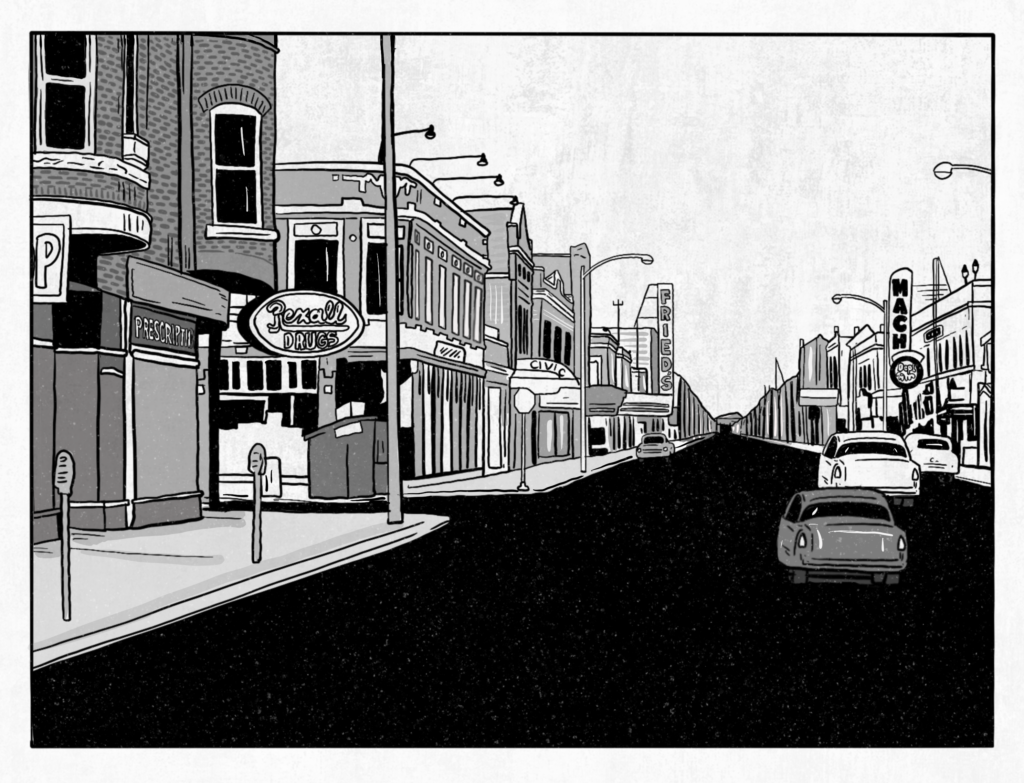
Nuevo Leon Restaurant is also located on 26th Street, along with many local businesses. Opened in 1962 on 18th Street, this location burned down in a 2015 fire. The new restaurant, housed in a former Rexall Drugs Store building from the 1950s, is a community institution, and the oldest family restaurant in Little Village. The stunning Day of the Dead mural by Elizabeth Reyes was added in 2019.
Jill Petty is Editor-in-Chief of South Side Weekly.
Mel Dempsey is art director and layout editor of South Side Weekly.
Jaz Rodriguez is a Chicago-based artist who creates vibrant mixed-media works and illustrations. She is known for her nostalgic and colorful love letters to the city’s landmarks and pop culture.