
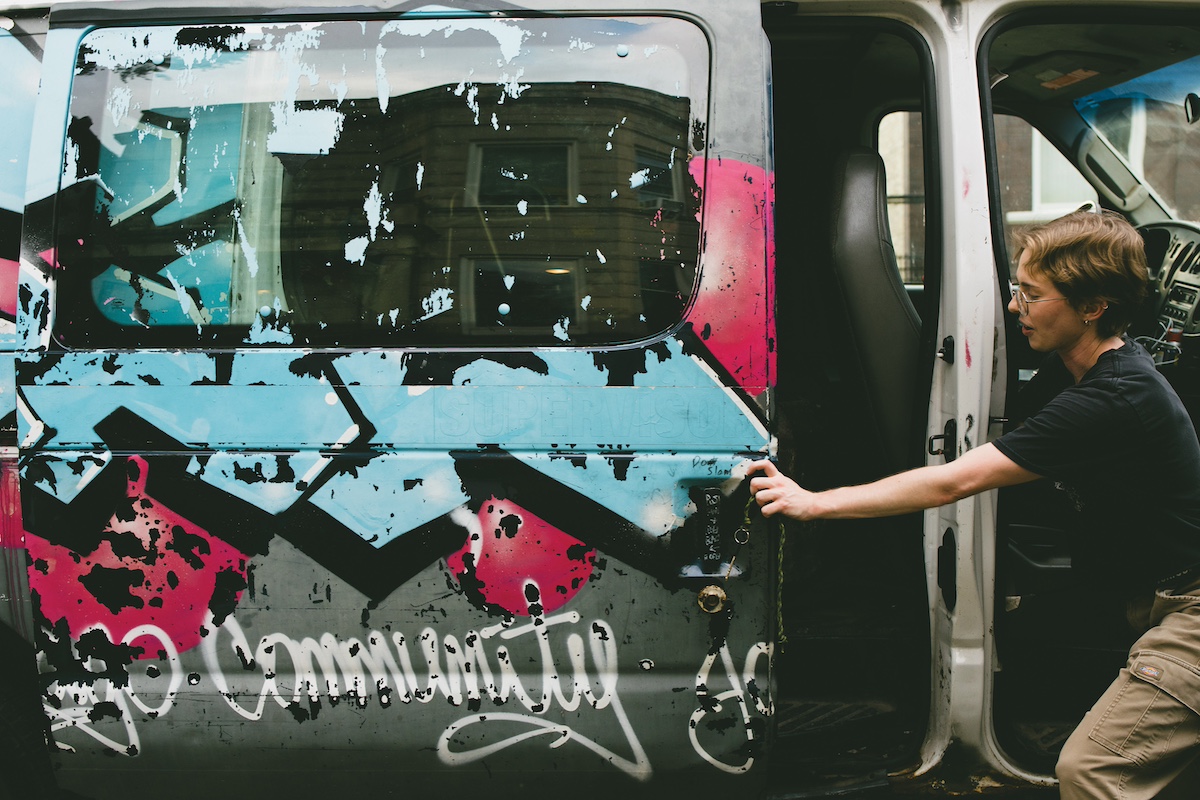
As the sun sets over Cook County Jail, on most nights, a spray-painted purple van pulls up and parks across the street. Moments later, several people get out of their cars, taking out a smattering of tables, chairs, clothing, snacks, water, Gatorade, and a fire pit, which they set up on the gravel outside the main entrance to the jail. These people are part of Chicago Community Jail Support (CCJS), a “daily, on the ground, grassroots mutual aid project run completely by volunteers.”
Many people leaving jail find themselves recovering from a traumatic experience without their phones, wallets, or other personal belongings, and often they do not even have a ride home late at night, when most releases occur.
CCJS’s mission is to assist anyone being freed from Cook County Jail, their loved ones, and the surrounding community. The volunteer organization focuses on providing direct aid that meets the immediate needs of those being released. This includes phone calls, warm clothing, snacks, drinks, safe transportation home, and emergency housing.
CCJS began during the George Floyd uprisings of 2020, when arrested activists found themselves coming out of jail in bad shape and in need of support. Organizers set up 24-hour shifts to help people at each holding facility in Chicago. These tactics drew on a long history of jail support for protesteors, with prominent campaigns for Martin Luther King Jr., Angela Davis, and Huey P. Newton, among others, galvanizing people to wait outside jails and police stations after wrongful arrests.
Over time, CCJS volunteers saw the need to extend that support not only to protestoers, but to all affected by the carceral system. Shift times adjusted to focus on when most people got out, 6pm–12am, and focused on the main jail at 27th and California, where everyone held more than 24 hours ended up.
In some ways, the organization’s work mirrors that of the Kolbe House Jail Ministry in Chicago, founded by “hippie-like” priest Lawrence Craig in 1983, according to Mark McCombs, Kolbe House’s current executive director. During its tenure, Kolbe House has served people in and out of the jail through programming on the inside and, reentry services, and by providing material support like clothing.
While both kinds of work are important, CCJS differs from Kolbe House in its explicitly abolitionist orientation. And in contrast to historical efforts of supporting jailed protesters, CCJS shows up outside the jail to help anybody and everybody being released late at night get home safe and start reintegrating.
Of course, for most people, family members and loved ones provide the lion’s share of support, as has long been the case. But the times at which people are actually released from jail are unpredictable. Sometimes people don’t get out until 5am the morning after their scheduled releases, limiting what support families can reasonably provide.
To respond to these late-night releases, CCJS started to run a late night “third shift” in the winter of 2026, with some volunteers showing up at midnight and staying until 5am to -6am the next day. “This work makes a life or death difference for some of the people getting out, especially in the winter,” said one frequent third shift volunteer. People getting out wait by a fire on frigid nights, with firewood crowdsourced and crowdfunded. Volunteers offer rides to get people home, and when there aren’t enough drivers, donor funds pay for rideshares and, when needed, overnight hotel stays. It makes a difference—often people getting out say that seeing the people congregated around the tent provides hope for what’s on the other side.
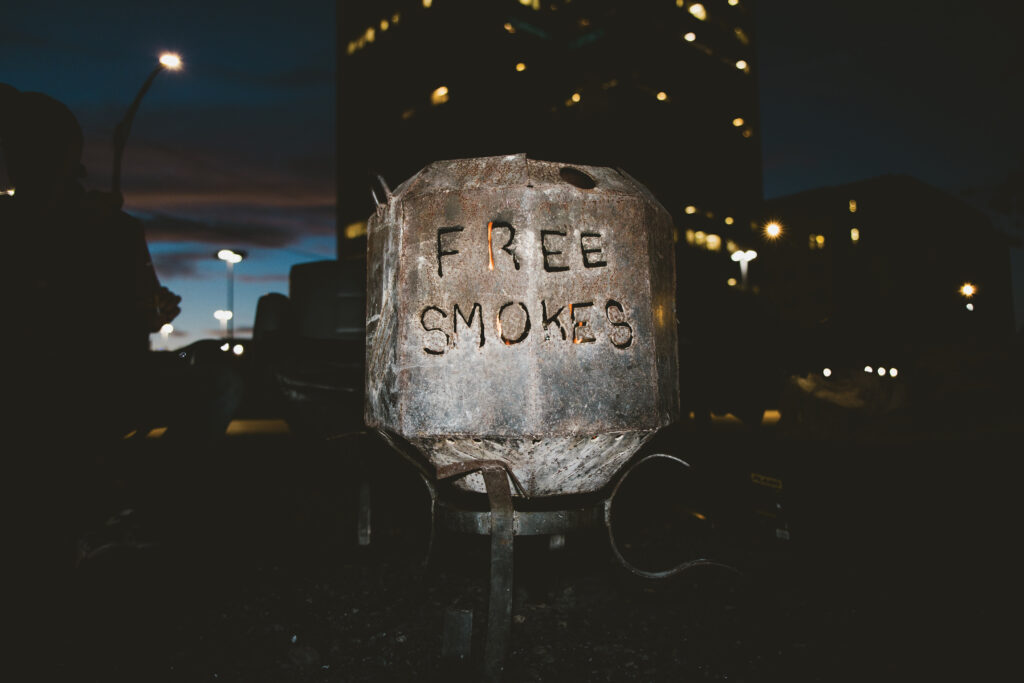
People sit around a metal firepit with the words “Free Smokes” carved out of it in front of the Criminal Court Building aton 27th and& California on September 9, 2026. Credit: Caeli Kean for South Side Weekly. 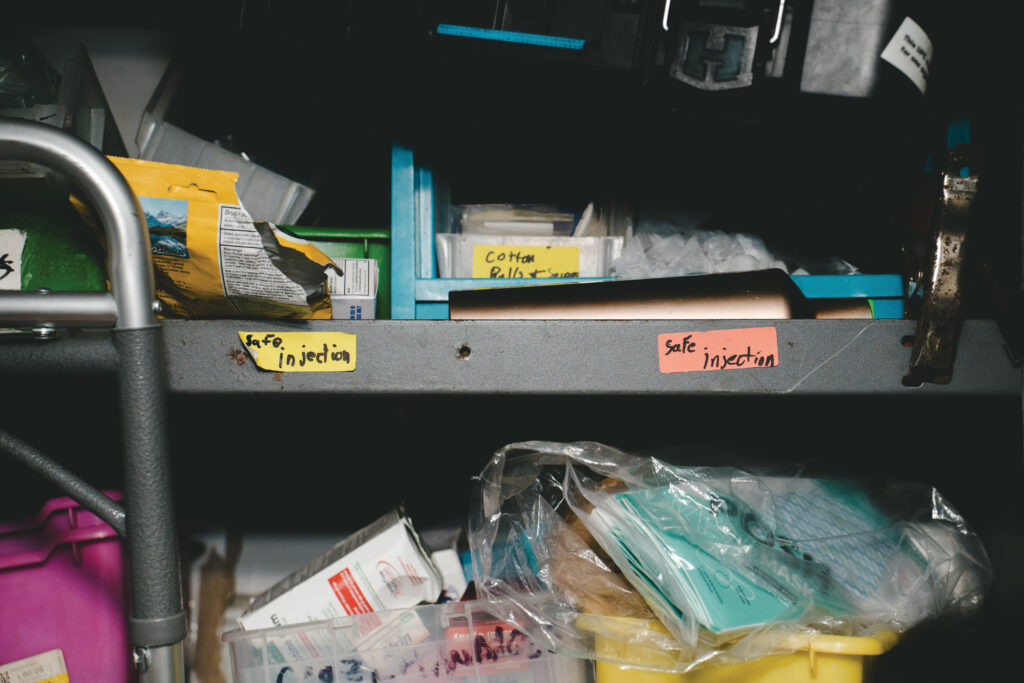
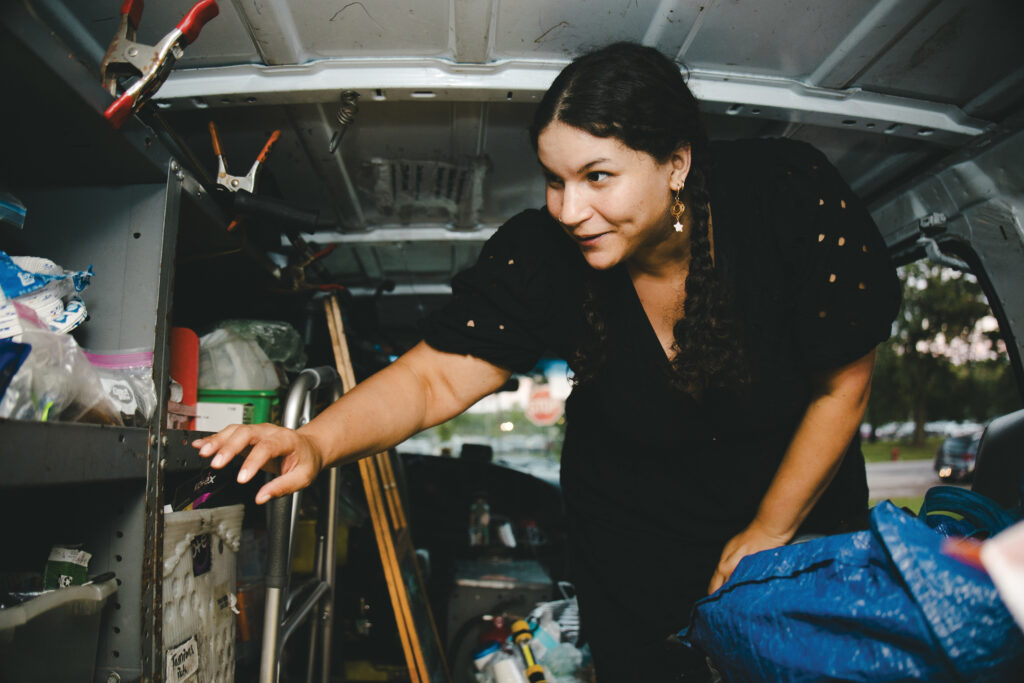
Shelves inside the Chicago Community Jail Support van stocked with resources and labled “safe injection.” Credit: Caeli Kean for South Side Weekly. 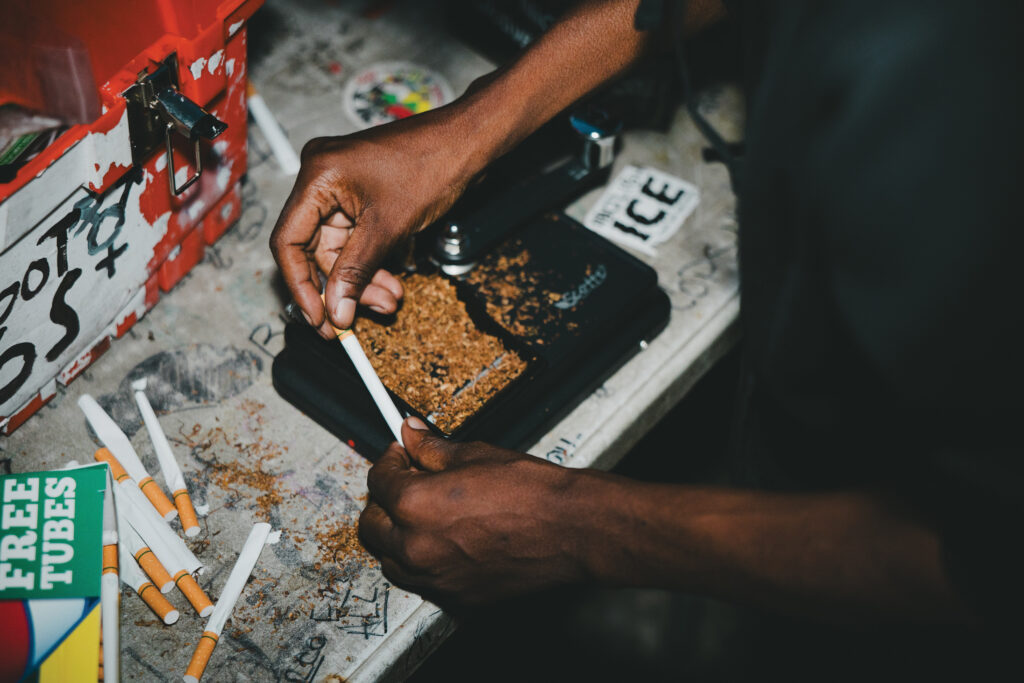
A Chicago Community Jail Support volunteer rolls a cigarette to hand out to folks coming by their table. Credit: Caeli Kean for South Side Weekly. 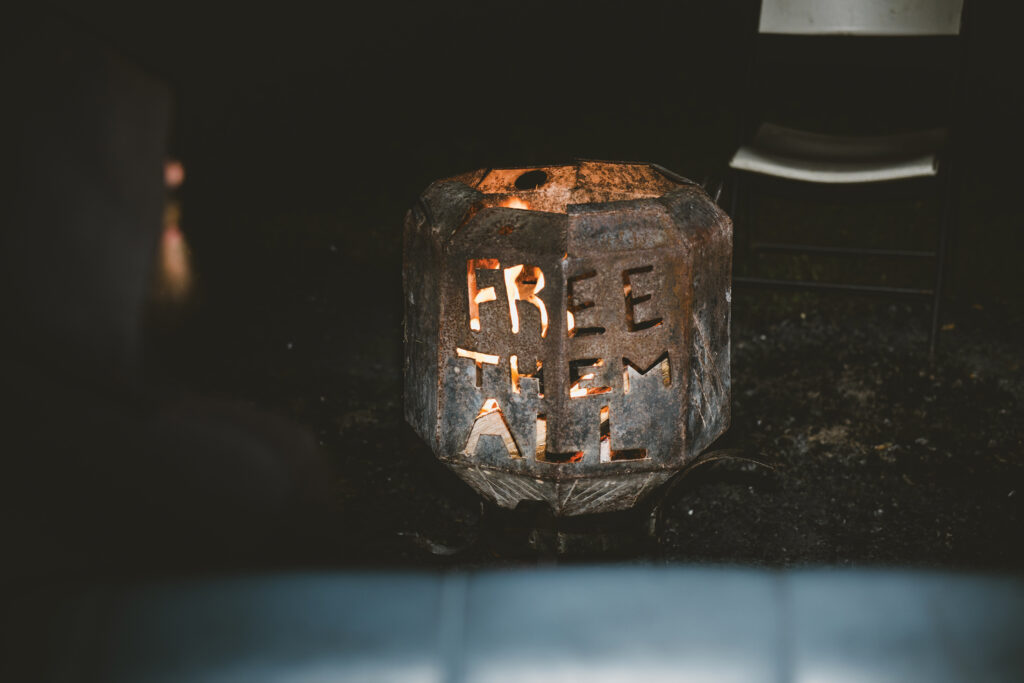
A man sits by a fire in a metal firepit with the words “Free them All” carved out of it in front of the Criminal Court Building on 27th & California. Credit: Caeli Kean for South Side Weekly.
Funding the later nights has been a challenge, but volunteers are determined to keep showing up for their neighbors. Another anonymous volunteer reflected: “After years of working with CCJS, it becomes clear: we’re all one bad day or one argument with a neighbor away from ending up in this system. We want to make sure no one ends up in that situation alone—but we also want to get the word out, because this system isn’t working. Why let people out so late? How is that a good use of public resources?”
Chicago Community Jail Support. Donate or get involved at chicago-community-jail-support.webnode.page. A group of CCJS volunteers is building a campaign to end late-night releases. Email Chicommunityjailsup@gmail.com to find out how to support this effort.
Jonathan ‘‘Jo’’ Sabath has been a volunteer with Chicago Community Jail Support since 2023. Outside of his work with CCJS, he works and volunteers to steward Nature Preserves throughout Northeast Illinois.