
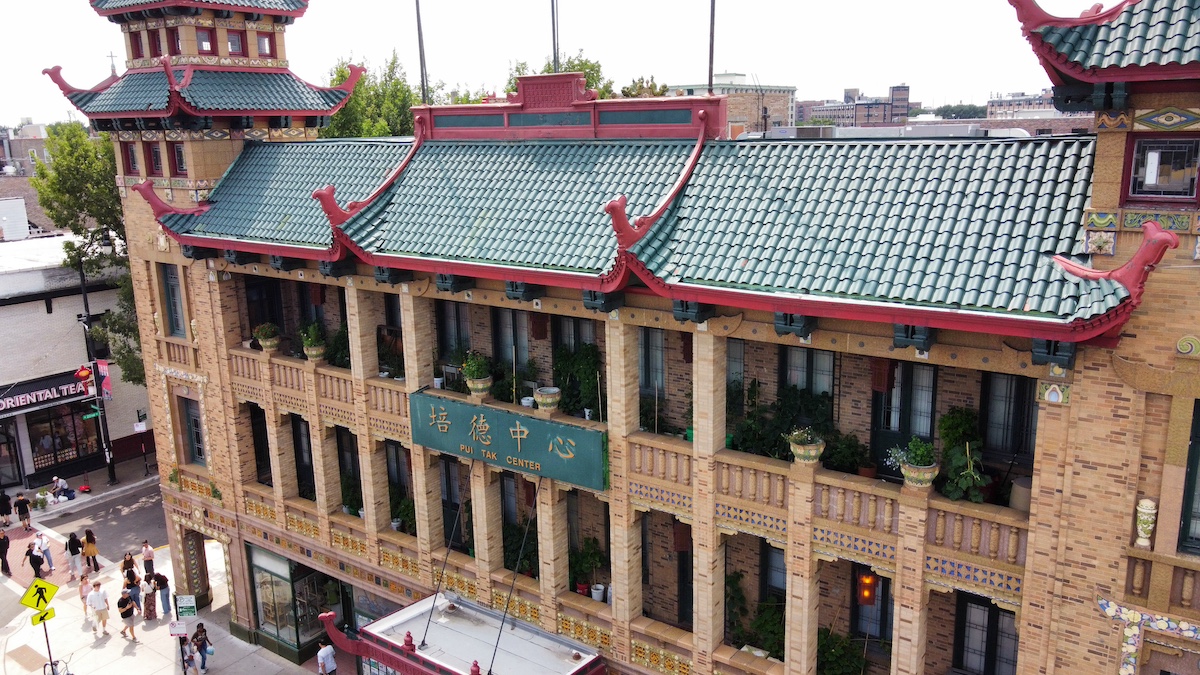
The Pui Tak Center building is easily one of the most recognizable landmarks in Chinatown. Standing under the neighborhood’s famous gateway, which displays the words “天下为公” (The world belongs to the people), the structure is crowned with pagoda-style towers and features vibrant terra-cotta relief and clay tile roofs that blend Eastern motifs with Western design.
“It’s probably the most photographed building in Chinatown,” said Pui Tak Center executive director David Wu.
To passing tourists, the building remains a majestic, mysterious fixture of the neighborhood. But for newly arrived immigrants, stepping through its doors feels like coming home. For decades, the building has served as a cornerstone of immigrant life in Chinatown.
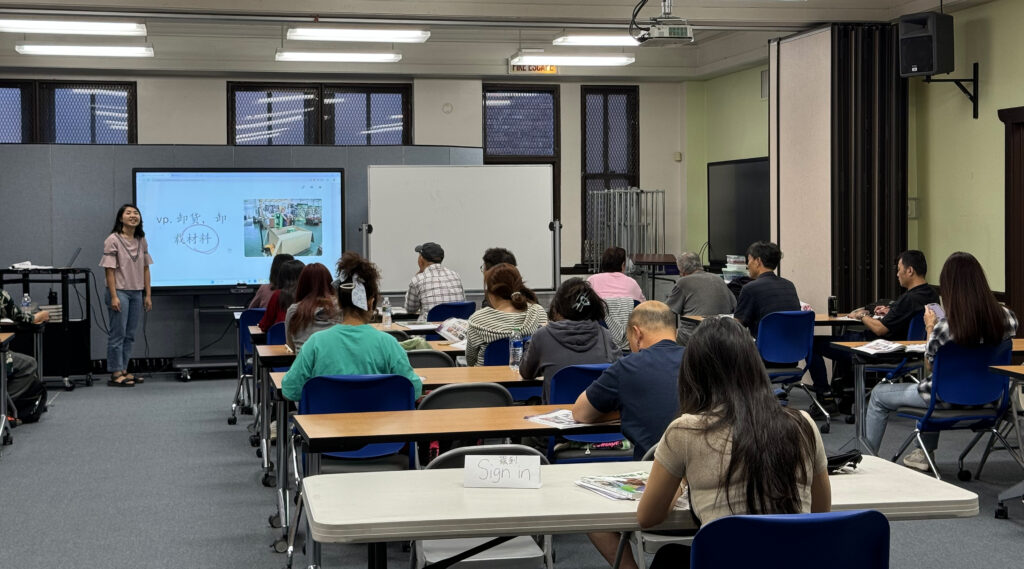
Every Monday through Thursday, 46-year-old Angel Huang arrives at Pui Tak Center for her morning English class. An experienced massage therapist who moved to Chicago three years ago, she signed up as soon as she received her work authorization.
“The teachers are warm and welcoming, just like family,” Huang said.
Beyond learning the language, she found community—classmates visit each other to exchange gardening tips and attend church together on Sundays.
Last year, Pui Tak’s adult ESL program served roughly 800 immigrant students.
The classes are built around the rhythms of immigrant life. Morning sessions run from 8am to 10am for workers commuting to restaurant jobs in distant suburbs, while evening classes remain online so working mothers can study while caring for their children.
Beyond language classes, new arrivals turn to Pui Tak Center to apply for public benefits, receive mental health counseling, access resources for families of children with disabilities, attend community meetings, and connect with job opportunities.
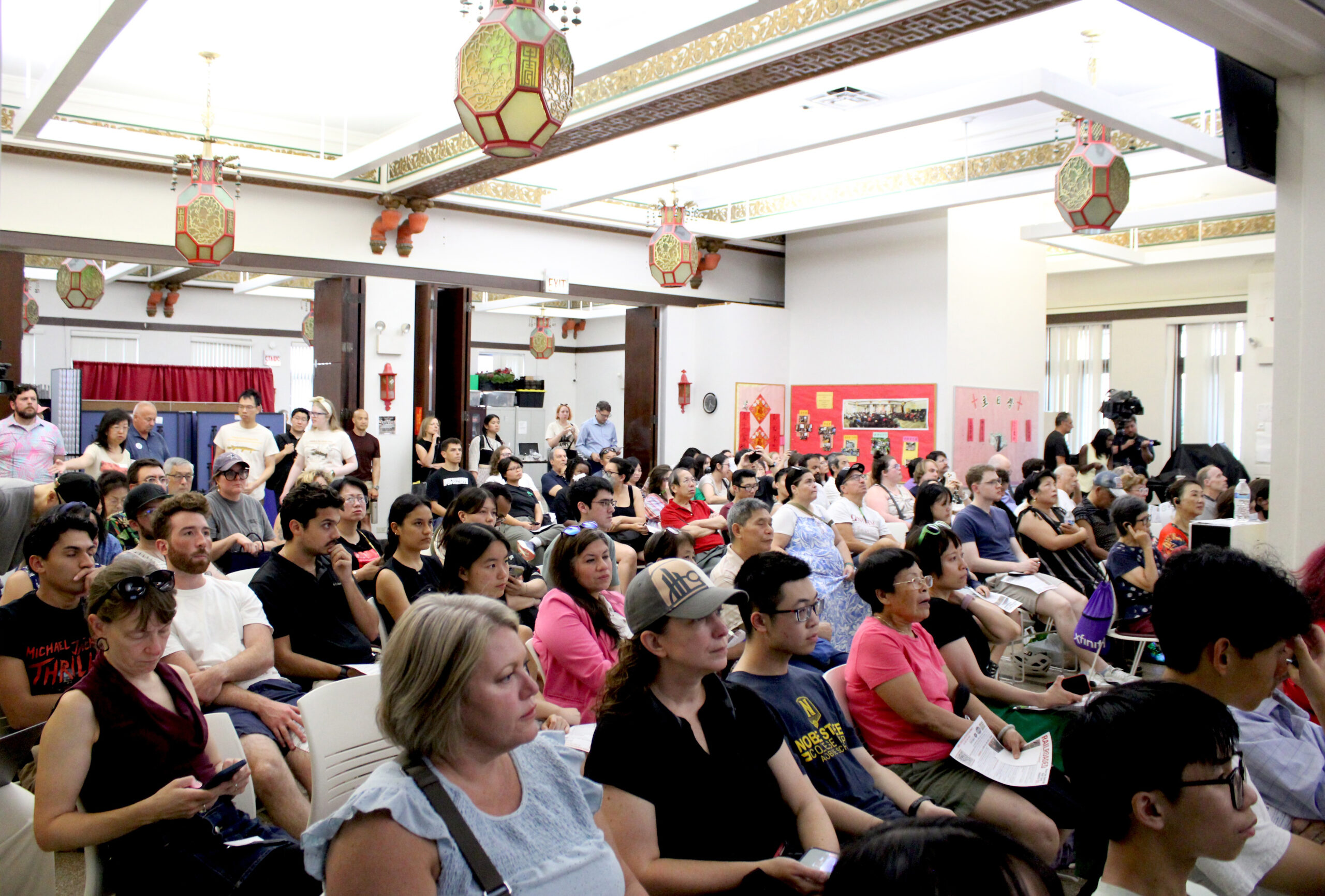
On September 2, a community information session regarding Amtrak’s new construction project was held on the third floor of the Pui Tak Center building. Credit: Yonggang Xiao 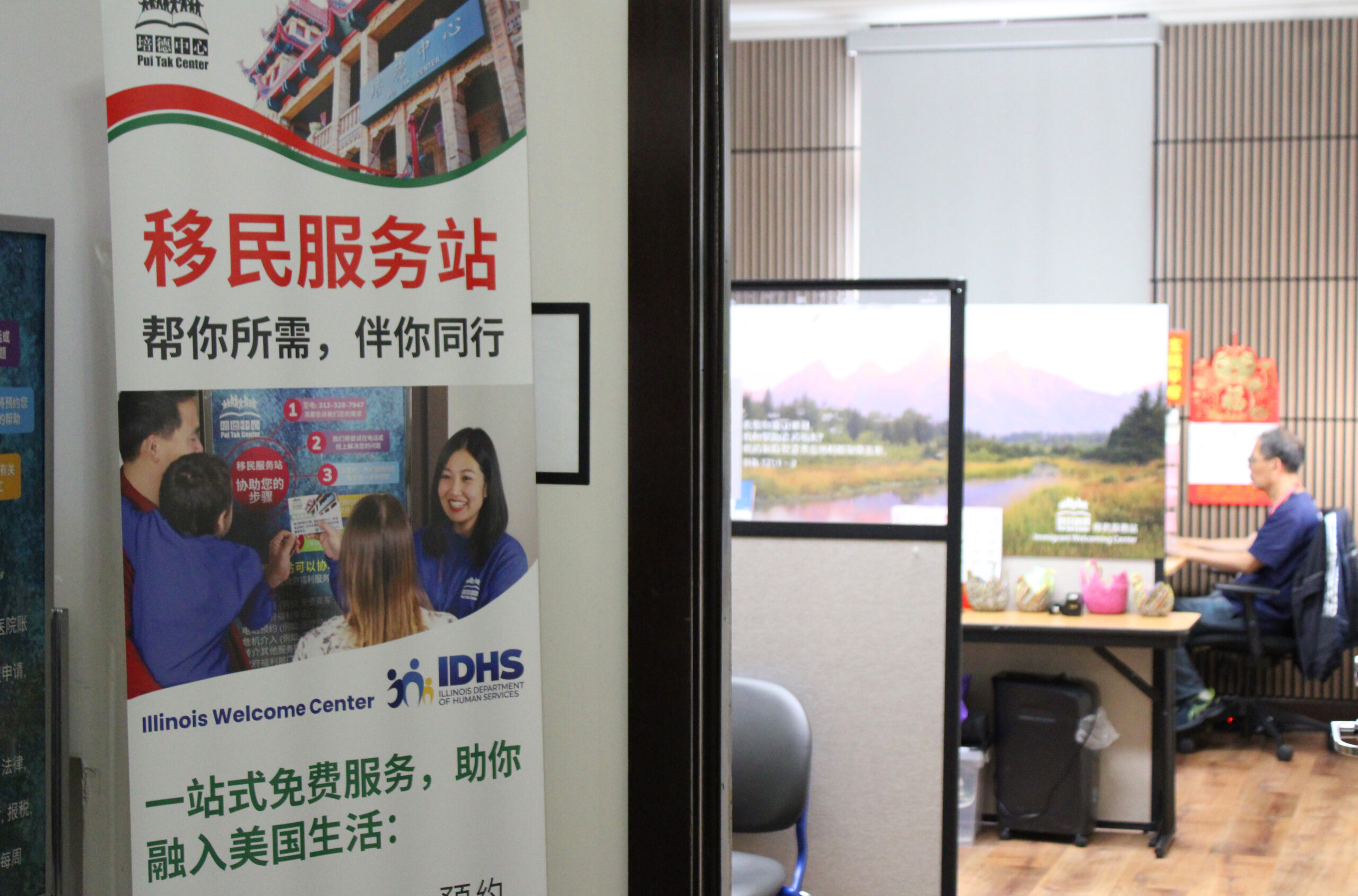
A glimpse into Pui Tak Center’s Immigrant Welcoming Center. According to David Wu, it served approximately 1,300 people over the past year. Credit: Yonggang Xiao
Wu noted that Pui Tak Center assisted more than 3,000 clients over the past year.
For nearly a century, the Pui Tak Center building’s history has mirrored that of the community itself. In the 1910s, facing discriminatory evictions and displacement downtown, Chicago’s Chinese community relocated south from Clark and Van Buren streets to Wentworth Avenue. In 1928, the On Leong Merchants Association built this grand headquarters to anchor the new enclave.
Designed by two Norwegian-American architects using a German monograph on Chinese architecture, it became an architectural marvel. According to the Commission on Chicago Landmarks, the building innovatively integrated a typical Chicago union hall with Chinese stylistic traditions, using unique terra-cotta details that articulated “an uncommon architectural vocabulary.” Early on, it housed language classrooms and even an informal community court on the third floor, earning the moniker “Chinatown’s City Hall.”
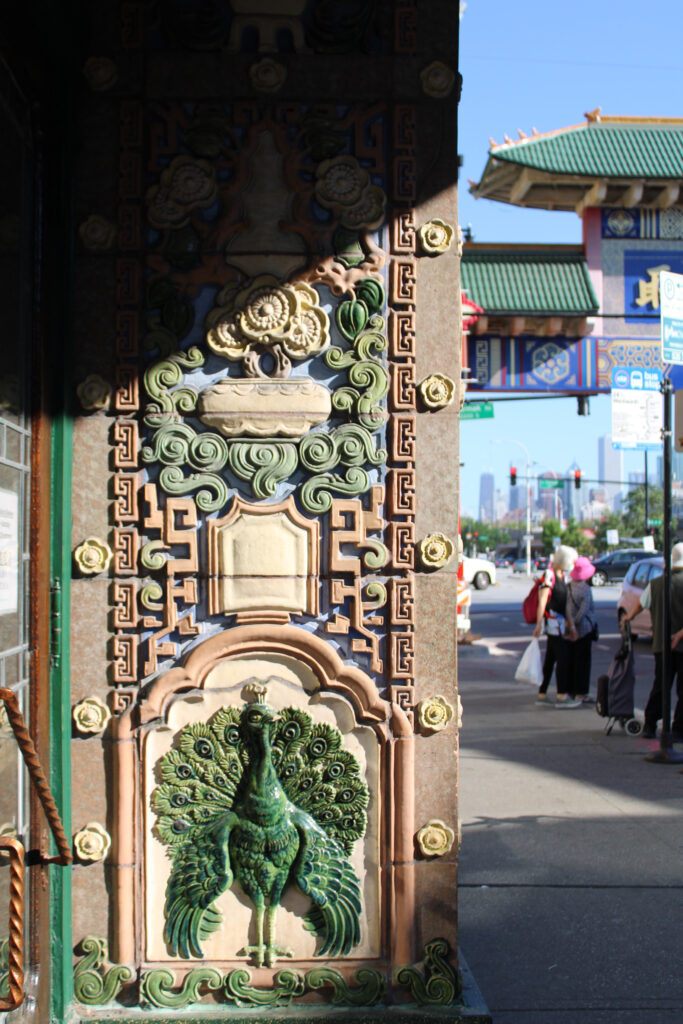
Photo by Yonggang Xiao Credit: Yonggang Xiao
By the 1970s, however, as modern nonprofit service agencies such as the Chinese American Service League emerged, the association’s civic functions faded, and the premises were gradually overtaken by illicit gambling. The building was raided by federal authorities in 1988 and sat vacant for several years. In 1993, the Chinese Christian Union Church purchased the site, and it established the Pui Tak Center nonprofit in 1994 and reopened the building in 1995, restoring the building’s original mission of community service.
For ESL transition coordinator Jonathan Meter, who previously taught English at a Chinese university, working here offers daily meaning. “It feels like working in a castle,” Meter said. He connects clients with job opportunities, helps them prepare for the state’s Chinese-language nail technician exam, and tracks their placement progress.
The moments of gratitude make the work rewarding. One student hired by the Hyatt returned to thank him with a handcrafted gift, and another sent a heartfelt note to share her new job offer as a special education classroom assistant, adding that his support “made a world of difference.” Meter keeps the printed email on his desk.
Looking across the broader neighborhood, Chinatown has transformed dramatically over the last thirty years. According to Wu, when he first began directing the center in the 1990s, the local Chinese population was around 12,000. By the 2020 census, it had expanded to nearly 35,000, sprawling outward through Bridgeport and all the way into Brighton Park.
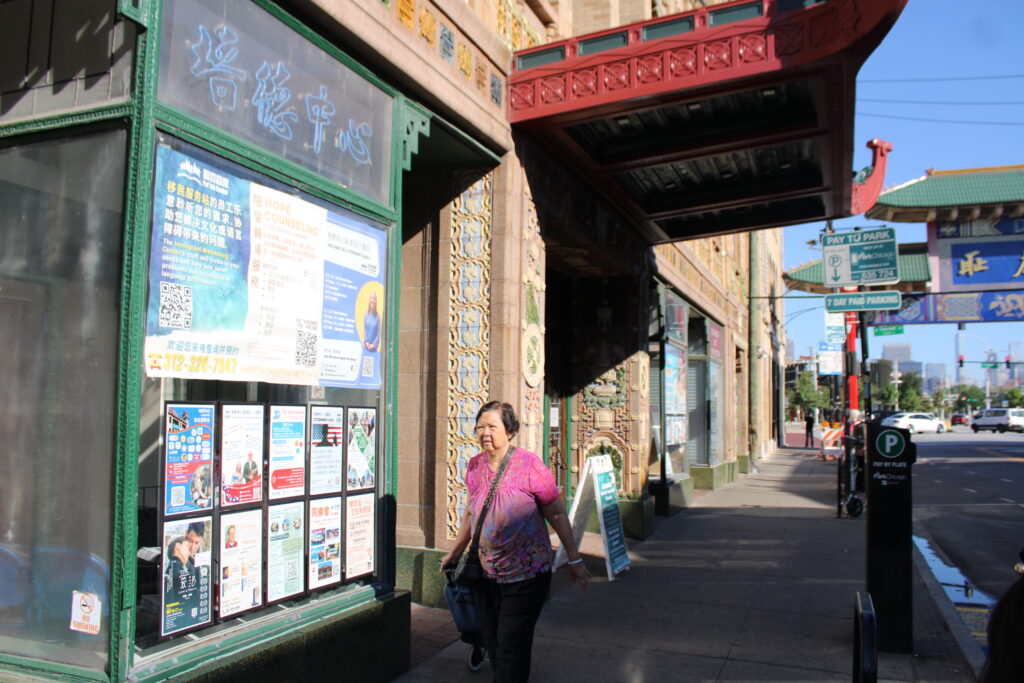
Yet, as Wu noted, the mission remains constant: “We still see ourselves as trying to care for the newest of the immigrants and helping them in their journey, their long journey, to be reestablished here in Chicago.”
To preserve the aging landmark, Pui Tak Center has raised hundreds of thousands of dollars for terra-cotta restoration and masonry repairs. In September 2025, the building was officially listed on the National Register of Historic Places, becoming Chinatown’s first nationally designated historic site, in a testament to both its architectural significance and its central role in the history of Chinese immigration in Chicago.
On October 17 this year, the center will participate in Open House Chicago for the first time since 2022, once again opening its doors to the public.
Pui Tak Center, 2216 S. Wentworth Ave. Monday–Friday, 8am–7pm; Saturday, 9:30am–12:30pm. (312) 328-1188. puitak.org
Yonggang Xiao is a community organizer with the Coalition for a Better Chinese American Community. He founded a Chinese community newspaper called Chinatown Spotlight. Before joining CBCAC, he worked as a journalist and editor in China.