
Words have always held incredible power and meaning for me. As a child, books were entryways into narrative building; my family will tell you that my first true love in this world was reading. For me, nothing compared to being invited into different worlds, exploring different cities, conjuring every new super power, and using texts to imagine the unimaginable.
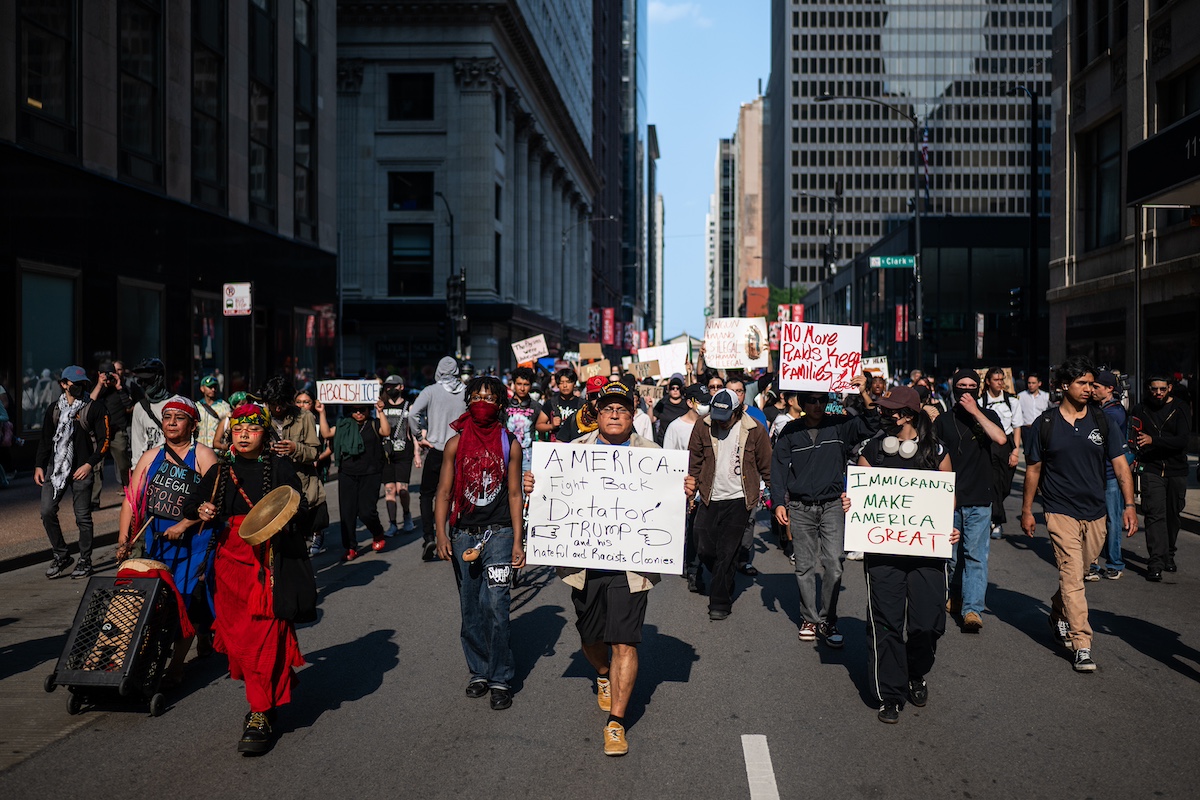
Since Trump’s second inauguration—and more so during Operation Midway Blitz—I’ve been battling how stories are told about immigrants, and at odds with the dominant storytellers of this time. Along with other neighborhoods—on the city’s Northwest and Southeast Sides, South Shore, and the West Suburbs—we have been among the most targeted and directly impacted.
But for much of the past 21 months, stories have been told about immigration enforcement in Chicago, largely without the critical perspectives of Southwest Siders.
Just as federal agents occupied the city last fall, news reporters from every which way came and “took over.” For much of the fall, Chicago was at the center of a lot of national and local media coverage, frequently receiving breathless, shallow attention. Oftentimes, it felt like the mainstream press was looking for pity stories, narratives that emphasized heartache, despair, and tragedy to frame the fight against ICE.
Those are not the stories I seek to tell.
I look at my community and I see strength. I see resilience in many forms. I see joy. I see people power. I see love. I see care.
Operation Midway Blitz took many things from us—they will not take our stories.
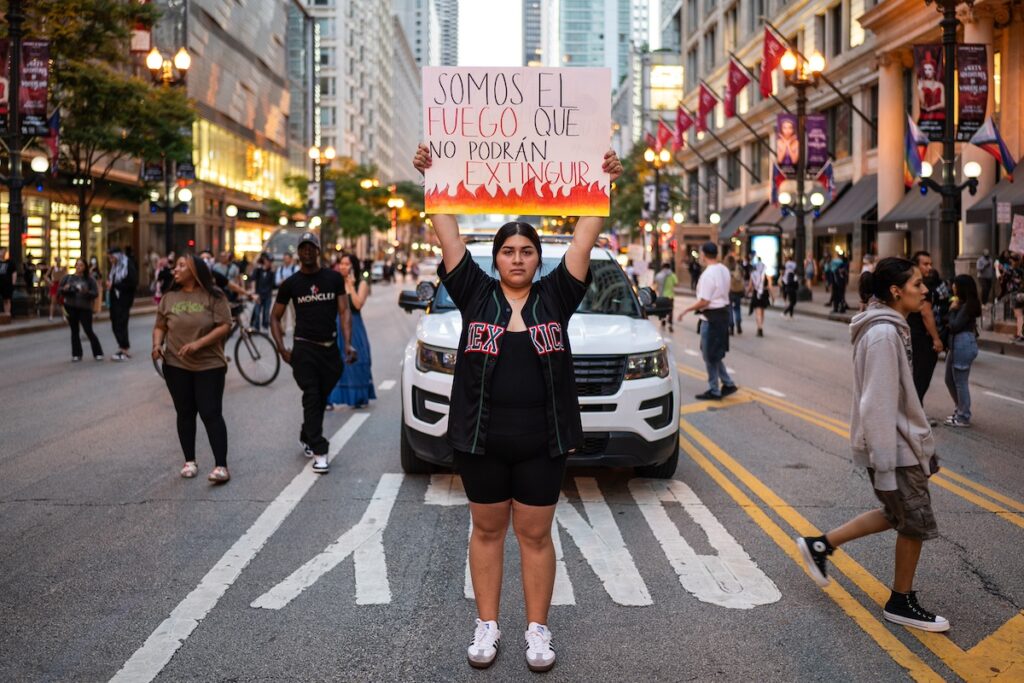
From the beginning of this escalation, initiated as Trump returned for a second term, his administration has labeled our people as “the worst of the worst,” to prompt and justify terror in our communities. They’ve maintained this fiction ever since, even though we know none of it is true.
For example, data compiled by the Transactional Records Access Clearinghouse (TRAC) reveals that approximately 70% of people currently held in U.S. Immigration and Customs Enforcement (ICE) detention facilities have no criminal convictions.
And according to November 2025 reporting on NPR, Department of Justice (DOJ) records revealed that only 16 out of 614 individuals (2.6%) detained during immigration sweeps in the Chicago area—primarily under Operation Midway Blitz—had recorded criminal histories.
In these times, even the term “criminal record” is deceiving; it can mean something as benign as a “traffic offense.” Silverio Villegas González is an example.
On September 12, 2025, Villegas González dropped off his sons at school—an everyday occurrence for this father, and many parents—when he was pulled over by federal immigration agents in suburban Franklin Park, Illinois, 15 miles northwest of Chicago. When he attempted to pull away from this traffic stop, agents senselessly shot and killed him. One year later, no information about this shooting, or its supposed investigation, has been released by the government. No one has been held responsible for his death.
This is a story we’ve become all too familiar with.
Silverio Villegas González. Renee Good. Alex Pretti. Keith Porter Jr. These people were killed by federal agents on the streets of Chicago, Minneapolis, and Los Angeles. And the more than 30 deaths of those in,or within 30 days of being released from, detention in 2026. All at the hands of an agency operating within the Department of Homeland Security.
Before the escalation by ICE and the Department of Homeland Security had begun in Chicago, I recall watching the news of the federal military being deployed in Los Angeles in June 2025. My phone was overwhelmed by videos from car wash workers taken at their employment sites, protests at federal buildings, and a community that became militarized, over the span of two months, by thousands of National Guard soldiers. I wondered, what will we do if Trump launches armed forces at our city next? Are we prepared?
Within weeks, these questions in my mind became the realities on the ground. The Illinois National Guard was not unleashed onto Chicago, but the installation of hundreds of ICE and Customs and Border Patrol officers mirrored everything—the violence, assaults, and abductions—we’d all seen earlier, in Los Angeles.
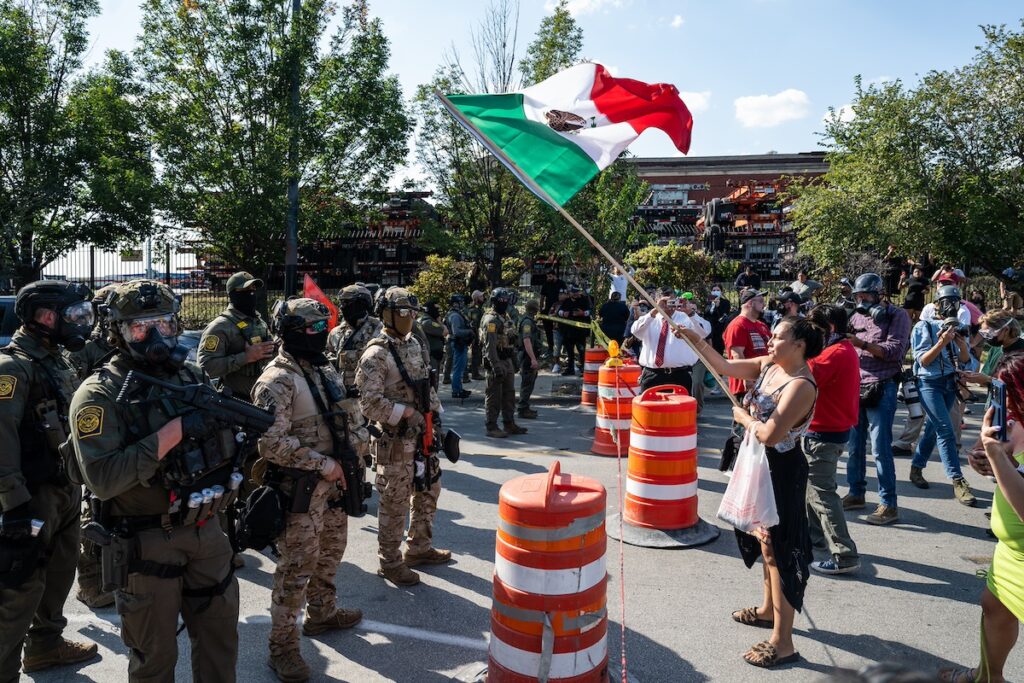
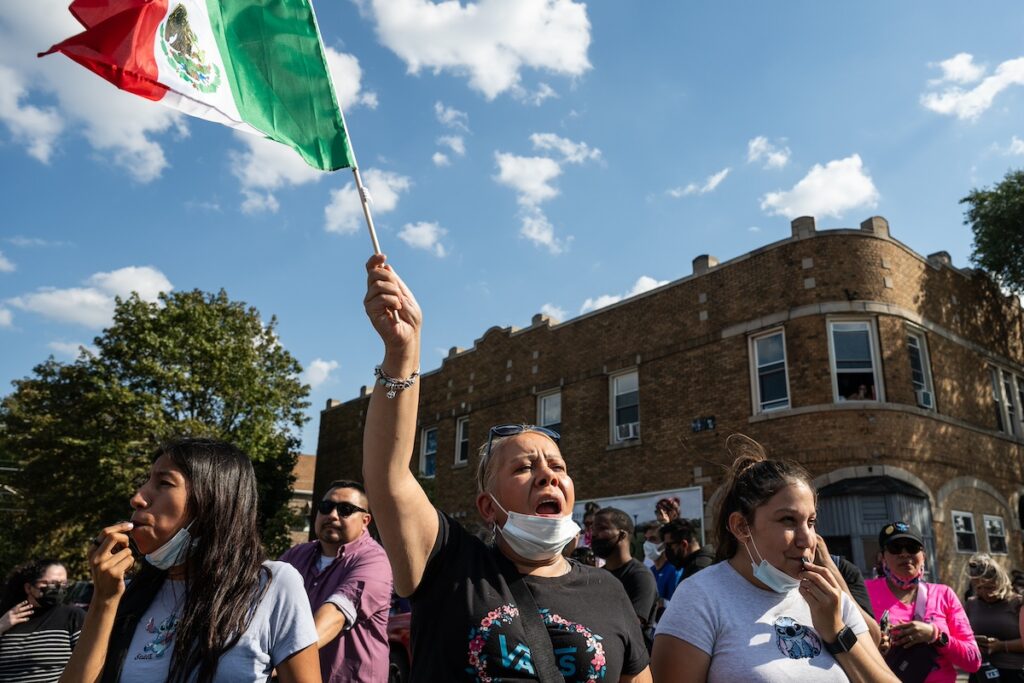
October marks one year since the shooting of Marimar Martinez in Brighton Park—my home. On October 4, the anniversary, I was especially emotional; I was filled with anxiety and stress. My thoughts flashed back to being in a crowd of protestors that day, with many assault rifles pointed at or near us. I remember agents recklessly driving cars, speeding through groups of people on Kedzie Ave. I can see agents with hands on tear gas canisters. Clouds of smoke filling in the air. Large flags waving. And I can feel, again, overwhelming fear for my friends, family, myself and my neighbors. By October 4, 2025, we had already endured weeks of kidnappings. Those days felt heavy, and they continue to feel heavy.
As I begin to process what has happened this past year, many questions remain in my head. But one stands out: what is our threshold for grief? How much we can hold as individuals, as a community, and as a society?
We feel grief for the senseless deaths of individuals, for all intentional harm, but also for the loss of autonomy. For things that were once ours. I sit in my room staring at artwork by Olly Costello on my wall; it reads: “grief and love are sisters.” It’s a portion of a quote by Francis Weller, a retired psychotherapist and author, from his book The Wild Edge of Sorrow: Rituals of Renewal and the Sacred Work of Grief. In full, it reads, “Grief and love are sisters, woven together from the beginning. Their kinship reminds us that there is no love that does not contain loss and no loss that is not a reminder of the love we carry for what we once held close.”
Operation Midway Blitz claimed more than people’s lives. It claimed a sense of safety, of community, of home. On some days, my home no longer looks like my home. How can it, when my corner stores, shops, parks, became abduction site after abduction site after abduction site?
When I think of grief, I think of families—members across generations—now worried about setting foot outside their doors. What horrific consequences might that bring? What does it mean to lose your ability to travel?
I think of the parks where children, like my seven-year-old nieces, love to play. Last year, when Customs and Border Patrol drove around in large caravans, many soccer leagues at Marquette Park, Gage Park, and other locations cancelled their games. What did it mean to them to no longer have that space?
The Southwest Rapid Response Team, who I volunteer with, works diligently to follow up with families and loved ones post-abduction. There are some people we have not been able to reach. I wonder where every person who was taken has ended up—have they returned to Chicago? Were they deported to other countries? Did they sign their self-deportations? What about their families? Were they uprooted, yet again?
For many Latino families, October 27th through November 2nd marks a celebration known as Día de los Muertos. Families decorate altars in their homes with cempasúchil, salt, water, pan de muerto, papel picado, and photographs of their loved ones. It’s a time of honor and remember those who are no longer with us. I think of every family putting up new and old photos and the favorite foods of their people. According to tradition and to belief, their spirits make their way back and visit. A small moment of tranquility in a world that has felt so harsh.
While I sit with grief, as Francis Weller shares, I also sit with love. I sit in a community constantly fighting back. A community that refuses to be minimized or forgotten.
Karina Mireya is a proud born-and-raised Southwest Sider, a White Sox fan to her core, and a current Brighton Park resident. They build narratives around strong communities and manage social media at Brighton Park Neighborhood Council. Karina is also a member of the Southwest Rapid Response Team.