
When catastrophic and destructive storms slammed Northwest Indiana on August 11, with wind gusts reaching up to 99 mph, they left behind a devastating trail of structural destruction, extensive power grid failures, and prolonged, suffocating blackouts.
For weeks following the August 11 disaster, thousands of residents, particularly in the city of Gary, Indiana, found themselves enduring grueling, dangerous conditions without electricity, air conditioning, or reliable access to basic necessities, like water and food.
Considering Gary is predominantly Black, with African Americans comprising roughly 75% of the local population, the storm and its aftermath exposed widespread institutional gaps that deeply tested the daily lives, safety, and resilience of community members. Gary is also predominantly working-class or poor; 33% percent of the population lives at or below the poverty rate, and the annual median household income is $38,731—about $33,000 less than the state median income ($71,967).
This environmental disaster was devastating for the city and many of its residents, who were already economically precarious. And their challenges were compounded by the limits of the Federal Emergency Management Agency (FEMA) to help disaster victims, in part due to the loss of thousands of experienced staff to resignations, departures and internal reassignments since the start of Trump’s second presidency. Just a few days before the storm, on August 5, the Trump Administration formally shifted FEMA’s resources away from natural disasters to immigration enforcement, tasking disaster relief workers with supporting deportation raids and the management of migrant detention centers.
These turnovers and reassignments gutted the agency’s ability to respond, leaving it severely under-resourced as Gary’s residents needed immediate relief. Families navigating the aftermath ran into exhausting bureaucratic delays, confusing application hoops, and rigid qualification barriers that felt entirely out of touch with the scale of the disaster.
Even today, many Gary residents still report frequent, unannounced power disruptions and intermittent blackouts. In some neighborhoods, debris removal, tree clearing, and structural repairs are still needed, following the damage caused by the storm’s powerful winds.
Hru Khunaten, a 73-year resident of Gary, weathered the disaster from home, facing a challenging 15-day blackout in the Wildwood neighborhood of Gary where downed trees completely blocked streetways and restricted mobility.
As a self-described survivalist, Khunaten already had essential gear and basic resources on hand to navigate the outage. For weeks, he managed the crisis by hunkering down, reading books, and resting when the sun went down.
“Having to still pay bills and try to survive, that was just the number one problem,” Khunaten said.
Moreover, despite the harsh and broad implications of these systemic failures, the story was largely underreported in regional and national press—reflecting historical patterns of systemic neglect. Beyond the immediate darkness and spoiled food, Khunaten faced the compounding frustration of feeling completely erased by national and local media.
Khunaten said, “Our local station… they talked about Munster [Indiana], they talked about Whiting [Indiana], they talked about all the [other Indiana] cities, except for Gary.”
Residents across affected communities reported receiving full monthly utility statements from Northern Indiana Public Service Company (NIPSCO) for periods during which they had no functional power. As the region’s primary utility provider, NIPSCO serves over 1.4 million electric and gas customers across 30 counties.
Despite their extensive corporate reach and monopoly status across northern Indiana, the utility’s automated billing systems continued to operate without interruption while residential services lay completely dark.
Even as families sat in the dark for weeks, tossing out hundreds of dollars in ruined food, utility bills arrived like clockwork, forcing residents to pay for power they did not have while scrambling to keep food on the table.
Khunaten said that basic municipal upkeep, such as trimming hazardous trees or maintaining aging utility poles, had been severely neglected long before the storm hit.
As help from federal agencies fell short, South Siders stepped in
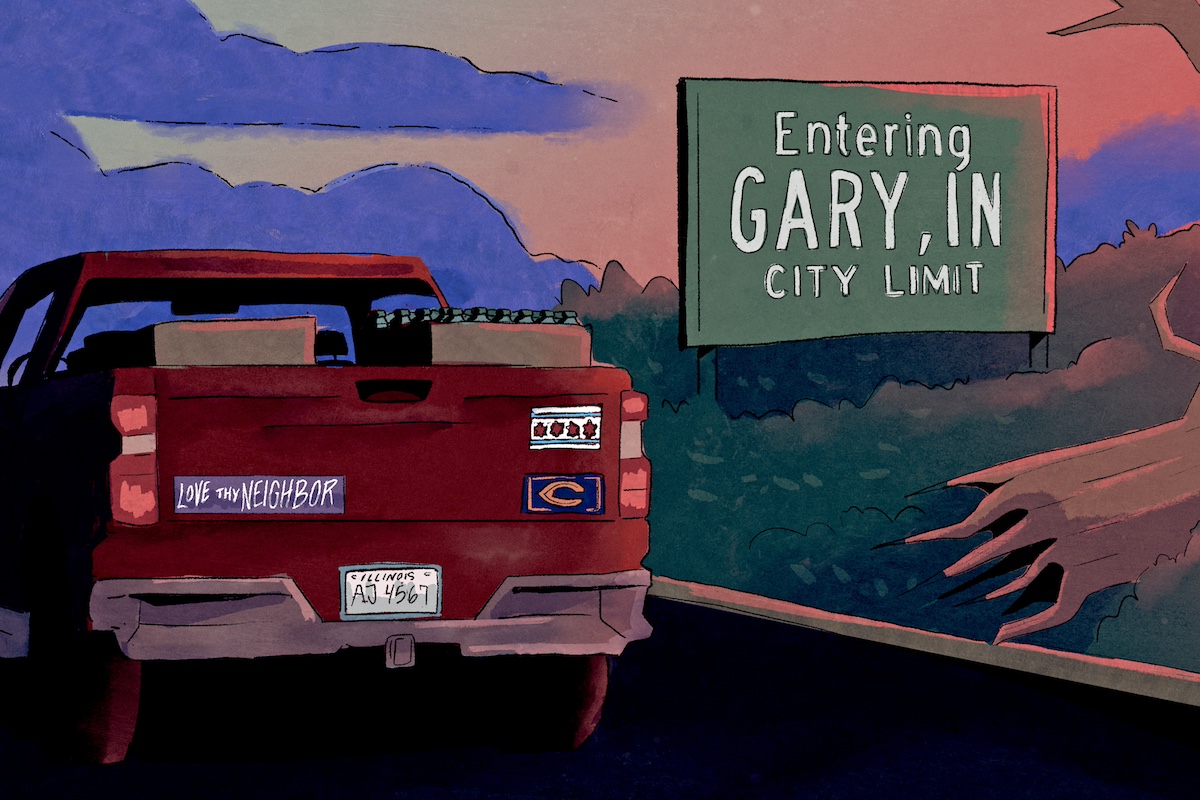
Other residents faced similar isolation and hardship, prompting South Side Chicago-based mutual aid organizer Nita Tennyson to take matters into her own hands and travel directly to Gary to deliver critical relief.
Through her mutual aid organization, Nita’s Love Train, Tennyson launched an initiative in mid-2020 providing donated baby essentials, hygiene products, household supplies, and more through pop-ups and contactless “love deliveries” to Black and Brown parents and families around Chicago.
Bringing that same spirit of grassroots care across state lines, Tennyson said she saw a social media status update online where people desperately needed support in Gary. “I’m like, let me just go out there and see if there’s something I could do,” Tennyson said.
She set up distribution spots in overlooked neighborhoods that major aid agencies had completely ignored, delivering hot meals, diapers, hygiene items, and daily essentials straight to families. As these grassroots relief efforts rolled out, long-time Gary resident Carrie Jennings stepped in a later into the process to help volunteer and assist with the distribution.
Learning about the initiative through social media friends, Jennings shared, “I volunteered to help her out on top of getting a little help for myself.”
Jennings noted how valuable these community-led efforts were because local families, especially those with young infants and toddlers, could not simply endure in the punishing heat without support.
While community help filled in the gaps, it could not make up for all of the major obstacles residents faced when seeking relief from federal agencies like FEMA.
Before applications could even be submitted, the federal government had to approve a formal major disaster declaration; in Gary, families were left in limbo for weeks while local damage was tallied.
Those who did apply were often turned away because of strict paperwork requirements; they lacked formal deeds for inherited family land, or accepted minor insurance payouts that instantly froze federal funds, or inspectors had quickly declared their homes “safe to live in,” despite lingering toxic mold or structural damage.
Many residents pointed out that emergency payouts—such as limited stipends meant to cover minor groceries—fell painfully short of addressing major disaster-related damages, including severe structural roof compromises, mold remediation in basements, and destroyed appliances.
With a short 60-day deadline to appeal denials, displaced residents without steady internet or mail access were often locked out of the help they desperately needed.
“We shouldn’t even be going through half the stuff we went through with FEMA,” Jennings said. “Everyone in Gary was affected by that storm, so we automatically should get something.”
Jennings emphasized that while church groups and mutual aid organizers provided wonderful short-term relief like food and diapers, families were left to face the daunting long-term reality of property damage without adequate financial safety nets.
“In my honest opinion, other things need to be done besides giving back body products, diapers, wipes, all of that,” Jennings said. “We need stuff that really is going to benefit us long-term. I got mold growing in my basement right now due to the flooding… In a couple of months, I can’t stay in my home, because that mold is going to start growing out of control.”
Ultimately, the storm and its aftermath revealed the stark contrast between community-led care and institutional abandonment. These lessons are made more grim, because the frequency of severe storms will continue to rise; climate change has accelerated and intensified extreme weather events, including the violent derecho (a widespread, durable windstorm) that brought hurricane-force winds and heavy rains to Gary in August.
Residents and local leaders continue to pressure NIPSCO for repair, as they contend with high electricity bills and lingering damage. While organizers like Nita Tennyson and residents like Jennings and Khunaten continue to champion mutual aid and demand true accountability, the crisis in Gary stands as a stark reminder of how Black communities are too often left to fend for themselves in weather disasters without federal support.
Amaris Edwards is a Chicago-based freelance journalist and storyteller dedicated to covering the narratives of South and West Side communities. A former City Bureau Civic Reporting Fellow, her work spans staff reporting and multimedia production with outlets like The Columbia Chronicle, True Star, and Block Club Chicago. Amaris leverages her background in poetry and local activism to center South and West Side communities, mutual aid, and youth experiences.