
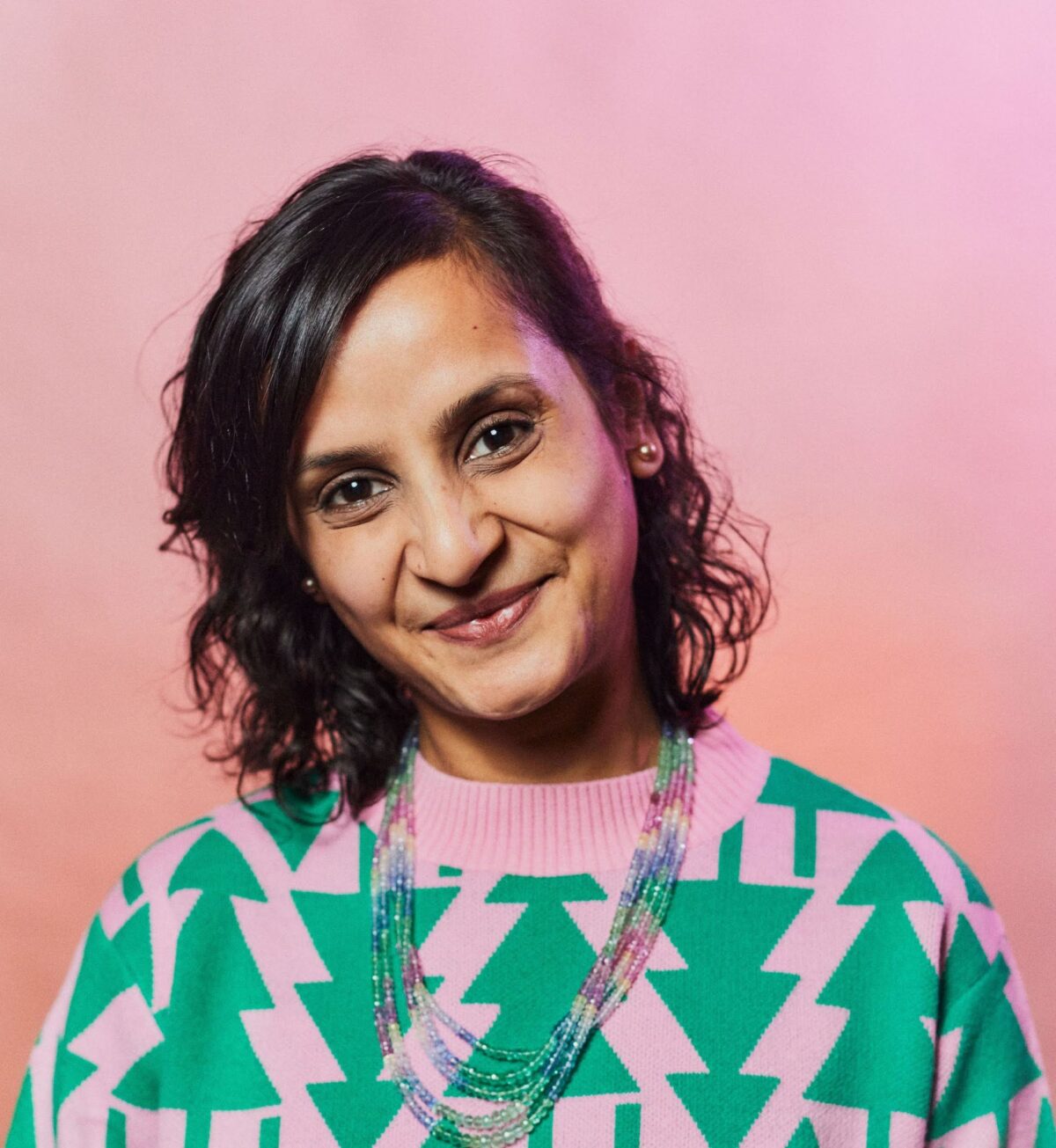
Tulika Ladsariya has become quite adept at explaining herself to people who aren’t entirely consumed by the art world, but she doesn’t mind. The Mumbai native sees art everywhere, and she believes it’s not necessarily black and white—Ladsariya views many things as art, from propagating plants to helping her mom cook samosas or padpads during holidays like Diwali as a child. For her, creativity comes in small and subtle ways.
“I have had a lot of people asking me questions about my real job,” said Ladsariya. “And sometimes that can be the most frustrating part about being an artist, where in itself, it’s not considered a real job.”
Her family is an assortment of accountants and financial advisors, but Ladsariya pushed the envelope by leaning into art later in her career path and even as a parent. After all, she has always loved to make things with her hands and observe nature.
“[As a child] I would collect snails and bring them home as pets. I used to carry a little microscope around with me. I loved to draw as well—I did a lot of biology drawings in my journals.”
After working in banking for four years, and a stint at an auction house, Ladsariya transitioned into having a full-time studio practice. She also incorporated what she learned during a one-year art program in London, which allowed her to immerse herself in galleries and libraries.
“My husband was super supportive,” she said. “I had my first solo show [in Mumbai], and then I brought that with me to Chicago when we moved here.”
Ladsariya’s exhibition footprint has travelled through the United States, UK and India. She’s showcased art at the Chicago Cultural Center, Hammond Museum NY, ART India Fair New Delhi, Kalakriti Art Gallery Hyderabad, Jamaat Art gallery Mumbai, Art Heritage Gallery New Delhi, and many more.
Ladsariya uses earth materials—like tree bark or moss—printmaking, and ceramics in much of her work. She believes in using her art to redefine our relationships with the land that we walk on. For her, these materials carry memory and history. They connect us to these different cycles of growth, decay, and regeneration.
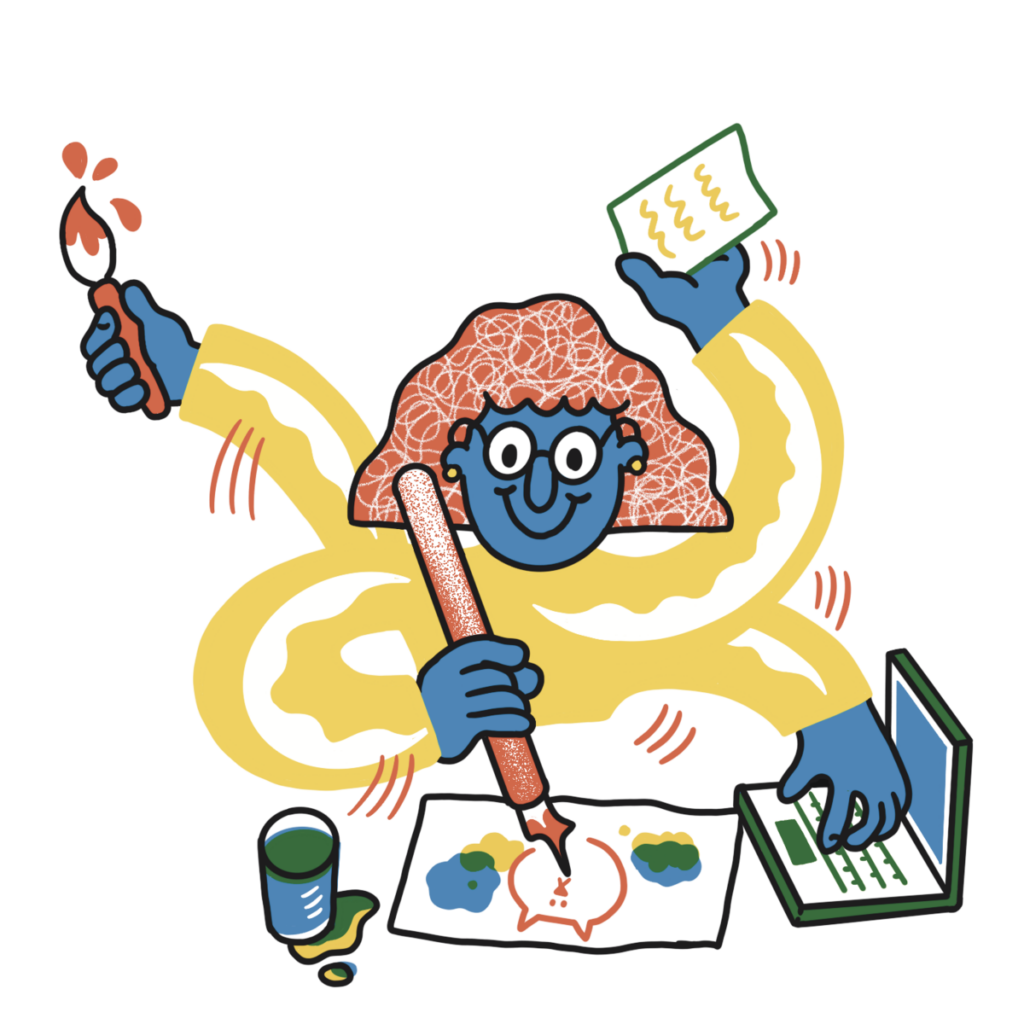
She was a resident at the Hyde Park Art Center from 2019–2021, a BOLT resident at Chicago Artists Coalition from 2022–23, and, most recently, a 2026 resident at the Ragdale Foundation. The residency, located in Lake Forest, IL, offers ten to eleven 18-day sessions and uninterrupted time for work and creativity. Her cohort consisted of writers, visual artists, music composers, and dancers. Ragdale, like many residencies, allows like-minded artists to build community together in a shared, creative space.
“We had not only our community time together, but also our personal time to spend in the studio,” said Ladsariya. “In the evenings, we would meet by the fireplace and sew and read and write together, which was very regenerative.”
During the residency, Ladsariya spent most of her time sewing and journaling. Her fascination with thread started young; she sees fabric as linking different worlds together. Journaling every night during her residency, surrounded by other artists, was also a cathartic process.
But Ladsariya stressed the practice of mindfulness after residencies because it is easy to forget the learnings taken from these experiences. She believes in creating everyday habits and expressing them in her studio, but, on the other hand, she’s also aware of the inaccessibility of residencies, and the elitism of the art world.
“I felt other-ed as an artist because I’m from a different country and I’m a parent,” she said. “The pathways into art aren’t always obvious. But I’ve also seen efforts in Chicago to open these doors wider through community art spaces and public programming.”
While every artist has different needs, Ladsariya believes that all artists should participate in residencies as the experience will only strengthen their craft by giving them the space and time to focus on their art, which is typically hard to balance in the outside world.
She also wants people to know that there’s a lot of behind-the-scenes work that entails artists in residency programs. From the administrative efforts, all the way down to the small details like the food—“a lot of people work behind the scenes to make residencies happen.”
An important lasting impression left by her experience in the Ragdale residency is the creative community and dialogue. “Community is vital when I go on residency programs. Being with so many incredible artists energizes me everyday.”
Sarah Luyengi earned her B.A. in English with a concentration in creative writing from the University of Illinois at Chicago. Her work has appeared in Borderless Magazine, Third Coast Review, and Common Ground Review.