The City Council banned nearly all hemp products sold by unlicensed stores on Wednesday, a move that local businesses have warned would send their livelihoods up in smoke.
The ban would prohibit hemp products with “intoxicating” or “psychoactive” effects from being sold at unlicensed businesses, but exempts hemp beverages, topicals, and products intended for pets. The Illinois Restaurant Association lobbied for the beverage carveout for taverns, packaged goods stores, and restaurants, an exemption designed to relieve local brewers who have turned to hemp amid the alcohol market’s downturn.
The measure also prohibits the sale of hemp, including those exempted products, to those under twenty-one years of age. Marijuana dispensaries, whose owners complained that hemp stores didn’t have to follow the same strict regulations and cut into their business, are still permitted to sell hemp products.
“The idea is that the dispensaries are regulated, and they test the products,” said Ald. Marty Quinn (13th Ward), who spearheaded the ordinance. “And one of the things we’ve heard throughout this whole process….is all these stories about people getting their hands on stuff that shouldn’t be in the hands of kids and that’s unregulated today. I mean, hell, you don’t even need to be twenty-one years old to purchase this stuff.”
Quinn’s measure could change depending on what happens at the federal level. Buried in the bill that ended the government shutdown last year was a provision that closed a loophole on small amounts of THC in hemp products, effectively banning most hemp products by November 2026. The legislation also dealt a blow to Mayor Brandon Johnson’s plan to tax hemp products last year, which was projected to deliver $10 million in revenue annually. A bipartisan push this month from U.S. Senators Amy Klobuchar (D-MN), Rand Paul (R-KY) and Jeff Merkley (D-OR) aims to delay the federal ban by two years.
Alders voted 32–16 in favor of the ordinance, just two votes shy of the veto-proof majority needed if Johnson chooses to quash the measure. Several alders from the progressive caucus expressed skepticism that the proposal would keep hemp out of the hands of bad actors, instead driving the substance to the black market. Alders Maria Hadden (49th Ward) and Daniel La Spata (1st) both vouched for local businesses that have profited from hemp.
Hadden, who returned to the council on Wednesday after extensive surgery, took CBD, a non-psychoactive hemp derivative that would be exempted from the ban, to help relieve inflammation. She said that “good actors” who sell a variety of hemp products could also have their businesses impacted by the ban.
“So it hurts me, cutting off an avenue for healing, for health, but also for really the backbone of our global economy,” she said.
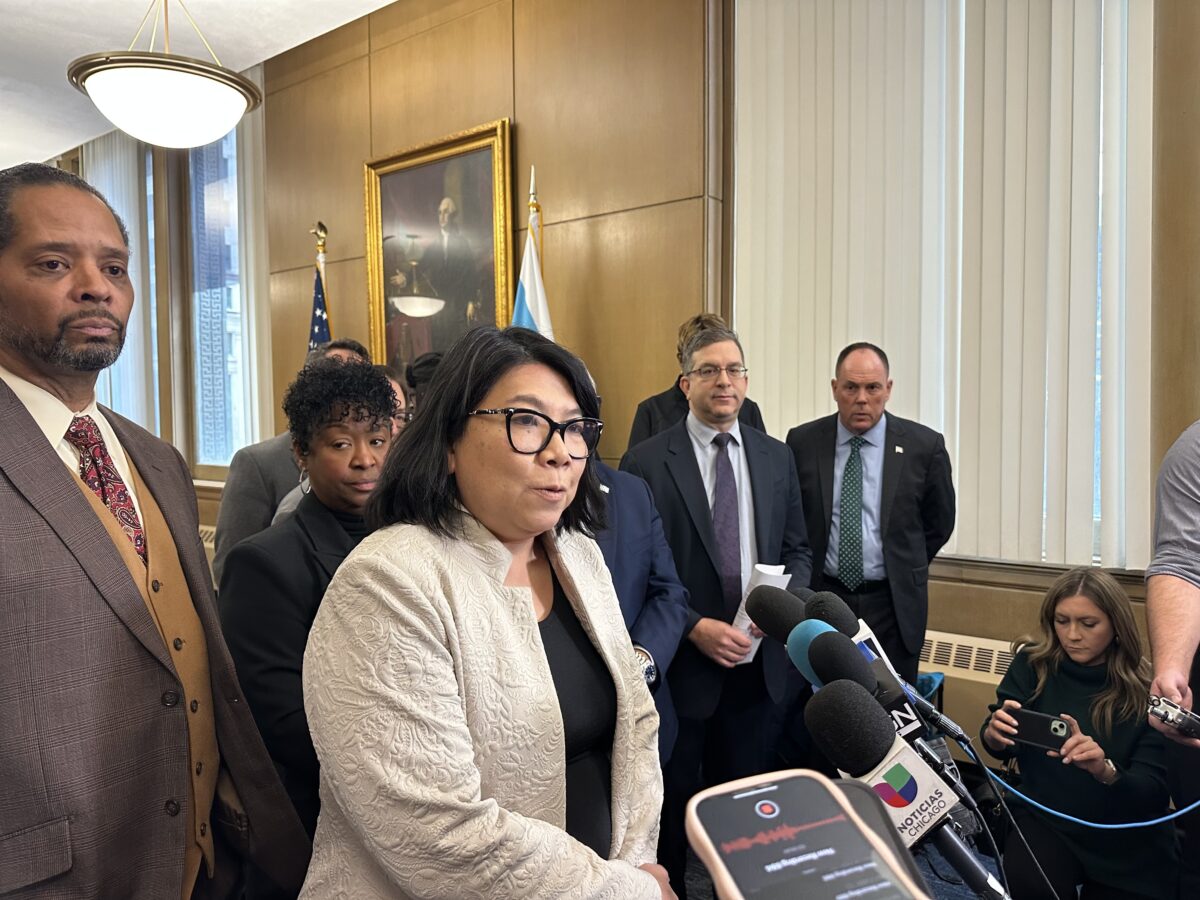
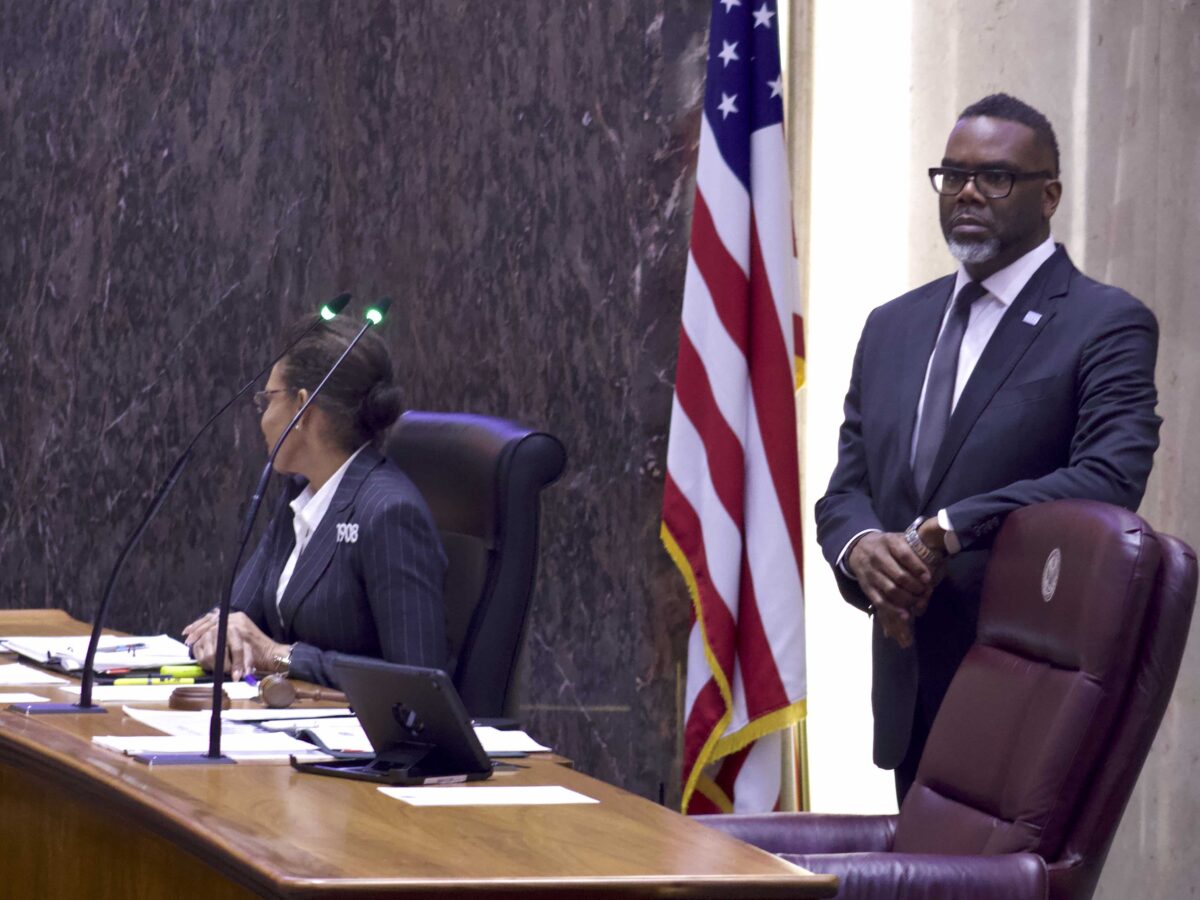
In a press conference following the council meeting, Johnson expressed reservations about the ban, but stopped short of saying he would veto it.
“There are some real serious concerns about this ordinance. I’m not the only one that has these concerns,” Johnson said. “I have not made a decision yet, but I think it’s important that when we enact policy, that we do it right, that we do it well.”
Meanwhile, the Johnson administration reached a compromise with Ald. Brian Hopkins over the latest iteration of the 2nd Ward alderperson’s curfew proposal for minors. Hopkins later punted his measure to a committee meeting.
After a large gathering of teens downtown turned violent last spring, Hopkins floated an ordinance that would give the CPD superintendent the power to declare a localized curfew whenever an on-site police commander believes that a “mass gathering” might occur. Progressive alders pushed back, arguing the policy could infringe on people’s First Amendment rights. Hopkins returned to the drawing board with an alternate curfew that he passed in June, only for the mayor to promise that he would veto the ordinance.
Hopkins brought forth a watered-down version of the curfew ordinance on Wednesday—one that scrapped the “snap” part completely. The language states that if the Chicago Police Department (CPD) superintendent determines that a “disruptive youth gathering” is going to happen, they can issue a dispersal order. The commander must give a verbal warning to the public and allow everyone ten minutes to obey. Minors who violate the order will be taken into police custody until a parent or guardian can pick them up, but they won’t be “booked” or fingerprinted.
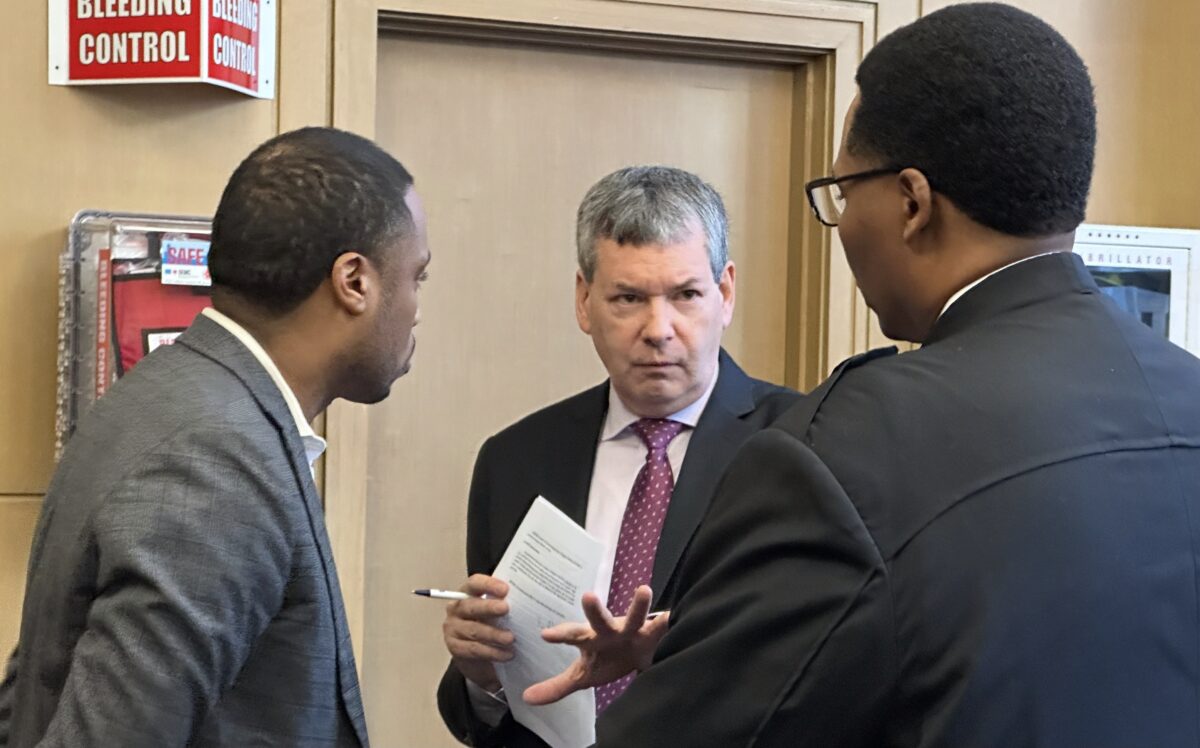
Earlier that day, Hopkins huddled outside the council chambers with Ald. Jason Ervin (28th Ward) and Johnson’s senior advisor Jason Lee. The three appeared to reach a compromise while Johnson advisor Kennedy Bartley rounded up more than half a dozen members of the progressive caucus inside the Council’s copy room. Following that huddle, the progressive council members were pleased by the fact that the new language in the bill did not grant CPD any additional powers. The bill instead codifies the superintendent’s existing ability to call a curfew into the municipal code.
Soon after the hallway scrums, Hopkins emerged with fresh copies of his ordinance and distributed them to the council.
“This is a vastly superior tool to the one that was initially offered,” Hopkins said. “It avoids the constitutional question and it gives the Chicago police maximum flexibility to respond to events as they occur and to not be locked into enforcing dispersal orders at only a specific time and specific place.”
The last-minute introduction frustrated 19th Ward Ald. Matt O’Shea.
“I’m uncomfortable with what’s being put before us here on the fly,” O’Shea said. “What I just heard sounds like we’re opening up the city of Chicago for more litigation.”
O’Shea expressed doubt that the ordinance would help prevent fatal events like the November shooting following the downtown Christmas tree lighting that left fourteen-year-old Armani Floyd dead.
“It would appear to me, what I’m reading is this is just something to placate,” he said. “What does this do that gives the Chicago Police Department a tool to help them prevent another kid from getting shot and killed in a gang conflict downtown Chicago?”
Hopkins ultimately decided to hold a vote on his measure and is expected to bring the proposal back for debate in the Committee on Public Safety. In a press conference that followed the council meeting, Johnson would not say whether he supports the ordinance in its current form, though he detailed his team’s close collaboration with Hopkins. That process included the decision to remove the twelve-hour notice period from Hopkins’ earlier proposal.
“We were incredibly concerned about the constitutionality around how the initial proposal went forward,” Johnson said. “And then, quite frankly, what we were also concerned about was this idea that just simply doing something and establishing an arbitrary time that that would prove to be effective. What we have seen repeatedly is that curfews and curfews alone don’t just simply prevent that type of behavior or interactions from occurring.”
Reynia Jackson, a youth organizer with Good Kids Mad City, said she still believes the curfew would target and traumatize Black and brown youth. GKMC organizers were “ecstatic” the last time Johnson vetoed the curfew ordinance, and they hope the mayor turns down the latest measure.
“We’re still very much against it. We’re still very much protesting against it,” Jackson said. “Continuously and further traumatizing our youth and further adultifying our youth. I’m 100 percent against that.”
Leigh Giangreco is a freelance reporter based in Chicago. You can follow her work on Twitter/X @LeighGiangreco and at leighgiangreco.com.