
David Chiko, one of the former high-ranking officials in Cook County Sheriff Tom Dart’s office who was implicated in an alleged ghost-payrolling scheme in 2022, was allegedly involved in misconduct years before. At the time, Chiko was not disciplined and was later promoted to a senior leadership role.
The alleged ghost-payrolling scheme, which drew the involvement of the FBI, involved several high-ranking officials in the Sheriff’s Office (CCSO). Investigators probed allegations that Sheriff’s Office employees were “double-dipping,” or working side jobs while they were on the clock for the county, but ultimately prosecutors declined to bring charges. The ghost-payroll investigation also prompted investigators to reexamine older allegations of misconduct by Chiko, leading to his termination in 2024.
Chiko started his career at CCSO in 1993 as a deputy sheriff and quickly rose through the ranks. By 1999, he was an investigator in the women’s division of Cook County Jail, and in 2013 he became the jail’s deputy director. In 2019, Chiko was promoted to assistant executive director, a role in which he first oversaw the jail, and in 2021 was put in charge of the CCSO’s incident command center, which was designed to handle all jail emergencies and oversee specialized units. By the time he was terminated in 2024, Chiko’s annual salary topped $120,000.
Chiko did not respond to multiple requests for comment.
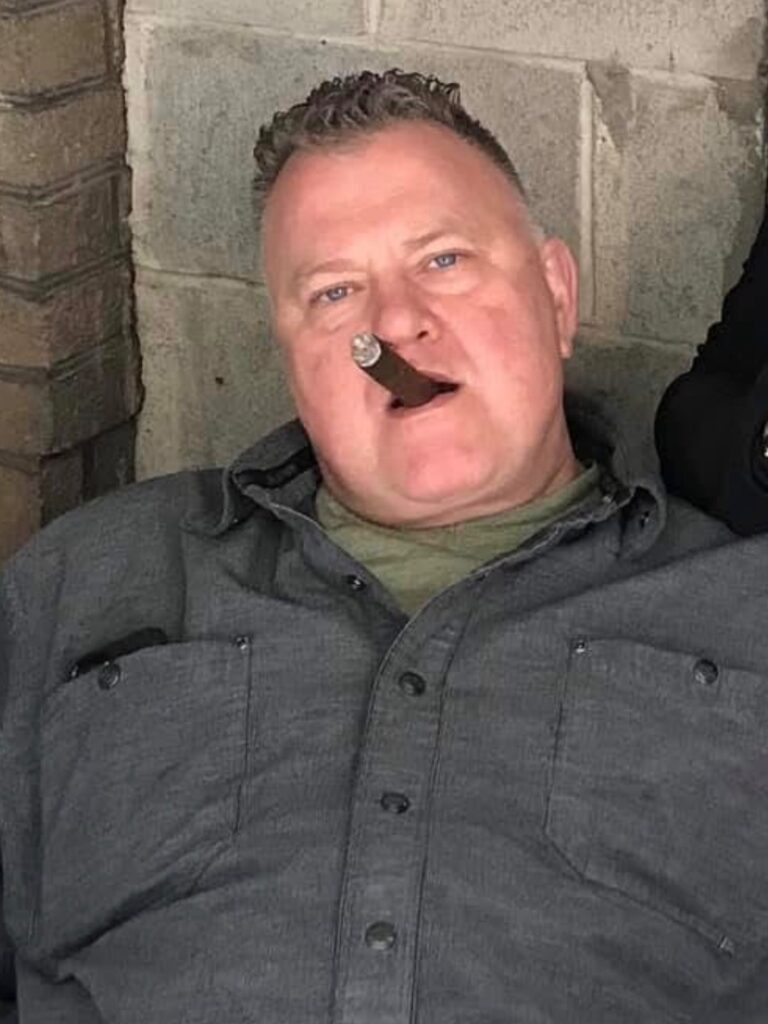
News of the joint-FBI-Sheriff’s Office investigation of alleged ghost-payrolling became public in March 2022, when multiple outlets reported on the involvement of federal authorities. According to those outlets, the FBI sought payroll records from a security firm that was known for employing off-duty police officers and sheriff’s deputies, and more than a dozen employees were placed on administrative leave while the investigation proceeded, including four high-ranking jail officials.
The Weekly sought the FBI records, which had been turned over to the Sheriff’s Office in 2024, via a public-records request, but the FBI told the Sheriff’s Office to deny the request. So instead, the Weekly obtained records from the Office of Professional Review (OPR), the Sheriff’s department of internal affairs, via several Illinois Freedom of Information Act (FOIA) requests.
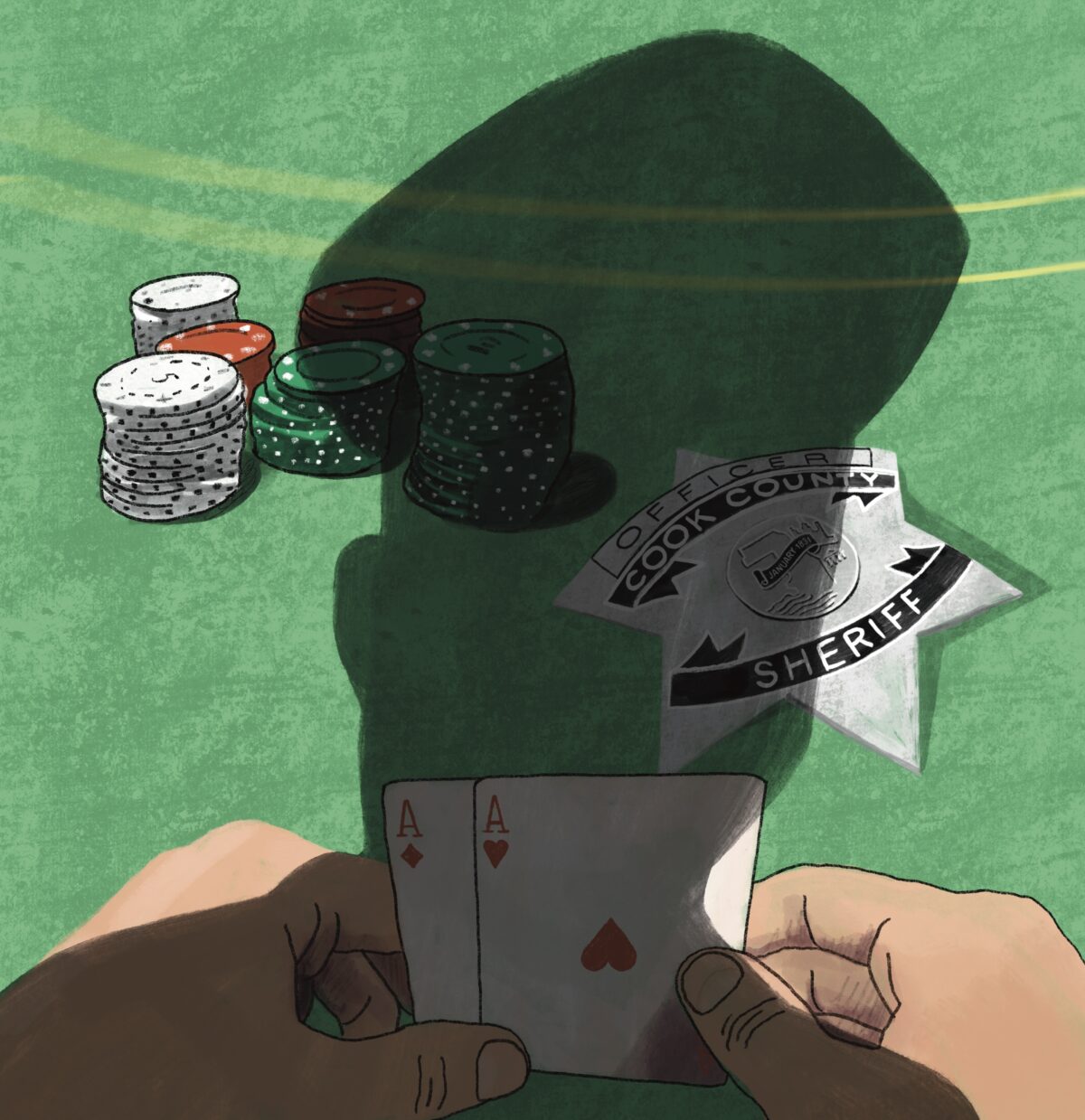
OPR found that Chiko was robbed at gunpoint outside an illegal gambling den in West Lakeview in the wee hours of a cold January night in 2015.
After taking his cell phone and $150, the ski-masked, black-clad robbers ordered Chiko to get on his knees and put his hands behind his head, according to investigation records. Thinking he hadn’t handed them enough money for someone who’d just exited the gambling den, one of them said, “Let me finish this,” before firing two shots at Chiko.
The shots missed, and the robbers ran off. According to the initial investigation, Chiko pulled out his county-issued Glock handgun and fired back at them six times.
He then called the Sheriff’s Office, while witnesses called the police. When Chicago Police Department (CPD) detectives first interviewed him, Chiko told them he was visiting a friend and did not mention being inside the gambling den. When re-interviewed after detectives learned about the den from other witnesses at the scene, Chiko denied gambling, stating he was there to “watch a game, enjoy a cigar and have a meal.” But multiple witnesses, including the card dealer, told police Chiko had been playing Texas Hold ‘Em before stepping out of the back of the house to make a call, which was where he was robbed.
When CCSO investigators reopened the incident as part of their investigation of ghost-payrolling years later, they noted that merely being in an illegal gambling parlor could be disreputable for a law enforcement officer, in addition to gambling on cards being a misdemeanor.
“Illegal gambling dens have ties to organized crime and street gangs,” the CCSO investigators wrote. “Moreover, they are sites for other illegal activity, such as prostitution. Finally, they are targets for armed robbers, due to large amounts of cash being carried by incoming and outgoing gamblers.”
Chiko told CPD detectives he was unaware of another robbery that occurred nearby shortly before his, and that he was alone when he was robbed. Both claims were contradicted by another witness’s statement.
CPD detectives provided the CCSO with a twenty-two-page report that said at least three witnesses saw Chiko inside the gambling den, and yet, the initial investigation concluded that then-Deputy Director Chiko “did not violate any department directives.”
Records show that upon reexamining the incident as part of the possible ghost-payrolling investigation, investigators with the CCSO’s Office of Professional Review (OPR) found that Chiko had violated ten of the Sheriff’s rules for employees, including prohibitions against knowingly visiting “a house of prostitution, illegal gambling house, or establishment where illegal activities occur, except in performance of duty” and participating “in any form of illegal gambling.”
OPR investigators who reviewed the case also found that Chiko violated a policy that prohibits lying to internal and external agencies, citing a provision that states CCSO employees must “truthfully answer all questions, provide proper materials, and provide truthful and relevant statements when the employee is involved in an investigation, either as the subject or not.”
In the years following the gambling-den robbery additional allegations of misconduct involving Chiko surfaced, but initial investigations of those allegations also found no wrongdoing. OPR investigators who later reviewed the investigations as part of their probe into ghost payrolling came to the opposite conclusion.
A CCSO spokesperson did not answer specific questions, but provided a statement that read in part: “The Sheriff’s Office does not tolerate illegal or unethical behavior by staff and aggressively investigates and pursues disciplinary actions or criminal charges where warranted.”
One of the allegations reviewers looked at concerned a 2016 incident in which Chiko communicated through a third party with a woman jailed on an aggravated DUI charge, and provided money for her commissary account.
Phone call transcripts reviewed by OPR investigators show that an unnamed individual thought Chiko might have some sway with the Cook County judge overseeing her case.
In return, one speaker (whose name is redacted in the OPR report) claimed that “‘Chiko’ said all she had to do was tell him, he loves her, he will do whatever he can to help her, and that they were supposed to go to dinner,” according to OPR’s summary of the phone calls.
OPR investigators concluded Chiko had committed eight policy violations in this case, including one prohibiting “the wrongful or unlawful exercise of authority on the part of any member for malicious purpose, personal gain, willful deceit or any other improper purpose.”
Less than two years after the events with the jailed woman, the CCSO received an anonymous letter in July 2017 alleging that Chiko and other CCSO employees were “working for a private entity, breaking the law, intimidating the community and abusing their police powers.”
The letter alleged that Chiko and the others were working for a company called Off Duty Services (ODS). The business, which is headquartered in Texas and began operating in Illinois in 2015, hires active-duty law enforcement officers to provide armed security for businesses.
“Our off duty law enforcement personnel are the highest level of private security available, far exceeding any security guard capabilities,” the company’s website reads.
ODS did not respond to the Weekly’s request for comment.
According to an OPR summary of the letter’s allegations, Cook County sheriffs working for ODS escorted delivery trucks in residential neighborhoods while armed and in uniform, and “were activating police lights and sirens, and blocking traffic.”
While it is not uncommon for county and city law enforcement officers to work second jobs, they must have prior approval and cannot be in official uniform. And although there is no strict cap on hours, the secondary employment cannot interfere with their county or city work or performance. The Weekly obtained eleven secondary-employment forms Chiko filed during his tenure at the CCSO, but the names of the employers were redacted per Illinois FOIA exemptions.
After eight months of investigating, OPR determined the allegations in the letter were unfounded. But OPR investigators who reexamined the case in 2021 reached very different conclusions after uncovering additional evidence of serious, potentially criminal misconduct by Chiko.
According to OPR’s review, a former FedEx employee told investigators that Chiko attempted to bribe him in 2017 after the FedEx employee discovered that one ODS employee working security for FedEx was not a law enforcement officer. According to the FedEx employee, the ODS employee, who claimed to have worked for the Illinois State Police and the CPD, had been arrested and indicted for impersonating a police officer.
When the FedEx employee confronted Chiko, who was a manager at ODS, with this information, Chiko allegedly replied that he was experiencing “extreme staffing problems” and that “he would ‘give me whatever I want’ and insinuated offering cash if this information stayed between us and I did not tell anyone at FedEx.”
The FedEx employee refused the offer. Chiko then allegedly offered him “the ability to hand pick the staff from the officers that have been at my location before or anything else he could give me not to tell FedEx management.”
Instead of agreeing to Chiko’s offer, the FedEx employee contacted his manager. “FedEx sent a cancellation letter to ODS two weeks later terminating their contract for security for FedEx for the Midwest region,” according to the former employee’s statement to OPR investigators.
OPR investigators who later reopened the case found that Chiko had violated several Sheriff’s Office rules, including prohibitions against the “offer or acceptance of a bribe or gratuity” and “criminal, dishonest, infamous or disgraceful conduct.”
Several former CCSO employees told the Weekly they knew about Chiko’s potentially criminal wrongdoing years before he was fired. One said she felt Chiko was a polarizing figure in the office.
“[People] either liked him or hated him,” said Carmen Gercone, a former assistant chief at CCSO who left the office in 2020 and ran for Dart’s post in 2022. “Some people felt like he would—if it was their skin or his—that he’d sell them out in a minute.”
Gercone said Chiko was known for doing favors for CCSO employees who also did security work for him at ODS.
“If the calendar was closed and you put in for a day off, he would give you the day off, and then you can go work for him, or go to your son’s graduation, or go to whatever else you needed to do,” she said. “Other officers who didn’t have that luxury couldn’t get the day off if they needed it.”
Gercone said it was rumored in the Sheriff’s Office that Chiko and the ODS employees he managed would show up for ODS shifts and pretend they had a “mix up” in forgetting to remove their CCSO patch from their vest or badge from their waists in order to get free food or other comps.
“They knew what they were doing,” she said. “There’s a general mistrust from the community, because when they come in, [people] don’t see Off Duty [Services)], they see the Sheriff’s Office.”
Joint FBI-CCSO investigation led to firings, lawsuit
The ghost-payrolling investigation also uncovered additional wrongdoing that implicated other jail officials and guards. Some were fired as a result.
In 2024, the Sun-Times reported that two of the high-ranking jail officials, Drake Carpenter and Aracelis Gotay, who had been suspended while under investigation, were fired. The pair filed a retaliation lawsuit challenging the suspension in which they alleged that they and dozens of co-workers were coerced into doing campaign work for Dart’s successful 2022 reelection bid. They say they were fired after making that allegation.
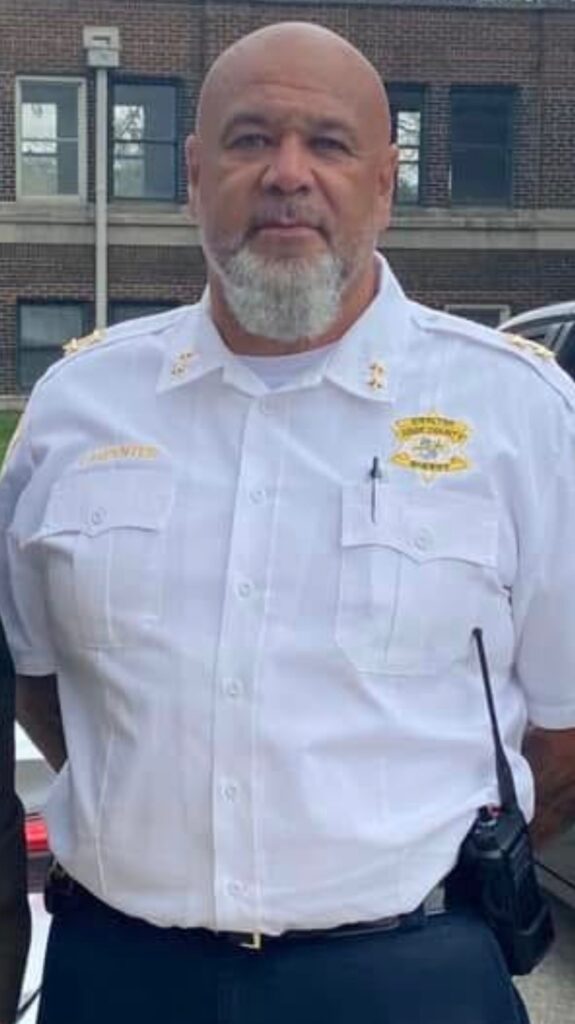
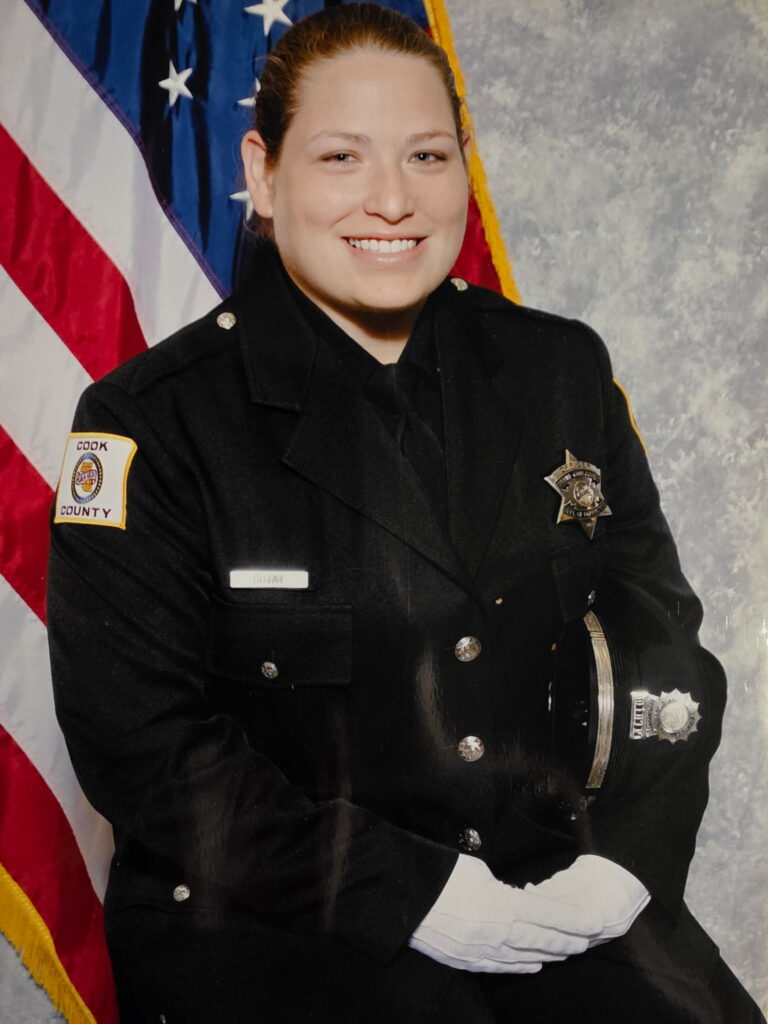
The case was settled last year—with no admission of wrongdoing by the county or Dart’s campaign—with Carpenter and Gotay each receiving $35,000 from the county, as well as $1,500 from Dart’s campaign.
“I sued them and they paid us because they knew that what they did was wrong to us,” Carpenter told the Weekly.
The CCSO and Friends of Dart did not admit liability and denied all allegations contained in the lawsuit, according to settlement documents reviewed by the Weekly.
But, until now, the conclusions investigators reached about what their misconduct entailed were not publicly known, including, apparently, by the subjects of the investigation.
OPR records obtained by the Weekly via FOIA requests show that OPR investigators ultimately determined that while Chiko, Carpenter, Gotay, and Frank Esposito, another high-ranking jail official, committed timekeeping violations, there was no evidence that these four worked unreported side jobs or failed to complete their assigned duties.
Sheriff’s Office data obtained by the Weekly shows that more than 850 CCSO employees filed secondary employment forms in 2020 and 2021. Four were the subjects of the possible ghost-payrolling investigation. The names of their secondary employers were redacted.
The joint FBI-CCSO investigation employed surveillance techniques, including covert cameras whose batteries and memory cards were switched out in the early morning hours to avoid detection by midnight shift staff, as well as cell-tower records that allowed agents to pinpoint employees’ actual locations alongside undercover teams directly observing the targets.
According to statements witnesses gave to federal agents, Carpenter, who oversaw the Jail’s emergency response team—which was responsible for transferring high-profile detainees—routinely called or texted subordinate officers to have them clock him in and out when he was not present at the facility. Between January and February 2022, investigators found that other employees clocked Carpenter in on at least sixteen separate dates.
Surveillance captured Carpenter’s routine on multiple occasions. In October 2021, OPR investigators observed him arriving at the jail in his white GMC pickup truck, exiting the vehicle, then immediately getting into a black Ford Taurus parked nearby and driving away—all while county records showed he had already been clocked in by another employee.
Gotay’s case centered on allegations that she approved fraudulent timesheets for a subordinate correctional officer who claimed to be working at the CPD’s Crime Prevention and Information Center (CPIC) when she was not. According to the joint investigation, the officer repeatedly submitted “Missed Swipe Forms” (documents used when employees could not access a timeclock) and claimed she could not clock in or out because there was no timeclock at CPIC. Gotay signed off on these forms and forwarded them to payroll, approving substantial overtime payments based on the false documentation.
Employee-access records showed the officer never scanned her sheriff’s identification at CPIC on the days she claimed to be working there, OPR records show. Computer records revealed her sheriff-issued laptop was located at her home address and at a bowling alley on dates she submitted forms claiming to be at CPIC. A CPD sergeant told investigators that everyone assigned to the facility had credentials and that remote work was not permitted. CPIC officials said the officer never even submitted an application for an access badge and was unknown to them.
In her interview with FBI agents, the corrections officer admitted she “never worked CPIC on-site, I always worked off-site CPIC,” though she also acknowledged she could not access the video-monitoring systems remotely that were central to CPIC’s mission. She told agents that Gotay had access to her email and directed her to submit the Missed Swipe Forms.
When questioned by the FBI, Gotay claimed other supervisors had given her the green light to approve the overtime and that she categorized various duties as CPIC work, including “doing all the regular reports too.” She admitted to clocking people in and out while also acknowledging that county policy prohibits the practice.
The joint investigation found text messages recovered from Gotay’s sheriff-issued cell phone showed Chiko directing her in May 2021 to “punch me out.” Other messages from that same period showed Chiko sending her invoice details for his private security company. An invoice, dated May 15, 2021, with “Check Payable to: David Chiko” written on it, was later recovered from Gotay’s office desk. In her FBI interview, Gotay alleged that Chiko had asked her to type up an invoice for his security business.
The joint investigation, which resulted in Esposito’s firing, found that he similarly directed or allowed other employees to clock him in and out on multiple dates while he was not present at a CCSO facility.
When interviewed by the Weekly, Carpenter and Gotay denied any involvement in a ghost-payrolling scheme. Gotay said she never worked a second job during her decade-plus career at the CCSO. Carpenter filed a secondary-employment form in 2021 that he told the Weekly was for private security work he did with celebrities.
Carpenter and Gotay both said they frequently logged well more than forty hours per week and did not receive overtime for their extra hours they put in because they were salaried employees.
Gotay said there were times during the pandemic she slept in her office instead of going home “just in case things would pop up.”
The pair argued the report’s findings constituted minor policy violations that might have deserved short suspensions, but not their firings.
“What they terminated me for was violating the policy and procedure of the time clock,” Carpenter said. “No one gets fired for that. Discipline is progressive: written warning, multiple written warnings, then some suspension days, and then they could put you in for termination…. I got none of it.”
Another salaried CCSO employee, Inspector Franco Domma, was confronted by OPR investigators in 2025 with evidence that he too had a subordinate clock him in and out while no longer physically at the office. Domma defended himself in his interview with OPR by saying that he was “teaching at a class in Wrigleyville” with a colleague and that as “an exempt employee … I don’t get any overtime.”
“I work nine, ten-hour days. So, I just want to put that down cause I don’t get paid for the extra hours even though I know I’m guilty to this,” he said.
Domma was not fired; instead, he received a fourteen-day suspension.
A CCSO spokesperson said that “for each allegation of employee misconduct, the Sheriff’s Office took the appropriate disciplinary action under the law—up to and including termination—where warranted and supported by evidence.”
Domma did not respond to a request for comment.
When the FBI interviewed Gotay at her home in December 2023, she never got the impression that she was the subject of the criminal investigation.
“I felt like they were trying to see [if I] was a witness…to any wrongdoings,” she said.
Gotay says the FBI agents questioned her about payroll procedures and timekeeping, asked whether she knew anything about “Chiko stuff,” and posed questions about whether she thought the county had overstepped its jurisdiction with various initiatives like vaccine programs and a domestic terrorism unit. Gotay said she couldn’t help agents with questions about side businesses and deflected the jurisdictional questions, telling them her personal beliefs were irrelevant.
“If my boss tells me we’re doing an operation, well, guess what? I’m enforcing it,” she said.
The pair felt they’d been tarnished by association with Chiko’s alleged wrongdoing, of which they said they were never involved.
“We were in the same office,” Carpenter said. “I’m assuming they felt like I was part of it, which 1,000% I was not. I was never employed by him, never worked for him, never received anything from him, financially regarding any of that.”
Gotay was devastated by the firing.
“As sad as it is to say, [the] county was my life,” she said. “I gave my all to that place.”
The investigation also ensnared several lower-level employees. Some, including correctional officers and criminal analysts, received suspensions ranging from seven to twenty-one days. Five resigned, and one—Cody Williams, the son of former CCSO Chief of Operations Tarry Williams—was fired in June 2022.
According to one of the OPR reports, Cody Williams was among a group of employees who “would leave hours prior to their shift ending.” OPR investigators also concluded that he and others had also committed “misuse of county equipment, secondary employment, falsification of work related records, dishonest and criminal conduct.”
Williams did not respond to requests for comment.
FBI agents and OPR investigators met with federal and county prosecutors in late 2023 to discuss the evidence they’d obtained. Both offices declined to bring criminal charges. The FBI then ceased its involvement and the OPR investigation turned from a criminal to an administrative one.
The U.S. Attorney’s Office for the Northern District of Illinois and the Cook County State’s Attorney’s Office did not respond to a request for comment as of press time.
Around the same time the FBI and internal affairs officers were digging into the possible ghost-payrolling scheme, the Sheriff’s Office was also examining more than 160 cases in which employees may have fraudulently obtained federal Paycheck Protection Program (PPP) loans.
PPP loans, which were simple to get and potentially forgivable, were designed to keep small businesses and self-employed people afloat during the pandemic. The program was later found to have been rife with fraud, with some loans going to companies owned by wealthy celebrities, as well as to hundreds of Illinois public servants. The U.S. Small Business Administration’s inspector general estimates that $64 billion in PPP loans were fraudulently obtained.
The Sheriff’s Office sustained policy violations against sixty-two employees, firing twelve and moving to terminate dozens more for PPP fraud. To date, at least twenty-nine criminal investigations of PPP fraud involving CCSO employees are ongoing.
This reporting was supported by the Fund for Investigative Journalism.
Max Blaisdell is a fellow with the Invisible Institute, a staff writer for the Hyde Park Herald, and an investigative reporter for South Side Weekly.