
Every week, Cook County Jail (CCJ) employs hundreds of insiders to prepare meals, clean cells, wash clothes, run barbershops, and otherwise maintain the buildings in which close to 6,000 people are incarcerated at any given time.
Though the Cook County Sheriff’s Office (CCSO) describes the purpose of work assignments as enabling “individuals in custody to earn a wage, build a work ethic, practice responsibility, and learn practical job skills,” incarcerated workers make between $5 to $12 per eight-hour shift—or 4–9% of Chicago’s minimum wage. Their income is automatically applied to their commissary accounts. 393 insiders were working in paid positions during the March 1–7 pay period.
Not everyone is allowed to be a worker. Certain disciplinary infractions, for example, can prevent insiders from being authorized to work. Disabled insiders are allowed to work but can face challenges. Though disabled insiders are supposed to have “equal access to programs and services, provided that they are able to perform the essential functions of the job and do not pose a legitimate safety concern,” according to a CCSO spokesperson, they can face challenges from officers.
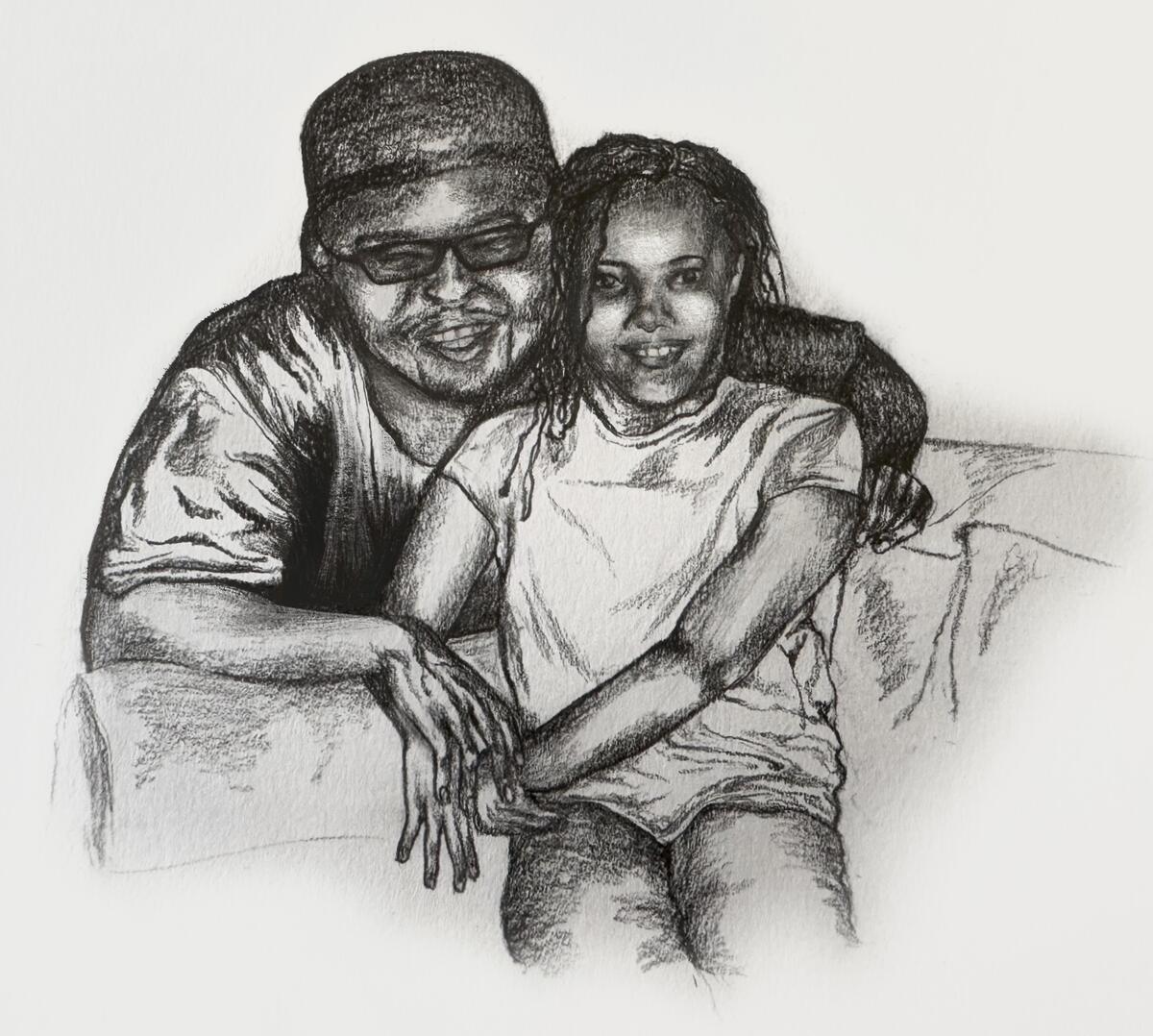
Saint* has been incarcerated in CCJ since 2017, and spent much of the last six years employed as a building worker and laundry porter, preparing lunch trays and cleaning cells cells in general housing as well as the Special Management Unit (otherwise known as “the hole” or “seg” for segregated housing). He says that a few years ago, shortly after an officer saw him using a cane, they stopped calling him for formal employment. Eventually, he started helping with laundry on the tier without pay, and as of the last nine months, he has been back on the payroll.
Before being incarcerated, Saint helped support his two daughters by driving a medical van for a veteran’s hospital. Now, he spends his time playing chess, learning the law, and trying to help others with their cases. In the conversation below, Saint talks about what it’s like to work while incarcerated, from cleaning burned cells to using a cane while incarcerated.
Harley Pomper: Can you tell me about your roles and workload as an incarcerated worker?
Saint: As a laundry worker, I would go to different tiers, and we’d pass out laundry tags [which make sure each article of clothing goes to its owner]. We would bag everything up, take it downstairs, and we’d wash all the clothes, dry ’em, and bring it back that evening and pass them out. The obstacle was for security to keep an eye on us to make sure we ain’t transporting anything, that nobody gets jumped on. And the sweet part about it is we’re able to wash our own clothes.
What do you talk about with the correctional officers when you walk around?
They might ask, “how long you been here?” We might ask, “how long you’ve been working here?” Small talk. I ask people all the time what they had for lunch, breakfast, dinner, because I know the food here is so horrible.
How are workers selected? Do you volunteer?
A worker says to the officers who choose the workers, “This my guy right here. You like the way I work? He’ll work just as hard as I work.” And you have somebody on the inside vouching for you.
Can you tell me why people would choose to work? What does it mean to work while you’re inside?
Me? I want to get out of the tier because I’m around these guys all the time. Just to move around. It helps the time go back faster instead of just being stuck in the dayroom. Being a building worker, you could wash your own clothes.
You get paid for it. I had two or three jobs at one time on the street. I’m not getting paid what I’m worth [here] but I can save a little money. I don’t have to put too much stress on my friends and family members sending me some money for my books, because I already have it. You can become friends with the officers, and they might give you some food, pizza, coffee. Commissary coffee is horrible, but they got some real Folger’s downstairs with real sugar.
What is it like to use a cane while you’re a worker?
It was okay for a little while, until some officers see me going to Cermak [the on-site medical center], or see me going on a visit. One officer tells a sergeant or the lieutenant, “How you working when you got a cane?” And next thing you know, the lieutenant or the sergeant is telling them not to get me. So they’re not telling me I’m fired, they’re just not coming to get me for work.
So when I catch the officer, I say “You ain’t come get me in a while, what’s going on?” At first they’ll say, “We don’t need your help right now. We’ll try again later.” And after a while: “Well, am I fired? Where’s my pink slip? Tell me something!”They say,”’Yeah, you’re just a liability. So you got a cane.” But, I was still working, right? It’s not my cane, my hip wasn’t bothering me as much when I needed the cane. I’m still doing the job you had me down for. But they say, “Yeah, it’s just a liability. We don’t need you to fall.”
After a while, I saw one of the supervisors who do the payroll for the workers. I asked him, “Hey, man, why am I not getting pulled for work anymore?” They said, “Because you’re a liability. We think it’s better this way. Thank you for your hard work, but this is for you.” “For me?” I said. “I’m not asking for this.” That’s how it went. No pink slip, like I wasn’t fired, no write up, no incident report. Just not coming to get me.
I’m working now on a tier doing laundry. It works out because I can sit in one spot and call, “Laundry tags! Get your laundry tags.” So I just holler it out, and people come to where I’m at to get the laundry tags, or I throw it across the dayroom.
Are others aware of your hip problems?
Yeah, they see me when I go to my visit. The week before last, the elevator was out. We gotta walk 96 steps. They see my cane and some guys will make fun of me. You know, “Ah, your old ass, you got a cane.” Or some guys say, you know, “You don’t need that cane.”
Can you tell me about what it’s like to be a seg worker?
The guys in seg can be real disrespectful. The officers in seg are real disrespectful also. And some of the guys got beat up by the officers. Some of the detainees beat up the officers before. They put certain officers down there, with high aggression, to work in seg. So, anybody in seg get aggressive—they can beat the aggression with aggression.
For example, the lunch trays come with a hard plastic tray inside. [Building workers] take the hard plastic tray out, because they could use these trays and break them down and sharpen them up, make knives out of it. The officers pass the trays out because they don’t trust the guys in seg.
In seg, guys’ll coordinate to flood the cells. On each tier, there’s 22 cells. 11 on bottom deck, 11 on top deck. Two, three, four of the cells will flood at one time. The officer’s not gonna clean the water up. They’re gonna say, “Hey, get them guys to clean this mess up.” We’re down there cleaning the water up, and the guards would cut off the water for the cells involved for that day. And once we clean the water out, the cells whose water is not off… they’ll flood. We have to get called back.
People coordinate just to upset the officers, piss them off, and just to be doing something. The officer is not gonna do any of this work. So, they gotta have workers.
A CCSO spokesperson confirmed that there have been incidents of insiders being assaulted by staff and vice versa. Charges were sought against four staff people last year. They also confirmed that incidents related to intentional flooding and fires have occurred.
What duties fall under being a seg worker?
When a guy that’s in seg gets matches or a lighter, and he sets the cell on fire, we have to clean the cell. I cleaned burned cells a few times in seg and on other tiers.
Walk me through step-by-step what cleaning a burned cell requires.
When you first walk in the tier, you would smell the fumes from the burned plastic, or the burned blankets or sheets, and you could just glance around the dayroom. Because over here, our doors are off-white, and when you come to the tier you can easily see the burned cell. We can see where flames is coming through the crack of the door, the charcoal and the window portion of the door, it’s black from the smoke. And nine times out of ten, they’ll have that door open to try to air it out. The doors are painted with cheap paint, so the flames will burn all the paint off the door to the steel.
It’s just smoke everywhere. It’s smoke up in the lights. Burnt spots on the ground and on a doorway from probably a mattress or the blanket. We gotta go in with a power wash kit that sometimes don’t get anything off the ground or the walls. Just do the best you can with what we got. Scrubbing. And once we finish, you can still tell this cell was set on fire.
How long does it take you to clean a burned cell?
Wooo! I wanna say they usually have four or five people doing one cell. First the one guy going with the power wash. He’s spraying everything. We’re trying to loosen it up. Then two, three, four people come in, scrubbing. Scrubbing light fixtures, scrubbing the doors, scrubbing the bunk, scrubbing the tables, scrubbing the walls. Try to get everything off you can, but they don’t have the right equipment to get burned stuff off like this.
Now keep in mind, for a time they said I couldn’t work because I got a cane. But I was working before. On one of the tiers, one guy set his cell on fire and it was so bad, they had to move everybody out that tier to the gym and have people come up and clean it up. And I was one of the guys they came and got to help clean the cell up. We had to clean the cell and the tier, it was burned that bad.
When they came to get us, they were asking, “Hey, we need some volunteers to help clean a burnt cell.” They didn’t tell us we were cleaning the whole tier. And while we was over there, since all these guys was moved to the gym, we wound up cleaning up the other cells also.
But we spent a lot of time in that first cell. We had people on the outside getting the burnt spots off the door. Got people inside cleaning the door, the walls, box, tables, sink. On top of hitting the whole tier, scrubbing the walls—because it was a lot of smoke.
I don’t know how long it was burning, because usually they set fires in seg. So all the fire extinguishers are over in seg. There’s none over in the other tower, where that fire happened at. So when it first happened, the officer got to run to seg to get a fire extinguisher, and come back to that tier. All that time it’s burning, and these guys probably in the cell feeding the fire: their sheets, their blankets, their mattress. And it affects the whole tier.
A CCSO spokesperson said that “Fire extinguishers are accessible to staff for every tier. We are unable to identify a specific incident based on the details you’ve provided.”
What is it like to clean a burned cell, and what kinds of conversations happen while you’re doing that work?
Usually the phrase they use is “These guys got wild.”
And I seen guys who set fires. I went to Cermak for the eye doctor, and we took a guy with us that came out of seg, and the officer asked him, “Hey, man, you one of them guys that be setting the fires?” He said, “Yeah.” So the officer asked some questions. “Why are you doing that? It’s dangerous.” And the guy says the dumbest answer to me, that he wanted to move around. “I got tired of the view we got in the window. I just want to move around, and maybe go to Stroger’s Hospital.” I said, “Dude, you trying to hurt yourself just to take a trip to the hospital for a day and come back to jail?”
You seen guys whose cell caught on fire, and they got burnt real bad, where they had to wear some type of glove, and their skin was tight. Your hair doesn’t work the same because your skin is burnt so tight on you. It’s horrible.
Do you do any work that isn’t traditionally considered work, like caring for people?
I try to help guys out. I get paid for doing laundry. And there’s some guys here that’s unfortunate. I got loved ones who send me money, and I got the job. So I try to look out for people. Like, one guy’s a big coffee drinker, but he doesn’t have any money—
Jail Phone: You have one minute remaining.
He doesn’t have money to buy coffee like that. A three ounce bag of coffee costs $10. So his birthday came up last month, so I bought him a bag of coffee as a surprise.
Jail Phone:Thank you for using Global Tel Link.
Harley Pomper is a PhD student in social work at the University of Chicago. They organize across jail walls to report on carceral injustices and political repression.