Chicago and Illinois jointly filed a federal lawsuit Monday taking aim at the Trump administration’s mass deportation campaign in the Chicago area. The 103-page complaint names the Department of Homeland Security (DHS), Immigration and Customs Enforcement (ICE), U.S. Customs and Border Protection (CBP) and U.S. Border Patrol as defendants, as well as DHS Secretary Kristi Noem, Border Patrol Commander Greg Bovino and other senior Homeland Security officials.
The complaint alleges that, under the guise of enforcing civil immigration law, the Trump Administration “is attacking Illinois and Chicago’s ability to carry out their core sovereign functions” in what amounts to a coercive occupation.
“The occupation of Illinois and Chicago is intended to coerce Plaintiffs to abandon their policies, which value and respect the state’s immigrants, and devote their resources to further the immigration policies of the current administration,” the complaint reads. “Illinois and Chicago have refused to do so.”
The city and state further argue the federal mass deportation effort in Illinois has undermined state sovereignty in violation of the Tenth Amendment; that Congress never authorized Border Patrol to conduct “removal operations” in Illinois; and that DHS has implemented multiple “new, unlawful policies” which have endangered local residents.
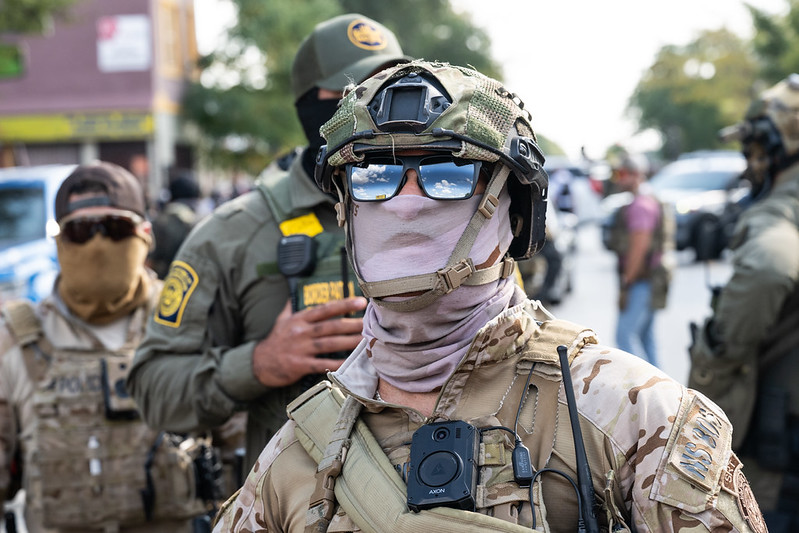
Among the policies the complaint specifies are immigration agents’ self-professed practice of swapping out license plates on their vehicles, the “roving patrols” of agents that targeted convenience and home improvement stores, and their penchant for warrantless arrests. The lawsuit claims DHS, in order to side-step legal limitations on warrantless arrests, even instructed its agents to carry blank “field warrants” with them on patrol and to sign them as an arrest was made.
The suit also highlights incidents where agents have trespassed on private or city property, carried out immigration enforcement activity near sensitive locations like schools and medical facilities, and used the “Mobile Fortify” app to non-consensually capture and retain biometric data, such as faces and fingerprints, from people they have encountered in Illinois.
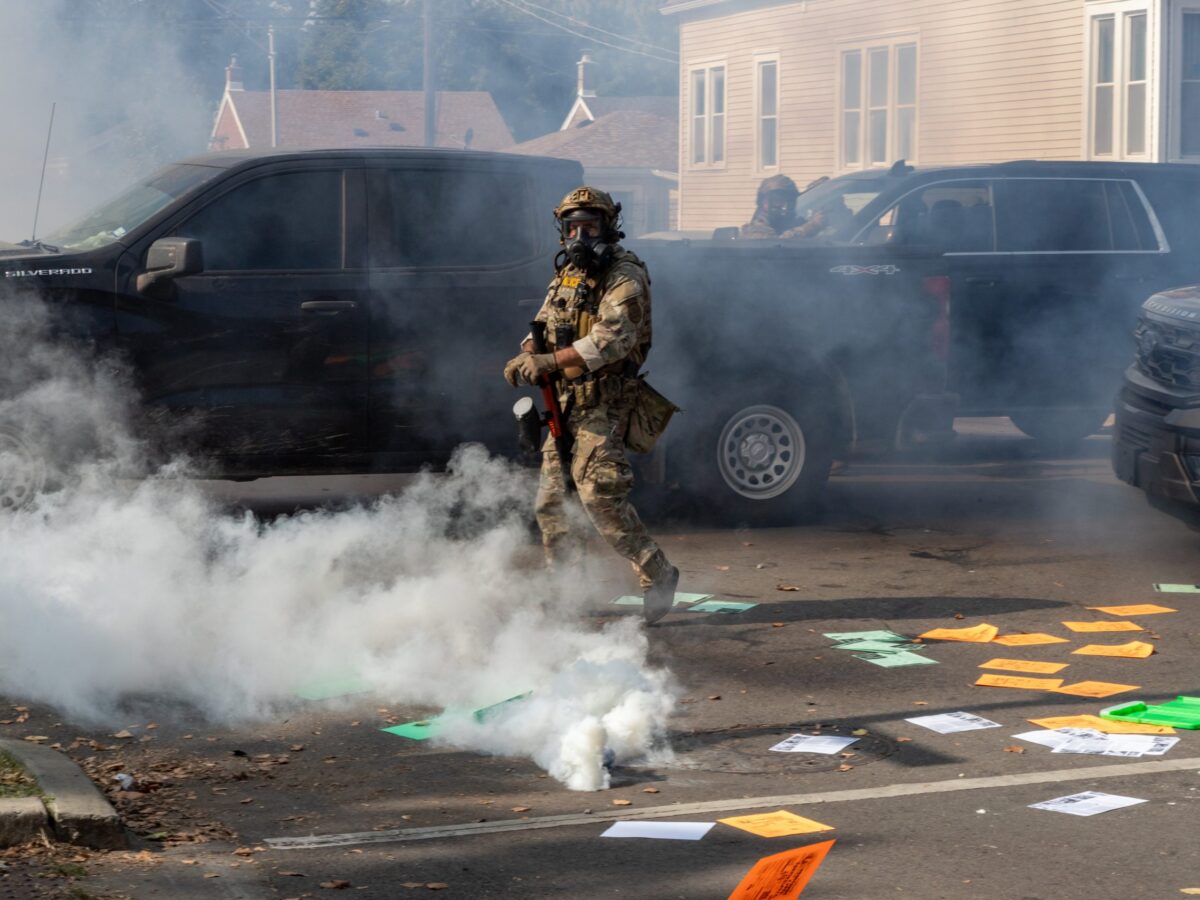
The filing also dedicates four pages to describing examples of what it calls “a policy of dispersing tear gas and other noxious chemicals without warning against persons who are not resisting.”
The Weekly, in collaboration with other Chicago news organizations, reported in November that federal agents had deployed chemical weapons at least forty-nine times across eighteen incidents throughout the Chicago area since the start of October. Illinois and Chicago’s lawsuit reiterates that finding.
The complaint outlines a total of nineteen claims for relief, including a request for the court to block the federal agencies from implementing these policies and to bar CBP from conducting civil immigration enforcement in Illinois without express Congressional authorization.
“Border Patrol agents and ICE officers have acted as occupiers rather than officers of the law,” Illinois Attorney General Kwame Raoul said in a prepared statement. “They randomly, and often violently, question residents. Without warrants or probable cause, they brutally detain citizens and non-citizens alike. They use tear gas and other chemical weapons against bystanders, injuring dozens, including children, the elderly and local police officers.”
Raoul’s office announced the complaint as the Trump administration’s mass deportation crosshairs have fallen on Minneapolis, MN, and amid a particularly violent start to the year for ICE and Border Patrol operations.
The Associated Press reported early last week that DHS was sending about 2,000 agents to the Twin Cities area, citing an unnamed official. The department boasted on social media on Tuesday that “the largest DHS operation ever is happening right now in Minnesota.”
ICE agent Jonathan Ross shot and killed Renee Good less than twenty-four hours later, sparking protests across the country. Ross shot Good only about a mile from where former Minneapolis police officer Derek Chauvin killed George Floyd in May 2020, which similarly ignited that year’s nationwide protests against white supremacy and police violence.
On Thursday, January 8, Border Patrol agents shot and injured two more people in a vehicle in Portland, OR. Over the weekend federal prosecutors charged one of the victims, Luis Nino-Moncada, with aggravated assault of a federal officer and depredation of federal property. An FBI affidavit attached to Nino-Moncada’s complaint claimed he used his vehicle to repeatedly strike an unoccupied Border Patrol vehicle, but conceded investigators have so far been unsuccessful in finding video evidence of the incident.
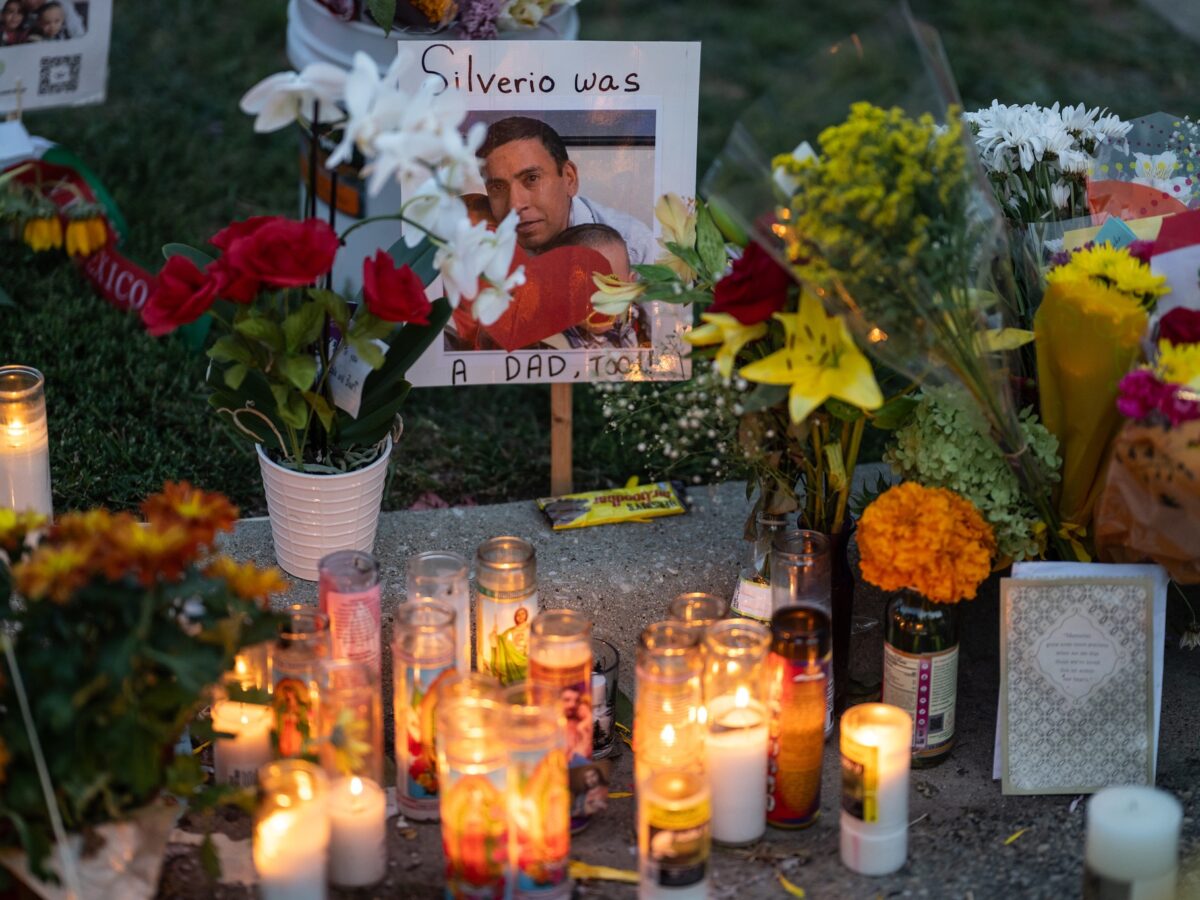
Illinois and Chicago’s lawsuit cites both these incidents, as well as CBP agent Charles Exum’s October 4 shooting of U.S. citizen Marimar Martinez in Chicago, and an ICE agent’s fatal shooting of Silverio Villegas González, a Mexican immigrant and longtime resident, in the Chicago suburb of Franklin Park on September 12.
“The chaos and violence that Border Patrol’s tactics have unleashed on plaintiffs has resulted in two shootings by immigration officers, one of them fatal,” the state and city argue.
The suit overlaps significantly with the still-pending federal class action of Chicago Headline Club v. Noem, filed last October, and with another federal lawsuit that Minnesota, Minneapolis, and St. Paul jointly filed against Noem and Bovinoon Monday.
The Chicago Headline Club complaint similarly highlighted multiple instances where ICE and Border Patrol agents deployed chemical weapons against unarmed people—particularly press, clergy and protestors—in the Chicago area, and likewise named Bovino and Noem as defendants.
Illinois and Chicago moved Monday for their new suit to be assigned to U.S. District Judge Sara Ellis, the federal judge presiding over Chicago Headline Club, because it “shares significant overlap in factual and legal issues.” The new case, for now, remains before Ellis’ colleague, U.S. District Judge Georgia Alexakis.
As part of Chicago Headline Club, and after concluding Bovino had lied in deposition testimony, Ellis issued an injunction against federal immigration agents’ more violent tactics in the Chicago area in early November. However, a Seventh Circuit appellate panel consisting of two Trump-appointed judges and one Reagan appointee stayed Ellis’ injunction order later that month, deeming it “overbroad.” The plaintiffs subsequently moved to dismiss their complaint, which would dissolve the injunction.
Ellis, citing concern over Good’s killing and other legal issues, last week declined to rule on that motion. Another hearing in the case is set for January 22.
On Thursday afternoon, Judge Ellis granted Illinois and Chicago’s motion that she, rather that District Judge Georgia Alexakis, be the one hearing their new lawsuit.
Ellis remarked that, as she was familiar with the issues presented in Chicago Headline Club, it would serve judicial economy if she were the one presiding over the new case. Having another judge to get up to speed on these issues, she claimed, would be “inefficient.”
“Both of these cases involve many of the same issues of fact and law,” Ellis told attorneys for the state, city and federal government during Thursday’s hearing on the matter.
Minnesota, Minneapolis, and St. Paul’s eighty-page complaint from Monday overlaps with Chicago Headline Club, which it cites, by asking the court to rein in federal immigration agents’ violent behavior toward bystanders and protestors.
The Minnesota filing meshes with Illinois’ in that it seeks a court declaration that defendants’ actions violated the Tenth Amendment. It also seeks to enjoin the “unprecedented surge of Defendants’ agents” into the North Star State.
“This operation is driven by nothing more than the Trump Administration’s desire to punish political opponents and score partisan points—at the direct expense of plaintiffs’ residents,” Minnesota’s filing reads, echoing Illinois’. “Defendants’ actions appear designed to provoke community outrage, sow fear, and inflict emotional distress, and they are interfering with the ability of state and local officials to protect and care for their residents.”
Editor’s note: This story was updated on Thursday, January 15.
Dave Byrnes is a Chicago-born independent journalist covering the Trump administration’s anti-immigrant blitz. He lives in Lincoln Square, but is a lifelong White Sox fan.