
As immigration enforcement intensified under the Trump administration, rapid response networks expanded across cities like Chicago and Minneapolis, where volunteers began responding in real time to reports of federal agents in their neighborhoods. In some places, that response has included people blowing whistles to alert neighbors or tracking ICE vehicles as they move through a neighborhood, alongside other forms of real-time coordination. Across cities, these networks have taken shape through hotlines, group chats, and neighborhood-based organizing.
Much of this happens out of view: distributing supplies, organizing legal observer trainings, documenting encounters on the street, connecting people to neighborhood networks, coordinating alerts, and supporting families with food and other needs.
In this story, I spoke to three people involved in rapid response efforts about the roles they’ve taken on. Two spoke on background to protect their identities.
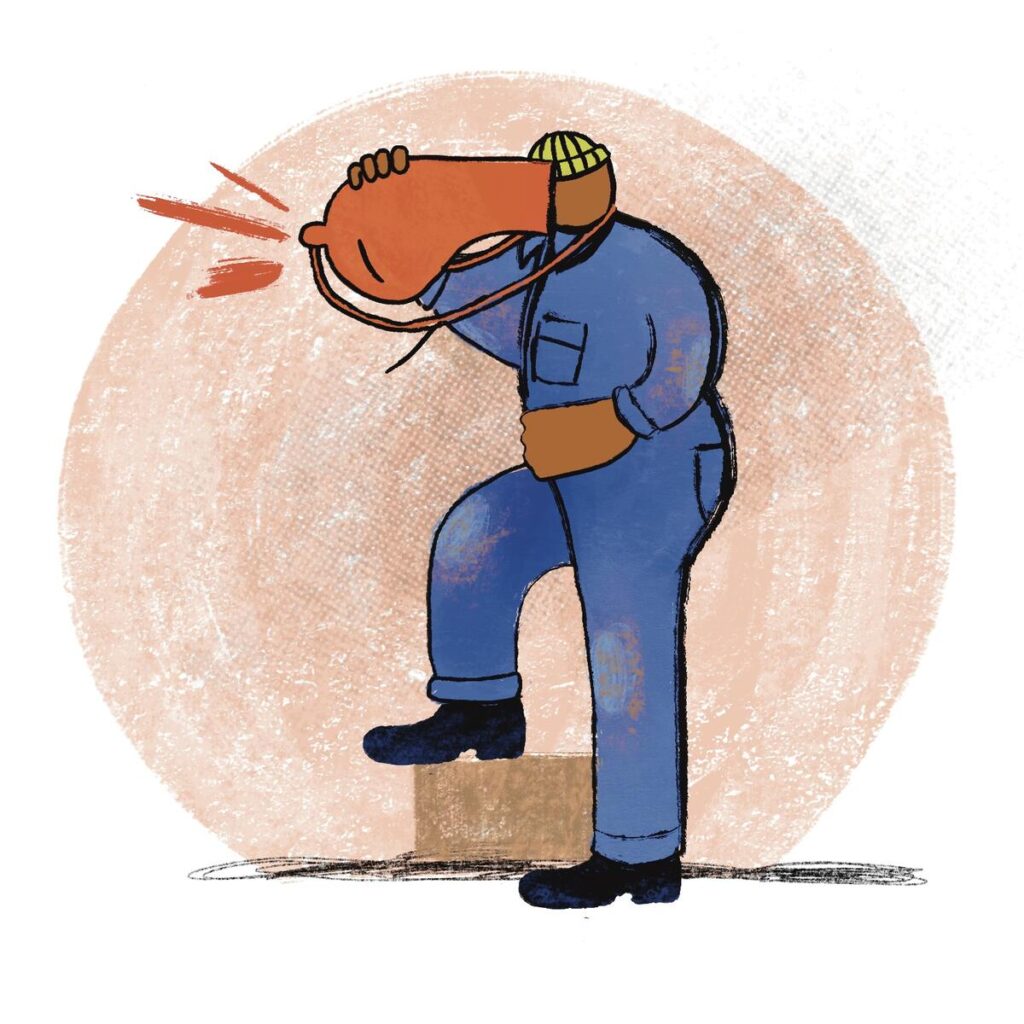
Lucas* isn’t part of an organization. He doesn’t have formal training. He works a regular job at a print shop. But as immigration enforcement intensified in his neighborhood of Little Village he felt like he had to do something.
In the weeks leading up to the surge, he kept seeing videos, posts, people talking about whistles being used to warn others when agents were nearby.
Lucas had been hesitating about what he could do to help his neighbors but he didn’t know how. So he went on Amazon and ordered more than a thousand whistles.
They began to pile up in his home with boxes stacked in his dining room. He then started handing them out directly in the neighborhood, especially to street vendors and people he came across in daily life: he said he would walk around asking people, “Do you have your whistle?” and giving them out for free.
Lucas said he brought whistles with him even when running errands at Walgreens and ended up giving them to people there too—even employees—who didn’t question what the whistles were for and just thanked him. “They know what it’s for,” he said.
Seeing him around the neighborhood, people wanted to know what organization he belonged to. “I was like, I’m sorry, It’s just me.”
But that led him to start a Facebook page so people could follow updates and help if they wanted to.
He and a few others pooled money to print Know Your Rights cards and created simple bilingual zines with instructions on how to use the whistles.
At work, he used what he had—paper, printers, layout tools—to put together those materials.
Quickly this grew into a collective effort, with volunteers assembling kits together and using the whistles to alert neighbors in real time. As the group expanded, the work became constant—filling his days with organizing, printing, and responding to others.
He began organizing gatherings at local restaurants, including Aguascalientes in Little Village. Volunteers would sit around tables assembling kits. At one point, he said, they brought a batch directly to a local school, handing them off so they could be distributed more widely.
One day, he heard it himself. He followed the sound of a whistle while driving on his way to work, and found a young woman standing outside, blowing in short bursts, scanning the block.
He decided to pull over and ask her what she had seen. She pointed him in the direction of where agents had been spotted. Other people were there when he arrived—some of whom he recognized from the neighborhood. He pulled over close by, grabbed a bullhorn from his car, and started recording.
At one point, he yelled, “Get the fuck out of Little Village” to the agents. He said it came from somewhere deeper, something instinctive and protective of the neighborhood. Within minutes, the agents pulled back and left.
For him, it was one of the clearest examples of how whistles worked. “That whistle had a lot to do with it…kind of led you to that.”
I spoke with Lucas in December, just a few days after ICE agents had left Chicago, at a restaurant where he had assembled whistle kits. But the urgency of those early days still lingered.
“I’ve had, like, no free time,” he said. He said even when he tried to rest, those moments stayed with him.
“I’m trying to find my way back home to who I am,” he said. But he also understands that something deeper shifted and things aren’t the same. “How much of this is now me?”
In Minneapolis, another volunteer, Brian* came into the work—but in a different capacity. He lives in the Powderhorn Park area of South Minneapolis, a neighborhood he described as diverse and close-knit. It was also one of the first places where enforcement activity became visible during Operation Midway Surge, a federal immigration enforcement effort launched in early December 2025 that deployed over 3,000 masked and armed federal agents in Minneapolis and St. Paul.
At the time, Brian wasn’t deeply involved in rapid response work. He had been involved in some mutual aid work since 2020, but he wasn’t connected to any specific group.
His involvement began when he saw agents moving through his neighborhood and chasing someone down the street.
Nearby, a young woman stood outside a car with her child. He and his partner stood outside too, trying to understand what they were seeing.
“I’m a little ashamed to say now that we didn’t blow our whistles,” he said, describing how early it was in the operation, how uncertain everything felt.
They stayed, watching. Afterward, they followed one of the vehicles for a few blocks trying to track where it was going. Later, Brian tried to speak with the woman using Google Translate. He learned that agents had chased the child’s father from the car. He didn’t know what happened after that.
The reports didn’t stop. Alerts came in from blocks away about other people being chased, doors being forced open, neighbors showing up. “You would just see more and more stories like this come in, right near you,” he said.
That was when he began to get involved.
At first Brian joined channels on Signal (a secure messaging app), attended early observer trainings, and kept an eye on what was happening. But as more people began trying to help, it became clear to him that there was a huge gap.
People didn’t know how to help.
“There were so many people who wanted to get involved,” he said. “They just didn’t know how.”
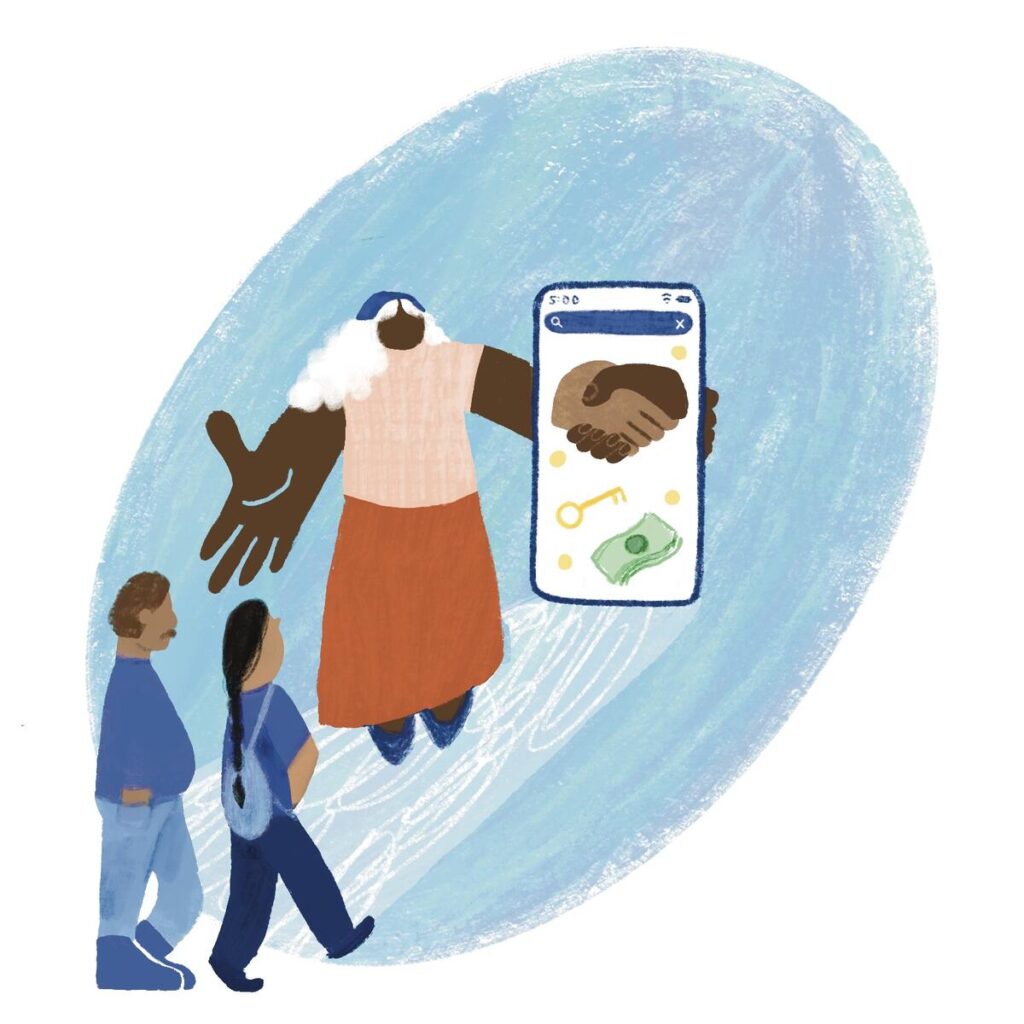
So he stepped into what he describes as a connector role.
Throughout the Twin Cities, Brian helped create an extensive network that links people to local groups, intake routes, and response systems.
“We didn’t organize the groups,” he said. “We greased the wheels.”
He explained that in Minneapolis, neighborhoods are spread out and people relied more on cars and coordination. You could not depend on someone simply being nearby.
After the killing of Renee Good, and then Alex Pretti weeks later, more people began reaching out, trying to get involved and the need for coordination became harder to manage.
“It’s always changing,” Brian said. “You have to keep adjusting.” At its peak, he said he was spending 60 to 70 hours a week.
Over time, roles began to take shape. Some volunteers drove through neighborhoods looking for federal agent vehicles. Others stayed in place, watching schools, churches, or business corridors. Dispatchers monitored incoming reports and directed people where to go. Others worked behind the scenes, checking information before it was shared more widely.
And so the work of connecting people, of making sure someone who wanted to help had somewhere to go, became his expertise. He was not always visible, but helped build a vital system. As an immigrant himself, he understood the fear that was moving through the community and so giving people something to do and a way to act, became important to do.
Looking ahead, Brian sees the work continuing to grow, such as people sharing what they have learned, building on each other’s strategies, and figuring out what works and what needs to change.
For people in other cities who are watching and unsure where to begin, his advice was simple: connection changes how people experience a crisis.
For those who don’t have it, or don’t feel able to respond, the weight can build quickly, especially when they are taking in information but don’t know what to do with it. “The more you can find something to do, the better you’re going to feel,” he said.
“Finding something to do about it, even a small thing, is so much better than doing nothing,” he said.
“The best thing to do, more than anything, is just to start getting to know your neighbors…start making connections with people,” he said.
Michael Urbanski of Northeast Minneapolis first got involved in rapid response networks early 2025, after attending a legal observer training just weeks into the Trump administration—one of the first large public entry points into what would become a much wider network.
More than a thousand people showed up, many of them, like him, “looking for something more immediate, something that felt closer than calling elected officials.” He had been loosely involved in activism since 2020 after the murder of George Floyd by a police officer.
A legal observer, as he described it, is someone who shows up to document, to use their presence and their phone to record what happens to federal agents which are often moments that unfold quickly and without warning: when agents come into a neighborhood to kidnap people, storm into businesses or agitate neighbors. Urbanski said the role is structured, but also fluid. You might respond to an alert, or you might be on your way somewhere else and come across something, and in that moment, you become part of it.
“You show up to film,” he said. “You’re not there to escalate.”
Over time, his role shifted. What started as showing up turned into organizing the trainings themselves then into the quieter work behind it, answering messages, routing messages they received through the hotline, moving information, keeping track of where people were needed.
When the surge began in December, he said the alerts increased, and systems that had been built over the year began to strain under the weight of what was happening. By January, the intensity had shifted again.
“My palms were sweaty for all of January,” he said.
At a bus stop in Minneapolis, Urbanski watched as four vehicles pulled up fast around a man who was standing there alone, blocking traffic while agents got out and formed a perimeter. Within minutes, people began gathering. Some filming and others were trying to make sense of what was happening. Urbanski, there as a legal observer, focused on documenting the scene.
Urbanski stressed this work is important but it’s also complicated. On one hand, observers are there to make visible what might otherwise happen without witnesses. But on the other hand, Urbanski explains it also can draw attention to the person—turning someone else’s worst moment into something more exposed as you are in close proximity to someone else’s vulnerability.
“I don’t want to further dehumanize anybody,” he said, describing the line he was constantly trying to navigate.

He described standing outside a construction site for hours, watching, waiting, making sure workers could finish safely after agents had been approaching them. He knew this might help, but also, he was conflicted about how it would feel for them. When they came down, they thanked him. But it was something he hadn’t wanted because he didn’t want them to feel like they owed him anything.
As the work expands, so do the networks around it. Mutual aid efforts have grown alongside rapid response, often quietly, built through relationships rather than a formal structure, with people organizing food deliveries, rent support, rides, and other forms of care that has made it possible for others to stay safe or stay home.
But the work has drawn backlash. He said people called the hotline just to leave hostile messages, and the training inbox filled with emails accusing them of being criminals and domestic terrorists. He said someone told him that a person had been sitting on his block in a car, idling. But he never knew who this person was.
Urbanski had left his job in software engineering months earlier, a break he had planned, but as the work grew, it became harder to imagine returning to something that felt disconnected from what he had been doing.
“It would be pretty hard to go back,” he said.
Alma Campos is the Weekly’s immigration reporter and project editor.