
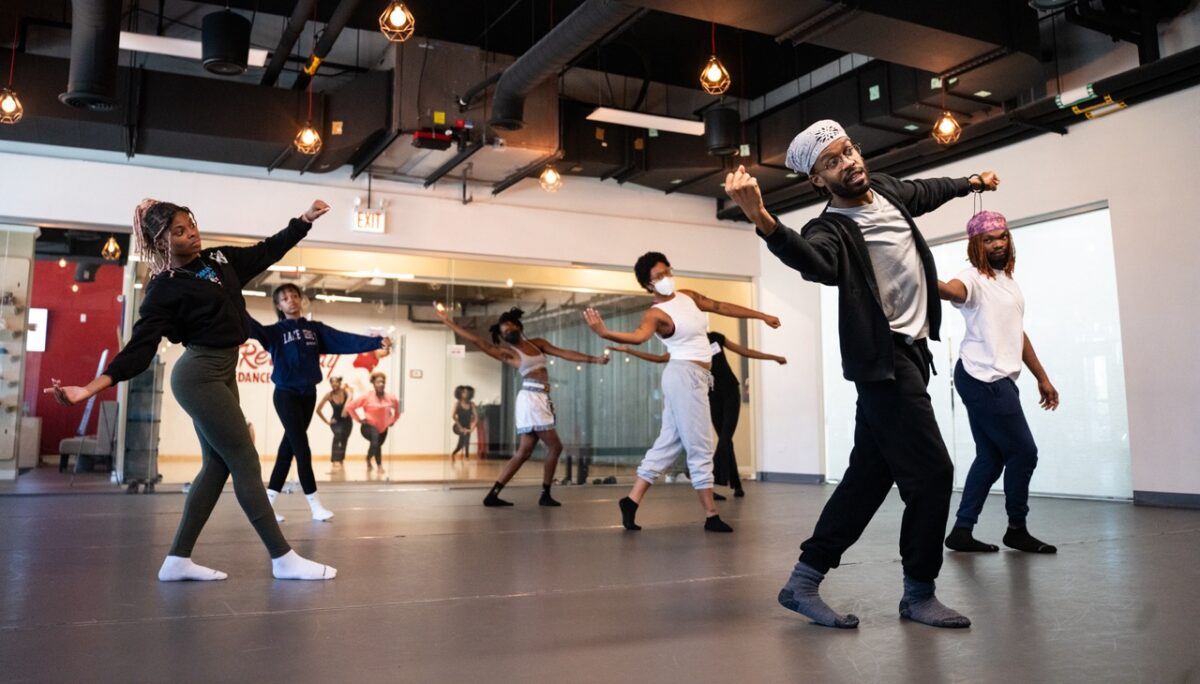
Activist or artist? For dancers at Red Clay Dance Company, the challenge is not one or the other, but the combination of the two. Its apprenticeship program offers dancers a chance to infuse greater meaning into their choreography while providing a launchpad for a meaningful dance career.
“How do we cope with this?” asked Takashe Fulce in the process of developing her project, “Post-Grad Navigation,” for Red Clay Dance Company’s Making the Artivist program. “You go to high school and in four years you graduate, then after you go to college, if that is your dictated path… It’s kind of planned out for you until you step out into the real world.”
The twenty-three-year-old Bolingbrook native, a recent graduate of the University of Illinois Urbana-Champaign who majored in dance, is challenging herself to express the struggles of life after graduation through dance. She is a member of the sixth cohort of the Woodlawn-based dance company’s paid apprenticeship for dancers and choreographers ages eighteen to twenty-four, in which participants explore how dance can be a tool for social impact.
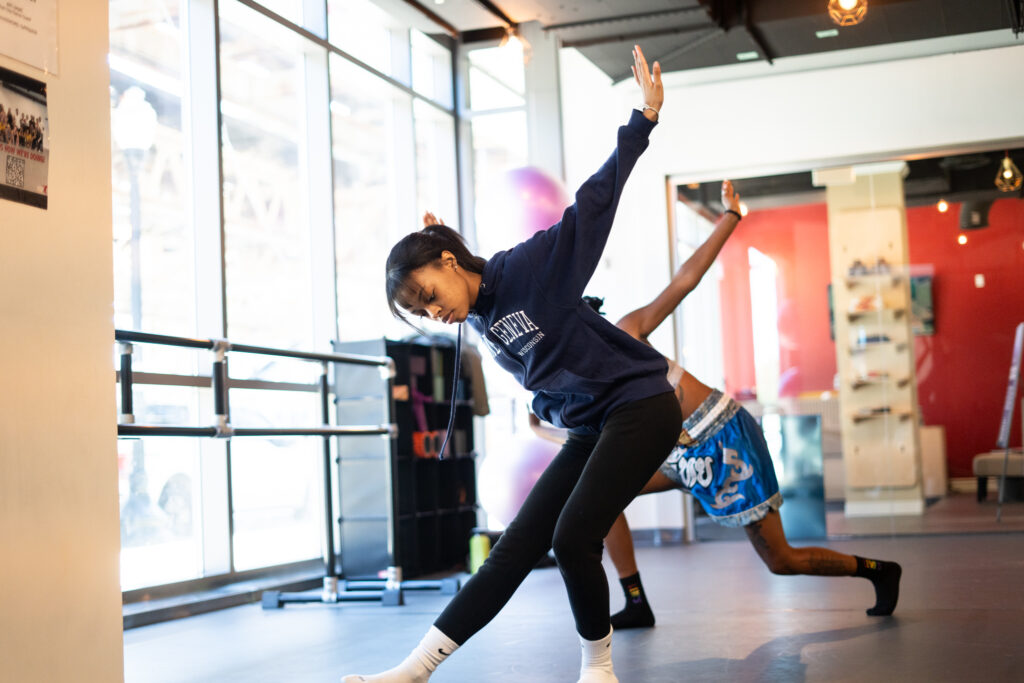
The first phase of the program focuses on “identity, artistic voice, and community connection through movement and storytelling.” Phase two focuses on career and project development, featuring performance, mentorship, and possible funding for future projects. (Photo courtesy of Red Clay Dance Company) 
By definition, an “Artivist” uses art—like painting, music, writing, or performance—to raise awareness, challenge injustice, heal, inspire, or advocate for a better world. (Photo courtesy of Red Clay Dance Company)
By definition, an “Artivist” uses art—like painting, music, writing, or performance—to raise awareness, challenge injustice, heal, inspire, or advocate for a better world.
The twelve-month Making the Artivist program provides training on choreographic storytelling, creative project development, and career preparation skills specifically for dancers, as well as professional development to empower participants to create sustainable livelihoods as artists.
“The program started out at the juvenile detention center, actually,” said Destine Young, Red Clay Dance Company’s director of community engagement and education. “The company had been invited to perform a work for the young people there, and they had a lot of questions after the performance on how [we] make meaning behind the moves.”
Those questions inspired Vershawn Sanders-Ward, Red Clay Dance’s founding artistic director and CEO, “to build a program where young people can learn more about the storytelling behind dance and how to really make movement and meaning behind the things they care about, the changes they want to see in their communities,” Young said.
She elaborated that although the program is for experienced dancers, Red Clay Dance embraces a variety of dancer backgrounds: “Whether it was a studio, a park district, or… dance school team, we really want to give them an opportunity to still have access to these kinds of benefits and community opportunities.”
Making the Artivist project topics often focus on issues like equality and political change, or give voice to personal struggles, even aspects of the human experience.
“Me and my friends, we’re in this space where all we want to do is be successful and live simple lives, but life isn’t so simple because you have so many factors,” Fulce said. She reflected on the challenges fledgling adults face as they start to make decisions that may determine the rest of their lives, like how to financially support themselves, whether or when to start their own families, “and figuring out how to network to get that specific job.”
“How do we navigate that?” Fulce asked.
“Post-Grad Navigation” is a daunting experience for many adults, and the expression of this predicament is no easy mission. But the Making the Artivist program provides structure to do so.
Fulce is gaining the tools she needs to manifest her idea through the program’s twice-a-week sessions and supportive environment. The first phase of the program focuses on “identity, artistic voice, and community connection through movement and storytelling.” Phase two focuses on career and project development, featuring performance, mentorship, and possible funding for future projects.
Fulce said the biggest challenge of her project is starting to create the movement around it, but she is excited about what she is gaining in the program. “I really enjoy the identity exploration work we do here,” she said, and she’s become more comfortable with showing her work and not being so hard on herself.
“It’s okay not to know, and to be stuck, because that is just the process,” she said. “And that is what we are here for, to learn our process.”
Through the challenges, Fulce is clear on her objective: she wants people to walk away from her project “feeling refreshed” and able to relate to it. She emphasized how much she appreciates the support of the other dancers in the program, and she hopes her project will let others know they are not alone and inspire older adults to help.
“A lot of young people need mentors” and to know that “I wasn’t crazy and I can do this,” Fulce said.
Red Clay Dance Company accepts sixteen apprentices for each Making the Artivist cohort. Each dancer has a different background and brings unique expression, energy, and inspiration to art and to activism through movement. For Fulce, her activism gives a voice to and builds awareness and support for a period of post-graduate struggle. Other dancers in Making the Artivist tackle subjects responsive to the social and political climate.
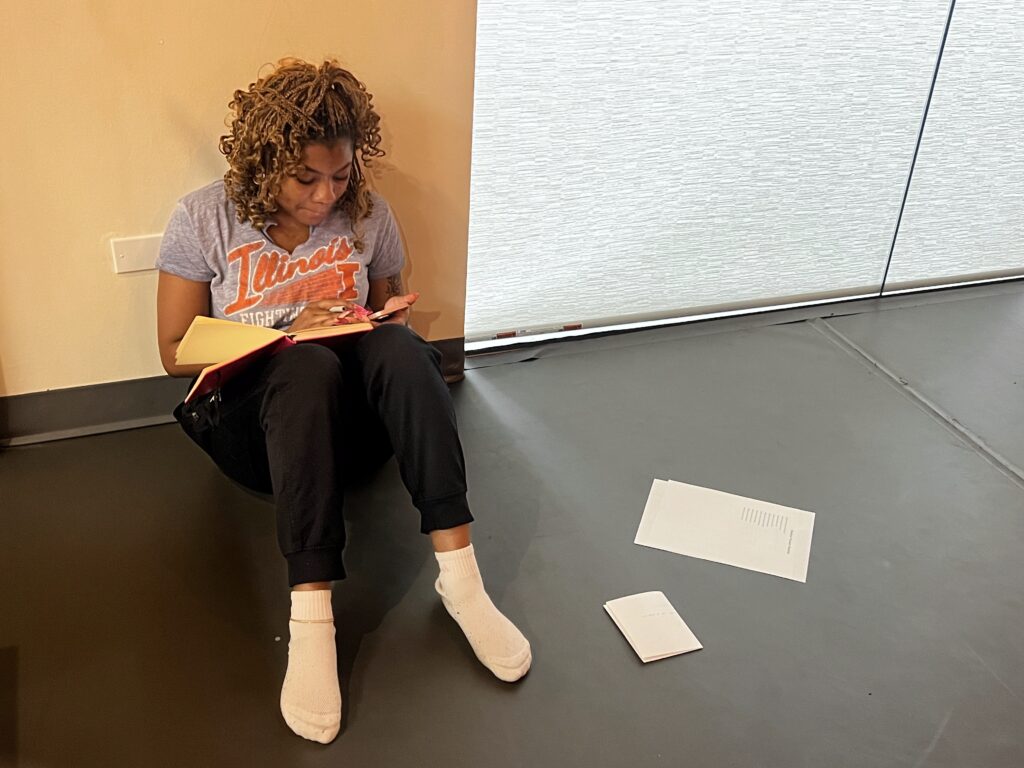
“Even if you have this big résumé, ‘it’s not what you know, it’s who you know,’” Takashe Fulce noted as she researched her project for the Making the Artivist apprenticeship at Red Clay Dance Company in Woodlawn. The twenty-three-year-old Bolingbrook native, a recent graduate of the University of Illinois Urbana-Champaign, is challenging herself to express the struggles of life after graduation through dance. (Photo credit: Taryn Galbreath) 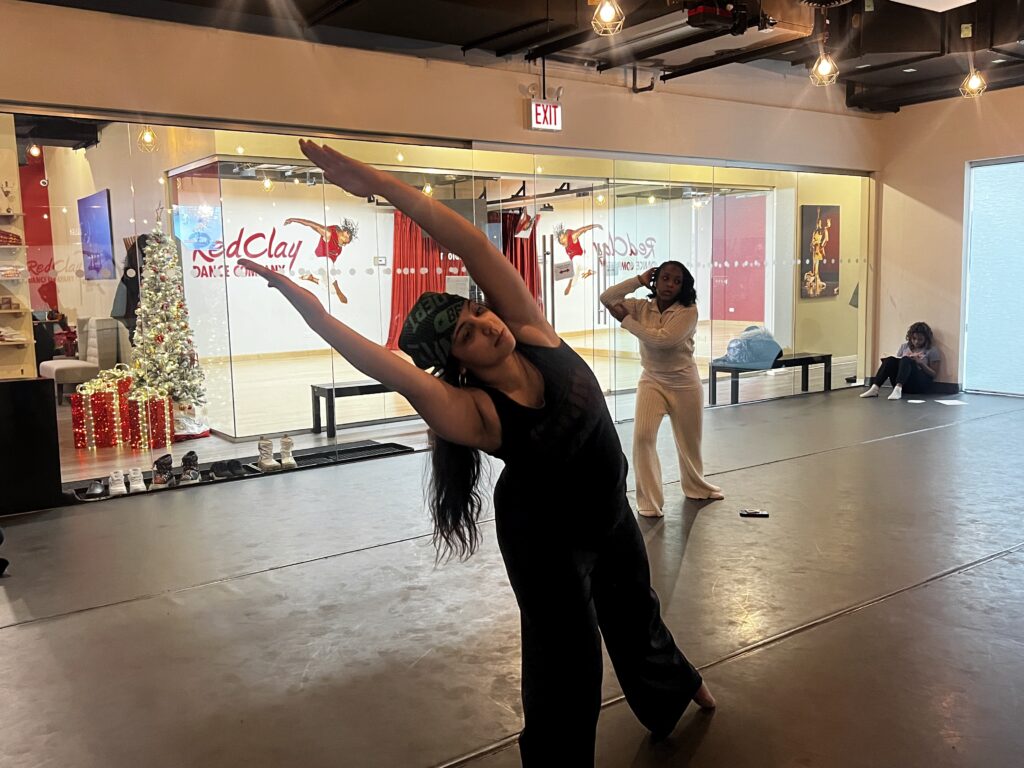
“I was seeing, obviously, a lot of what’s happening in our country, and in Chicago specifically, with ICE raids and things like that,” said Nawal Assougdam, current Making the Artivist apprentice at Red Clay Dance Company, as she discussed why her project was about citizenship. Assougdam’s parents are immigrants, now naturalized citizens of the United States. (Photo by Taryn Galbreath)
Nawal Assougdam’s project focuses on citizenship. “I was seeing, obviously, a lot of what’s happening in our country, and in Chicago specifically, with ICE raids and things like that,” she said. “It had me just thinking a lot about, what makes somebody a citizen or, what qualifies somebody to be ‘legal’ or ‘illegal,’ and why does that matter—especially when we’re talking about stolen land and being on indigenous land.”
Assougdam is another recent graduate from the University of Illinois Urbana-Champaign, where she majored in dance and kinesiology. A native of Denver, Colorado, the twenty-two-year-old shared that her family is from Morocco and both parents are immigrants, now naturalized citizens of the United States.
“I have to make something that feels right to me and that resonates with me, because if it doesn’t resonate with me, how is it going to resonate with anyone else?” Assougdam said.
Through its Making the Artivist program, Red Clay Dance Company is not only empowering activism through art but making a profound impact on participants like Fulce and Assougdam.
“If you are an independent artist and you want to do some independent exploring work on a social topic or issue that you want to bring to light, they give you the space and opportunity to do that,” said Fulce.
“I’m just really excited that an opportunity like this exists,” Assougdam said. “To be somebody fresh out of college, having an education in dance, too, I feel like I wasn’t necessarily prepared to just go into the dance world, and this program is giving me a space where I am, one, encouraged to and required to make dance, but then I’m also being given resources to make that happen.”
Red Clay Dance Company’s seventh Making the Artivist cohort will begin training in January 2026.
Taryn Galbreath is an experienced reporter, traffic anchor, news anchor, and multimedia journalist. This is Taryn’s first piece for the Weekly.