
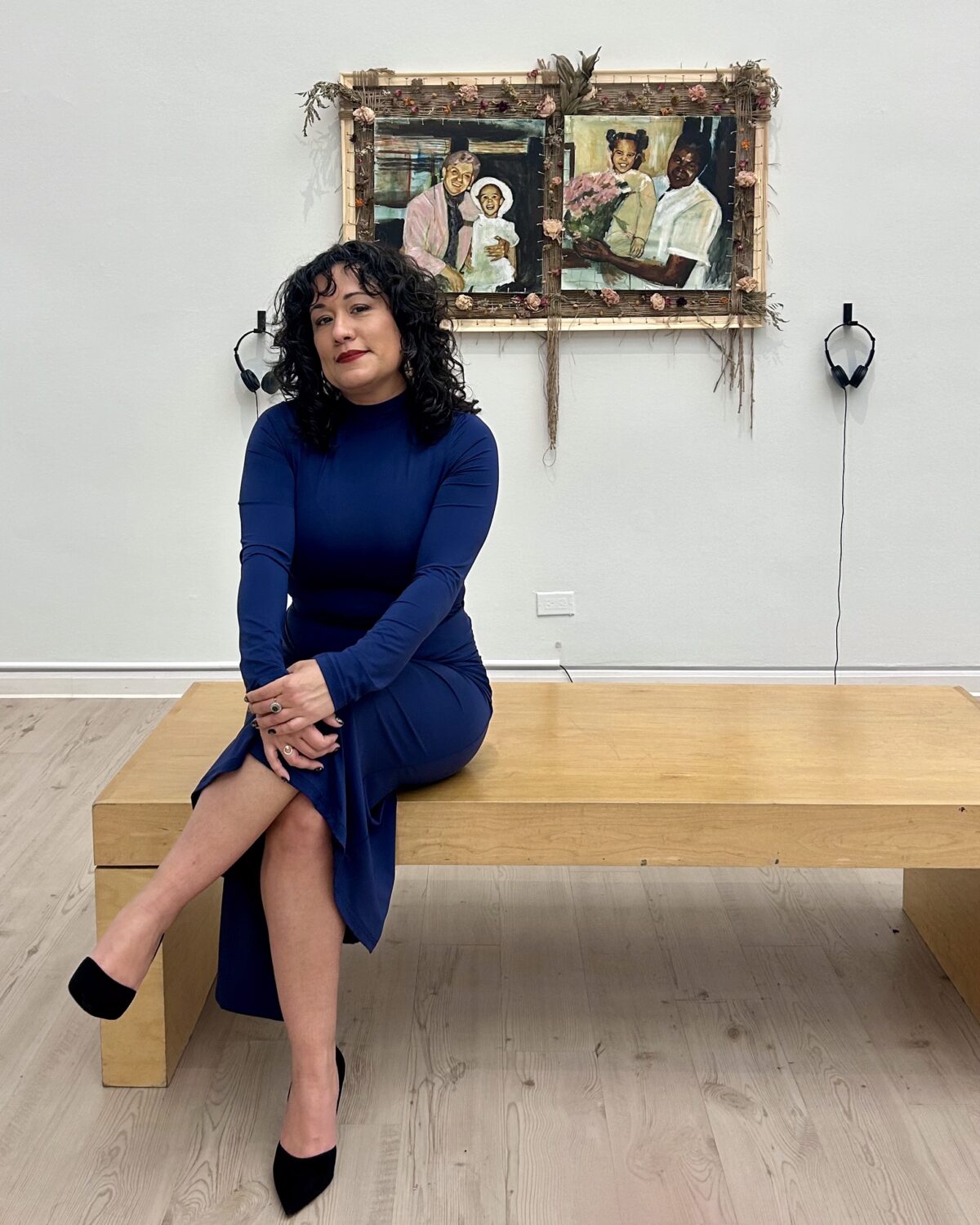
I met Mayda del Valle in 2017, when I was a Youth Poet Laureate and educator for Young Chicago Authors. Jamila Woods, our cohort manager at the time, brought her in to lead our cohort sessions. The structure of our cohort was intended to help the teaching artists of the organization sharpen their literary skills, master curriculum building, and gather critique for new or developed pieces. As I write this piece now and reflect back on that moment under del Valle’s care, I wonder if I truly knew the value of this brilliantly kind and warmly talented individual’s time, or if I was able to take in all the information she offered. Almost a decade later, I can’t remember the scope of the workshops but I can remember where I was artistically at the time. I remember wanting to explore new avenues of creativity. I wanted to prove to myself that I wasn’t just a poet. That I had a lot more to offer myself and my community. I thought, “Why should I just be a poet, when I can do a lot more?”
Nine years later I got up close and personal with Mayda again at the Chicago Cultural Center, when this January the Chicago Public Library, alongside DCASE and the Poetry Foundation, celebrated the official appointment of Mayda Alexandra del Valle as Chicago’s second-ever Poet Laureate. She will serve a two-year term in this role, and receive a $70,000 grant to commission new works and create public programming. Through this interview, I was able to learn who she truly is and what a gift it is to be in her presence and know her story. I was particularly interested in learning how she got here. How did Mayda del Valle, a Puerto Rican from Chicago’s South Side, make her dreams come true? I wanted to know who she was as a young writer, what experiences growing up shaped her today, and how she teaches the art of remembering where you come from.
So you are from the South Side?
I am, born and raised.
Where exactly?
I was born in Englewood, on 54th & Wood. When my parents first got here from Puerto Rico, they settled in Woodlawn and Englewood. And there was a really sizable Puerto Rican community there back in the day, in the fifties, sixties, and seventies. And then when I was about five, we moved to Chicago Lawn. So I grew up on 63rd Street, like 63rd and California. It’s funny because I found all of my brother’s and sister’s classroom photos, and I went to kindergarten at St. Basil before they knocked that church down. So I was looking at all our class photos, and my brother and sister were always one of four or five Latino kids in the mostly Black classroom. And then I was one of three or four Latino kids, with Black teachers, Black students. And then we moved west to Chicago Lawn.
When we moved, we were one of the first non-white families in that neighborhood. And then by the time I looked at my eighth grade class picture, it was three or four white girls and everybody else is Black and Latino. So it was interesting being able to see those class pictures and seeing the change of demographics. You just kind of see the history of the South Side in these class pictures. It was really cool.
Did they have a spoken word team?
No, they did not… I mean, I started writing when I was a freshman in high school, so I was definitely doing the school talent shows, and I was a theater nerd, and I was writing monologues for our variety show.
There was an organization called the Southwest Youth Collaborative that started a program called the University of Hip Hop when I was in high school. So myself and a group of young people that were mentored by some folks at that organization, we kind of helped kick off that program and it ran for a real long time. They basically would do classes in graffiti and DJing, MCing and Bboying—all the elements. And so my earliest experiences as an artist were always in multidisciplinary spaces and spaces of learning to be a young youth community organizer, always the arts in the context of community building and social justice. And then I left for college.
I did want to talk to you a little bit about that, what your poetic journey has been from youth to now. I hear you;re talking about organizations or organizing influences. What were some of those things that you were getting into?
Ooo! Sixteen, seventeen-year-old Mayda used to sneak out the house and do graffiti at night… wearing oversized JNCO jeans with my baseball cap and my Ralph Lauren “Polo” boots.
So I was really into hip hop, and at that time the hip hop scene in Chicago was just really vibrant. In any event all the elements were represented. Some of the earliest things that I started to write were raps—they were bad. Let’s not talk about those. But I kept writing, and I had an English teacher my freshman year in high school who had us do a lot of creative writing exercises, Mrs. Kelly, and she made us keep a journal for class. And that’s when I was like, oh, okay. I really want to be good at this. I think I have that notebook, and I think I wrote in it one time, “I want to win a Pulitzer Prize.” I was, like, fourteen… So Mrs. Kelly would have us do all this stuff, and then I started taking it a little bit more seriously. And then at the Southwest Youth Collaborative, we would have poetry and writing workshops that our mentors would do, kind of in the style of poetry for the people, like June Jordan. I didn’t know what they were doing at the time, but in hindsight, I’m like, man, they were doing poetry for the people-type stuff with us! And so I got real serious about it. And then I left to go to school and that was a big culture shock for me.
Where did you go to school?
I went to Williams College in Massachusetts. I pursued a degree in studio art: screen printing and photography, sculpture, video. My senior year, I had to take drawing classes, figure drawing, art history. I worked in the wood shop. I had to learn how to weld armatures for sculptures, learn how to work with plaster, and learn how to work with wood. I took photography, and then my senior year, with a semester left, I wanted to drop out of school. I was just over it. I was done. I was like, this place sucks. You’re talking late nineties, early two thousands. So affirmative action, multicultural movement in schools. And it was a really, really, really, really privileged, primarily, I dunno, eighty percent white school. So it was hard for me socially there.
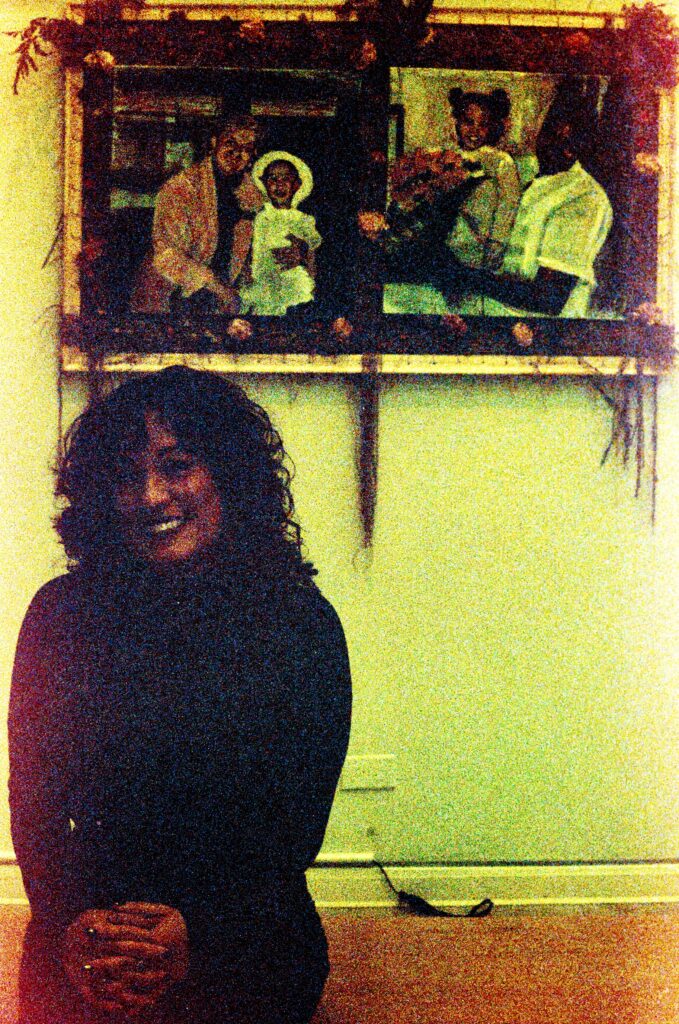
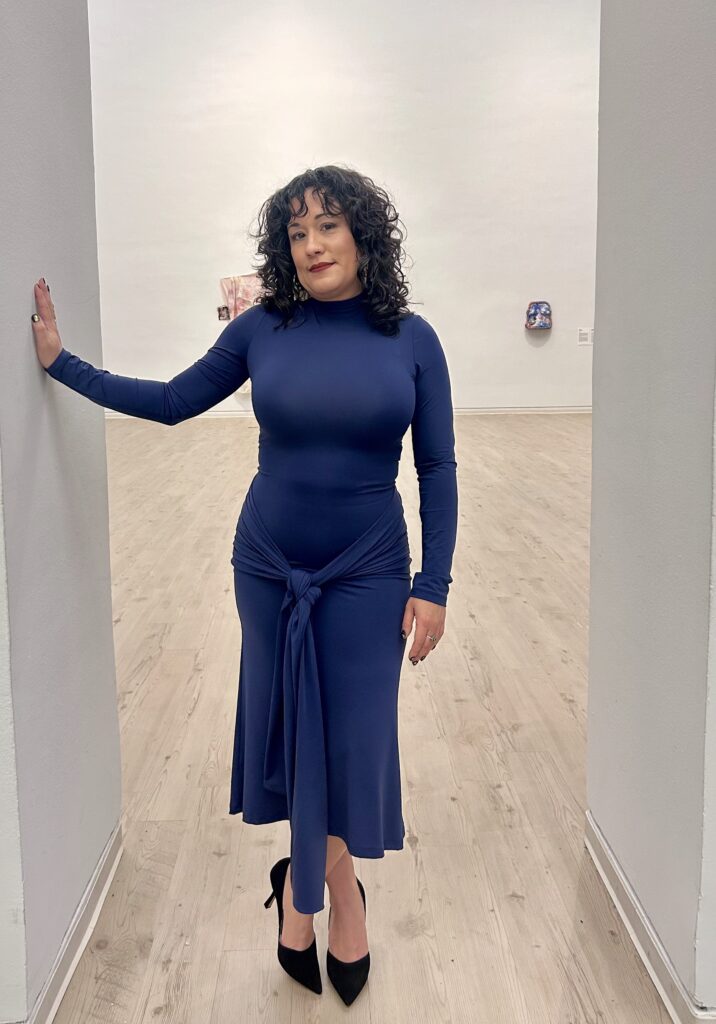
I had studied abroad in South Africa for six months. So when I came back, I was like, what am I doing here? It just felt like there was a cognitive dissonance in me being in this really sheltered, disconnected place. But I hunkered down and ended up doing an independent study with my dance teacher. I ended up writing a whole bunch of poems and I was like, “Oh, I’m just going to do an independent study on poetry and performance.”
I thought I was going to write a research paper or something. And what ended up happening is that it kind of merged with my art thesis. So I ended up making these videos and I ended up writing all these poems, and I put together this multimedia performance piece with music and videos and my poems and dance and all of this stuff. Then a couple of those poems I ended up doing on Broadway.
Congratulations. May I ask you the details of that?
So I graduated, I moved to New York, I took those poems, and I started going to the new Nuyorican Poets Café.
Is it still open?
It is. It’s under construction. So when I came to New York, Caridad de la Luz was already really big on the poetry scene, and she was a rapper and a singer and actress. Multihyphenate, really dope cool sister, a couple years older than me. She’s [the executive director] right now. So they’re redoing the whole building, but she’s doing programming kind of popup style all over New York.
So I took those poems. I walked into the Nuyorican one day and I started slamming and I started winning. Nobody knew who I was because I had been out of Chicago for four years. I moved to New York in September, and in June I won the Grand Slam, which was a big deal at that time too, because there hadn’t been anybody Puerto Rican who’d won the Grand Slam at the Nuyorican since Willie Perdomo in the mid-nineties. So I won the Grand Slam, which means I made it onto the 2000 Nuyorican team, which means I got to go to the National Poetry Slam, which I really wanted to do because two years prior, the Grand Slam, the National Slam had been in Chicago. And I got to see it and I was like, I want to go to the National Poetry Slam.
I got to go to the National Slam, and then I won the National Slam that year. I won the Nuyorican in June, and then I won Nationals in August, and then that September was September 11th…
That October was the first season of Def Poetry Jam on HBO, and I made the cut. Not everybody who recorded for that first season made the cut.
What was that experience like?
That was crazy. From that I ended up doing Def Poetry Jam on Broadway. They turned the show basically into a Broadway show. So that’s how the college independent study poems end up on Broadway.
You were just meant to be a star. You are very multi-hyphenated. In what ways can we make poetry more accessible? And I would love to know if any of your multi-hyphenates plays a part in that accessibility call.
I think everything has its own poetics, thinking about graffiti and music and dance. I have that visual background, which was kind of unexpected, but it makes sense for me in hindsight that I would’ve pursued that as my degree, even though I didn’t do much with it right afterwards. And then I danced in college too, and I was always a performer—that came from high school as well. So for me, they all go together. I always tell my students whenever we’re writing to, study another medium, take a couple classes, go try something in a different medium. If you feel like you’re never a good dancer, go take a dance class. All of these things inform your work. I can talk about the body in the way that I do. I can talk about movement in the way that I do because I’m a dancer. I can talk about texture and color and light and all of these different things as a writer, because I pick up a paintbrush and I paint earrings, or I pick up a camera and take a photo.
One of the things [people say I’m] known for is the musicality and rhythm in my work. And I didn’t always study music, but there came a point when I started studying Bomba music. I got really deep into it, studying the instruments and studying the structure and the rhythm of the songs. I started writing Bomba songs, but that aspect of storytelling is in that as well. So I don’t know. I always tell students to try a different medium, challenge yourself. It’s only going to make you a better writer. I feel like art informs each other; mediums all speak to each other. They all try to tell a story, and they all give you a vehicle and a tool for expression. So have at it.
I love that you’re talking about your youth. As an educator, what values or what core values of literacy do you think need most support right now?
I feel like young people have got to understand how powerful they are. And one of the ways in which they can really tap into their powers is by telling their story and taking control of their voice, having control of their voice, being able to tell their story in their own way. I feel like that’s how my mentors taught me.
Art was not just a vehicle for expression. It wasn’t just like, “Oh, just make art because it’s fun and it’s nice.” That’s a part of it, but it’s also in service of something greater. It’s in service of sharing your story so that it inspires somebody else.
I carry an ancestral thing… my grandmother didn’t even really know how to read or write. So I’m doing this for women in my family who didn’t have the opportunity to go to school, who didn’t have the opportunity to speak up and have a voice and tell their stories and share their gifts and their talents. That’s part of it for me. I think we’re in a time when these kids, man, they find it so hard to just be with each other. It’s just like this generation, they’ve been through so much and we haven’t even gone through everything that we’re going to go through yet in this country. And if writing is a way for them to be able to understand themselves a little bit better so that they can own their story and be proud of who they are in the world and share who they are with the world, I’ll continue to share it as a tool for that. And also, like I said, as a tool for them to inspire other people by listening to their stories and sharing their stories.
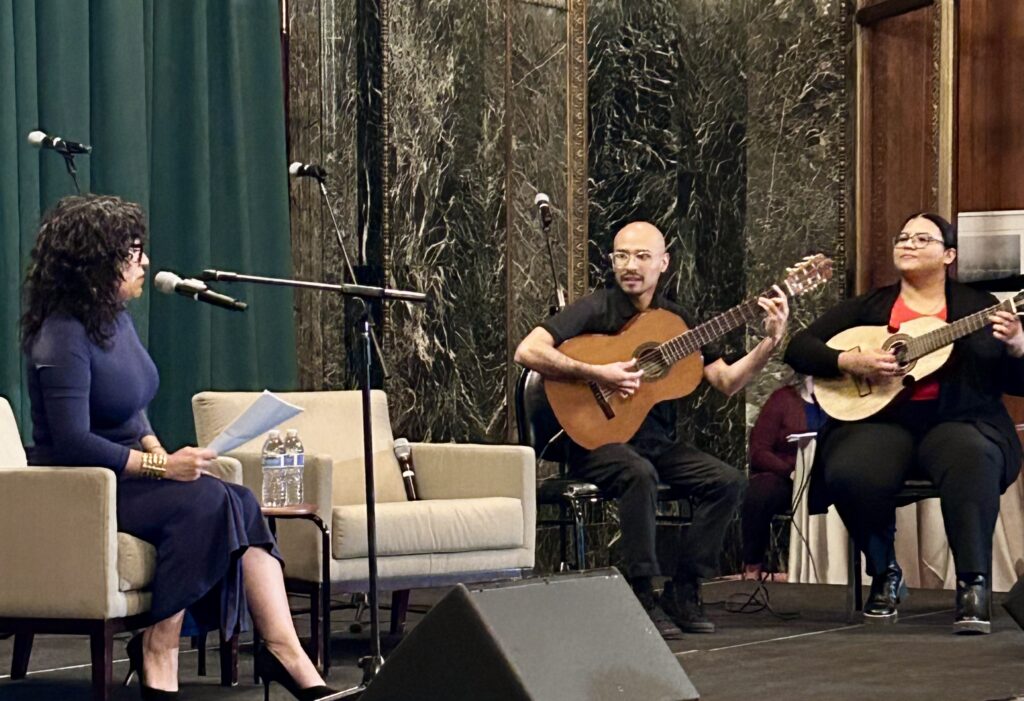
I am the youngest of three in my family. My parents had me when they were older, so I never felt heard in the home. And I think this is the youngest child, the baby syndrome. It is like nobody listens to you. Everyone’s too busy. You get to the little one and nobody pays attention. I think writing became my way of making sure that I was heard and escaping into that notebook and just writing pages at a time about boys and life and how mad I was at my mom or whatever, and how my teenage angst became my refuge. It became my safe space.
What are you currently impassioned about giving voice to?
Ooh. So I am writing a lot right now about my family. Writing about my dad a lot. I’ve written a lot of stuff about my mom, but I’ve never really written about my dad. My dad is eighty-six and has late stage Alzheimer’s, and I assist with his caregiving at home. And so those family stories are really important for me to kind of capture and put down on paper. That story of migration to the South Side, which is something that a lot of people in Chicago don’t know about. They’re like, there were Puerto Ricans on the South Side? I’m like, “Yes, they’re from the ‘Lost Tribe of South Side Puerto Ricans,’ ‘The Last of the Mohicans’, ‘The Last of the South Side Puerto Ricans.’ Everyone’s like, “oh, Humboldt Park.” And I’m like, no.
There’s thirteen brothers and sisters on my father’s side of the family. Out of those thirteen, ten lived in Chicago at one point or another, and they all lived on the South Side. Same with my mom’s family. A lot of people went back. What eventually became the Puerto Rican parade was started by an organization called Los Caballeros de San Juan, the Knights of San Juan. San Juan was one of the first Puerto Rican fraternal organizations in Chicago. And the first chapter was on 63rd and Woodlawn. They had a credit union, they had a co-op housing building. They had a social hall where they would do events. That’s when my aunt, mom, and dad got married and had their wedding reception. And they had offices in the airport in Puerto Rico so that when you left, you could get oriented about where you were going to be going, and you would have help when you came to Chicago. English classes, driving classes, offices to help you get your driving license.
I’ve asked all my questions, but anything else that you would like to leave us with Ms. Mayda?
Oh my goodness. I’m so excited to see Chicago more, to just get out and learn more about Chicago. I was gone for so long. I’ve been back almost ten years now, but I still feel like I’m still relearning and learning about the city and falling in love with the city all over again.
When I was in high school, I got a job at Perfumania [at Ford City Mall] through this youth job training program that we did. And I used to frequent a store in the basement. I was the first girl to work at the skate shop in the nineties. So do you know who owned that store? Dug Infinite. Do you know who Dug Infinite is? Dug Infinite is a legendary Chicago hip hop producer. He produced and taught Kanye how to make beats… Dug was one of the first Black skateboarders. He had a straight-up skateboard shop, but he was like, we’re on the South Side, we’re in Chicago, people roller skate. So he started selling roller skates. I learned how to put together skateboards. I learned how to put together roller skates. I learned how to put together low rider bikes. And it was also around this Chicago hip hop legend who was pretty instrumental in it. I learned a lot of shit from Dug too. Just mindset stuff of dreaming big and not dreaming small.
Today, I ask a younger version of myself, have I fulfilled my biggest dreams? Have I ever made a dream that’s bigger than I? How do I access it? In sitting with Mayda del Valle, I would honestly say I am making them bigger and bigger. She encourages us to be clear about what we want, and put in the work to learn how all our art informs one another, and how we coexist, as a greater creative community of Chicago.
As our new Poet Laureate welcomes us into a new chapter, may we not take this for granted. May we understand the presence of our penmanship and push our mindset to be lush and vibrant. Guided by the brilliance of Mayda del Valle, we will know that we can be much more than we solely believe. We are encouraged to be well versed, powerful, and persevering through the community of poetics and kinship.
Chicago welcomes Mayda back home, and looks forward to where she will take us, lest we never forget where we come from.
E’mon Lauren was named Chicago’s first Youth Poet Laureate. Her work unpacks her coined philosophy of “hood-womanism”. Her first chapbook of poems, “COMMANDO,” was published by Haymarket Books in 2016.