
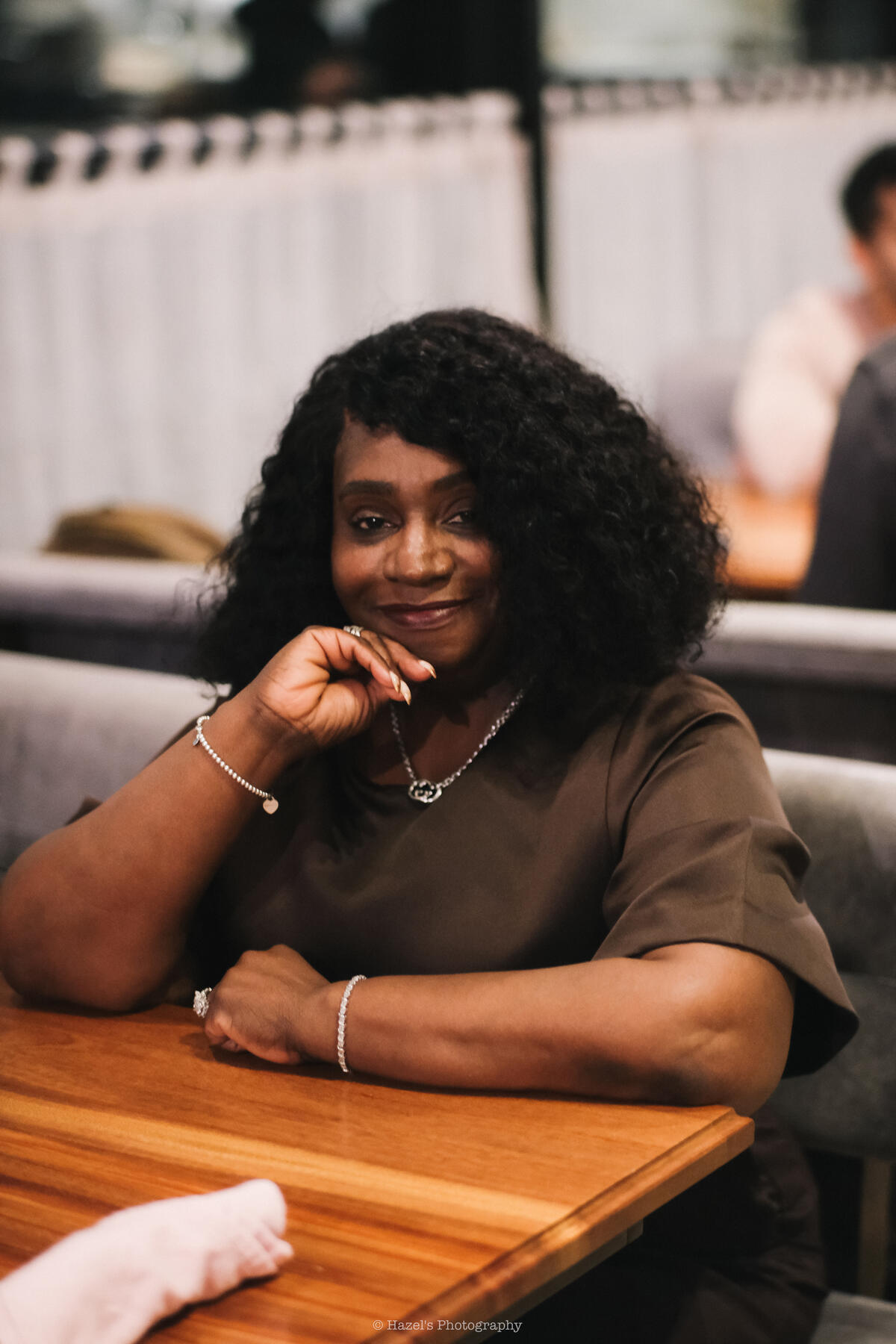
Kimberly Miller-Griffin first met community organizer Robert Gannett on her front steps in the summer of 2020, during COVID-19 lockdowns.
The masked stranger was holding a clipboard and collecting signatures on a petition supporting the establishment of a new mental health facility for Bronzeville residents, after years of public clinic shutdowns by the city. As a psychologist and long-time Bronzeville resident, Miller-Griffin signed the petition. She assumed she’d never hear from Gannett again.
Two weeks later, Gannett, long-time executive director of the Institute for Community Empowerment, knocked on her door again, asking if she would consider joining the Bronzeville Expanded Mental Health Service Program Governing Commission if the referendum passed.
This public board, established by Bronzeville community residents through a successful fall 2020 referendum vote, was created in partnership with the Coalition to Save Our Mental Health Centers. Governing members, ultimately appointed by the Mayor of Chicago and the Governor of Illinois, would be responsible for designing Bronzeville’s mental health care system.
“I told myself in 2020 when the world was locked down,” she said. “I said, ‘God, if I ever get the opportunity to help people and spread the word worldwide, I would do it.’”
So, she said yes.
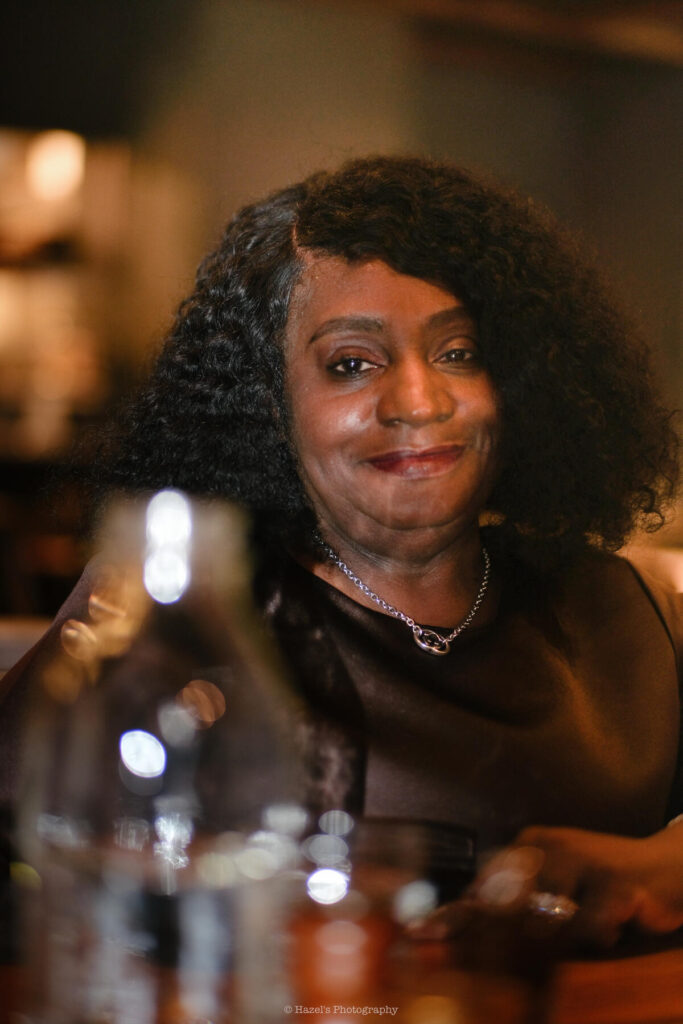
Her decision marked the beginning of a marathon of meetings and listening sessions to reimagine and rebuild Bronzeville’s mental health services. After residents approved a small property tax increase under Illinois’s Community Mental Health Services Act in November 2020—89% voted to support—the Commission was formed to manage the funds and to select a provider for a new community mental health center. Miller-Griffin was appointed as the Commission’s president.
Five years later, the Collective Mental Health Center, one of the commission’s flagship projects, is scheduled to open in mid to late 2026. A former jazz club, the Collective Mental Health Center will be a 7000-square-foot space with a fireplace and lots of natural elements, located on 47th Street. But what drives Miller-Griffin to meet the community’s needs is rooted in a much older story predating COVID and the Commission.
She spent her life in Bronzeville with her mother, a Mississippi native who migrated to the city’s South Side in the 1950s. Her mother supported her family and put herself through school by working as a housekeeper before eventually securing a job in the Cook County Treasurer’s Office and became deeply involved in local politics. Growing up, Miller-Griffin remembers being taken to rallies by her mother, who served as a precinct captain on the South Side. She took it all in, learning lessons from her mother’s example.
“I always said that ‘when I grow up, I want to do something like this,’” she said. “I want to make a mark.”
Back then, her Bronzeville neighborhood felt like an extended family. But Miller-Griffin sees a more fractured landscape today. “African American culture is disappearing with gentrification,” she said. “But what we have now is African American people who have made it, who are professionals. They’re returning and striving to get the community back.”
She wants the new center to honor this increasingly fragile legacy, by ensuring that the next generation does not have to fight the same battles without support.
In her early career as a mental health worker, Miller-Griffin was contracted with a program called “GPS for Kids,” designed for students who were on their last chance before being expelled from school. For 10 weeks, teenagers and their parents were required to attend group counseling sessions every weekend.
During one of those Saturday sessions, she witnessed a mother publicly scolding her son. “What type of man are you?” she asked, after school security guards discovered he was carrying marijuana. In shock, Miller-Griffin wondered what that young person was feeling in that moment, after becoming “the elephant in the room.” She realized the “generational curse” in the community; both the teen and his mom needed support.
“That was at that moment I felt ‘this is where I belong,’” she said. “My passion is with children. We get a second chance when we work ahead, as opposed to working with adults.”
Over the years, she worked with teenagers on the South Side who were navigating a web of consistent pressures and obstacles, including under-resourced schools and limited opportunities for work and personal development.
By the time Gannett knocked on her door in the South Side, Miller-Griffin had already spent years of service in courtrooms, community programs and classrooms, witnessing the “generational curse” in action and trying to interrupt the cycle. After the pandemic, she began teaching at Gary Comer College Prep, continuing her efforts to help teenagers.
“A lot of times in the community, kids are doing more than just going to school,.they are actually running the household as well,” said Vanita Rockford, former office manager at Gary Comer College Prep She would work with the kids on their personal growth and teach them things about how to deal with their emotions. We would use her as a resource for that as well.”
Among Bronzeville residents, mental health services have always been in demand in the community. Long-time Bronzeville resident Christopher Potts, 22, who worked with Miller-Griffin as a junior community organizer, believes mental health has been at the intersection of community needs for some time.
“I would say the disinvestment wasn’t quiet,” Potts said. “It was very apparent as you walked around communities…before the coalition stepped up and started rebuilding.” Potts said mental health crises endured by unhoused people were more “public and outward,” of course, and he frequently encountered homeless people who were struggling.
Potts has been impressed by how Dr. Miller Griffin has worked to provide “hands on” tools and resources for Bronzeville community members to navigate common but incredibly challenging circumstances.
Today, Miller-Griffin sees her job as centering concerns like Potts’ in community-centered policies and services. “We do not want another mom-and-pop community center,” she said. “We want to bring innovative changes in mental health in this center. We want the person to feel exactly how they feel walking into that new Northwestern [Medical Bronzeville] center.”
These days, even on vacation, she finds herself taking commission calls and worrying about the center, thinking through provider contracts and hiring, and wondering if they have the right program manager, the right property manager, the right team.
“At this point in my life, I don’t know what I will do without it because it is a part of my life now,” she said. “Until that day I stand before that door and cut that ribbon and say that ‘we are open,’ I will probably not take a real vacation.”
She imagines the moment when Bronzeville residents, including kids like the ones she has counselled in schools and court programs, will walk through the doors of their own community mental health center, funded by their neighbors’ votes, shaped by their stories.
“When you work in this field, you carry everyone on your shoulders,” she said.
Over the last few years, Millier-Griffin could not “slow down” to celebrate the referendum’s victory, or her hard work on the Commission and in the community. Last November, a gala to honor her work was canceled last minute.
That Friday night, her husband came home and asked her to put on the silky champagne dress she was going to wear to the gala. She assumed they were heading to a restaurant downtown. Instead, her husband drove south and pulled up in front of a venue.
“When I opened up the door, all my friends and family were there and dressed up,” she said. “He managed to get a whole event for me with all my friends, with all the people coming [to the gala].”
There was a golden trophy for her, speeches about how she had helped people through their hardest moments, and a room full of people who showed up for her the way she shows up for others.
“If you don’t know this is the work that you are supposed to be doing, the world is telling you,” her husband told her afterward. “It makes me happy to see you out here in the world making a difference.”
At that full circle moment, she let herself believe that she was doing the right thing. “I guess I am doing what God wants me to do.”
Yuqing Liu is a reporter, photographer, and graduate student at Northwestern University’s Medill School of Journalism. She covered social issues and culture in Beijing for Phoenix Weekly, healthcare in Chicago’s South Side for Medill Reports, and is currently covering business and technology in Washington, D.C. for Medill News Services.