
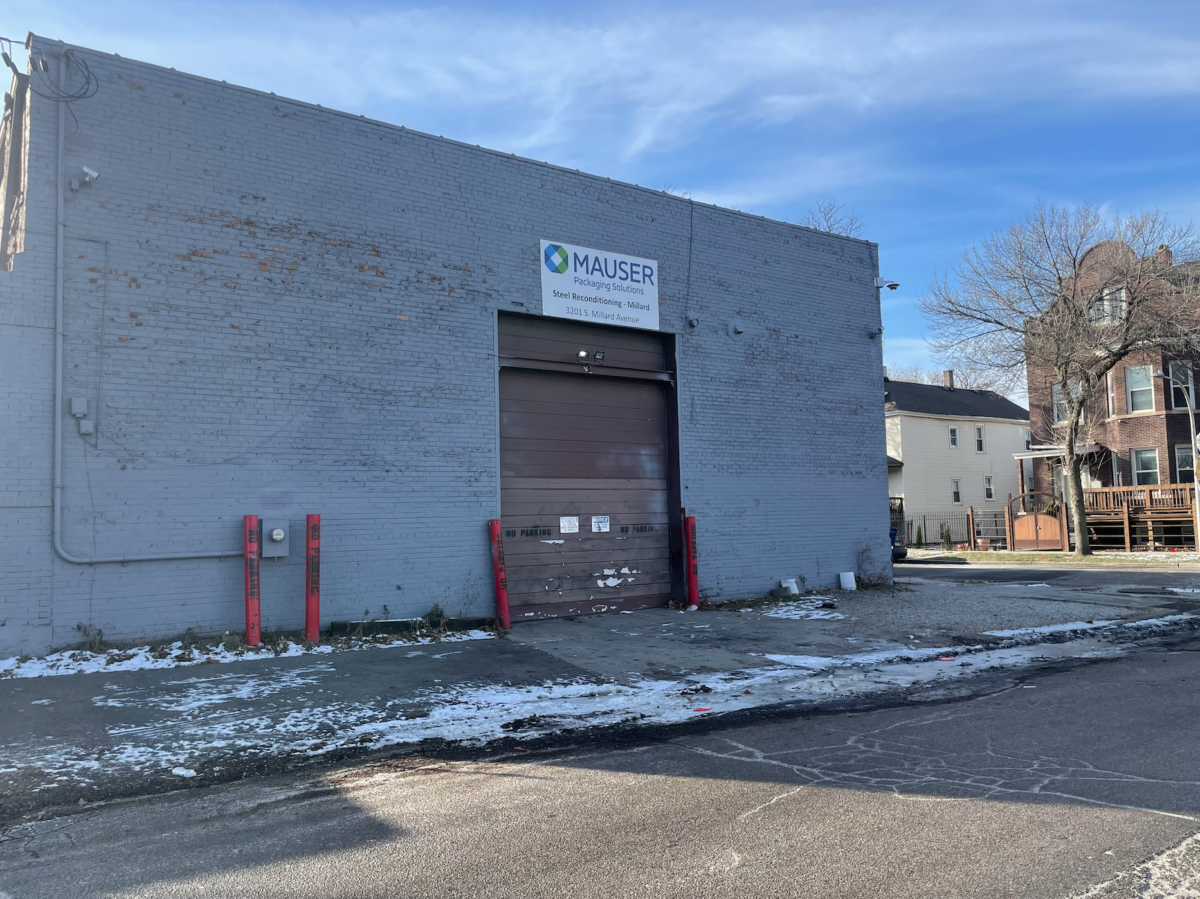
A fter seven months on the picket line, Teamsters from Local 705 at Mauser Packaging Solutions’ Millard plant in Little Village reached an agreement to end the strike on January 21.
Workers began striking in June and continued even after Mauser closed the plant in November.
According to Nicolas Coronado, legal counsel for Teamsters Local 705, the agreement allows twenty union drivers—who were not part of the contract negotiations but joined the picket line in solidarity with production workers—to keep their jobs. The 120 production workers will receive severance pay that equates to a full work week of pay for each year they have worked at Mauser. Some will be paid upwards of $36,000.
The agreement also included a stipulation that would recognize Teamsters Local 705 as the union representative at any Chicago Mauser plant that may open in the future that reconditions drums as the Millard facility once did.
While the production workers will be allowed to reapply at other Mauser plants, they would not be given any special preference.
Mauser did not respond to request for comment.
The Millard Mauser facility, which the company closed in November, sits on the corner of 32nd Street and Millard Avenue, bordered by train tracks and facing residential homes and an empty gravel lot. It was one of three Mauser plants in the neighborhood though the only one to see a strike.
Before the Millard plant closed, tensions had been building for months. The strike began in June to win a new collective bargaining agreement that addressed unsafe conditions, extreme temperatures, inadequate protective gear, low pay, and immigration raids.
According to Mauser representatives, revenue losses tied to the strike, along with mounting safety, health and environmental violations, contributed to the decision to close the facility.
Even after Mauser announced it would close its Millard facility, workers continued the strike to pressure management to reopen the plant and negotiate a collective bargaining agreement or severance for laid off workers.
Sustaining the strike for so long took dedicated effort from workers.
Arturo Landa worked at the Millard plant for more than twelve years. A union member, shop steward, and Teamster since 2019, for months Landa would arrive at the facility by 5:30am each morning. He’d have his coffee and prop up a blue Teamsters 705 tent across the street from the plant by 6am, with a space heater blasting to provide warmth and a resting area for members on the picket line.
Landa, a mechanic II who worked his way up from inspecting painted steel drums to overseeing the painting process and managing seven employees, had been on the frontlines of the strike since it began in June. He was the first one to arrive and the last to leave. Throughout the day, Landa would ensure that the over 140 members on strike had what they needed, whether that be protection from the elements or propane for the huge inflatable, Scabby the Rat.
Signs posted on the fence surrounding the empty gravel lot where the tent was stationed provide a notice to federal immigration agents prohibiting them from entering the private lot.
In December, about a dozen Teamsters were on strike near the southwest intersection of Archer and Cicero avenues when they were targeted and harassed by Customs and Border Patrol Chief Gregory Bovino and about a dozen agents.
A video posted on Instagram by Local 705 shows Bovino accompanied by a media team and several agents, some dressed in full tactical gear and others in plain clothes wearing bulletproof vests.
In the video, Bovino laughed as agents questioned members about their status. Workers, who had previously received know-your-rights training from worker rights organization Arise Chicago, remained calm, and no one was detained. But the encounter made workers concerned about future possible encounters with federal agents.
According to Landa, prohibiting immigration agents from Mauser property protects all workers, particularly as Mauser’s workforce is predominately Latino, and as the company continues its operations at other nearby facilities where Teamsters may potentially be rehired or transferred to.
Members asked for what Coronado described as the “bare minimum,” requesting immigration protection language to be enshrined in the contract that would state to Mauser employees that the company would protect their workers and keep them safe by not letting ICE or CBP enter the workplace without a signed judicial warrant.
However, because the Mauser Millard plant will not be reopening, a new collective bargaining agreement was not reached, and the workers did not secure protections against immigration raids.
The strike began just as Mauser Teamsters Local 705’s collective bargaining agreement was set to expire.
The plant recycled used dirty steel drums that at some point contained one of thirty-six possible products that complied with Mauser’s container acceptance policy. Chemicals in these drums ranged from ammonia to benzene and poisonous materials. As a recycling facility, employees reconditioned barrels using an oven that burned dirty residue from contaminants before the containers were painted and shipped back out to customers.
According to Coronado, employees worked around toxic materials without adequate ventilation. Landa explained that when the temperature outside was in the 90s, it would often be ten to fifteen degrees hotter inside the plant due to the burn-off ovens that reached up to 1,000 degrees Fahrenheit.
“They [Mauser] would show us an OSHA app on their cellphone and say ‘This reads 94. Until it reads 95 we cannot give you a 15 minute break per hour,’” Landa recalled management telling him. He said employees would express concerns that the app would only read the outside temperature and not the indoor temperatures they were working in.
Winters were especially harsh for members who were responsible for cleaning the drums. Due to the cold weather, the plant would keep windows closed.
“There would be smoke, dust, and we would even have to breathe paint,” Landa said. “There was a ton of contamination.”
Landa said that the smoke and dust would not settle until the nighttime when people were off the clock. He added that the Personal Protective Equipment (PPE) given to employees was inadequate and would cause workers to experience burning and irritation of the eyes, nose, and throat.
In a social media post, Mauser Teamster Dante Woodson described the unregulated temperatures within the Millard plant that caused extremely high temperatures during the summer and frigid temperatures during winters.
“I got really sick due to the fact that I was working in extreme heat and instead of being met with concern and accommodations, I got met with threats of being terminated,” Woodson said.
According to Landa, the fine sand used to clean drums would cut people’s skin when machines were not operating appropriately. During the cold months, the hose used to suction the sand would freeze and leave the air in the workplace filled with dust.
A search of Occupational Safety and Health Administration (OSHA) records for the Millard Mauser facility and its subsidiary, BWAY Corporation, which shares the Millard address, found at least a dozen closed inspections since 2019 and an additional open case from 2025 involving an amputation. In one closed incident, an employee suffered a fingertip amputation on two fingers.
On another occasion a worker was moving drums off a trailer when he felt unwell and appeared red in the face before he lost consciousness. Other violations included uncertified performed inspections, slip and fall hazards, exposing employees to crushing hazards that resulted in broken bones, and failure to retrain employees.
According to OSHA violations summaries, the Millard facility racked up nearly $200,000 in fines between 2019 and 2025. Most violations were categorized as safety and health violations. In the state of Illinois, Mauser and BWAY have had a combined total of twenty severe injury reports, eleven workers hospitalized, and fourteen workers who suffered amputations. Records show that six of those incidents involving amputations occurred at the Millard plant.
Mauser representatives at the negotiation table told members various reasons for why the Millard plant was closing, including dips in revenue due to the strike and mounting EPA and OSHA violations.
Coronado said that despite the plant’s closure, work continued. “We thought that the company was going to be shut down. But to this day, we see Mauser trucks leaving that facility on Millard, continuing to do work,” he said.
According to Coronado, Mauser used temp agencies and diverted some of the work that the Millard plant would do to a leased facility near Archer and Cicero. There, he said drums were sorted out before they would be taken out of state to Ohio and Michigan where they are reconditioned.
Before Millard announced its closure, Mauser Teamsters asked for a three-year contract with a 1 dollar hourly raise each year. Mauser countered and offered 65 cents in year one, with a 50 cent raise each year after that. “That’s not even enough for Maruchan Ramen Noodles,” Landa said.
Feeling pressured to vote and alarmed by Mauser’s fear tactics—including letters sent to members’ homes falsely claiming that the Teamsters wanted the plant closed—Local 705 unanimously rejected the company’s offer.
The Chicago strike wasn’t the first labor action at Mauser last year. In April, Teamsters Local 117 members at the company’s Seattle facility were locked out during contract negotiations.
Mauser Packaging Solutions owns and operates over 180 sites across twenty countries and five continents. It was formed in 2018 in a merger between companies BWAY, MAUSER Group, National Container Group, and Industrial Container Services, some of which date back to the 19th century. Mauser produces and reconditions metal, plastic, fiber, and hybrid packaging to industries worldwide.
“When Mauser arrived they told us we would be like a family. That we would be united,” Landa reflected. “But throughout the strike we were out here during the high temperatures and now with the cold and we realized we didn’t matter to them.”
“I’m happy that these workers can have this chapter closed in their lives. They should be nothing but proud of themselves for standing up,” said Coronado.
José Abonce is the senior program manager for the Chicago Neighborhood Policing Initiative and a freelance reporter who focuses on immigration, public safety, politics, and race.
After ICE Raid, Swap-O-Rama Vendors Push for Safety
A chaotic federal raid left vendors at the longtime South Side flea market shaken. Now they’re demanding stronger protections.
Practical Guide for Families Facing ICE
Prepare by organizing important documents, making a childcare plan, and remembering to exercise your right to remain silent.

Healing Susto Amid ICE Violence
As immigration enforcement terrorizes communities, Chicago healers turn to ancestral practices to heal collective trauma.