
This article was published by City Bureau, a nonprofit journalism lab reimagining local news. Support City Bureau’s Civic Reporting fellowship by becoming a recurring donor.
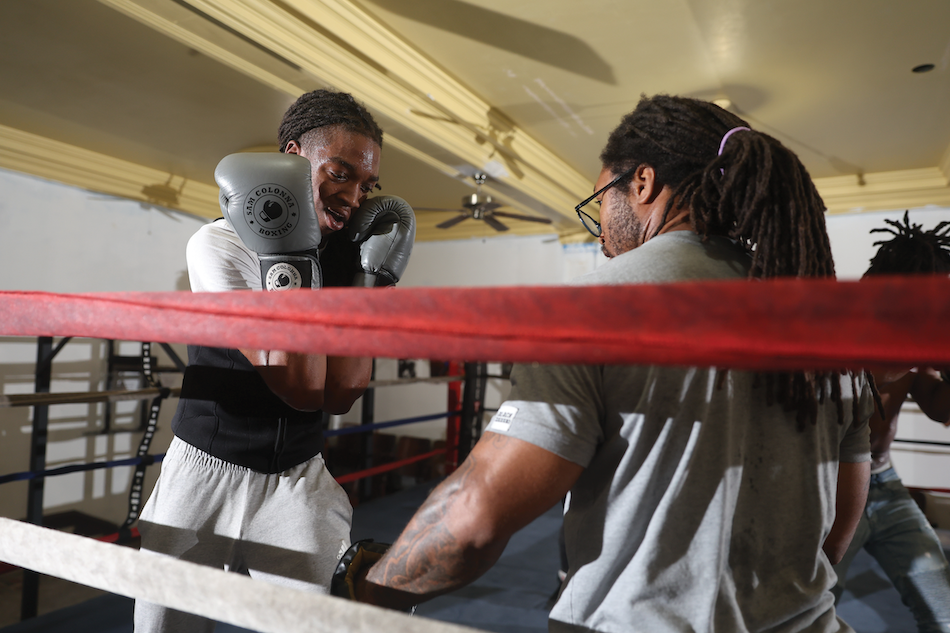
Sir Jayden Addison has been involved with Crushers Club since he was 9. The South Side community organization, which serves at-risk boys and young men year-round, has consistently supported him into his young adulthood. Now, Addison has transformed from participant to program leader.
“This place changed my life,” said Addison, who grew up on the South Side. “It gave me structure when I needed it, opportunity when I was ready for it, and now it’s given me the chance to do the same for other kids.”
Addison’s journey reflects a model playing out across community-based organizations in Chicago. While summer employment programs capture headlines and city budget funding, organizations such as Crushers Club, Brave Space Alliance, Chicago Jobs Council, and the Institute for Nonviolence Chicago work year-round to fulfill the needs of the people they serve. That consistent support helps keep participants involved in these programs to build skills, try new activities, and find jobs and career paths.
Community-based youth programs “often design their programs to address barriers that the youth may struggle with [in order] to succeed in more mainstream, traditional workforce programs,” said Angela Morrison, engagement manager for Chicago Jobs Council. The council is a member-based nonprofit organization that bridges community groups doing direct service work and the policy decisions that affect them to build more equitable systems for job seekers.
In these programs, young people have points of contact that aren’t simply, “someone that they’re seeing for six weeks, but maybe someone that’s attached to them for a longer haul, over the course of their engagement in those year-round services,” Morrison said.
For Latasha Henry, case management supervisor at Institute for Nonviolence Chicago, sustained support equals lasting results.
“This is long-term support, not just a three-month or six-week program for the summer. You can build that long-term support, and you can utilize the community to help the community grow and rebuild,” Henry said.
‘This is a space that is here to help me’

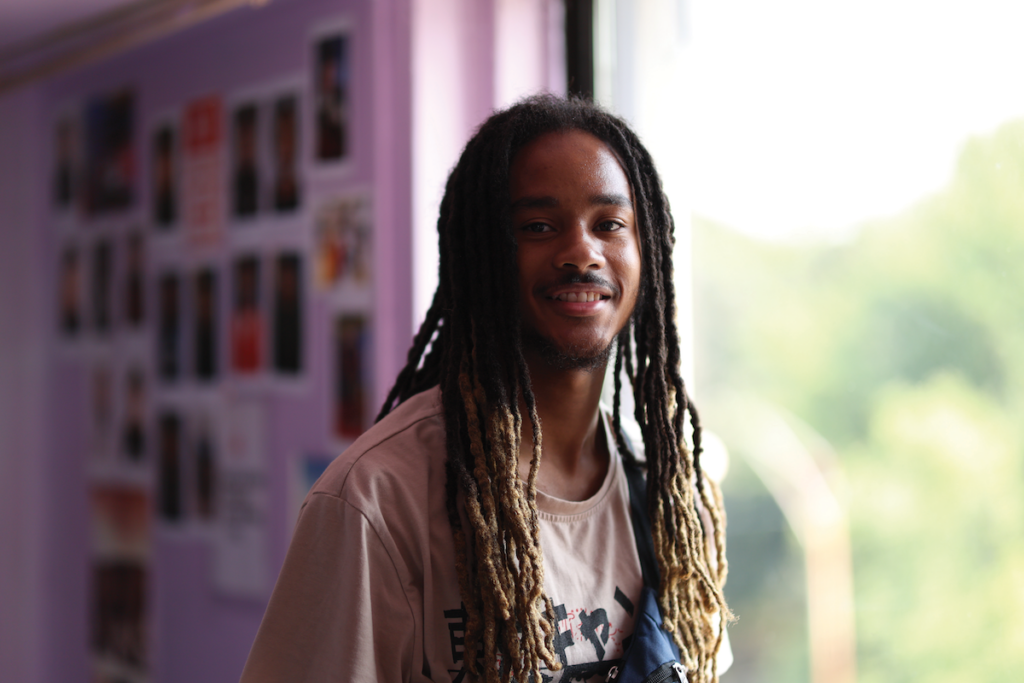
Like Addison, Jahiem Jones also took a participant-to-staff path at Brave Space Alliance. The Hyde Park-based, Black-and-trans-led social services organization provides employment and housing support, health and wellness services, cultural programs, and more.
“We provide resources like our free food pantry that people [can] access every two weeks. We provide our Dignity Suite, which is like our personal boutique clothing room … We let our trans individuals get their essential needs twice within a week. We have shoes, clothes, hair, makeup, hygiene products—just everyday, essential items that people need to survive,” Jones said.
Jones first came to Brave Space for a haircut, but kept coming back to take advantage of more resources. Over time, Courtney Mckinney, senior outreach coordinator, pushed him to volunteer. When Mckinney again saw his effort, she recruited him to the staff. Still, Jones went further, creating his own position within the organization.
“The youth outreach coordinator role wasn’t developed yet here at Brave Space Alliance. They brought me on as the outreach coordinator, but I pushed for the youth outreach role,” Jones said. “As Dr. Mario Pierce, senior director of programs, and Father Balenciaga in ballroom would say, ‘I made the title.’”
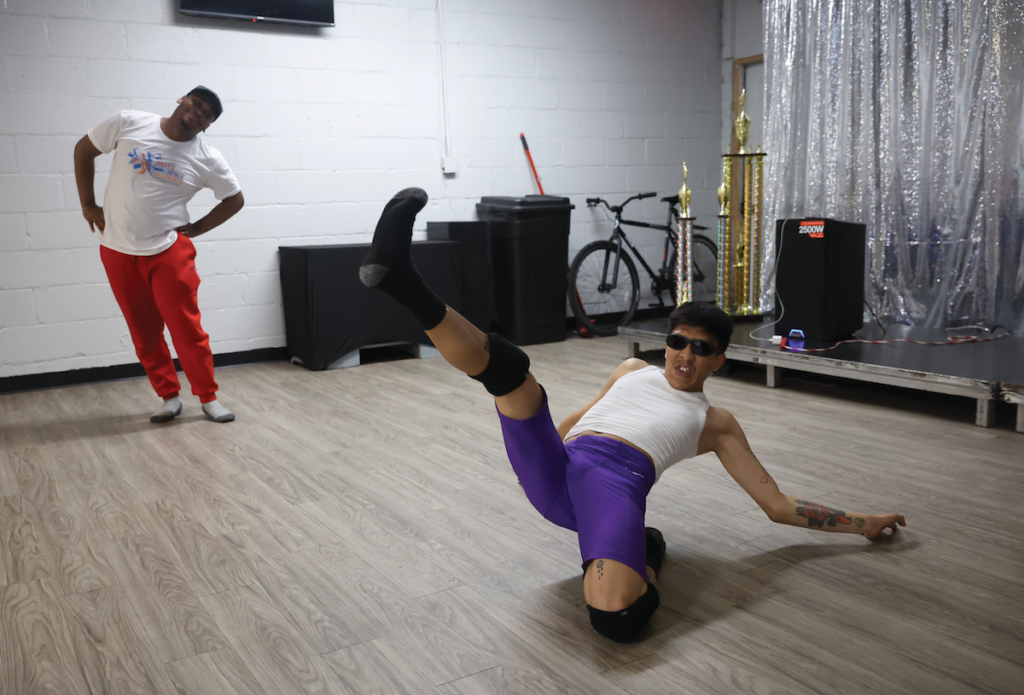
Jones helps teach Brave Space’s weekly voguing and runway workshops, known as Vogue University. He organized the Sour Patch Kids Kiki Ball, where he gave away $1,000 in prizes and combined entertainment with education on mental health, safe sex, and STI and HIV prevention.
“I think with Brave Space, that’s like one thing that we’re very good at, caring and nurturing our participants,” he said. “And I think that is what makes our participants come back to Brave Space, because they know that this space here, this is a safe space. They know this is a space that welcomes me. This is a space that is here to help me.”
At Institute for Nonviolence Chicago, Henry and her colleagues take a similar, comprehensive approach to support their communities.
The West Side-based group tackles violence prevention through street outreach, behavioral health and wellness programs, workforce development, re-entry support, and more. They also help individuals and families who have survived violent crime, including help with employment, rental assistance, and paying utilities.
“We’re making sure that we’re working on their mental [health], we’re working on trying to keep them from going back to the streets, and then we’re also working on their day-to-day progression. So we’re always looking to provide some kind of wraparound support,” Henry said.
From there, the focus is on long-term stability. For example, some workers in the group’s outreach division will be assigned to do community peacekeeping for six months, deescalating conflict in local communities. Leaders then work to connect them with more permanent jobs. Five or six people who completed the group’s re-entry program, named H.O.P.E. or Helping Other People Exhale, have joined the organization’s staff.
Progress isn’t always linear. Sometimes participants fall back into old patterns or and face new challenges, Henry said. But others have radically turned their lives around, such as the couple with a young child Henry met at a community event who were living in a daily hotel at the time.
“We got them in one of our workforce development programs, which led them to getting a job. We provided them with rental assistance support, so they ended up getting their apartment,” Henry said. “It’s been about four years now. They’re still maintaining stability with an apartment. They’re both working at the same job, and that baby is growing up now.”
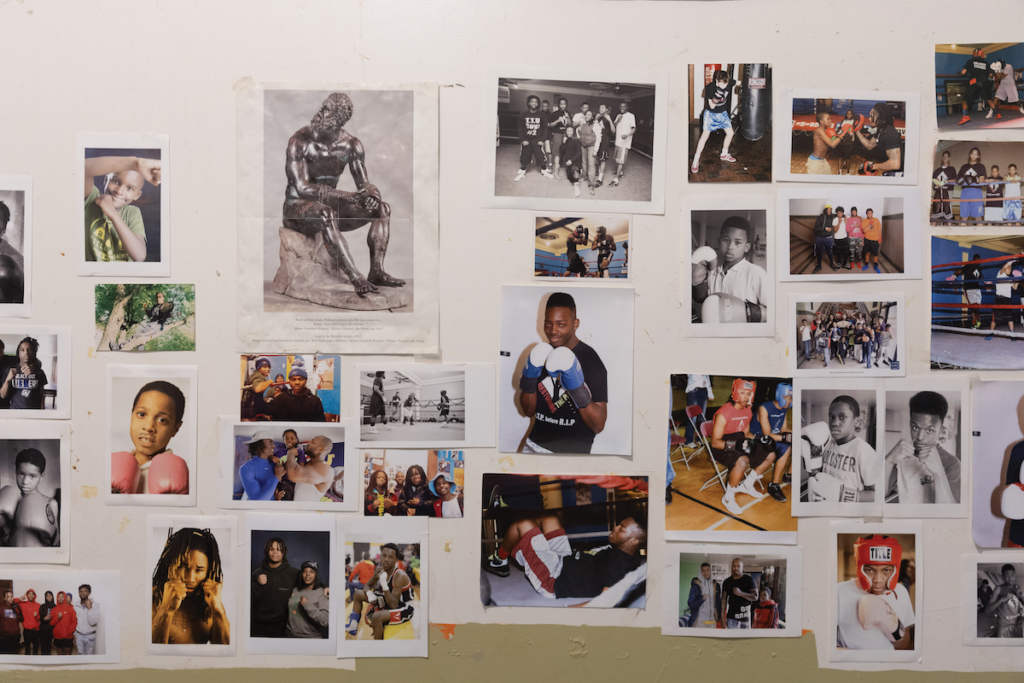
In West Englewood, Crushers Club started as a boxing club, but has grown into a youth development program, offering job placement, financial literacy, mentoring, and skill-building to deter at-risk boys from crime. Other resources include an in-house kitchen, where boys make meals for each other and cater events; a clothing design program; and a partnership to give construction jobs to boys 17 and older.
Last year, Crushers Club put more than 175 young people aged 14 to 19 to work. In total, they logged over 40,000 hours and earned more than $600,000, said Rashad Grant, chief program officer. To get kids in the door, they replicate a key successful gang recruitment strategy: money.
“We offer you a chance to earn wages, and the reason why that helps, is a lot of these kids are in poverty, and that’s the sinker. That’s what gets them,” Grant said. “The fact that they can earn a certain amount of dollars, that’s what gets them to want to come and that’s what keeps them coming here. Now we can offer the mentor, now we can offer the trauma therapist. Now we can offer the programs we have to try to catch their interest.”
Crushers Club’s year-round approach addresses what temporary programs cannot, Grant said.
“With temporary programming and jobs, when the programming is over, the kids have to go back to their community. They have to go back to their family members, they have to go back to their neighborhood. So if they have nothing to do and they have no way to earn income during that time, then they just get kicked right back into the streets. It’s a temporary fix.”
Addison was a third grader at O’Toole Elementary School in West Englewood when his school partnered with Crushers Club to teach students boxing, music, and other activities. He continuously participated with the group throughout high school, transitioning into a junior supervisor role in late 2020 and participating in the city’s One Summer Chicago program when he was a senior.
At Crushers Club, young people get the “chance of doing something different with their lives,” Addison said. Even if he pursued other opportunities, Addison knew that the club would still support him and welcome him back to continue mentoring younger participants if he wanted to. He was recently promoted to be a junior manager at Crushers Club.
“How I see it, it’s more like a family. We got each other back.”
‘We want to make sure that these programs are continuously funded’
For these groups, the work doesn’t pause when the seasons change. Their programs stay open, their support remains, and their programs evolve. According to youth advocates, this is necessary.
“Organizations serve youth that may be out of school or not even attached to work or educational opportunities … some of these programs might serve youth with disabilities, come from underserved communities, [or] that are faced with other significant challenges or barriers,” Morrison said.
The rates of teens and young people who were not in school or working spiked during the pandemic, but many Chicago youth remain disconnected. Those most affected are disproportionately young Black men and women, and South and West siders.
Offering summer jobs is one approach, said Matt Wilson, associate director of the Great Cities Institute at University of Illinois Chicago. Such programs yield positive results, such as lowering participants’ arrests for violent crime, according to research conducted by University of Chicago Crime Lab and the University of Pennsylvania in 2014. But many young people are aiming for year-round opportunities, Wilson said.
The kinds of wraparound services community-based groups offer is critical for any job placement program to work in under-resourced areas. Many of these organizations not only are tracking success in terms of job placement and earnings, but also young people getting into training and apprenticeship programs, building leadership skills, participating in advocacy and peer learning opportunities.
“To help them develop things that not only serve them at this point in time, but may help them into their adulthood and some of the complexities they might face there, as well, and be building those life skills to not only get into employment, to sustain and maintain themselves,” said Wilson.
As someone who manages these programs daily at Institute for Nonviolence Chicago, Latasha Henry also pleads for continued investment.
“We want to make sure that these programs are continuously funded because it makes a difference in the community and in the lives of others. And it gives children who’re watching their parents restore their lives an opportunity to say, hey, I could do it, too,” she said.
The path forward is clear: spread the model, build the future. Not for one summer—for good.
Robert Speed Jr. is a native South Sider whose work focuses on community empowerment and public health. He is the founding executive director of the Defy Racism Collective, which analyzes documents and archival research to expose systemic racism through evidence-based narratives. He participated in City Bureau’s Civic Reporting Fellowship in Spring 2025.
This is such an important program. Its great to see community organizations stepping up to create real career pathways for young people who might not have access otherwise. The mentorship component sounds especially valuable.
kepo.ai
Really appreciate the depth of reporting here. Stories like this matter for the community.