
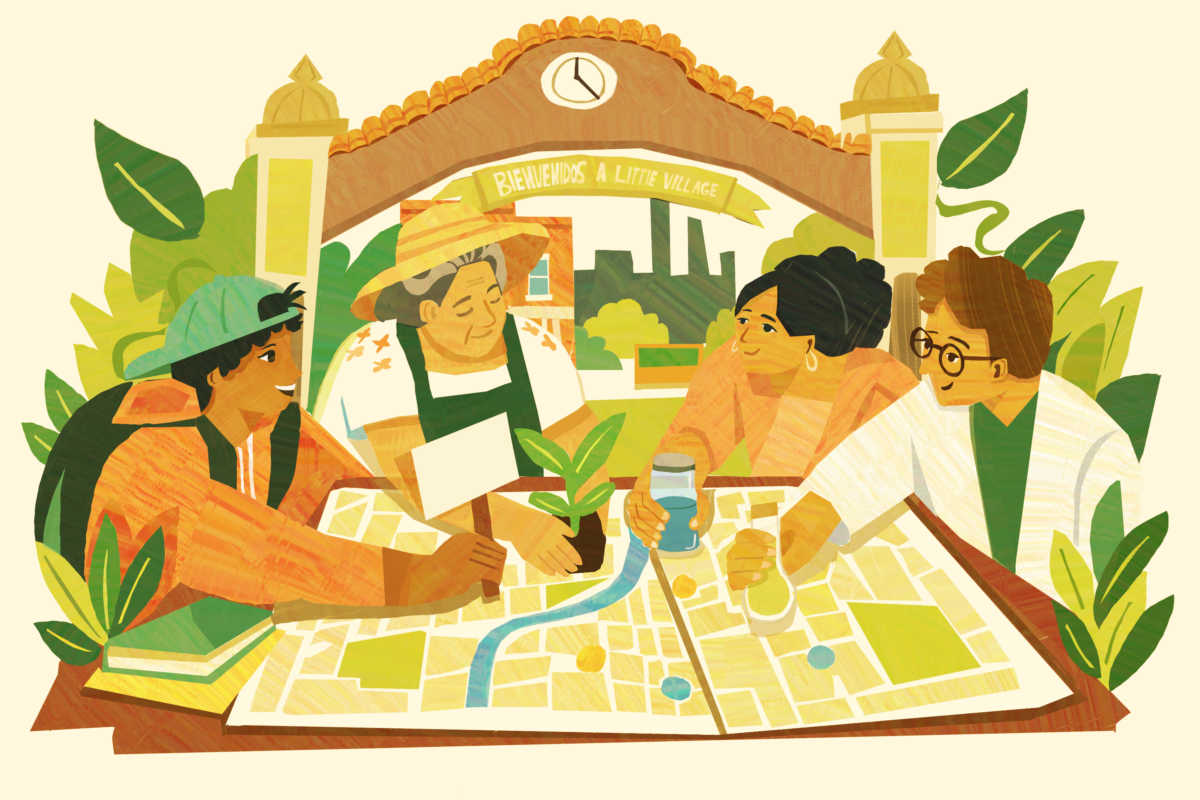
For 32 years, the Little Village Environmental Justice Organization (LVEJO) has advocated for residents affected by rapid industrial development on Chicago’s Southwest Side. While the neighborhood is no longer subjected to the coal emissions that once permeated the air, industrialization continues and one of LVEJO’s core goals remains the same: investment in developments that will be a “good neighbor.”
LVEJO was founded in 1994 as the Gary School Environmental Justice Project, an effort by parents to change plans for renovations to a local elementary school that could expose children to dangerous particles.
When the project succeeded, the organization evolved to address other environmental concerns in the neighborhood, including a years-long campaign to close the city’s two coal-burning power plants. Little Village’s Crawford Station and Pilsen’s Fisk Station were both shut down permanently in 2012.
In the following years, LVEJO succeeded in the push for more green space like Las Semillas de Justicia community garden and La Villita Park. The organization also pushed to expand bus service in the neighborhood.
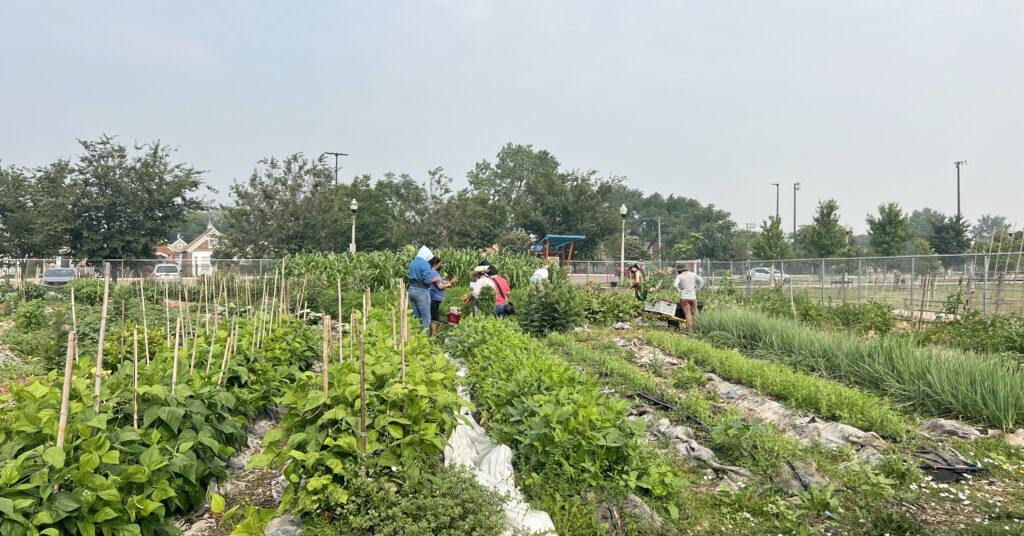
“Toxic Tours,” led by LVEJO community organizers, are community history lessons, environmental justice discussions, and firsthand looks at conditions residents live alongside every day.
Decades after its inception, the organization continues its push for environmental justice. The coal plants may be gone, but as warehouses move in, air quality from truck emissions is still a concern.
“There’s definitely been a move of people realizing and noticing how the pollution has shifted from coal ash to diesel,” said Edith Tovar, LVEJO’s community organizing manager.
Little Village is home to one of Chicago’s 26 industrial corridors—planned areas surrounding railways, waterways, and highways that are primarily zoned for manufacturing and industrial uses. The corridors were established in 1992, but the city’s planned industrial areas date back to the Union Stock Yards, which opened in 1865.
Little Village’s industrial corridor, located north of the Chicago Sanitary and Ship Canal and the Stevenson Expressway, is one of the city’s largest. Its occupants include a 1.3 million square foot Target Distribution center, which opened in 2021 at the site of the former Crawford Station.
The Target warehouse has been steeped in controversy from the beginning, after Hilco Redevelopment’s demolition of the former coal plant led to a botched smokestack implosion that covered the neighborhood in dust and debris in April 2020.
Tovar, a lifelong resident of Little Village, said the implosion caused a “reawakening” of interest in their work, but that the organization and neighborhood residents have concerns that reach far beyond the environment, like immigrant justice.
Predominantly Mexican-American Little Village is a residential and economic hub for immigrants.
“We’ve seen ICE target workers that work in industries,” Tovar said. “They’ve definitely targeted factories in the suburbs and people [are] being abducted, even waiting by the bus stop.”
“These instances [are] where we use moments like that and highlight how our struggles are intersectional and how they connect to environmental justice and the need of having more people,” Tovar said.
One way LVEJO educates on intersectional environmental and social issues is through “Toxic Tours” led by community organizers. Since 2000, the tours have taken groups on an immersive walk through the neighborhood’s built environment, from the greenery of La Villita Park to the stagnant canal water near Collateral Channel. The tours are free for students and LVEJO often works with educators to tailor the tours to specific topics.
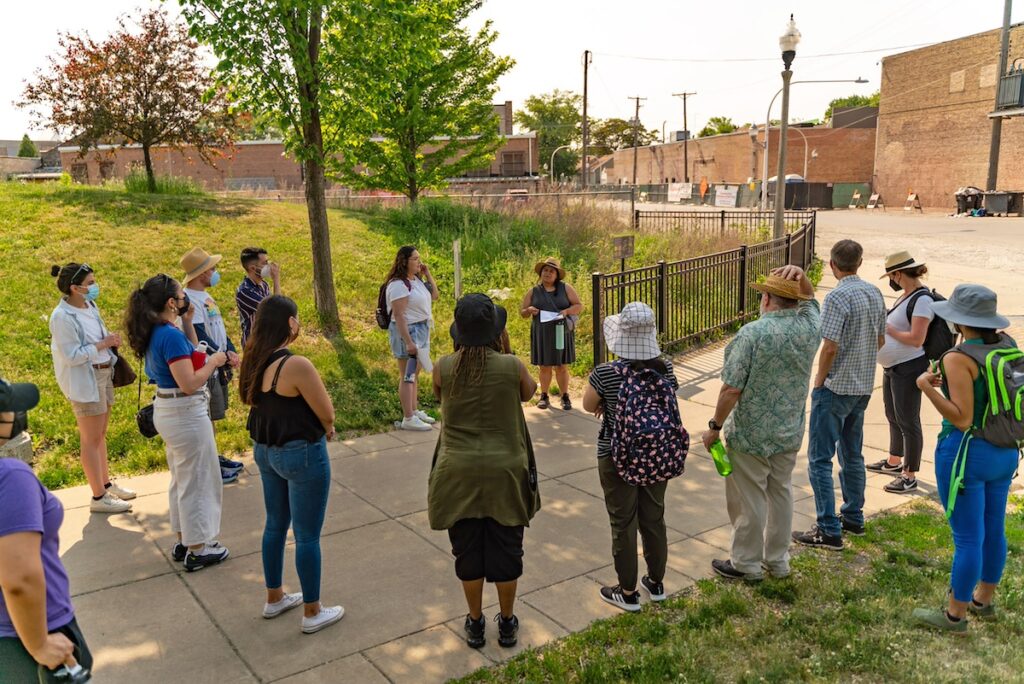
“Toxic Tours,” led by LVEJO community organizers, are community history lessons, environmental justice discussions, and firsthand looks at conditions residents live alongside every day.
The tours help to demonstrate the staggering differences between many of the neighborhood developments, Tovar said. “For a minute, it’s quiet, you’re in La Villita Park, but you see how massive Cook County Jail is.”
Tovar also said that the tours create opportunities to discuss Chicago history and social issues. She said tour guests who are not as familiar with Little Village often mistake the jail for an academic institution, which gives organizers an opening to educate on the school-to-prison pipeline and how the jail houses a large population needing mental health care.
As longtime issues like poor air quality and a lack of green space remain, new environmental concerns continue to emerge. Tovar said organizers are trying to learn about and prepare for the potential effects of AI data centers and, further to the southeast, the 128-acre quantum computing campus being built on the former U.S. Steel South Works site.
“To me, it’s also like an opportunity for a huge land grab and the type of investment that residents have been asking [for] is not that type of facility,” Tovar said.
Tovar said LVEJO is also grappling with disaster preparedness after Little Village was afflicted by flooding during the summer. She also said residents have expressed concerns over utility hikes and their ability to cool their homes during future heatwaves.
“I know that those are conversations that we’re having in our neighborhood,” Tovar said. “I’m hoping our city is somewhat prepared or preparing.”
Little Village Environmental Justice Organization, 2727 S. Troy St. (708) 320-3349. lvejo.org
Sydney Richardson is a writer and audio storyteller living in Bridgeport. Richardson’s previous reporting has covered higher education, labor organizing, and arts and culture.