

This story was originally published by Borderless Magazine, a nonprofit award-winning bilingual news outlet reporting with and on immigrants. Visit their website and sign up for their newsletter at borderlessmag.org.
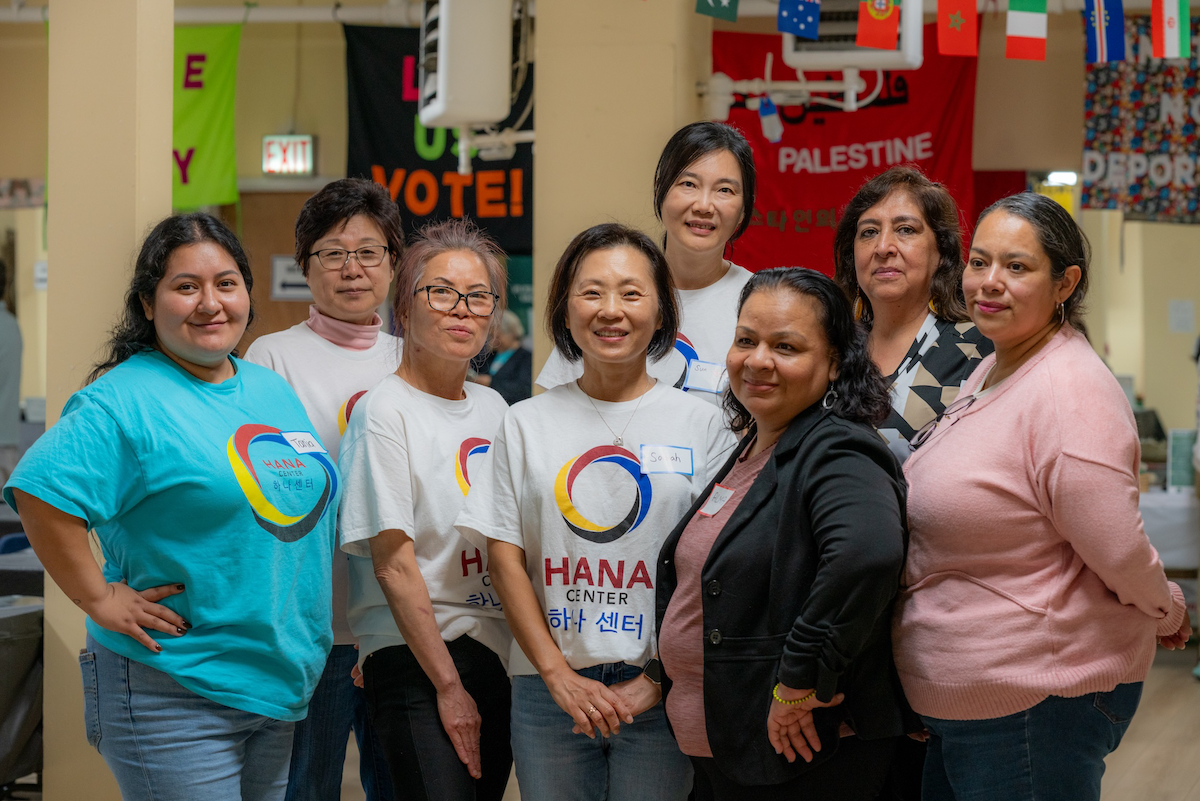
Last April, 54-year-old Sarah Yeo walked into the Illinois State Capitol building for the first time. A naturalized citizen from South Korea, Yeo joined hundreds of other Asian American organizers, volunteers, and advocates for the annual Asian American Action (AAA) Day in 2025—an opportunity for people of all ages and civic backgrounds to visit Springfield and speak out on issues that are important to them.
For Yeo, talking to legislators at AAA Day was a new experience. While adapting to life in a new country, she said she never really thought about civic engagement. After going to AAA Day, that changed—she went from being an “outsider” in the U.S. to becoming a “real citizen.”
“It’s become more special and meaningful knowing that the other many different group of the Asian community bring ourselves together [to] become one voice, to bring power, to enhance well-being in our community,” Yeo said.
For many community members and first-generation immigrants like Yeo, AAA Day is an opportunity to empower not just the community but also themselves. It’s pushed many to feel more civically engaged and confident in advocacy.
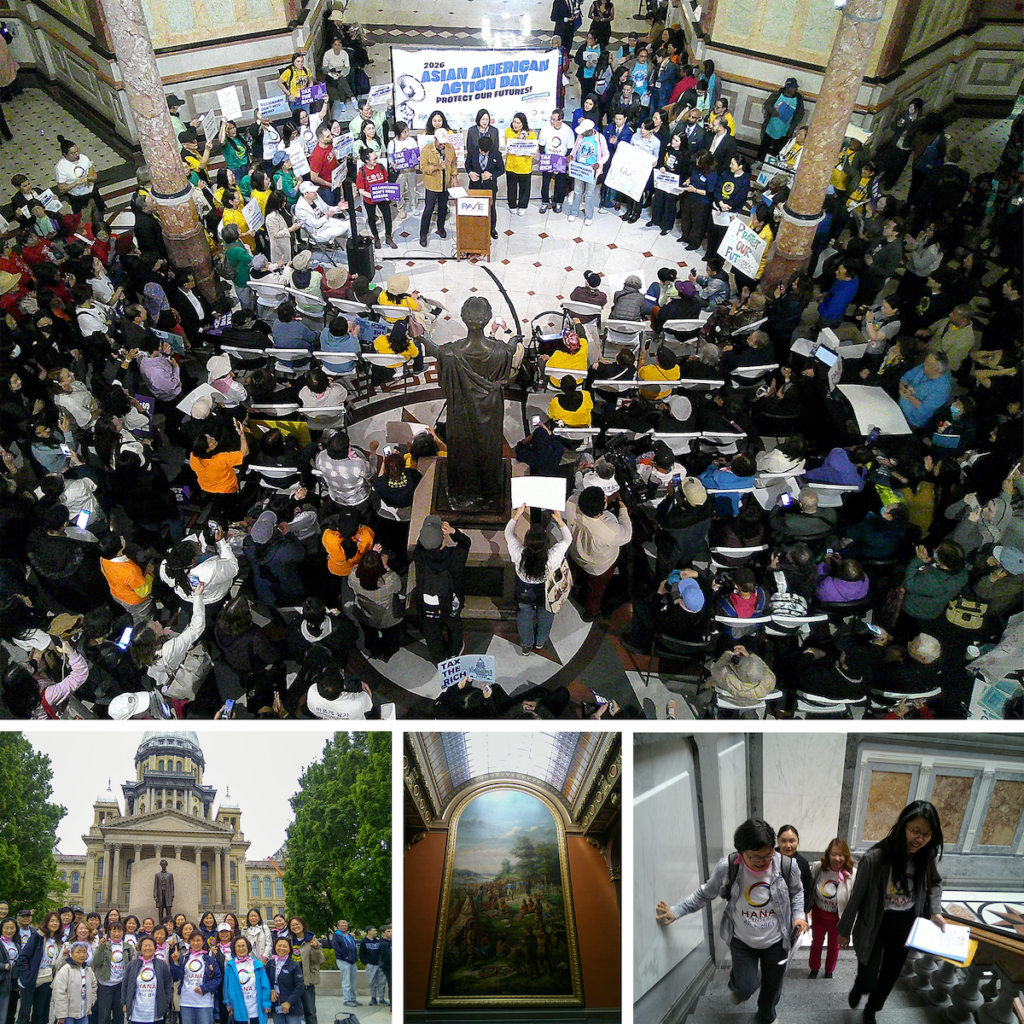
This year, community members who took part in AAA Day on May 6—organized by the Pan Asian Voter Empowerment (PAVE) Coalition—are urging lawmakers to protect funding for services supporting immigrants and low-income community members, threatened by federal policies and cuts to Illinois’ state budget. They’re pushing for legislation that bolsters healthcare programs, increases funding for immigrant legal aid and other social services, and enacts progressive taxes to fill gaps.
The PAVE coalition includes 19 Asian American organizations throughout the Chicagoland area, such as the HANA Center, Indo American Center, Vietnamese Association of Illinois, and the Chinese American Service League.
“We’re going to continue pushing for these bold revenue increases and these bold solutions because that’s what Illinois needs and what our communities need,” said Anooshka Gupta, organizing manager at Asian Americans Advancing Justice Chicago.
The theme for this year’s AAA Day was “Protect Our Futures.” In prior years, Gupta said, community members have rallied for landmark legislation to support Asian American communities in Illinois. For example, the PAVE Coalition successfully advocated for passage of laws requiring Illinois public schools to teach Asian American history and for public schools to serve halal and kosher meals upon request.
“We’re at this pivotal moment,” Gupta said. “We need real, bold action to protect our futures and make sure that we can all stay in Illinois and continue to live and thrive in Illinois.”
Protecting Immigrant Healthcare Amid Federal Funding Cuts
As Illinois faced federal policy changes and a budget deficit, Gov. JB Pritzker cut or reduced funding for several state programs last year, including two offering healthcare for immigrants—Health Benefits for Immigrant Seniors (HBIS) and Health Benefits for Immigrant Adults (HBIA). HBIA covered healthcare costs for over 32,000 people ages 42 to 64 as of February 2025 before it ended in July last year, according to the Illinois Department of Healthcare and Family Services. HBIS, which serves people 65 years of age or older, continues to cover roughly 8,900 older adults, but is now closed to new enrollees.
After President Donald Trump’s signature tax breaks and spending cuts legislation became law, funding was slashed for the Supplemental Nutrition Assistance Program (SNAP), Medicaid and other social services in Illinois and nationwide.
Christian Taylor, director of advocacy and government affairs at Advancing Justice Chicago, said those cuts in federal funds put pressure on Illinois’ budget this year, forcing Pritzker to “tighten the belt” on state programs.
Now, Taylor said the PAVE Coalition is pushing for Illinois to restore funding for HBIA or to find other ways to increase access to healthcare for immigrants. This could look like expanding hospital charity care programs that offer financial assistance programs for low-income patients without insurance, he said.
Pushing Back Against Cuts to Social and Legal Services
Alongside the pushes to fund HBIA and HBIS, PAVE is also opposing Pritzker’s proposed $2 million and $10 million budget cuts to the Immigrant Services Line Item (ISLI) and the Illinois Access to Justice (ILA2J) programs, respectively. ISLI funds social services for local organizations—such as citizenship application assistance and language access programs— while ILA2J funds legal services for immigrants, including direct legal representation and legal screenings.
Gupta said under the Trump administration, the need for social services and legal support for immigrants has expanded, making increased funding for programs like ISLI and ILA2J essential.
Kim Nham, who attended this year’s AAA Day with the Vietnamese Association of Illinois, said funding multilingual, local social service organizations is key for older adults like herself who may have a harder time seeking help if it’s too far away.
Nham came to the U.S. as a refugee from Vietnam in 1978 and said she often spends time helping friends and neighbors apply for benefits, using her Vietnamese, Chinese and English skills to help them navigate the process. “I want everyone should be healthy,” Nham said.
As Illinois faces budget deficit pressures, federal policy shifts and cuts tied to Trump’s large tax bill impacting the state’s FY2027 budget, Taylor said PAVE and other organizations are also advocating for legislation to tax billionaires and multi-million-dollar companies, to support social services.
That includes pushing for legislation—already introduced in the state legislature—proposing a digital advertising tax on companies making over $150M on ads, enacting taxes on billionaires in Illinois and requiring multinational corporations to include the income of foreign subsidiaries when paying Illinois state taxes.
Empowering the Asian American Community
Gupta, one of the lead organizers of the event, said AAA Day is a critical opportunity for Asian American voices to be heard in Springfield. It allows people who don’t often have the opportunity to advocate for personal issues to speak directly with legislators about what they care about, she said.
“One of the most important parts of this is our legislators actually being able to hear from everyday people and not our lobbyists that we see very often in Springfield,” said Gupta.
Gupta and Taylor said oftentimes, Asian Americans are seen as apolitical despite being a part of major social justice movements throughout history. AAA Day is an important part of pushing back against the narrative, they said.
“People don’t necessarily think of us as the faces of social justice movements,” Taylor said. “But Asians have been at the forefront, hand in hand, and in lockstep with every major social movement that’s happened in this country.”
Gupta added that harmful stereotypes, such as the “model minority” myth, create assumptions that Asian Americans are “fine” or don’t have political needs, despite being a community directly impacted by state and federal changes to social services.
“This is our opportunity to say these cuts or what’s happening right now does impact Asian American communities,” Gupta said. “Our solutions will benefit us as Asian Americans, but will also benefit communities as a whole, because they’re things that we’re all going through and ways that we’re all being impacted.”
Since Trump was inaugurated, Asian immigrants have been detained by ICE in Illinois and nationwide, including some with legal status—including the arrest of a U.S. citizen of Hmong descent in Minnesota, and an immigration raid where more than 300 South Korean workers were arrested at a Hyundai factory in Georgia.
Yeo said the current state of immigration in the U.S. has made her feel depressed and furious.
With more voices speaking out, however, she said there is hope for change. “I like to say there will be hope if we bring our hands together,” Yeo said.
Katrina Pham is Borderless Magazine’s audience engagement reporter.