

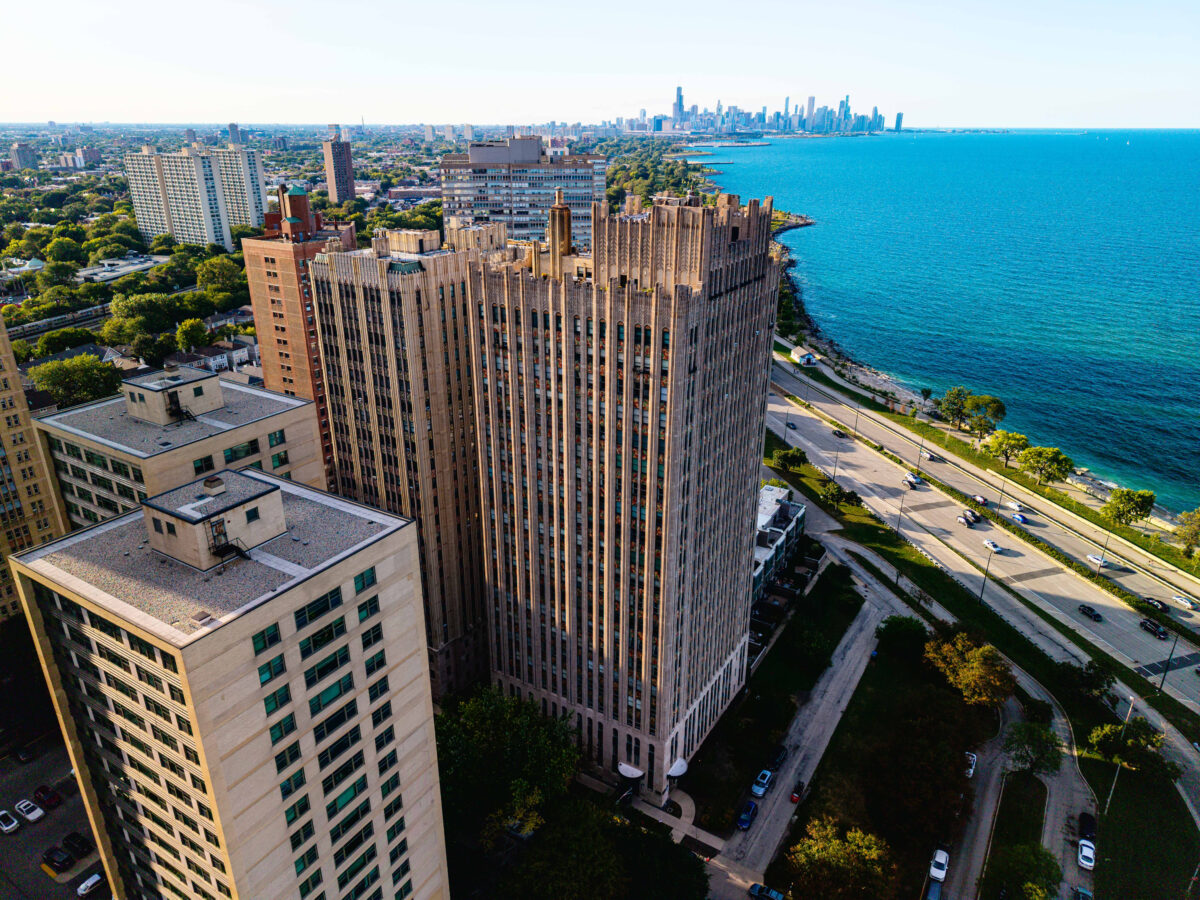
For Best of the South Side, South Side Weekly interviewed author and Chicago Sun-Times architecture critic Lee Bey about some of his favorite buildings in Kenwood. Ultimately, the discussion focused on The Powhatan, a distinctive high-rise built in the late 1920s. Designated as a Chicago landmark in 1993, The Powhatan “reflects Eliel Saarinen’s influential, streamlined design for the Tribune Tower competition of 1922,” according to the city’s website.
It was named for Powhatan, “the paramount chief of Tsenacomoco, a political alliance of Virginia Indians whose core six groups all settled along the James, Mattaponi, and Pamunkey rivers….By 1607, he was paramount chief of Tsenacomoco, having expanded it, through a combination of force and diplomacy, to between twenty-eight and thirty-two tribes and petty chiefdoms.” The Powhatan Confederacy included an estimated 10,000 to 15,000 people.
Several nearby residential buildings built in the same era were also named after Native American tribes—including the Algonquin, the Chippewa, and the Narragansett—hence an unofficial nickname for the east Kenwood neighborhood, “Indian Village.”
This interview has been edited for length and clarity.
South Side Weekly: What makes The Powhatan beautiful?
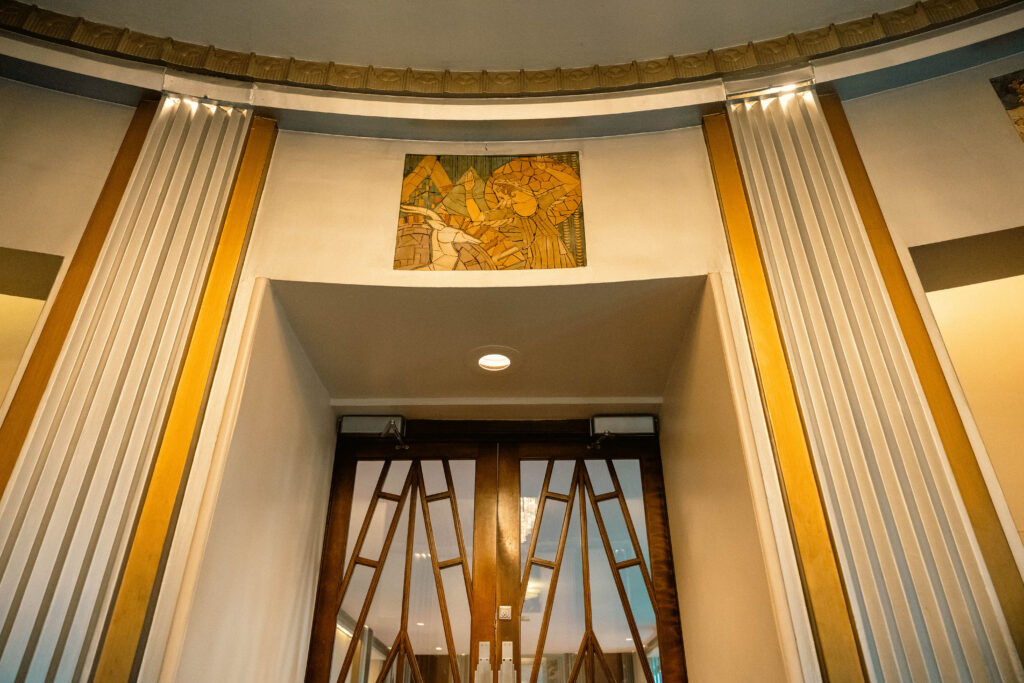
Lee Bey: Well, it’s certainly one of the most elegant high-rise buildings in Chicago. It was built in the late 1920s, Art Deco style, with its verticality clearly and fully expressed. At twenty-two stories with terracotta detailing and Native American themes—expressed through objects like feathers—the building works beautifully. It really looks like a jazz age building; it really typifies the elegance, class and style of that era.
It’s similar to the other buildings in that cluster of Indian Village; some have Native American names, and incorporate similar design details. But this one is a standout. It’s closest to the lake.
And even the units that are not directly in front of the building—the ones on the north and south sides—still overlook Lake Michigan.
The Art Deco detailing is visible from Lakeshore Drive. It really pops! Is there a challenge in maintaining that kind of detailing when near water? Or when exposed to bright sunlight?
Yes, the position of that building makes it that much more amazing that it still looks the way it does! I think the exterior was last restored maybe 12 or 15 years ago, but it is a challenge. [Note: The last two restorations were in 2005 and 2017.] Water and wind—those things tend not to be friends of buildings. And in this case, there’s no obstruction to protect it. It faces the lake; the sun comes up in the morning and heats the building up, and then it cools throughout the day. So there’s a kind of thermal expansion always happening that’s never good. It’s clear building management has kept up with maintenance and care.
This edition of Best of the South Side incorporates a focus on neighborhood history and change. Is there something about this building that’s representative of Kenwood?
I think of Hyde Park and Kenwood as twin cities, you know? Small twin cities. Kenwood was always kind of the upper, the slightly upper crust one, right? Kenwood was called the Lake Forest of the South Side, from the late 1800s. Even after it was annexed by Chicago in the late nineteenth century, Kenwood retained its suburban character.
At the turn of the century, residents included wealthy businessmen Martin Ryerson [lumber], Gustavus Swift [meatpacking], and Julius Rosenwald [department store, Sears Roebuck]. Kenwood’s spacious lots and large single-family residences were exceptional in Chicago. Architecturally, it has always sought to be a cut above.
Some of these single-family homes are just to the west of the Powhatan. Back in the day, a closer neighbor was a large luxury hotel called the Chicago Beach Hotel, built around the time of the World’s Fair, again taking advantage of the lakeside location. The hotel closed right before the Second World War; in 1942, it was commandeered by the military, reopening as a hospital. After the war the building served as the 5th Army Headquarters until the building was demolished in the 1970s, when the Regents Park apartments were built on the site.
We’ve talked a little about the other buildings named for Native American tribes, in the area near the Powhatan. Can you speak to how successful the incorporation of indigenous elements and themes in these buildings?
These are things that were done, allegedly, out of respect for Native American nations and tribes. But the best way to do that would have been not to run them off. The best way would have been for these communities to have continued to live on their own land. So naming is a tricky thing. I understand why it’s read as insulting. When cultural elements are used solely for ornamentation, it’s appropriation.
I think that’s the thing—these buildings were not designed for Native Americans to live in. They were not designed with Native American residents in mind. It’s beautiful architecture, but we can’t lose sight of the fact of what these choices really mean beneath the skin. For example, contrast the Powhatan with a new building being designed for the Native American community on the Northwest Side. It’s designed with Native Americans in mind, it’s in conversation with Native American people. It’s a completely different thing. [Note: The development, called ‘Jigzibik’ for the Potawatomi word for ‘at the river’s edge,’ is located in Irving Park and will contain 45 dwelling units and space for Native American nonprofit organizations.]
When researching information about Indian Village in Kenwood, we came across a campaign led by Indigenous people living in Lake and Cook County, for affordable housing and better social services. From 1970 to 1972, Mike Chosa, an Uptown-based community leader, was a key leader. Several encampments were established throughout Chicagoland, including in Wrigleyville and Belmont Harbor. The goal was to raise awareness, pressure government agencies, and to remedy poor living conditions for Native Americans in the Chicago area. It was called the Chicago Indian Village. An incredible counterpoint.
A while ago I was kind of the emcee at a big meeting held by the American Institute of Architects in Chicago. There were a few thousand architects from all over the country. We opened with something like a land acknowledgment. Native American artists and storytellers performed, and at the end of the performance the gentleman said, “we’re still here.”
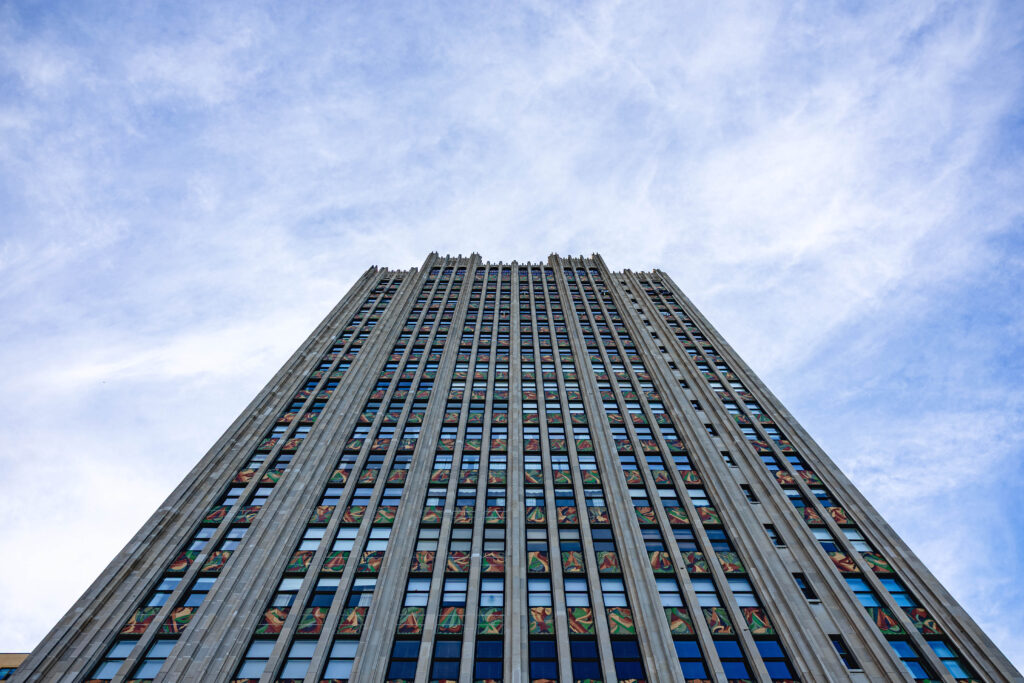
Colorful tile work under windows at The Powhatan Apartments, just off of Lake Shore Drive and 49th Street. Credit: Gabriel Valerio 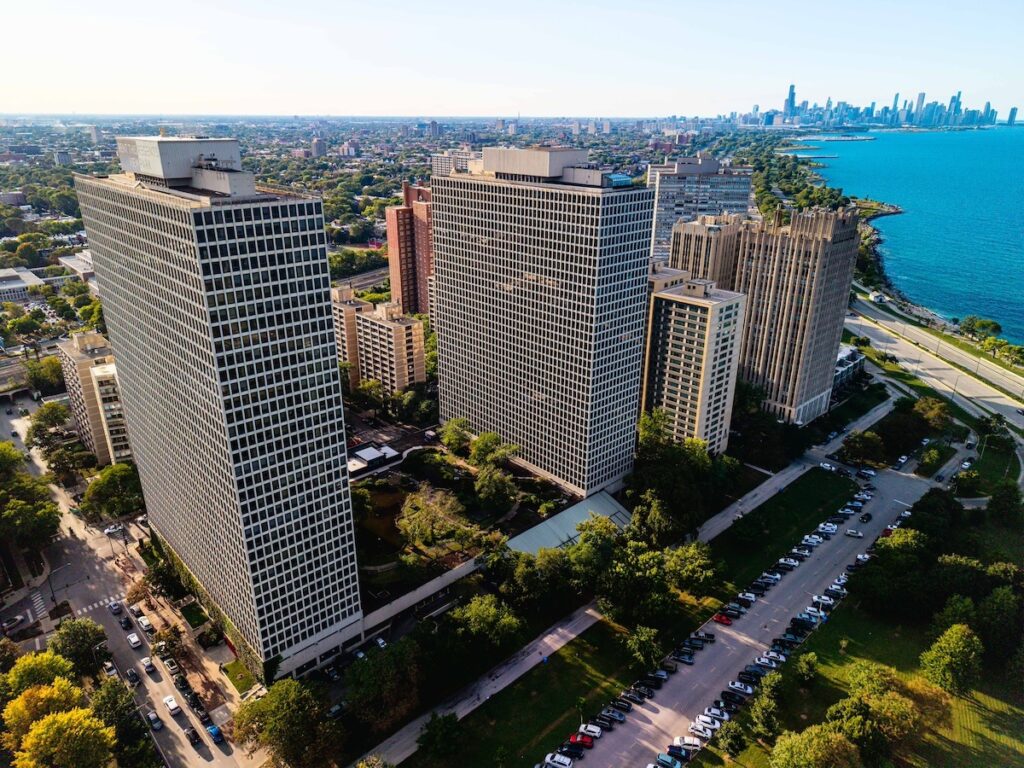
From left to right, Regents Park Apartments (on the site of the old Chicago Beach Hotel, built in the 1890s for the World’s Fair); The Narragansett (built in 1928); and The Powhatan (built in 1927-28, opened in 1929). Credit: Gabriel Valerio
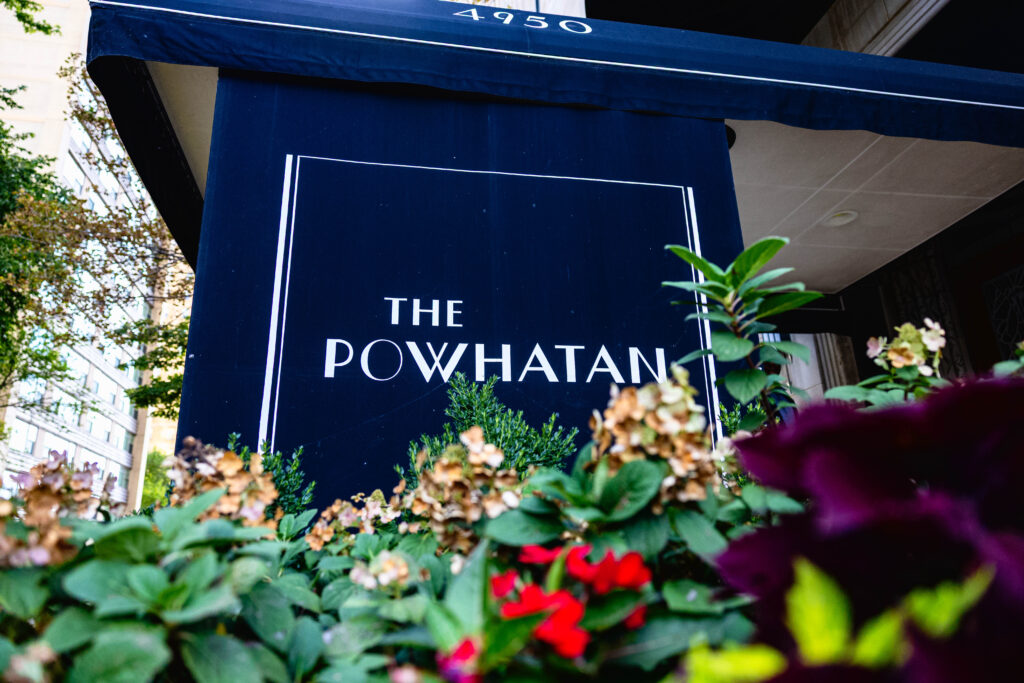
The Powhatan, 4950 S Chicago Beach Dr.
Lee Bey is an architectural critic, photographer, author, and editorial writer for the Chicago Sun-Times.
Gabriel Valerio is a Chicago-based student photographer who photographs sports, architecture, street, and communities throughout the city. He is especially interested in finding stories through photography and exploring the different sides of Chicago. Outside of photography, he is a competitive chess player and track athlete.