

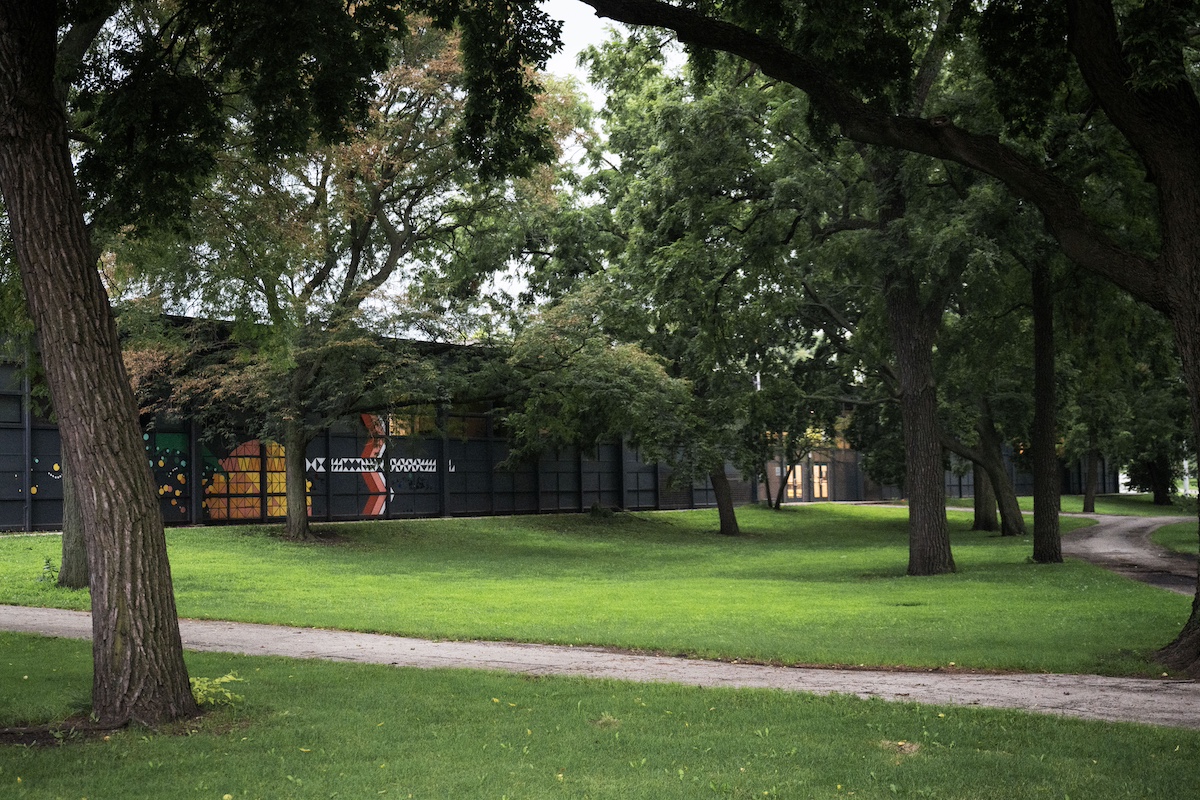
Walk the half-mile stretch along South Martin Luther King Drive connecting East 55th Place and East 51st Street, and you will be walking through a section of the South Side that activist Damon Williams recently dubbed a “liberatory corridor of justice.”
At the southern end of this stretch lies the site of the future Chicago Torture Justice Memorial, currently an empty lot. At its northern end rises “Other Washingtons,” a new installation by Bronzeville artist Amanda Williams.
Both projects are part of The Chicago Monuments Project, which asks two central questions about Chicago’s monuments: “Who is missing from our public memory?” and “How can we tell a fuller, more truthful story?”
The effort to establish a public memory of the more than 120 people (predominantly Black men, with a smaller number of Black women and Latine survivors) who were tortured between 1972 and 1991 by Chicago police Cmdr. Jon Burge and detectives under his command stretches back to 2011, when a group of artists, activists, academics, survivors, and attorneys formed Chicago Torture Justice Memorials (Project). In May 2015, the Chicago City Council unanimously enacted the Reparations for Burge Torture Victims Ordinance and an accompanying resolution that mandated construction of “a permanent memorial to the Burge victims.”
In early July this year, city officials joined more than a dozen survivors of Chicago police torture and family members for the memorial’s groundbreaking.
Anthony Holmes, who was electrocuted and suffocated by Burge in 1973 and served more than 30 years in prison before being freed, spoke at the groundbreaking.
“Memorial means everything to me, because it is about truth,” Holmes said, according to reporting from the Hyde Park Herald. “When no one would believe us for a long time, the memorial is the city’s way of admitting what happened to us.”
Looking to the east of the memorial site, across King Drive, lies Washington Park.
As you cross the street and walk north through Washington Park, near the intersection of King Drive and 53rd, and a hundred yards into the park, sits Ronald “Ronnieman” Johnson Playground.
The playground is named after Ronald Johnson III, who was 25 when he was fatally shot in the back by Chicago police officer George Hernandez near the same intersection.
Johnson was killed on October 12, 2014, just eight days before Chicago police officer Jason Van Dyke fatally shot 17-year-old Laquan McDonald on October 20. Following McDonald’s killing, widespread protests intensified calls for reform of the Chicago Police Department.
This August, 12 years after her son Johnson was killed and two years after his family settled a wrongful death lawsuit with the city for $2 million, Dorothy Holmes spoke at the ceremony unveiling the playground’s new name.
“It took me seven years, seven years to get a playground renamed,” Holmes said. “I’m not done yet,” she continued. “I need August 15th, Ronnieman Day.”
Mayor Brandon Johnson was at the ceremony. He listened and responded. On the spot he declared August 15, 2026, Ronnieman Day.
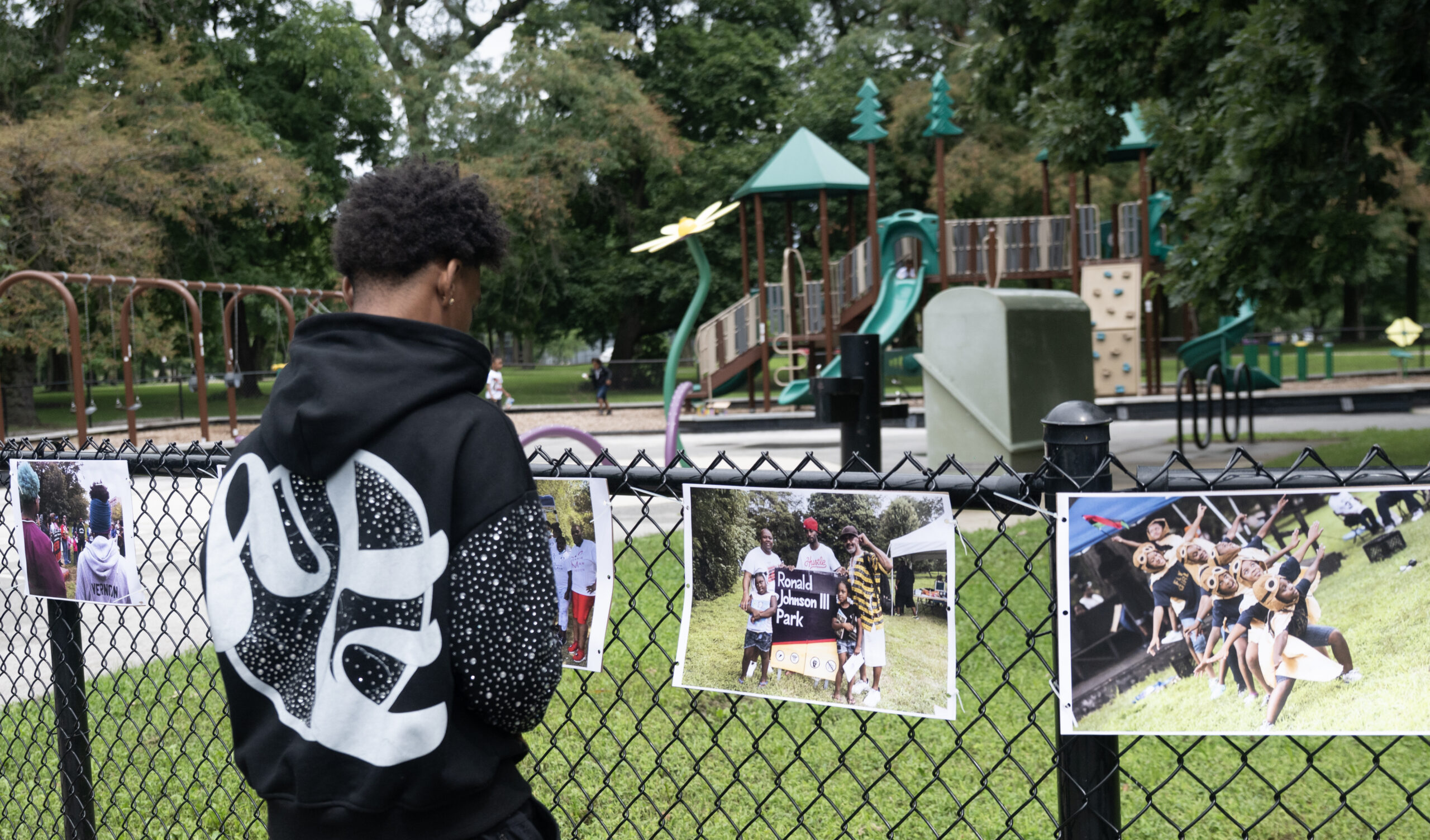
A member of GoodKids MadCity looks at photos attached to the fence of Ronald “Ronnieman” Johnson Playground as dedication ceremonies for the play area in Washington Park start, August 15, 2026. Credit: Marc C. Monaghan 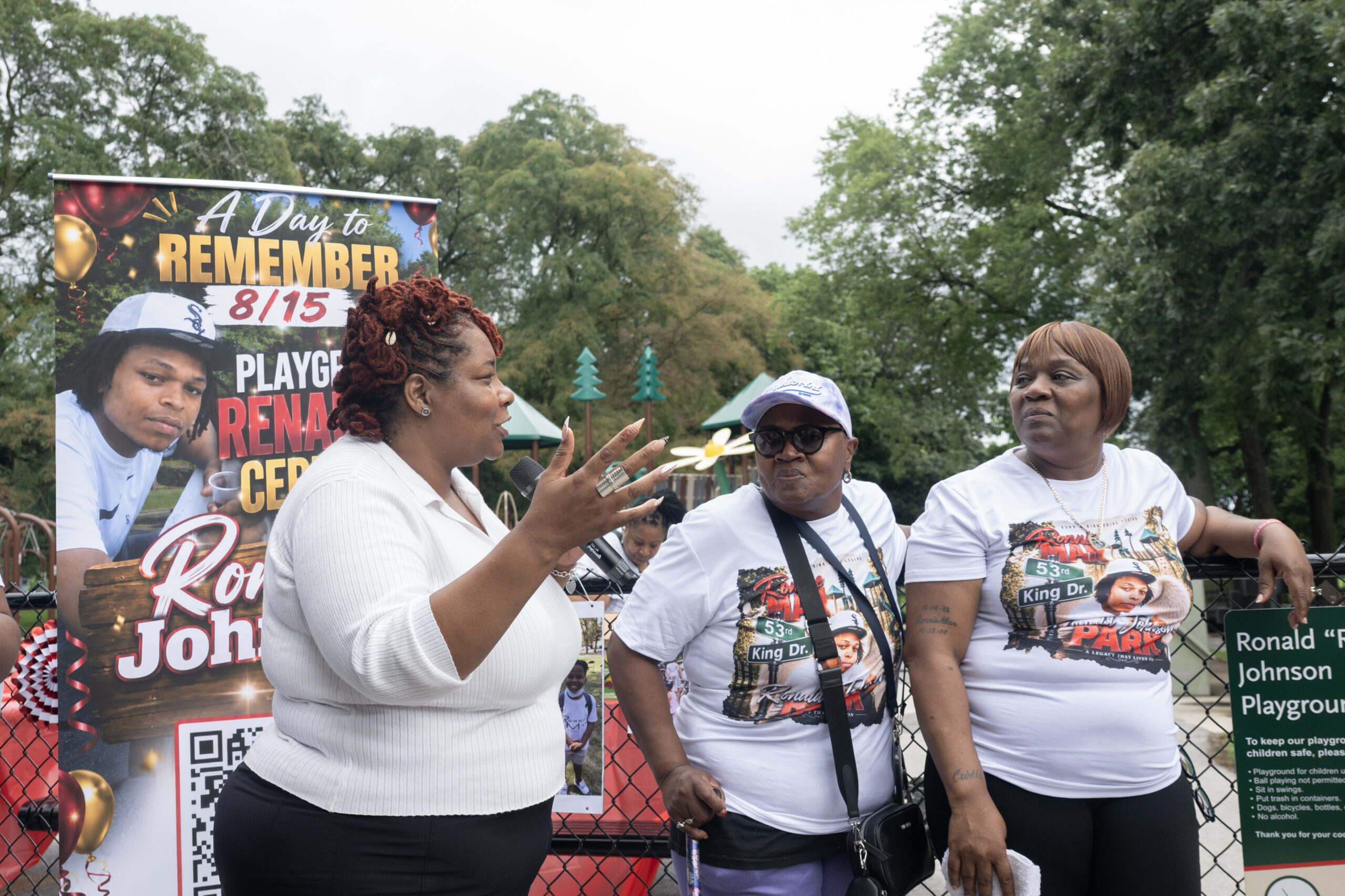
Ronald “Ronnieman” Johnson’s grandmother Dorothy Johnson and mother Dorothy Holmes listen as 20th Ward Alder. Jeanette Taylor speaks during dedication ceremonies for Ronald “Ronnieman” Johnson Playground, August 15, 2026. Credit: Marc C. Monaghan 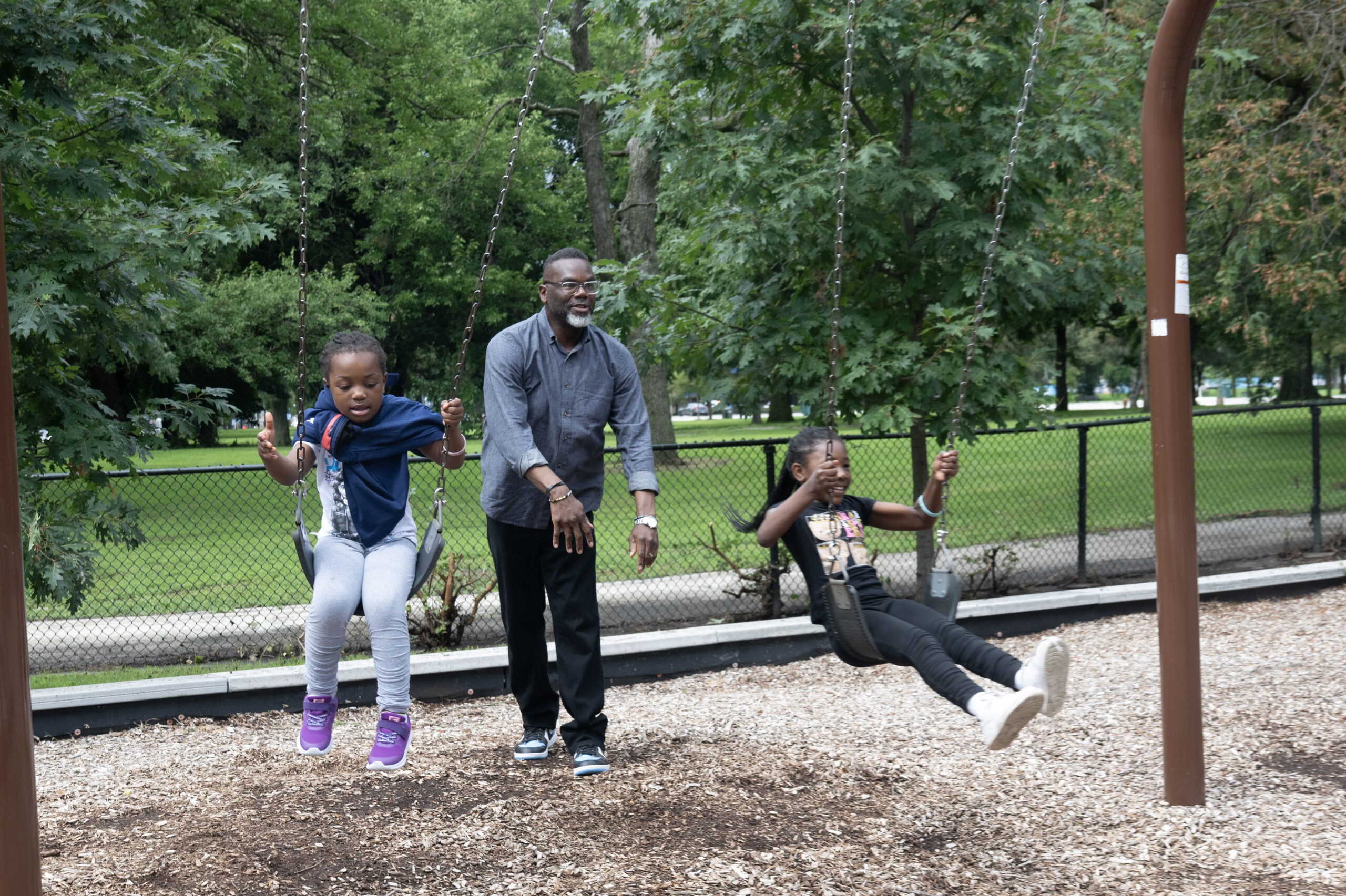
Mayor Brandon Johnson pushes children on a swing in Washington Park’s Ronald “Ronnieman” Johnson Playground, August 15, 2026. Credit: Marc C. Monaghan
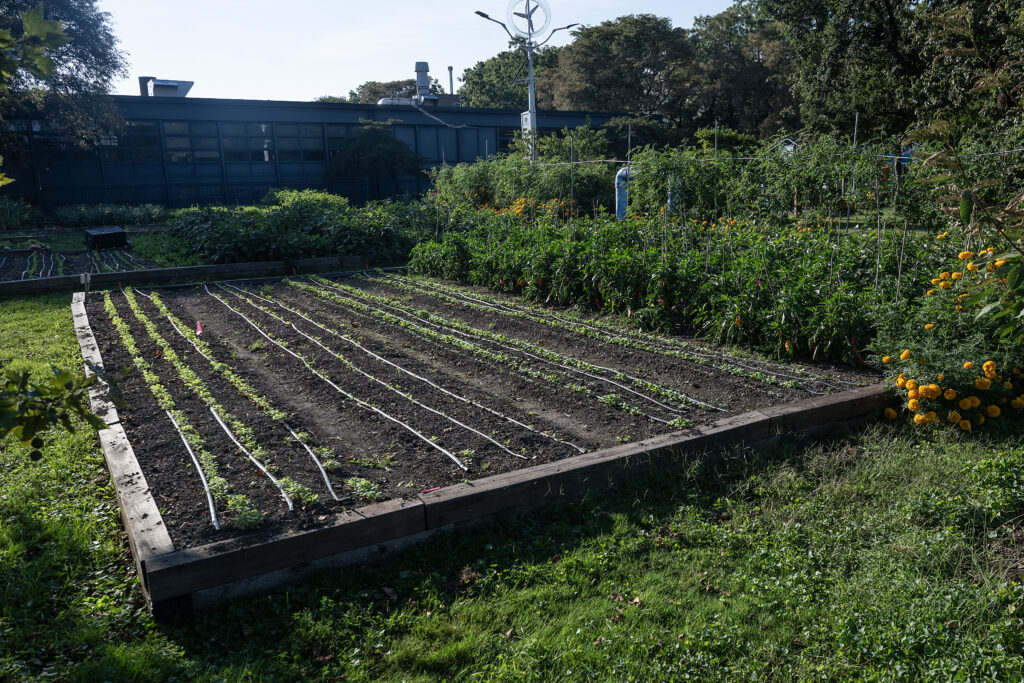
As you step out of Ronnieman Playground, looking northeast through an open woodland, you can see Walter H. Dyett High School for the Arts.
Dyett could have been just another vacant building. Named after an American violinist and music educator who served in public schools in Bronzeville—his students included Nat King Cole and Dinah Washington—the school was slated to close in 2015.
But in 2015, a group of parents, community leaders, and activists from the Kenwood–Oakland Community Organization (KOCO) initiated a hunger strike to prevent the closure, calling for it to be reopened with a curriculum focused on leadership and green technology. The planned closure, which followed Chicago’s mass closure of 50 public schools in 2013, was broadly criticized as part of a pattern of disinvestment in Chicago’s poor and Black communities.
After 18 days, the city agreed to reopen the school as an open-enrollment, arts-focused neighborhood high school but not with the curriculum requested nor with the investment and community partnership demanded by the strikers. In response, strikers announced that the action would continue. After 34 days, the strike was terminated due to concerns over the health of some of the strikers. Though not all of the strikers’ demands were met, they changed the course of the neighborhood’s history.
This past August, the school welcomed its 10th class since reopening after the hunger strike.
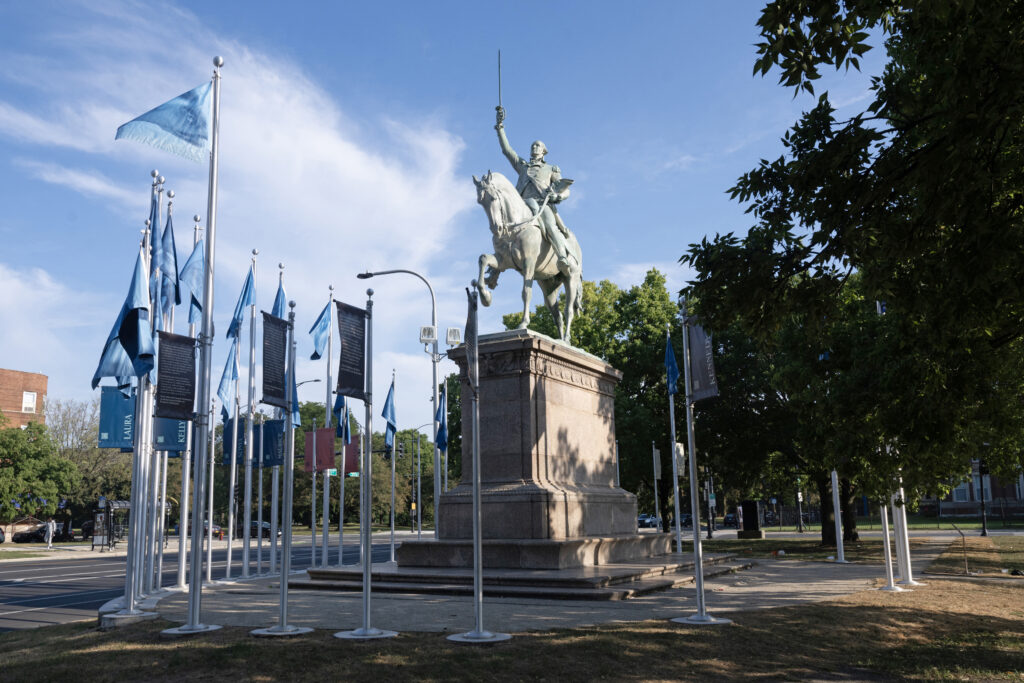
The final stop on the walk is Amanda Williams’s new art installation “Other Washingtons.”
About 40 flagpoles rise above the western median of King Drive just north of 51st Street. Bearing flags and vertical banners carrying the names and personal stories of Black Americans with “Washington” in their names, they surround a statue of George Washington riding a horse that was installed in 1904.
The installation invites those passing by to consider dozens of Black Washingtons who’ve made an impact, whether personal or historic, alongside the nation’s first president.
On one banner, Anise Harkey writes about her grandfather, George Washington Sims, who was a teacher drafted for service in 1918 and three months later died in the global influenza epidemic.
During a 2023 panel discussion, Williams explained her interest in using monuments to create spaces for conversations. When there is a “recognition of something that is absent from a collective narrative,” Williams said, there is a “rupture of the silence.”
At the 2026 opening of “Other Washingtons,” Williams added, “It’s not just about monumentalizing people or things, but also about creating space for those kinds of conversations.”
During the Ronnieman Playground unveiling, Damon Williams noted that the playground was in a larger context of such spaces.
“Right here is Dyett High School,” he said, gesturing toward the north. “And right down the street, we’re gonna have the new Torture Justice Memorial.”
“This is a space where we heal. This is a space where we repair.” And then he dubbed the half-mile stretch along King Drive “a liberatory corridor of justice.”
Future Chicago Torture Justice Memorial site, 5526 S. King Dr. ctjmfoundation.org/about-ctjmf/the-memorial
Ronald “Ronnieman” Johnson Playground, north of 53rd St. and east of S. King Dr. chicagoparkdistrict.com/parks-facilities/ronald-ronnieman-johnson-playground-nw
Walter H. Dyett High School for the Arts, 555 E. 51st St. newdyett.org
Other Washingtons, E. 51st St. and S. King Dr. otherwashingtons.com
Marc Monaghan is a journalist based in Chicago. He focuses on the people of Chicago’s south side, the work they do, the rituals they perform, the struggles and celebrations they have, and the ways they gather together and function as a community. He is a regular contributor to Hyde Park Herald.