
Everything is on fire,
but everyone I love is doing beautiful things,
and trying to make life worth living,
and I know I don’t have to believe in everything,
but I believe in that.
— Nikita Gill
Those are the words I repeated to myself over and over again for most of 2025.
I repeated it every day ICE agents entered the Southwest Side, every day I saw my neighbors get kidnapped by masked men, every day videos of abductions took over our screens. In the midst of all the chaos, it’s what kept giving me hope for a better tomorrow, whenever that may be.
I believe in that.,
I believe in a world where neighbors show up for each other, where they share food from their gardens and cook meals with one another, where they drive each other to appointments and give their kids rides to school.
Call me naive—I believe in a world beyond what has been shown to us.
I believe it because I’ve seen it.
The day President Trump was sworn into office a second time, I knew Chicago would put up a fight. This city is no stranger to strong community organizing. It’s as much our legacy as house music, corrupt politicians, and yes, even the Chicago dog.
In fact, much of 2025 would’ve looked very different had it not been for the decades of organizing that preceded this moment. In 2010, more than a decade before Operation Blitz, the Immigrant Youth Justice League (IYJL) organized the first Coming Out of the Shadows march to Federal Plaza where they proudly declared themselves undocumented, unafraid and unapologetic. This movement marked a shift as thousands shared what it means to live without papers.
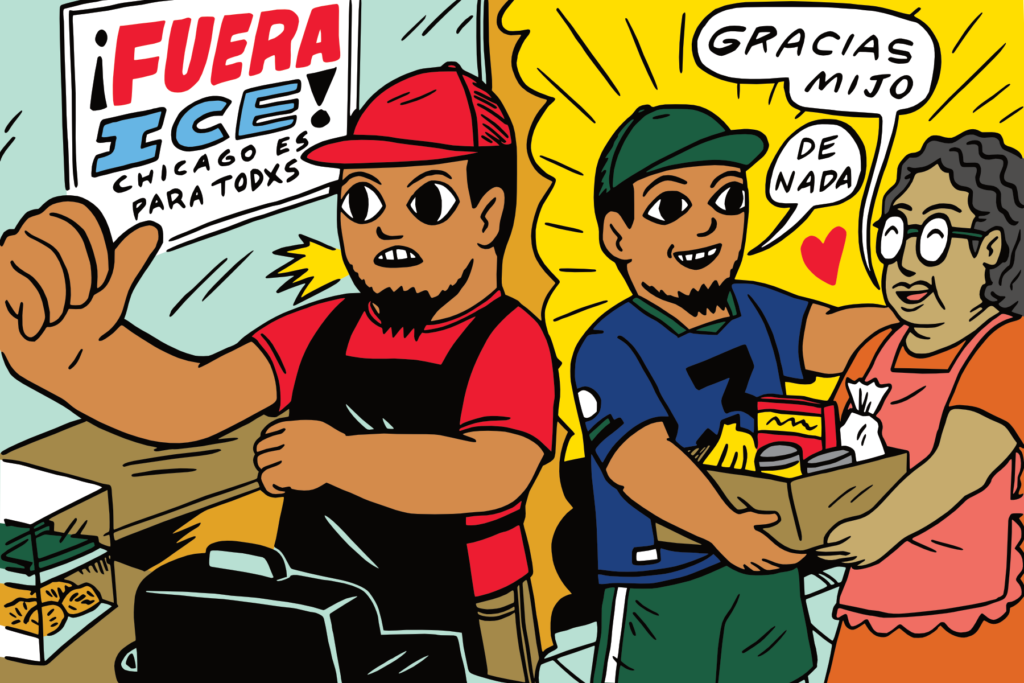
The city, county, and state passed sweeping protections for immigrants as a result of advocacy from groups like the Illinois Coalition for Immigrant and Refugee Rights (ICIRR), Organized Communities Against Deportations, #Erase the Database, the Brighton Park Neighborhood Council, and other coalitions that have called out harmful practices and fought for all people to have a right to safety, regardless of status.
In 2017, Immigration and Customs Enforcement (ICE) targeted 31-year-old Wilmer Catalan-Ramirez, raiding his Back of the Yards home based on his alleged gang affiliation in a Chicago gang database. The names of more than 150,000 people were entered into the gang database, most for reasons that did not prove gang affiliation—including having tattoos, self-admission, walking in gang territory, and wearing certain colors. But inclusion in the database had major consequences. As in Wilmer’s case, agencies like ICE used it in investigations to justify deportation, even when the information was incomplete or inaccurate.
Chicago’s organizers diligently built a movement to terminate the database at the city and county levels, and to amend the Welcoming City Ordinance, a local law that prohibits city collaboration with federal immigration officials.
At the state level, groups like ICIRR spearheaded the passage of the TRUST Act and IL Way Forward Act. Passed during Governor Bruce Rauner’s term, the 2017 law prohibited police from arresting or detaining an individual for ICE, barred federal agents from local jails for immigration purposes. The Way Forward Act, passed in 2021 under Governor J.B. Pritzker, built on these protections by prohibiting police from asking individuals about immigration status and by banning private detention centers in Illinois. Building a sanctuary city and state painted the beginning of the resistance from our vibrant communities against injustice. It was evident long before Operation Midway Blitz that we keep us safe.
The first kidnappings accelerated quickly after Trump was inaugurated in January 2025, asserting his violent agenda as promised. The Southwest Rapid Response Team was born in response. Amanda Varela, team co-lead, said “people really came together in a time of crisis. It was really heartening just how people—our rapid response group in particular—came together.”
In 18 months, a tight-knit crew grew to more than 170 members. “You know who showed up when shit hit the fan. There’s a lot of people that I may not know that well, but I have a trusting relationship with them just having gone through that experience together.”
At the height of Operation Midway Blitz, more than twenty people in our community were routinely abducted each day. Families were left wondering where their loved ones would end up, whether they had access to their medication, whether their children would see them again. Those people were fathers, mothers, recognized faces in the community. I may not have known them, but they were part of someone’s village, and this made them part of mine, too. The kidnapping of our neighbors destabilized not only individual and extended families, but the community as a whole.
Telling someone’s loved one that the Southwest Rapid Response Team has confirmed the abduction of their spouse, child, parent, or sibling is not taken lightly; it is a life-altering moment. We sit with families in the discomfort, the fear, the anguish, the anger. For many, the automatic question was, “Where is my family member?” While ICE publishes information through the ICE locator website, there is often a 48-hour delay from the moment a person is taken and arrives at Broadview Processing Center to when they show up on the website. 48 hours go by without them knowing where their loved one is.
The immigration system is intentionally made to lose people. Local tamale vendor, Don Federico, was taken in December 2025 while selling from his regular location on 47th and Hermitage. Mayra Lopez-Zuniga, his neighbor, experienced the chaos firsthand. “Throughout the whole process, we had challenges getting him his medication and the proper legal resources. Before getting him to sign his deportation order or his release, we wanted to get him to talk to a lawyer to see if he could fight the case. We weren’t really able to do that because it was hard to find him in the system,” she said. “He was in Indiana. Then he was transferred to Ohio. He was transferred down south somewhere and then ended up in Kentucky. Louisiana. He got transferred back to Indiana, before he was deported.”
After his abduction, Lopez-Zuniga and the Southwest Rapid Response Team launched a GoFundMe to support Don Federico, “Some of that [money] was used when he was going back and forth, his commissary, or [support] things he needed to resolve before leaving. He was able to get housing [in Mexico]. I’m amazed at our people. He was selling tamales here in the winter in his late 70s,” said Lopez-Zuniga. “He went back to Mexico and decided he wanted to continue to be a vendor so he was selling dried goods at the mercado, like jamaica, semillas.”
Don Federico is one of thousands across the city who were kidnapped. Thousands of people were separated from their loved ones. Thousands experienced months in unimaginable conditions, in detention, removed to cities and states far away from their homes. Thousands were deported to countries they may not have memory of or connection to.
The brutality of systems like ICE expand far beyond the walls of detention centers, spilling over into our communities. During Operation Midway Blitz, agents were frequently documented pointing their weapons at individuals, throwing tear gas near children, driving recklessly and causing collisions, shattering car windows, following people to their homes—acting with no care for humanity yet with emphatic, public approval from Commander Greg Bovino, and clear support from those he reported to.
Varela reflected on the connections across movements. “[Operation Midway Blitz] really made me think of the genocide in Palestine. It made me think about how they’re under constant, constant attack. It made me reflect on the tactics of the oppressor, in terms of ‘they have more resources, money, equipment, material’ to keep coming at you and really try to grind your spirit down,” she said. “Our people kept coming together, kept strategizing, kept dropping what they had to drop to at least put up a fight, piss them off, push back enough that we know we had an impact on what they wanted to do.”
Even in the darkest moments of Operation Midway Blitz, community showed up in any and all ways possible. La Casa Playroom sits at the southeast corner of Archer and Kedzie in Brighton Park, half a mile away from where Marimar Martinez was shot five times by federal agents. For owner Angie Maciel, October 4 started like a typical Saturday morning; she was hosting a virtual field trip to Guatemala to a packed room of children and parents, and they were learning about traditional foods from Chef Mary-Beth and reading from the children’ s book Emilia’s Corte. Then whistles began to blow down Kedzie Ave.
For many of us, this moment revealed a grim reality: ICE would use all tools at their disposal to harm our people. That day, an hours-long standoff between ICE and community members took over the intersection of 39th and Kedzie. Countless agents made their way to Brighton Park that day. Car after car stormed through the growing group of neighbors.
I never imagined I would see a day where my neighborhood would be under siege by violent federal forces. I never imagined a day I would see dozens of assault rifles pointed into a crowd of moms, dads, and kids.
I can feel the stinging of pepper balls burning my throat. Pepper balls were eventually traded for tear gas canisters. Agents donned respirators. Canisters thrown into alleys and streets without a care for who was there. Even in the worst of moments, it was neighbors who placed garden hoses on their fences to let others rinse their eyes, mouth, and skin from the chemicals.
“I had to shut down the event early, help people leave, and then that’s when I ran into the street and was helping people avoid ICE.” This day was when it shifted for Angie, “I realized I need to do more for the community.”
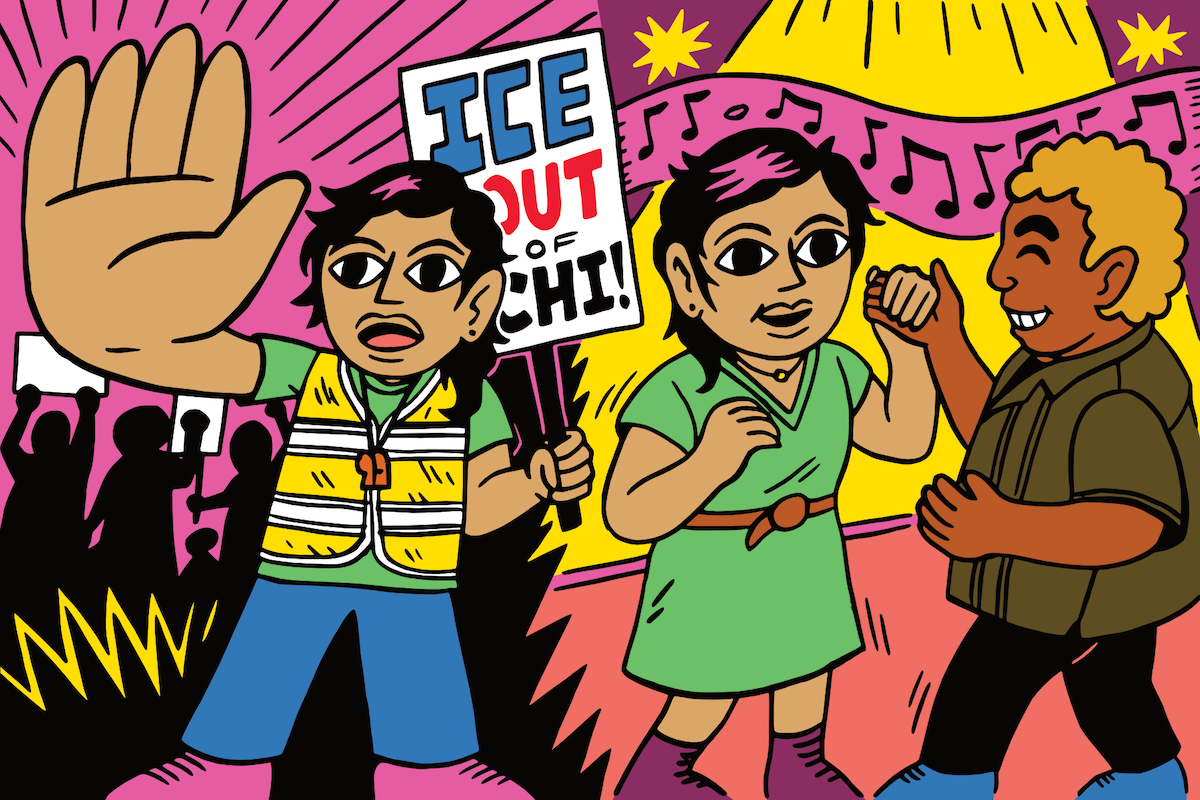
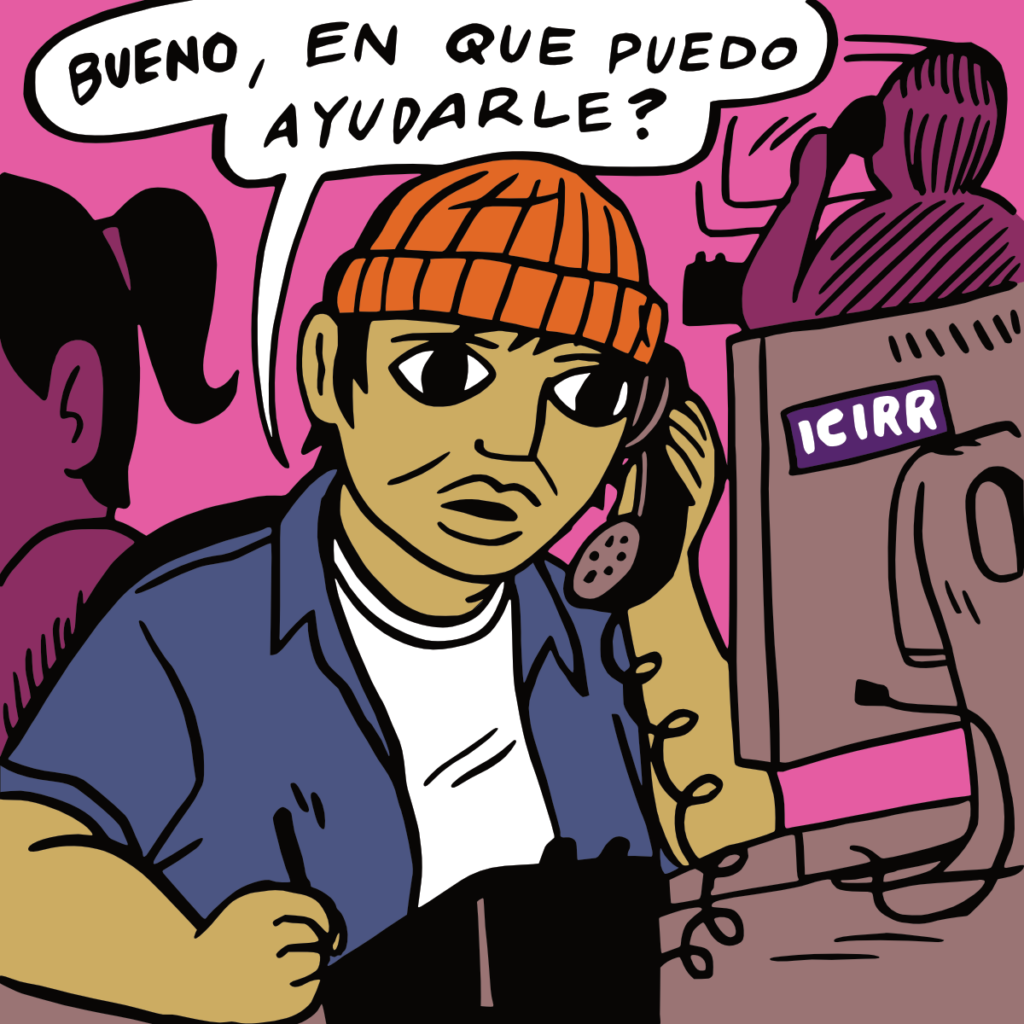
Operation Midway Blitz asked us all one question: what will you do when agents swarm your community? Everyone found their place, whether 3D printing whistles, offering rides to school or medical appointments, court accompaniment, or grocery shopping.
Quickly after the shooting of Marimar Martinez, La Casa Playroom became more than just a space for children. It became a collection center for groceries, diapers, toys, books, and clothing. “What struck me the most was how organically community was built, cultivated, and fostered. I’ve never seen anything like it. People who I had never met before were treating me like their best friend. We all came together. We all understood each other. I’ve never felt that before. I’ve never seen that before.”
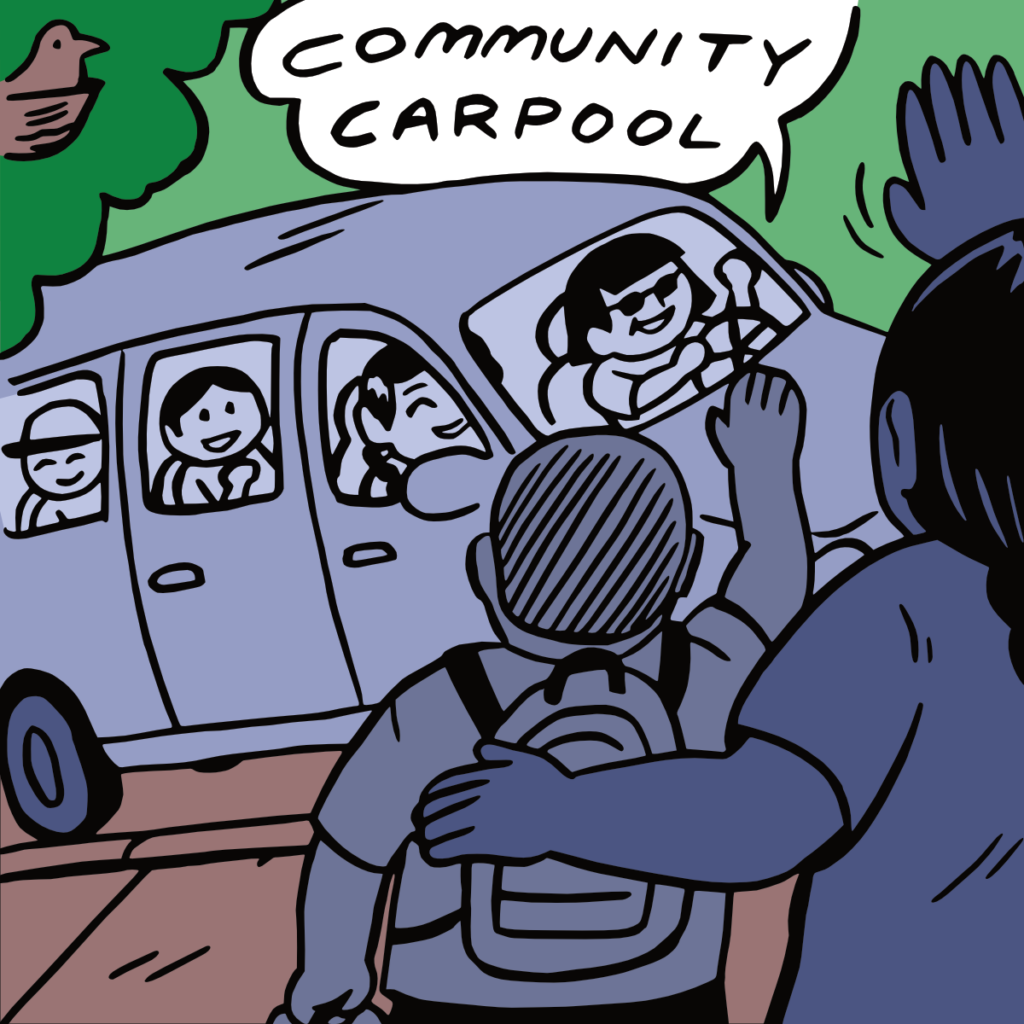
As Operation Midway Blitz continued, the most basic necessities were difficult for families to access. Many were forced to skip medical appointments. In one instance, a mother and teenage daughter on their way to a grocery store in Brighton Park were apprehended and placed in detention. Even going out for groceries was a risk and a calculated decision. “My family and I were hand delivering to 10-20 families per week. Sometimes three to four a day,” said Angie.
When asked why she was motivated to do this work, Angie reflects on, “Es my deber [duty]. As a community member, as a business owner, I am part of our community. It’s important to me to make sure my community is safe”.
The one-year anniversary of Operation Midway Blitz, September 7, 2026, has come and gone. I walk up and down the Southwest Side. I remember every corner where someone was taken. I remember driving my dad’s Ford Transit van, pulling down the visor to find a copy of his U.S. passport. My dad, a Mexican immigrant turned naturalized citizen, afraid that one day ICE would get him too. Every time I drive on Kedzie or 47th or Western, I can vividly see every family still fighting for freedom.
There’s a long day to go to begin to heal. We’ve got work to do. To the person reading this, find your place in the movement. We need you to join us in this fight. We’re going to get there—together.
Karina Mireya (they/she) is a digital organizer and freelance photographer intertwining storytelling and narrative building in movements. Raised on the southwest side of Chicago, Karina believes in building strong communities through community lead empowerment.
Atlan Arceo-Witzl is a biracial Mexican-American visual artist, second-generation printmaker, and third-generation educator based in Chicago, Illinois. He received his Bachelor’s degree in Studio Art from Skidmore College. He has worked as a teaching artist in various programs and institutions while also maintaining a personal freelance and art practice.
Great article! The illustrations enhance our understanding of the communal trauma we’re undergoing and the spirit of resistance shared by our neighbors. Thank you.