
To protect people who choose to speak with the Weekly for our Doing Time series, we use pseudonyms to refer to insiders and only first names to refer to loved ones on the outside who visited insiders.
On Valentine’s Day, Star spent twenty minutes talking to her fiance across a long plastic table. As the visit came to an end, she finally got to do something she’d been waiting for the whole time: give her fiancé a big hug.
“I’ve been coming up here for eight months now; it’s a bit overwhelming still,” Star said. “But once—at the end of the visit—once I’m able to hug my loved one, it make me feel a whole lot better…It put a smile on my face, it relieves a little bit of stress until the next time.”
Research from the Prison Policy Initiative shows that regular contact, including physical contact, between incarcerated people and their loved ones, such as family members, partners, children, and friends, leads to better health and lower rates of both violence and recidivism for insiders.
Yet across the state and country, jails and prisons have increasingly banned in-person visits, replacing them with video calls from jail-specific kiosks about the size of an iPad. The trend picked up at the beginning of the pandemic, when jails that had instituted temporary bans for reasons of public health never lifted them. The Weekly surveyed the visitation policies for all ninety-three jails in Illinois and found that sixty-three have banned in-person visits.
In this, Cook County Jail is an outlier. The jail brought in-person visits back after the height of the COVID-19 pandemic. According to a spokesperson with the Cook County Sheriff’s Office (CCSO), “Face-to-face contact is a vital part of preserving family bonds and supporting the well-being of those in custody. While video visits can supplement, they cannot replace the value of personal interaction. For this reason, we have chosen to continue in-person visits as part of our commitment to promoting humane and meaningful family connections.”
In addition, the jail maintains no-cost video calls and phone calls that are significantly cheaper than at jails across the state. While some jailed people are disciplined or punished by losing the privilege of visits, for many insiders and their loved ones, visits and calls are a crucial connection.
On Valentine’s Day, the Weekly interviewed five people leaving Cook County Jail after visits with their loved ones. Manda flew in from Colorado to see her boyfriend. Ashley brought her toddlers to see their dad. Star visited her fiancé. Jose brought Rosary, his friend’s three-year-old daughter, to see her Mom. Ravin visited her friend so he wouldn’t be alone.
The Weekly also spoke with two insiders: Anthony, who is one of nearly two hundred people in Cook County Jail who have been incarcerated for more than five years; and Manuel, who is facing deportation.
Everyone the Weekly spoke with said the most important moment of their visit is being able to hug.
Leading up to her visit, Ravin said she was “nervous, scary.”
“I have been to jail before,” she said. “So, walking behind them walls ain’t nothing pleasant to me. The whole time I was jittery, stuff like that, because I don’t ever want to get locked up. I got locked up [for seventy-two hours] so I just don’t like coming here, I be nervous and scared every time I come to the county.”
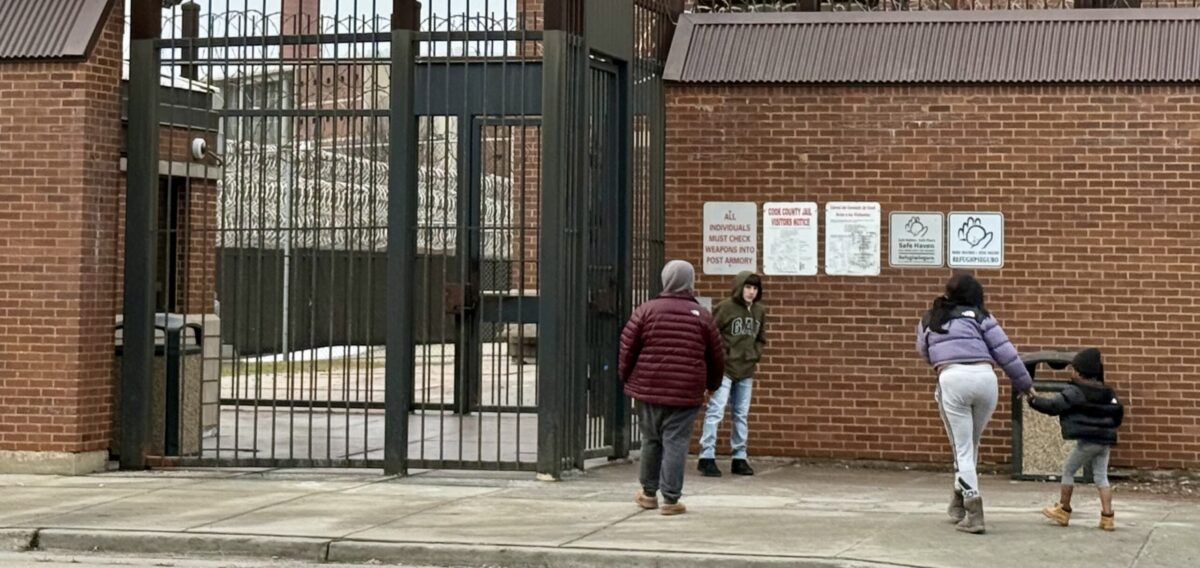
Entering the visiting room in Division 10, where Ravin saw her friend, involves walking up to the wall of the jail, walking through an external and internal gate, sitting in a waiting room, going through metal detectors, and then being escorted by guards to the visitation gymnasium.
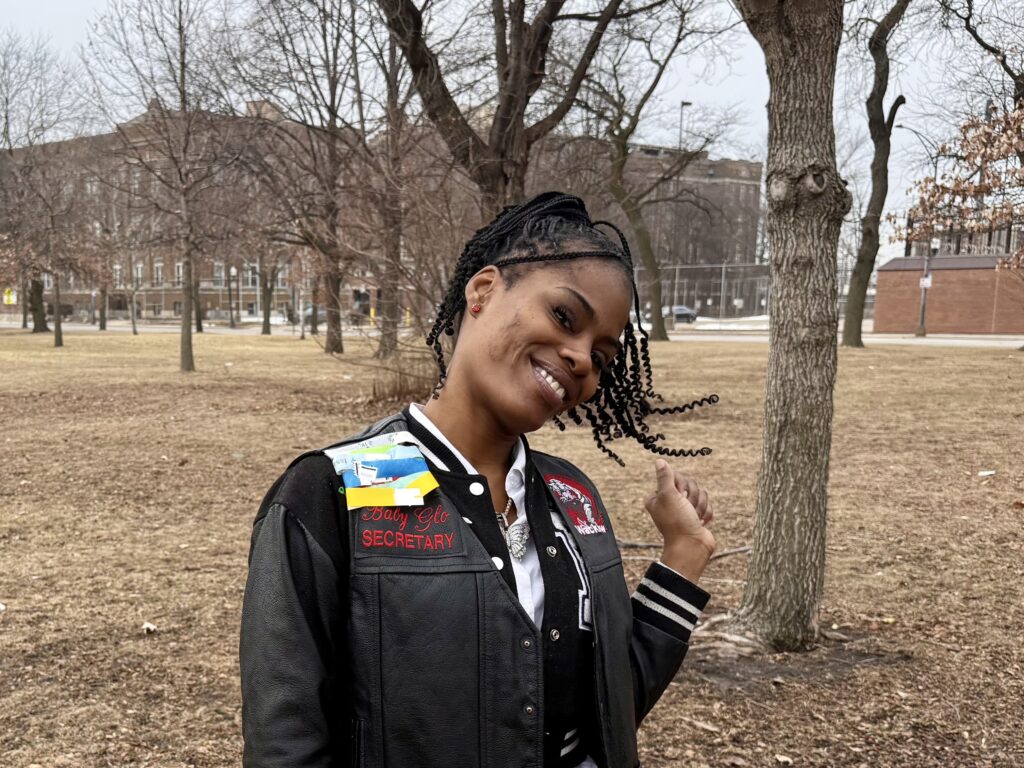
Ravin said she came to surprise a friend despite her fear, “because today’s Valentine’s Day, and he didn’t expect nobody to come on Valentine’s Day.”
To Ravin, love means “just checking on people. You never know what nobody going through.”
Visits in Division 10 take place in a gym with insiders and loved ones sitting at opposite ends of a two-and-a-half by six foot folding table. “Division 10 is designed as an open concept within a large gymnasium with separate areas designated for male and female populations. Visiting stations are equipped with a table and chairs as well as a children’s play space to reduce anxieties and adverse experiences associated with correctional settings. There are no Plexiglass dividers separating individuals in custody from those who are visiting them,” according to a CCSO spokesperson.
“When I bring my kids he gets to sit and hold them the entire time,” Ashley said. “I like bringing them so he can have somebody to hold, because I know he can’t do that in there; he’s alone.”
Ashley’s children are two-year-old twins. Her jailed partner calls often, and the family also does video calls. Ashley said the kids ask for him a lot. She’s glad he can be with the kids the entire visit, and is grateful for their one hug at the end, but wishes, as adults, she could hold his hand their entire twenty minutes together.
Jose brings three-year-old Rosary to visit her mom. “She gets to go up to her [Mom], she gets to touch her, she’s allowed to be with her [Mom] the whole time,” Jose said. “[My friend and I] can’t touch but, at the end, I’m allowed to give her a hug before we say goodbye.”
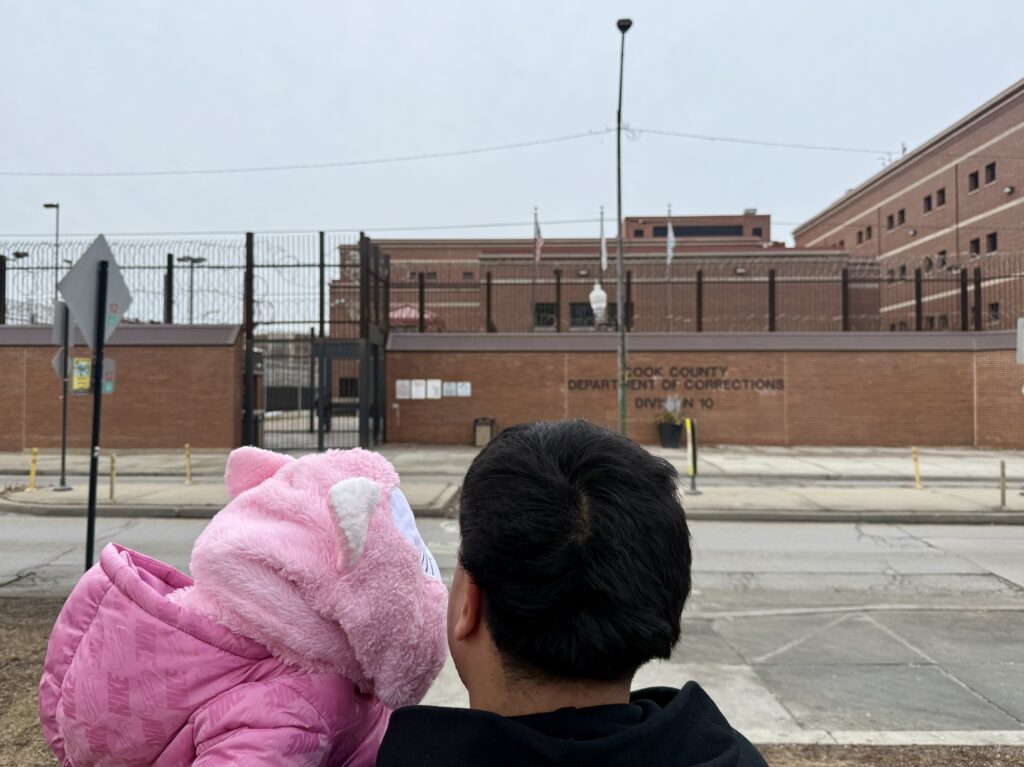
Jose is close with Rosary’s mom because when he was feeling low, she consistently checked in on Jose, supporting him through a dark time. Now, Jose brings her daughter to visit every weekend and sometimes during the week. “If you have a loved one, if you really care about them, just try to do your best to be there for them physically and mentally,” Jose said. “You never know what someone’s going through.”
The first Valentine’s Day letter was actually sent from a man in prison in 1415,” Manda said after a jail visit with her boyfriend, referring to the oldest known surviving Valentine written by an imprisoned member of the French royal family to his wife.
“Valentine’s Day holds a significance for us, actually, because [when he was arrested] we were not together,” Manda said. She struggled with whether to send a Valentine’s Day letter confessing her feelings and risk their fifteen-year friendship, but after reading her Valentine, he shared that he also had feelings for Manda. “It really meant a lot to him because he said he hadn’t gotten a Valentine’s Day card or celebrated since he was in fifth grade.”
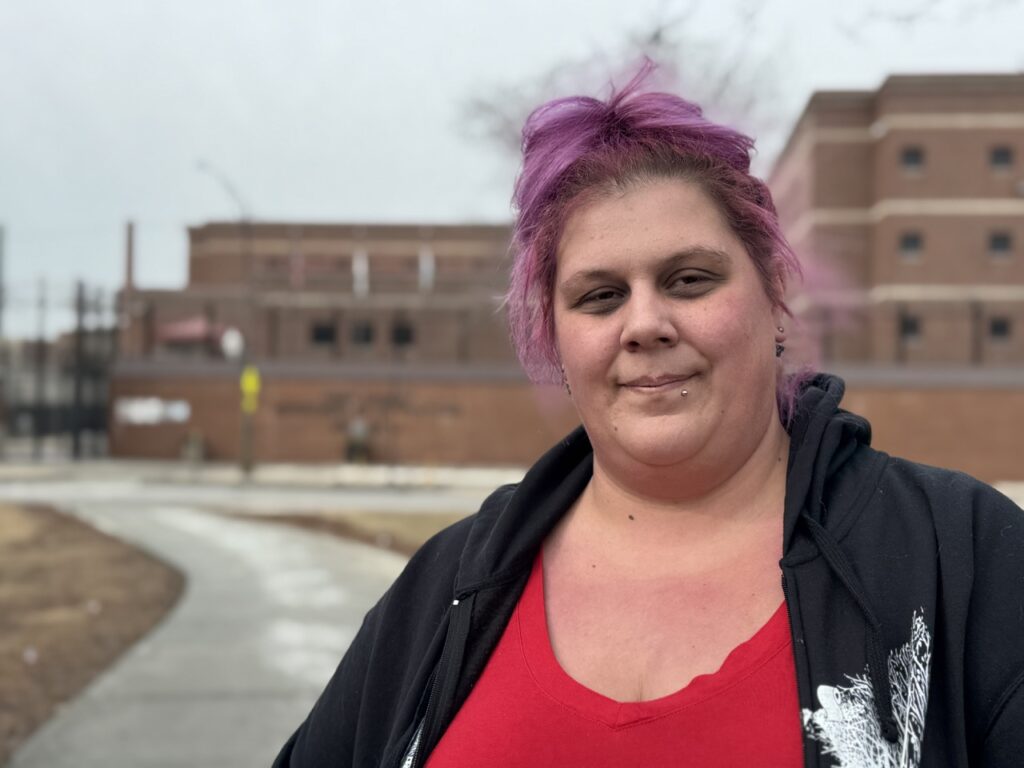
Now, Manda flies from Colorado to Chicago to visit him after payday each month, and twice when she has the money. “In Colorado we don’t have in-person visits, we have [calls] through the video screen,” said Manda. “[Chicago] is totally different than what I’m used to; [here] we get to hug them.”
Visit policy is set at the county level by sheriffs, which operate county jails. If someone is found guilty of a crime and sentenced to serve more time than they’ve already spent in jail, they are moved to prison where policies are set by a state-level Department of Corrections. Across the country, including in Manda’s home state of Colorado, many local sheriffs have chosen to ban visits. There is a pending lawsuit in Colorado alleging that banning visits violates children’s right to family integrity, children’s “right to hug” their parents.
In Illinois, visitation policies and the costs of phone calls and messaging services are set by county sheriffs. According to the Prison Policy Initiative, the average cost to make a call from a local jail in Illinois in 2024 was $3.01 for fifteen minutes. CCSO charges $0.75 for 15 minutes. In Los Angeles County, the only county larger than Cook County, phone calls are free.
Calls are a critical supplement to visits. Star talks with her fiance six or seven times a day, which costs about $9. Ashley calls two to four times per day, paying $3 to $6. Manda pays $6 a day, calling for the two hours her fiance is out of his cell.
Anthony is one of the 195 people who has been incarcerated in Cook County Jail for more than five years. That experience has been increasingly isolating, he said: “My brother, my mom, daughters, nobody is able to come and see me.”
Anthony got a ticket—the jail term for being written up for breaking a rule—and was punished by losing visits. Banning visits completely separates Anthony from his mother. “She’s from the hills, from Mexico,” he said. “She doesn’t know how to do technology; she barely uses cell phones.” Because of the restriction on visits, Anthony hasn’t seen his mother in more than five months.
“I haven’t talked to my son in a long time,” he said. “I don’t know why, I don’t know what’s wrong with him. My daughter, she left for Georgia with her mother, far away. We love each other a lot, but I don’t know why we’re so distant. I blame it on the county because it makes everything so difficult here.”
Currently, out of 5,798 people jailed, 536 are on visit restriction. A CCSO spokesperson said visit restrictions are in response to major disciplinary infractions and that restrictions are “temporary.”
Manuel has been separated from his wife and four kids since last June. He is facing immigration proceedings in addition to his arrest and is afraid of being deported. Video calls are a distraction from this fear and a chance to connect with his family.
“You know, seeing my kids and my wife, seeing my newborn—it’s a lifting experience,” he said. When Manuel can see them on a video call, it feels like “you get to leave from this place within just ten or fifteen minutes.”
To Manda, Valentine’s Day seemed special for everyone. “I feel like people are in a better mood. You got a lot of people in there wearing red, the kids got their hair done super cute.”
Everyone the Weekly interviewed wore a red or pink outfit.
Star’s outfit had a special significance. “When we went out last year, this is what I wore,” she said. “[My fiancé] wanted me to re-wear what I had on to get him back that memory of us being together.”
Ashley agreed the visiting room felt special. “It just felt like love was in the air, like everybody in the room was smiling. That’s what it felt like, just love everywhere.”
“You just got to try and be strong,” Manda said. “And if you love somebody on the inside, try to be strong for them. That’s all we can do.”
Micah Clark Moody is a PhD candidate in Sociology at Northwestern University. She has investigated pretrial jailing systems in Michigan, Los Angeles, and Chicago.
Harley Pomper is a PhD student in social work at the University of Chicago. They organize across jail walls to report on carceral injustices and political repression.