
A new study found that the University of Chicago Medicine’s Level 1 Trauma Center reduced shooting deaths on the South Side.
The study, published in February in the peer-reviewed journal JAMA Surgery, found that the trauma center’s 2018 opening was associated with a nearly 4% decrease in shooting deaths within the center’s service area. The rest of the city saw no significant change over the same period.
Researchers analyzed publicly available data on more than 45,000 shooting incidents in Chicago between 2010 and 2024, comparing outcomes before and after the trauma center opened in May 2018. They found that after its opening, shooting victims within the center’s service area traveled an average of 3.4 fewer miles and arrived at care roughly 9.5 minutes faster. The study estimates those gains translated to roughly 40 lives saved for every 1,000 shootings.
The study was led by Dr. Michael Poulson, a trauma surgery fellow at UChicago Medicine, with researchers from the University of Michigan and Boston Medical Center at Boston University.
Dr. Selwyn Rogers, the founding director of the UChicago Medicine Trauma Center, said the study confirms what South Siders and activists had long argued.
“Objective, concrete evidence validates what community folks on the South Side have been saying for almost three decades,” Rogers said.
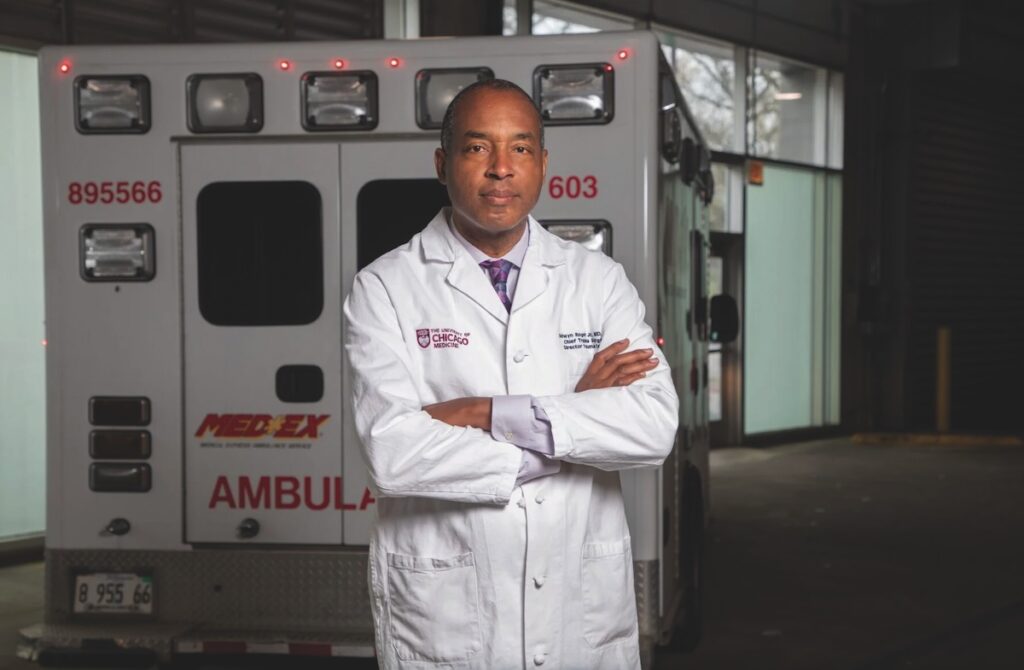
Medical Center on April 21, 2023. Credit: Jordan Porter-Woodruff
Rogers did not author the study but spoke about its significance in an interview with the Herald. The concept that minutes matter in trauma care is not new, he said. Rogers traced it to military medicine, specifically to WWII and the Korean War, when surgeons pioneered helicopter evacuation and mobile surgical hospitals designed to get wounded soldiers onto an operating table in less than an hour.
“Our hearts beat five liters per minute, and if you have an exsanguinating injury … within minutes, you could die,” he said.
Rogers offered a recent example from his own caseload of a life saved because the patient arrived in a timely manner. In mid-March, a young man arrived at the trauma center after being shot in the thigh, severing his femoral artery. Had the young man gone five more minutes without reaching the center, he would have bled to death, Rogers said.
“Without us being where we are,” Rogers said, “no doubt he would have died.”
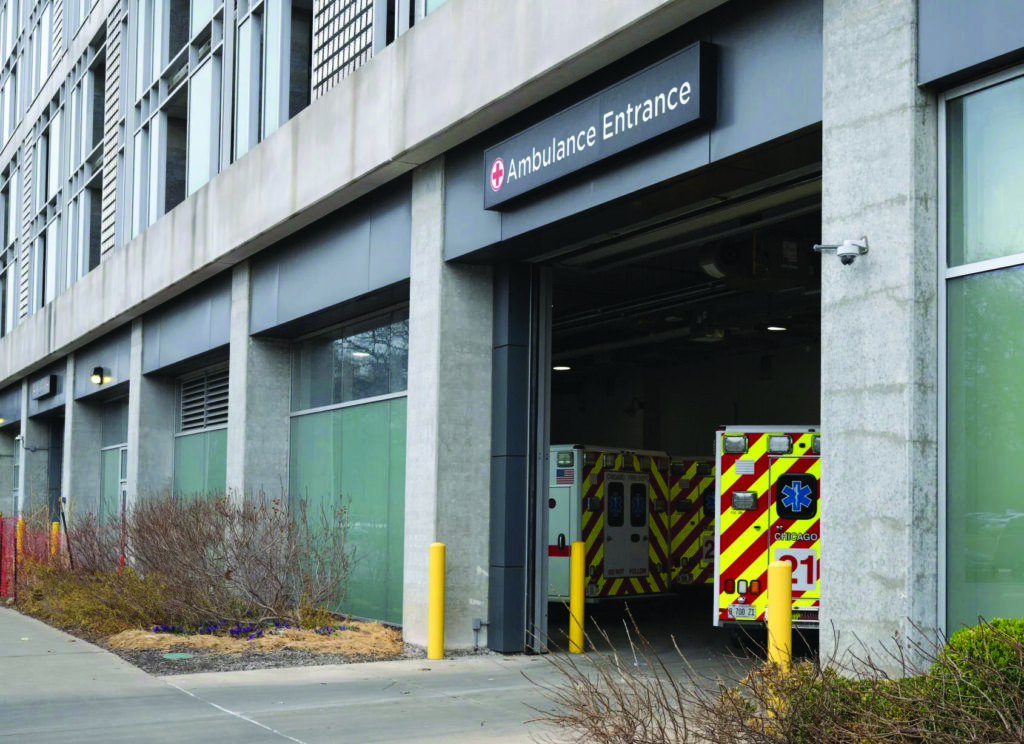
The trauma center’s volume has so far exceeded early projections. Rogers said the facility was originally expected to handle about 3,000 trauma activations per year. It now sees more than 6,000 a year and has seen more than 38,000 since opening. About 10% of its most severely injured patients come from outside Illinois, largely because of a lack of comparable facilities in Northwest Indiana.
Rogers said the study’s findings should push policymakers in other cities to address gaps in trauma coverage, particularly in communities that face disproportionate rates of gun violence.
“If you look at the demographics of Northwest Indiana, it deserves an adult Level 1 trauma center, and it doesn’t have one,” he said.
The South Side itself had been without a nearby trauma center for almost three decades after the university closed its trauma center in 1988, a move that shifted the burden of care to Michael Reese Hospital in Bronzeville, which shuttered its own trauma division three years later. That left Advocate Christ Medical Center in suburban Oak Lawn as the only Level 1 trauma center in the area.
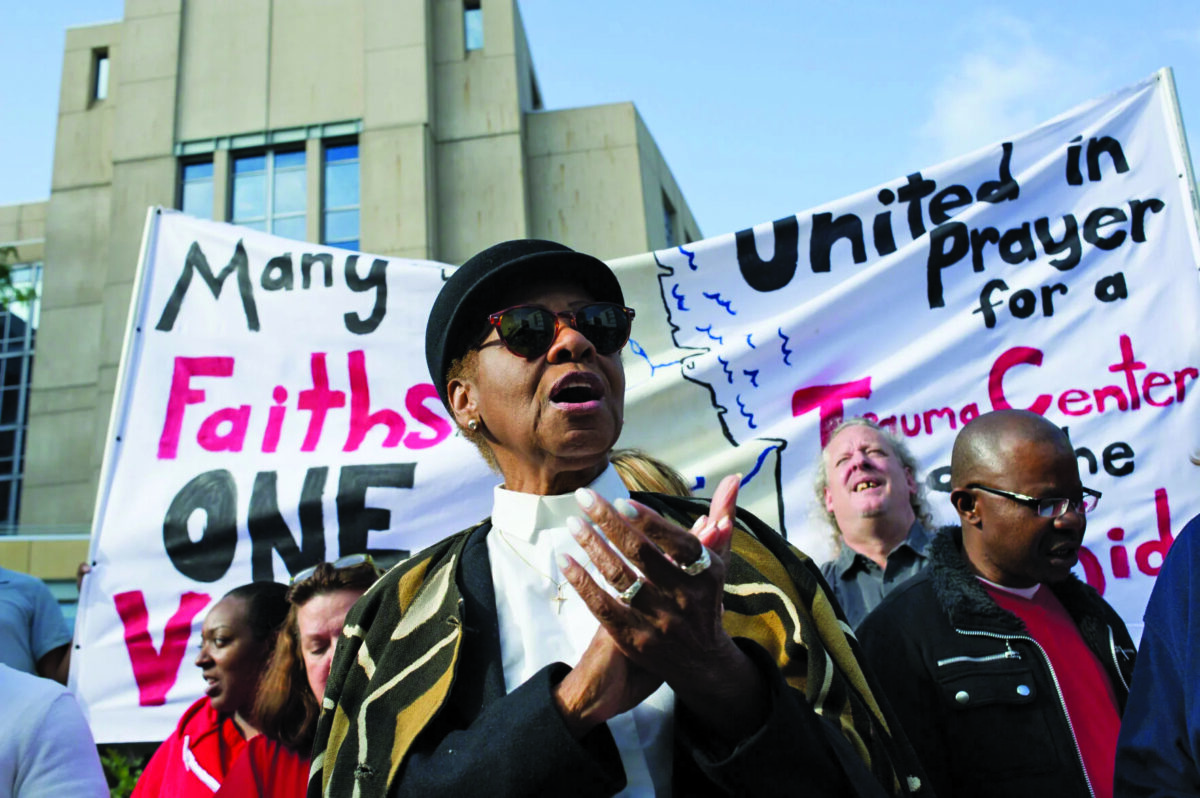
Following years of community organizing, activists with the Trauma Care Coalition helped bring about the center’s 2018 reopening. That campaign was galvanized in part by the 2010 death of 19-year-old Damian Turner. Although shot only four blocks from UChicago Medicine, because of the lack of a trauma center there, paramedics were forced to drive Turner nine miles to Northwestern Memorial Hospital, where he died.
Despite recent progress in reducing gun violence citywide, which Rogers said had significantly reduced the number of shooting victims coming to the trauma center, he is worried about potential reversion to the mean. In 2025, the city saw 416 murders, its fewest in six decades, a drop attributed in part to sustained investment in community violence intervention programs. But Rogers expressed concern that budget cuts at the federal level could undermine that progress.
“We should be doubling down,” he said. “But I fear that with the political headwinds and the various things happening at the federal level … we will see a backslide.”
Last July, the Trump administration canceled nearly $160 million in funding for gun violence prevention programs, including ones based in Chicago.
According to Rogers, this approach is wrongheaded, because the long-term goal must be prevention, not just treatment. He compared gun violence to smoking: treating its consequences without addressing root causes would only go so far.
Rogers thus called for extended protection laws for intimate partner violence, additional gun safety laws, and “tackling some of the community risk factors,” like economic disinvestment, racial segregation and lack of access to food, education and stable housing.
“Because the best trauma center,” he said, “is one that you’re glad it’s there, but you never need to use it.”
Max Blaisdell is a staff writer at Hyde Park Herald.