
This article is part one of a two-part series reported by the Illinois Answers Project. Part two of this series, focusing on the impact of specific city initiatives to preserve affordable housing in Woodlawn, will run in the July 2, 2026 issue of South Side Weekly.
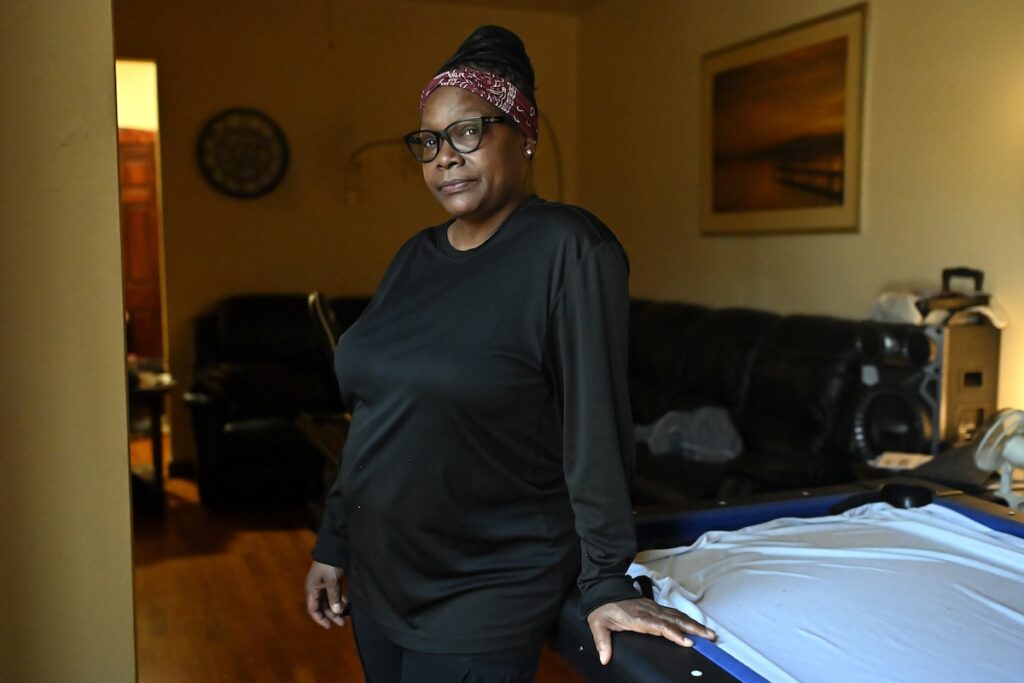
Latisha Bolden, exhausted from her eight hour shift at a nearby hospital in early March, came home to devastating news. Her son handed her a notice from their landlord stating they’d have to move out of their Woodlawn apartment by the end of July. The building’s new owners are renovating.
“I didn’t see this coming at all,” she said. Looking around for other apartments, she was again surprised that units similar to her one-bedroom now cost about $1,800 a month. Today, her monthly rent is $1,200.
Days later, 31-year-old Kyana Butler, who also lives in Woodlawn, and about 20 others chanted “Hell, no! We ain’t gonna go!” at a news conference after learning the building owner was listing their apartment building for sale. They’d be forced out into what they call an unaffordable housing market.
Butler has lived in the Chaney Braggs building since she was about 3 and has known many of her neighbors for decades. They attend church nearby and their kids play together at the park across the street. Butler wanted the same for her young daughter.
“I want to stay,” she said. “I don’t want to be forced out.”
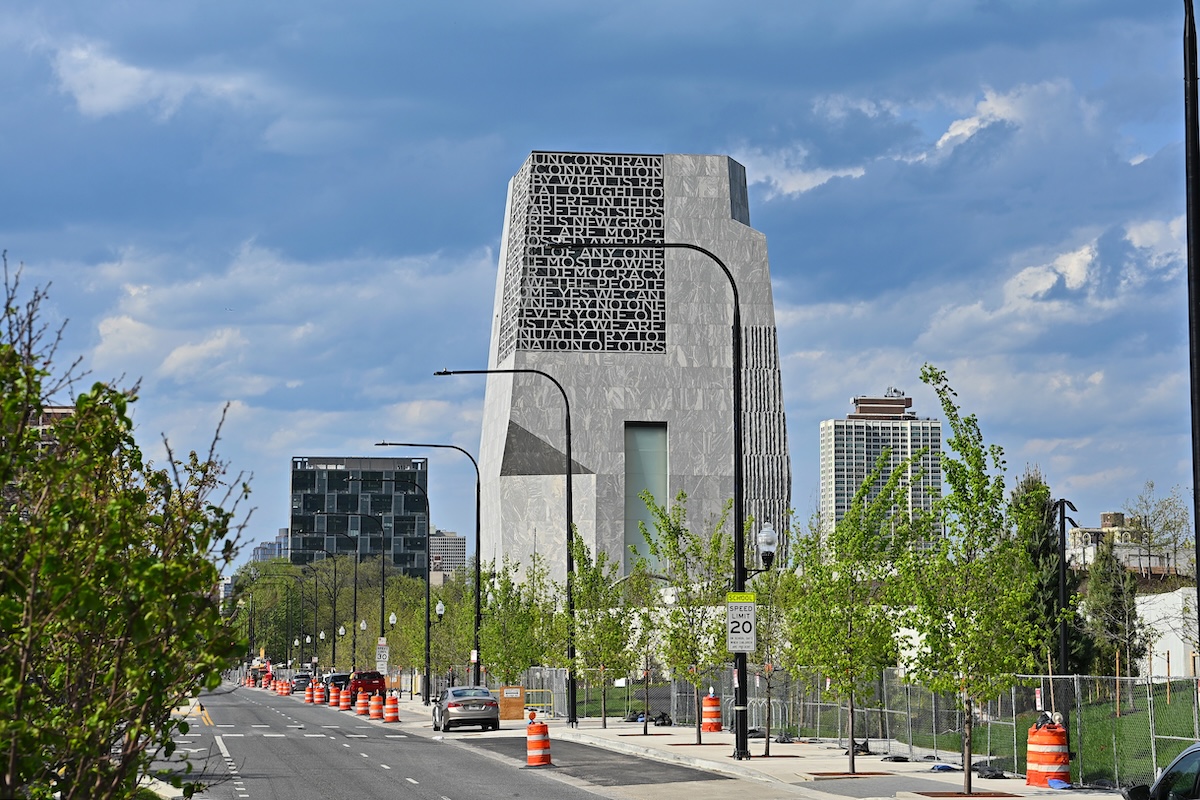
The city of Chicago was supposed to have created a safety net for residents like Bolden and Butler, as they faced the threat of being priced out of their neighborhood with the opening of the nearby Obama Presidential Center this month, and all the real estate speculation that followed it. Adopted in 2020, the city’s anti-displacement ordinance for Woodlawn was designed to protect long-term tenants from surprise sales and increased affordable housing options in the neighborhood.
But a review of hundreds of pages of city records and dozens of interviews with residents, organizers and experts by the Illinois Answer Project shows that the city’s promises often fell short of reality as it failed to spend enough money to run some programs, provided little supervision and abandoned others.
Three of the seven programs in the ordinance failed to get off the ground. Others were very limited in scope:
- Dozens of property owners have sold multifamily buildings in Woodlawn since a pilot program requiring them to give tenants the first chance at buying them began in 2020. Housing department records show that not one landlord has filed the required notice of these sales to tenants or to the city.
- The city was supposed to set aside 52 lots for affordable housing development. Only one project, a 58-unit apartment building, has been completed in five years.
- A loan program for local developers got off to a slow start. It funded fewer completed housing units in five years than it had hoped to in the first year of the program. In 2026, the program is producing additional results, with 18 units getting rehabbed or receiving improvements for new or current renters.
- $2 million dedicated to two programs to preserve or rehab affordable units went unspent.
- A jobs program designed to employ local residents resulted in only three hires from the neighborhood.
- 36 long-term homeowners each received grants of around $20,000 to complete crucial home repairs.
Chicago Department of Housing Commissioner Lissette Castañeda declined a request for an interview through a spokesman. In a statement, the department defended its work, calling the ordinance a success for preventing displacement and a model for future efforts to combat gentrification. However, it acknowledged some programs needed more money to succeed.
“Programs with limited activity still provided critical insight, as they identified areas where deeper subsidy or alternative financing structures are needed,” department spokesperson Michael Cox said in January in an email.
Cox later added that last month, the city formed a working group of city officials and residents to improve implementation of the Woodlawn ordinance. City officials have said they have learned from these programs as they implement another anti-displacement ordinance, passed last year, which covers South Shore and sections of East Woodlawn.
Housing data shows that it has gotten more expensive to live in Woodlawn. DePaul’s Institute for Housing Studies shows that prices on single and multi-family homes on the east side of the neighborhood, closer to the Obama Center, have doubled since 2019. And in 2024, less than a third of housing stock in the area was considered affordable, half of what was available 15 years ago.
Organizers and political leaders, including Alderman Jeanette Taylor (20th), say they’ve seen many residents forced out of their homes. Taylor, a critic of the ordinance, said the policy was weakened as part of a political compromise during a highly-contentious time, dooming it from the start.“What you have is a watered-down version of what the community knew would protect us,” she said. “So it failed.”
The problem, she said, was that there was no continuous stream of funding, so resources ran out quickly. A former housing department employee, familiar with the programs, said that wasn’t the only issue.
The ex-employee, who spoke on the condition of anonymity since they still do contract work for the city, flagged numerous administrative issues that plagued the execution of the ordinance. For example, records show, one of the ordinance’s key programs, the Tenant Right of First Refusal pilot, didn’t have a staff person dedicated to oversee it.
Dixon Romeo, an organizer and executive director of Southside Together, who fought for housing protections in Woodlawn, said the ordinance is a step in the right direction but not enough to protect many of the families displaced by rising costs.
“The city did not do the work … to implement it well,” he said. Romeo and his community organizing group have fought for housing protections in the neighborhood since the Obama Center was announced in 2015. “From 2015 until 2026 … we’ve seen a lot of people get evicted. We’ve seen a lot of people get displaced,” he said.
For Many, Woodlawn is Unaffordable
Four near identical, newly built and boxy townhomes, each selling for nearly $1 million, stand out against the brick multifamily units that have housed generations of Woodlawn residents. The shipyard style-homes on South Ellis Avenue are just a few of the many signs of the fast-changing neighborhood, particularly in East Woodlawn where single-family home prices have doubled to a median cost of $440,000 from 2019 to 2025, according to the Institute for Housing Study’s data.
The bigger problem, said April Jackson, an associate professor of urban planning and policy at the University of Illinois Chicago, is developers who are looking for big payouts and are tearing down much-needed multifamily homes to make way for the “McMansions.”
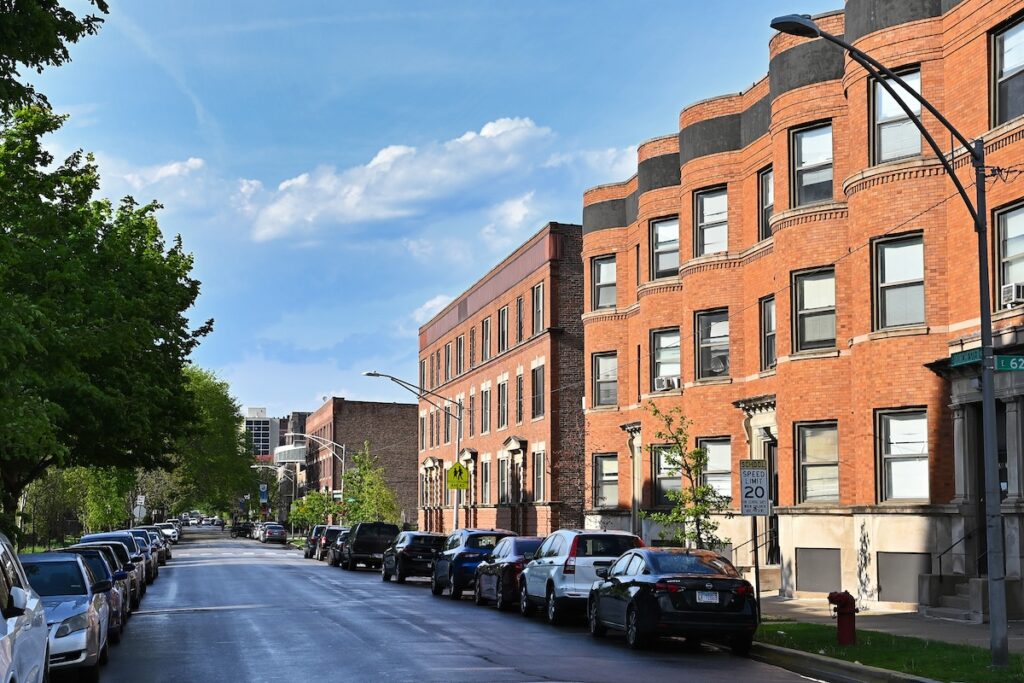
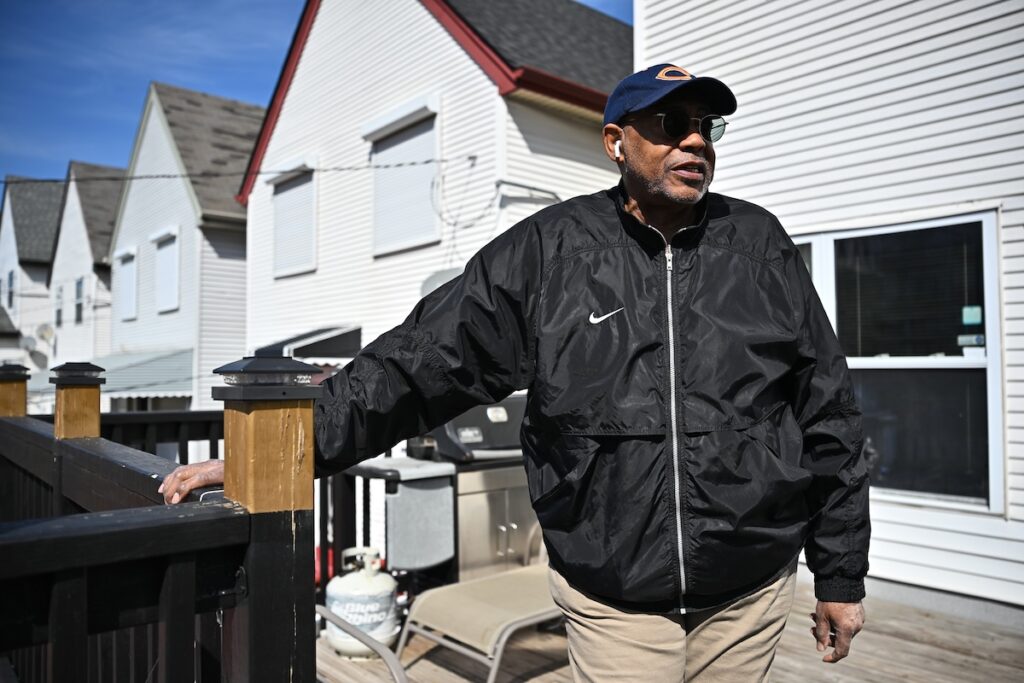
That hasn’t gone unnoticed by longtime residents like Marcus Gill, who noted those houses as evidence that fears of many residents have turned true—that they are being priced out of their community thanks to the real estate speculation spurred by the construction of the Obama Center.
“It’s a huge catalyst,” Gill said, standing outside his childhood home.
Residents and developers have debated for the past decade whether the Obama Center would cause displacement. Those who believe it does point to apartment and home listings that boast proximity to the center as an attraction for prospective renters and homeowners.
The Obama Foundation described hopes that the center would cause an economic boom in the neighborhood. The foundation is hosting monthly “community tourism preparation” sessions for local property owners interested in renting Airbnbs and for business owners wanting to capitalize on increased tourists.
In a statement, the foundation told Illinois Answers it supports the city’s work to protect affordable housing through the Woodlawn ordinance and another ordinance covering East Woodlawn and South Shore, passed in September. “While more work remains, we are proud to see the tide turning on the historic disinvestment of the South Side,” the statement said.
Residents have also noticed that the number of neighbors, who aren’t Black, moving into the area has increased in that same time period. While the entire area has been losing Black residents in recent years, East Woodlawn in particular has seen an increase in its white population that far outpaces the city as a whole, according to an Illinois Answers Project analysis of Census Bureau data.
New construction and renovation projects are a common sight in East Woodlawn. Signs for development companies, rental ads and building permits are scattered across the area. One home, built in 2019 on a lot that used to be owned by the city, is currently listed for more than a million dollars. The price tag shows the challenge of keeping affordable homes in an area with a rising cost of living.
The city’s inventory of available land is one of the ways officials try to incentivize developers to build affordable housing. The Woodlawn ordinance required the city to reserve 52 of those city-owned, vacant lots for homes affordable for the most cost-burdened residents.
Since 2020, only one development project has come to fruition. Park Station Lofts is a 58-unit building with 41 affordable apartments for the typical Woodlawn household making about $35,000 or less. That project led to three local hires, according to the city.
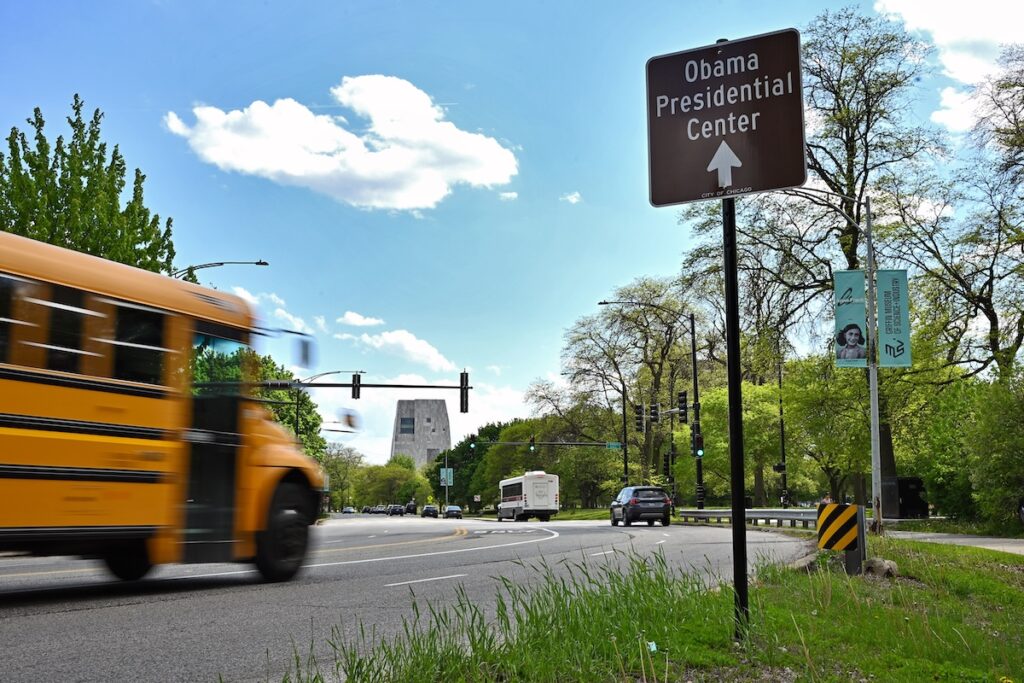
The city tried to encourage development on its lots by sending out requests for proposals from developers. It announced funding for its first deal in April: A $48 million dollar project that would put 60 affordable apartments on the market. The slow development on city-owned lots isn’t much compared to what’s needed in Woodlawn, where affordable housing stock has been dropping.
Twanda Barlow lives in the same three-story building as Bolden, where a new owner is planning a rehab that will force her to move.
She doesn’t want to stay in Woodlawn, she said. Even as rents have gone up, the neighborhood hasn’t gotten much better, she said. Barlow said there’s been no significant improvement to public spaces, local businesses or even dilapidated vacant lots. “It’s not worth it at all.”
The city deserves more blame here than the Obama Center does. Everyone’s instinct is to treat this as “gentrification happened, what can you do,” type of problem. But this ordinance was the city’s attempt to actually control that force, and they just didn’t fund it or staff it properly. That’s just negligence. If they’re going to take credit for “fighting displacement” in their press statements, they should also take the blame when the policy is this hollow.