
I finally understood why anyone would risk their safety to jump the fence at Lollapalooza in 2018, the year one of my favorite artists (and now close friend) femdot. made his summer festival debut.
In college student fashion, I returned home for the summer that year broke as hell. Too shy to ask for free tickets, I surveyed some of my mischievous friends for advice on how to sneak into the festival.
In the end, I chickened out; traveling from the far South Side to Grant Park just to get caught or get hurt seemed like a dead mission. Years later, I discovered fem would have accommodated my broke ass if only I’d asked. The rapper and DePaul University professor is no stranger to the desire for new experiences hidden behind barriers; he actually hopped the fence to attend Lolla himself in 2011.
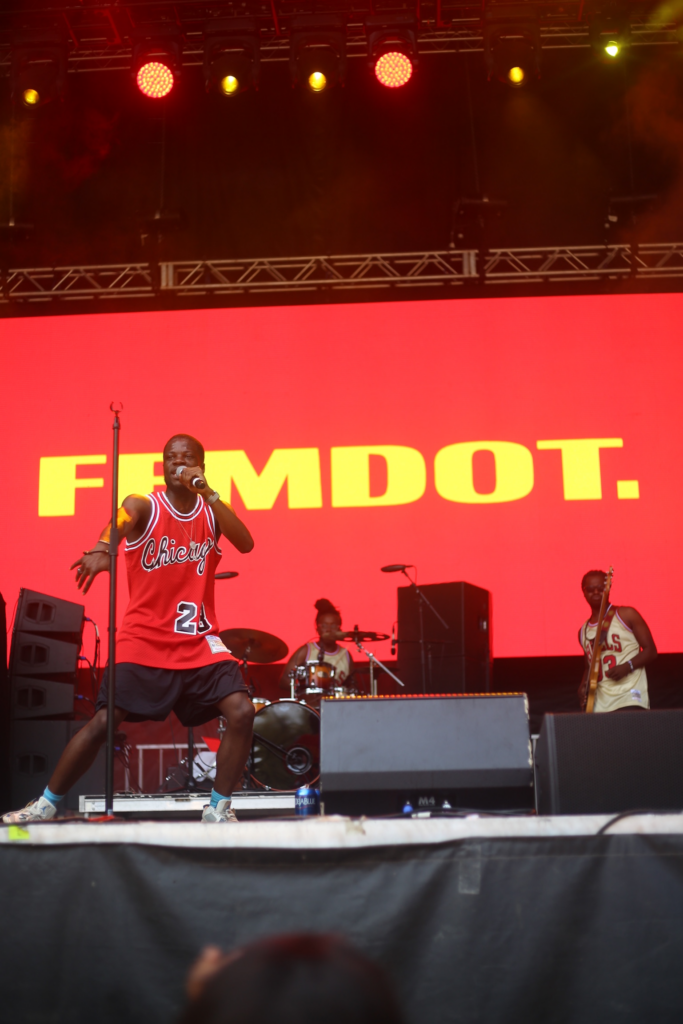
“I was so terrified that I couldn’t even enjoy Lolla, I was so antsy about getting caught. It was worth it though,” the rapper told the Weekly. “I wasn’t able to pay that ticket to get in there, so I had to get in somehow, I wanted to see what’s going on.”
In his career, he’s sought to challenge these very barriers, but not in the ways one might expect. Have you ever been to a rap show at a pizza restaurant, or listened to a live band while surrounded by a lifetime’s worth of shea butter? While artistic vision would be a more fun answer to the nature of the rapper’s latest events, the crux is access, both for fans and artists on the South Side.
There are fewer live music venues south of Roosevelt than north of it, and that number dwindles to zero the farther south you go. For the duration of his music career, femdot. recalls performing at no fewer than fifteen venues on the North Side, but only five or six on the South Side, including the recently closed Promontory.
So where does music live on the South Side? Historically, non-traditional spaces have held down the culture by any means necessary. From house music parties in abandoned buildings and back yard jazz shows to basement hip-hop shows promoted with handmade fliers, when there is a will, South Siders find a way.
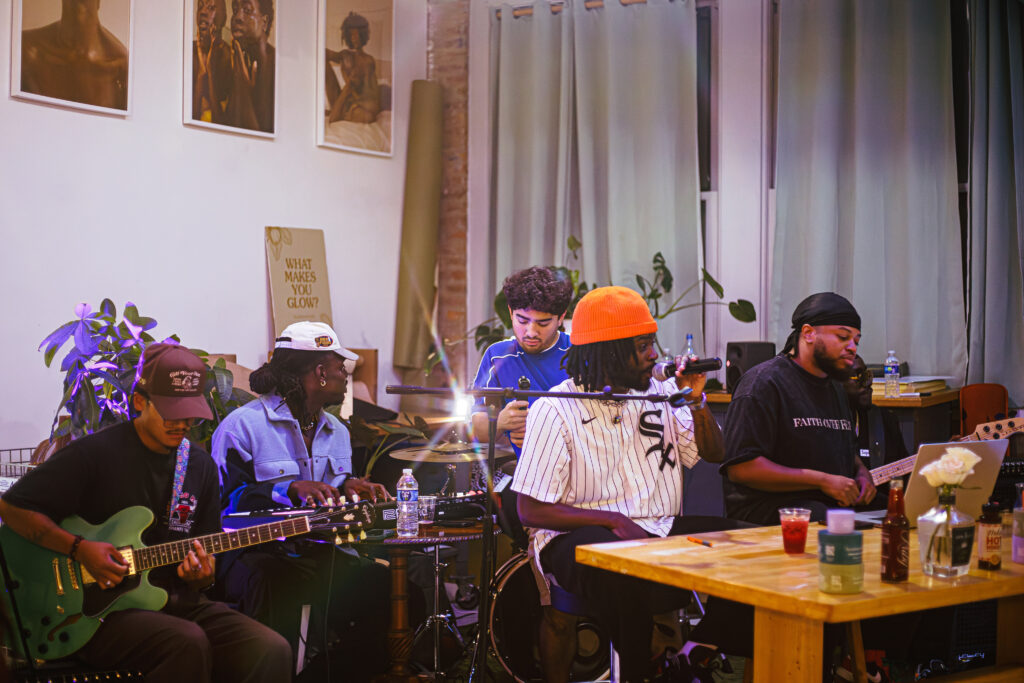
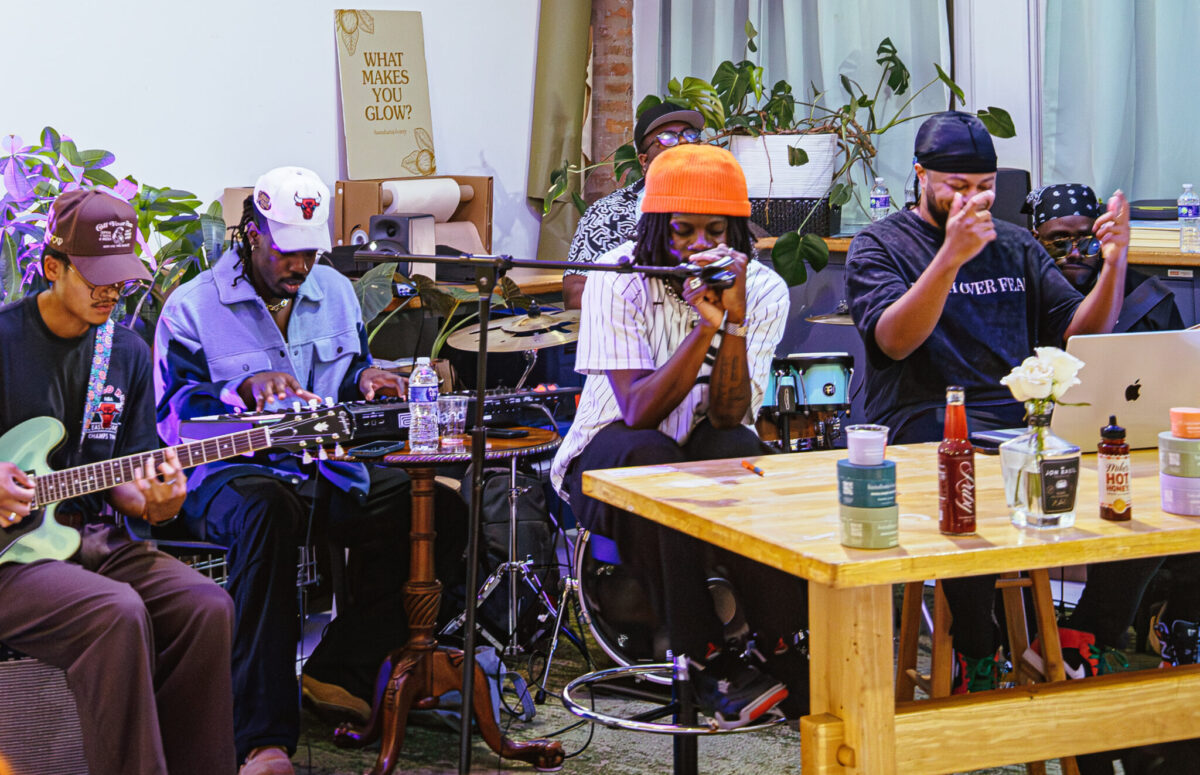
femdot. performs alongside DJ Chuck Hemi and live band at the Glow Room at hanahana beauty’s headquarters in South Loop, October 5, 2025. Credit: @maithuza. 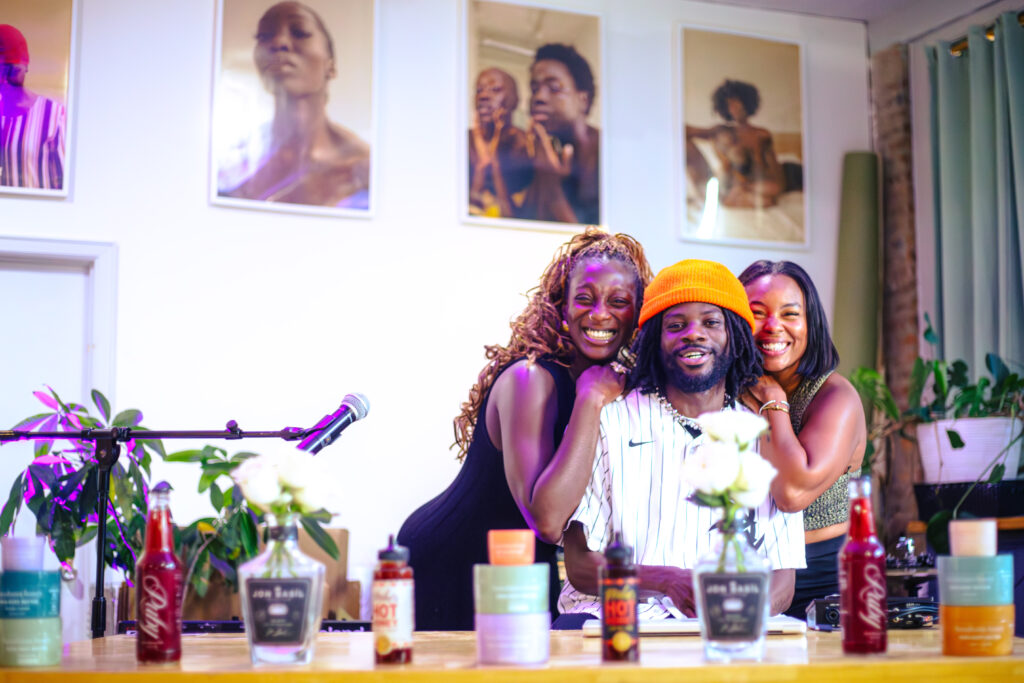
femdot. poses with Abena Boamah-Acheampong, founder of hanahana beauty, and brand designer Tahiti Spears ahead of the Glow Room at hanahana’s headquarters in South Loop, October 5, 2025. Credit: @maithuza.
femdot. believes the music of Chicago often reflects the circumstances and environments it came from. “If you listen to music from a time period that is based on folks who live here, and then reference whatever historical thing is going on, or whatever policies are in play, you will find a parallel,” he explained. Passionate about the anthropological impact of music in Chicago, last fall he started at DePaul University teaching “Chicago Culture Through Hip-Hop” as part of the school’s first-year program.
This sentiment tracks. Take drill music, for example—the raw and unfiltered songs and videos that infiltrated mainstream music were the result of DIY projects as artists took matters into their own hands. Without access to studios or fancy equipment, rappers and producers shot music videos on phones and set up makeshift booths in their bathrooms to record songs. They didn’t have restrictions from labels or even guidance from mentors about what was or wasn’t appropriate, so they showed it all.
Those circumstances are also evident in the events, or in the case of drill, the lack thereof. While incredibly popular, fans rarely got the chance to see drill music performed live. During the height of the drill era, former Mayor Rahm Emanuel’s vendetta against street culture waged war against its success. If there was a show, the police would most likely shut it down. Ironically, the violence on display in this music and sometimes at these events was likely exacerbated by Emanuel’s historic school closures. Teens from rival gang territories were suddenly mixed together, and high schools on the South Side saw a spike in violence as a result.
These barriers forced many of Chicago’s most popular surviving artists to leave. Venues were and still are hesitant to host rap shows or music events that attract young people, leaving little money to be made. As these artists performed elsewhere around the country, their original fanbases were left out of this success if they couldn’t afford to travel to see them live.
But Chicago can’t be counted out. femdot.’s most recent events seek to bring unique and reasonably priced experiences to more central locations and further south. With the help of like-minded business owners and creatives, he’s seen much success.
Last May, the CookUp, a webseries that fuses music and food, brought together femdot. and Novel Pizza to create a jollof-style pizza themed after the artist’s identity as a Nigerian from Chicago. They then collaborated on a culminating performance called Sample Slices, sponsored by Johnnie Walker, who assisted with merchandise and free custom cocktails.
“Very much a DIY like, ‘we’re just going to convert this pizza shop into a venue, but we’re going to lean on our community to do it,’” femdot. shared.


Midwest-based System Seltzers also provided alcohol-free canned drinks last minute, and the team utilized a microphone and mixer provided by studioSHAPES while the DJ brought his own speakers. Even the security guard at the door was a friend of the restaurant’s owners, who grew up with them in Pilsen, and City Cast Chicago’s Jacoby Cochran pulled up to take photos free of charge.
“[Tickets] were like thirty bucks, but it included a performance, a piece of merch, and a slice of pizza—and a slice [at Novel Pizza] is like a quarter slice of an entire pizza, which would be like nine bucks,” femdot. explained.
In October, Miyagi Records opened their doors for Craters, a free pop-up series by DJ Such N Such and multimedia artist Morgan Payne, inviting community members to browse and socialize at the store.
“Such N Such, one of the best DJs in the city, was spinning records inspired by my project King Dilla 2. So not necessarily like the project itself, but spinning a lot of these records that encapsulate the time that I was inspired by when I created the project,” femdot. said. “We were able to have fans come in to hear the music, and I could just sit and talk and really connect with them on a one on one basis, and also activate Miyagi’s space and get people to come to the South Side.”
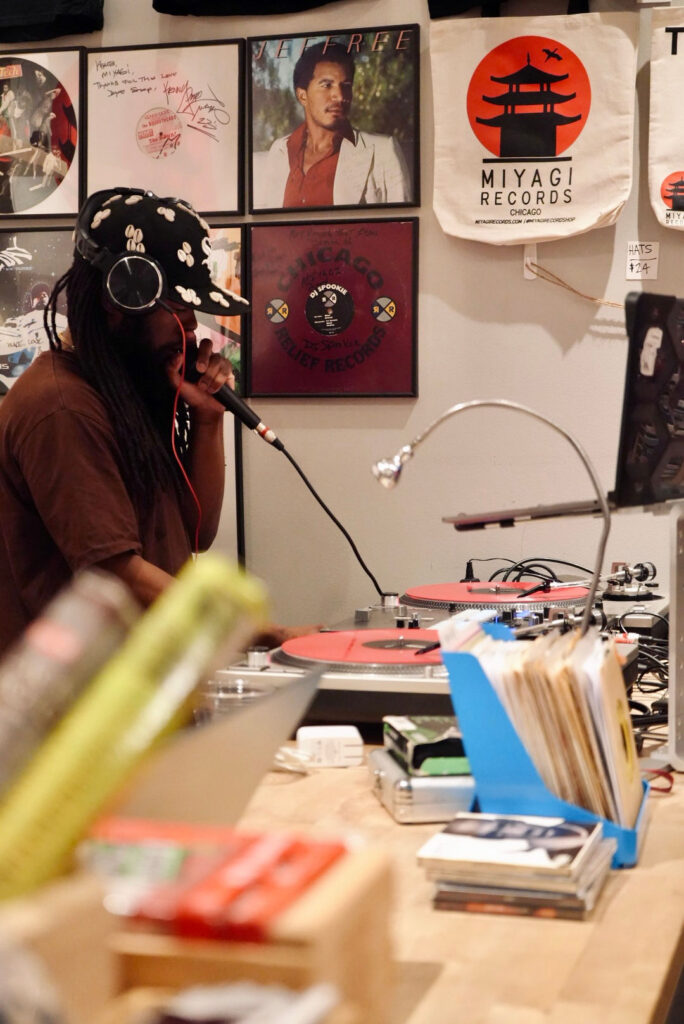
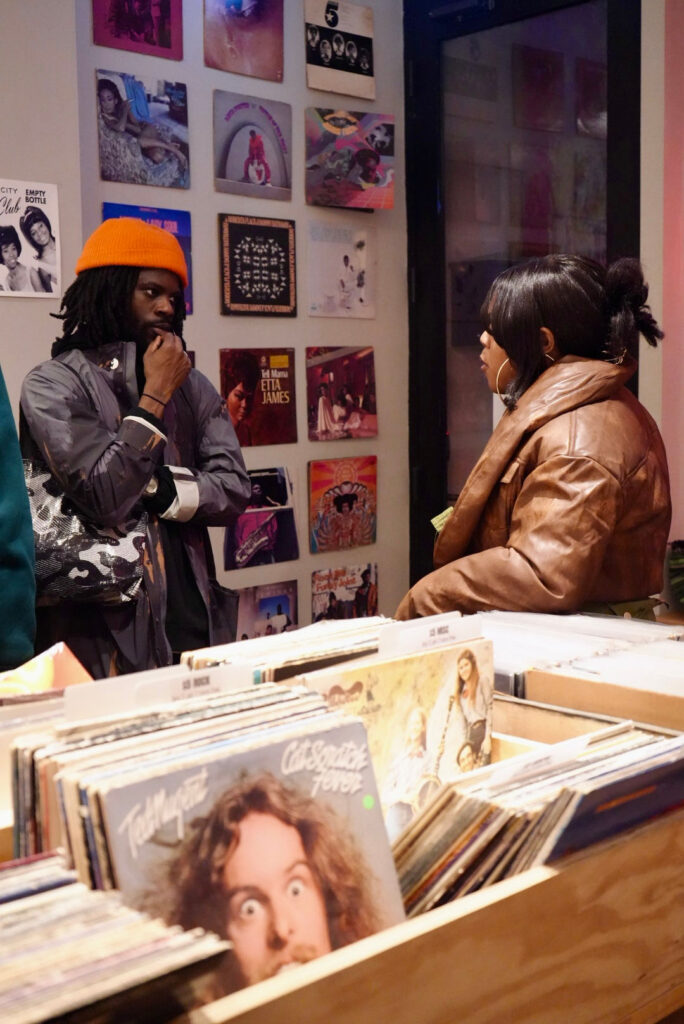
Despite being broken into earlier that year, and again in November of 2025, the record store continues to host workshops and free gatherings.
DIY shows and smaller scale events are essential to Chicago’s creative culture, but recent years have seen a decline in these activations.
“Growing up as shorties, we had the Red Bull five dollar shows, there were like dollar shows happening, there were open mics that felt like shows, we had so much access to be able to experience music, and I don’t see that as much anymore,” femdot. shared, “So I’m like ‘nah, I don’t gotta be J. Cole, I don’t gotta be a big artist to do a $1 show, I’m gonna do a ninety-four-cent show.’”
In 2024, femdot. hosted a five-year anniversary concert for his most popular project, “94 Camry Music.” The tickets for the show (before taxes and fees), were priced at ninety-four cents for reasons that extended beyond novelty.
“I remember I did a show the year before at Thalia Hall. It was a great show, it was a beautiful show as well, but I had fans like ‘damn, I just couldn’t afford to go to that shit.’”
While hosting an open mic that year, I had a student (who didn’t know femdot. and I were friends) say that tickets to the Thalia Hall show were on his birthday wishlist because he could not afford them. We invited him, and the artist gave him a signed vinyl.
The ninety-four-cent show was ultimately hosted at Schubas. “A lot of other venues were looking like ‘this doesn’t make sense,’” femdot. recalled.
“A lot of these independent venues also need to make money, when you have Live Nation taking over so many different venues…so I understand from the business side, but where does that leave the people that actually want to enjoy and really experience music if they can’t afford to do it?”
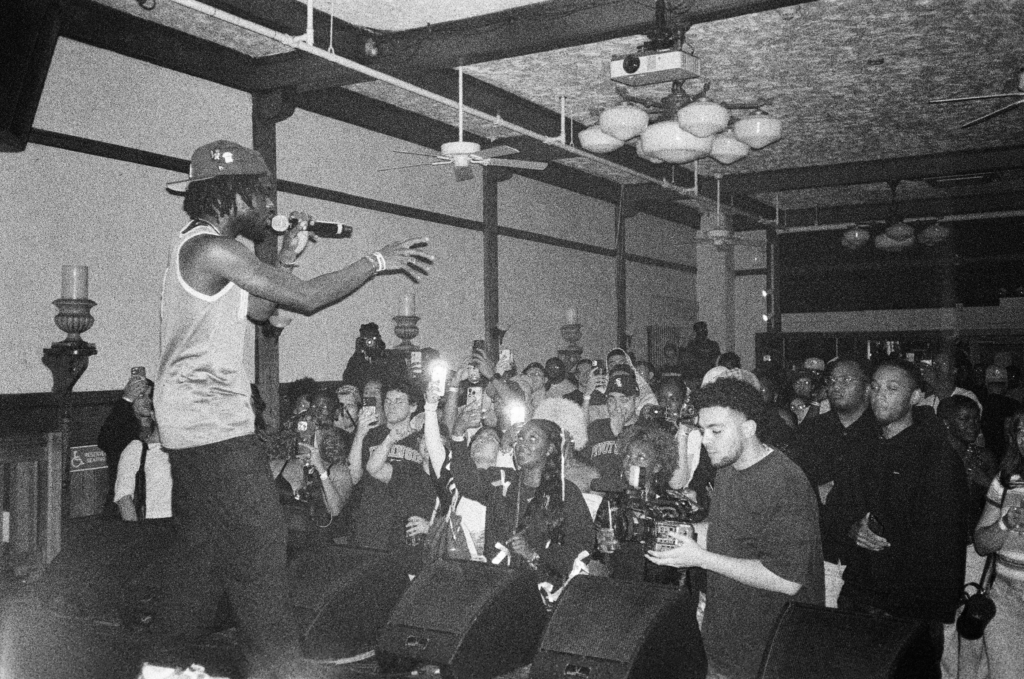
Now, femdot. is gearing up for “You Just Had to Be There” at Ramova Theatre in Bridgeport. “I’m like, yo, I think I can curate a very unique experience that gets people to the South Side, gets people exposed to good music in a safe environment, and literally breaks those barriers,” he said.
Along with his headlining performance featuring the talents of DJ Chuck Hemi, the event boasts a seasoned DJ lineup including Aced Spade, Slot-A, just.one, and Such N Such, all of which have hosted successful parties or recurring events throughout the city. Ramova Theatre is the only venue included in Lincoln Hall and Schubas’ Tomorrow Never Knows festival,located on the South Side.
“We see things like Soulection or Boiler Room tour…and I’m like, why don’t we do that here?” femdot. said. “We have all the talent to do it,”
The event was originally slated to take place in the Loft, a smaller space inside Ramova, but due to overwhelming demand after tickets sold out, the venue moved it to the main concert area.
“People are always like ‘no one wants to travel out south,’ and granted, obviously, Bridgeport isn’t that super far south, but for some people, it don’t even matter soon as they hear anything South Side,” he said.
“If we can start showing that people do actually want to come out south, then maybe we can start getting more venues back here and doing stuff.”
For him, the formula is clear. Curating intentional and unique events creates positive interest in the South Side, and that interest combats stigma.
There will be no roped-off VIP sections, or even a stage. The venue is building a custom platform in the middle of the room that’s only two and a half feet high, symbolizing femdot.’s recurring theme of connecting with music up close.
“We’re here to experience all of this together,” he said. “That’s what music does, and that is what it should be doing here.”
Tickets for You Just Had to Be There are available at ramovachicago.com for $26.78 (fees included.) Find femdot.’s music or watch recaps of his first semester at DePaul on Instagram @femdotdotcom.
Chima Ikoro is South Side Weekly’s Community Engagement Coordinator.