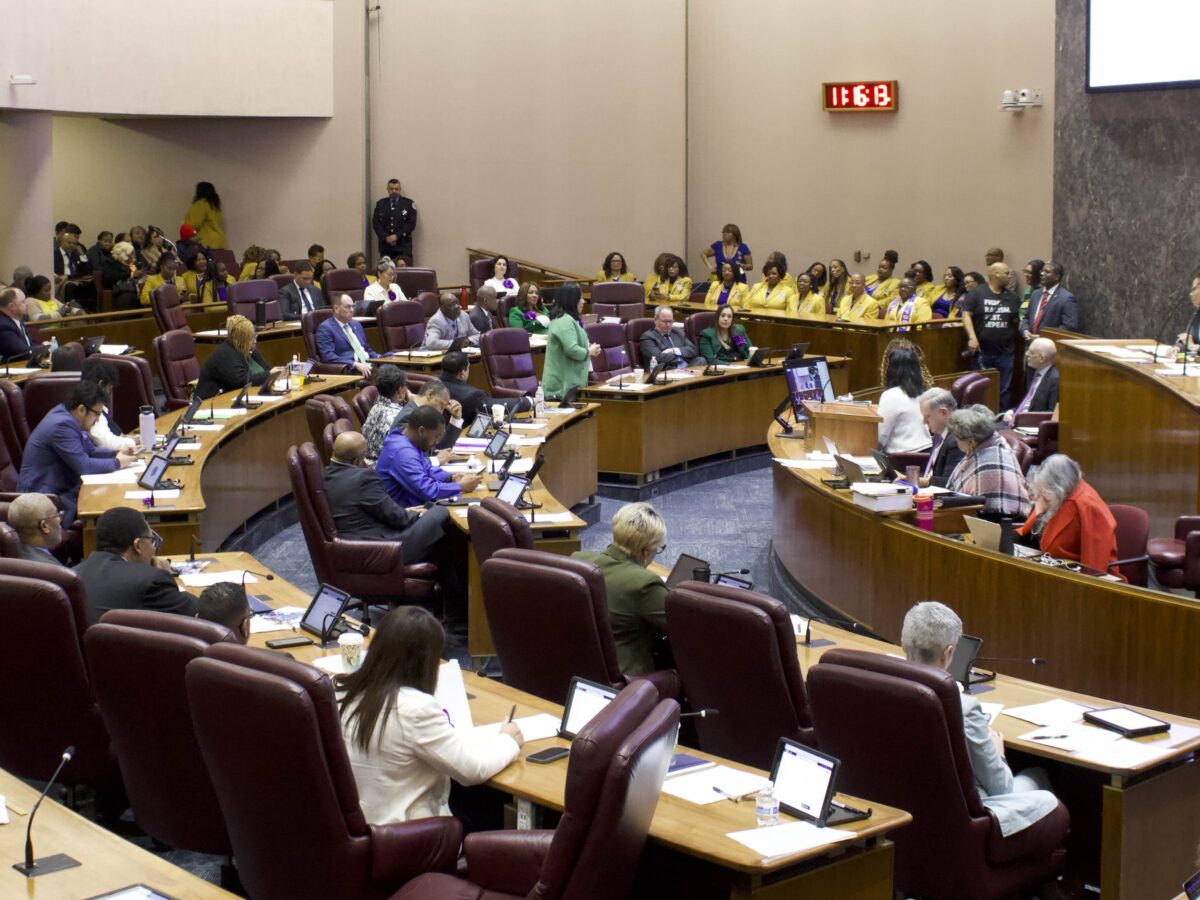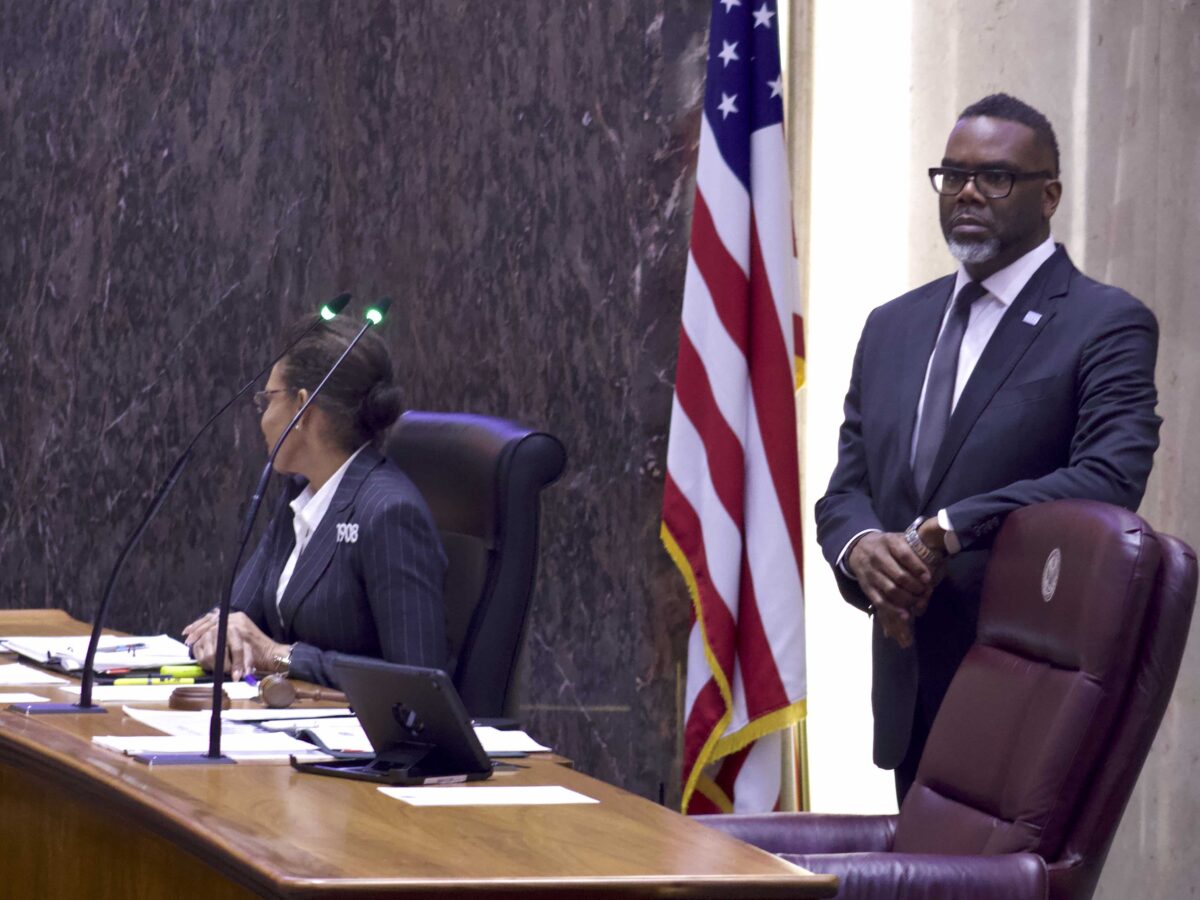
A majority of alderpersons and the mayor remained deadlocked over the 2026 budget at Wednesday’s City Council meeting—inching the city closer to a potential government shutdown in January.
As the December 31 deadline to pass the budget looms, City Council members are divided over key revenue sources—namely Mayor Brandon Johnson’s proposed corporate head tax. In a bid to convince more alderpersons to sign onto his budget ahead of yesterday’s Council meeting, Johnson announced changes to the tax. His original proposal would have levied $21 per employee per month on companies with 100 or more full-time employees in Chicago who spend half of their time working in the city.
The city levied a corporate head tax for decades until then-Mayor Rahm Emanuel convinced the Council to begin phasing it out in 2011; it was completely eliminated in 2014. Johnson’s proposal would use the head tax to fund community safety programs that are a central part of the mayor’s efforts to drive down violence. Those programs, according to Johnson, are a key reason Chicago is on track to have the fewest homicides this summer since 1965.
The city’s budget office had estimated the head tax would generate $100 million annually, based on current employment data and business licensing records. The latest tweak would increase per-employee tax to $33 and only apply to businesses with more than 500 employees in Chicago.
Those revisions didn’t persuade enough alderpersons to support the budget. On Wednesday, twenty-seven Council members introduced their latest alternative budget.
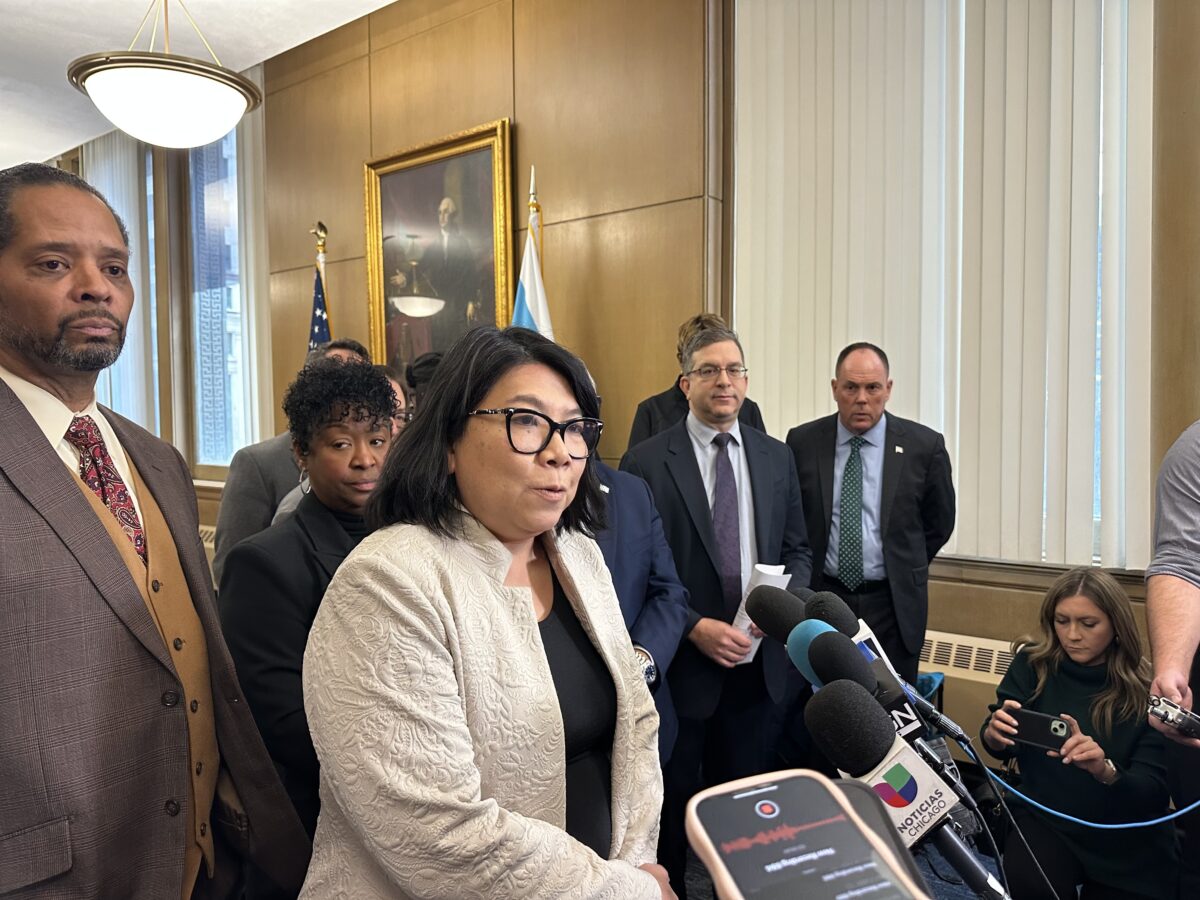
“We believe a corporate head tax, at any level, is a bad thing for the city,” said 11th Ward Ald. Nicole Lee, who joined the group of alders unveiling the alternative proposal.
Council members’ alternative budget would axe the head tax while increasing fines and fees on residents. Johnson’s aldermanic rivals brought forth a version earlier this month that proposed an $18 per month garbage collection fee; the budget introduced this week lowered that rate to $15. The garbage fee is currently $9.50 per month per dwelling-unit. Johnson told reporters after the meeting that he would not support a higher garbage fee, a move his administration has previously characterized as a regressive tax, meaning it would hit lower-income residents harder.
Among the other proposals to raise revenue, the alternative budget would hike up fines for operating a business without a license and raise taxes on hotels and vacation rentals. It would also establish licenses and fees for video gambling terminals, which alders estimate would garner $48.4 million in revenue.
The Civic Federation, a nonpartisan fiscal watchdog organization, has criticized the mayor’s plan to borrow money to cover the city’s operating costs. The group expressed fear that taking out short-term debt to cover daily operations would cost Chicago taxpayers millions more in interest down the road and result in a credit downgrade for the city.
If the City Council passes an alternative budget, it would mark the first time since 1983 that the legislative body passed their own budget as opposed to a proposal drawn up by the mayor. The budget marked one of the many battles of the Council Wars, which pitted Mayor Harold Washington against a faction of white, conservative Council members led by Alds. Ed Burke and Ed Vrdolyak. The 1983 legislative coup also demonstrated the weakening of the Chicago mayor’s once iron grip over the City Council, a dynamic that Johnson has also struggled with throughout his term.
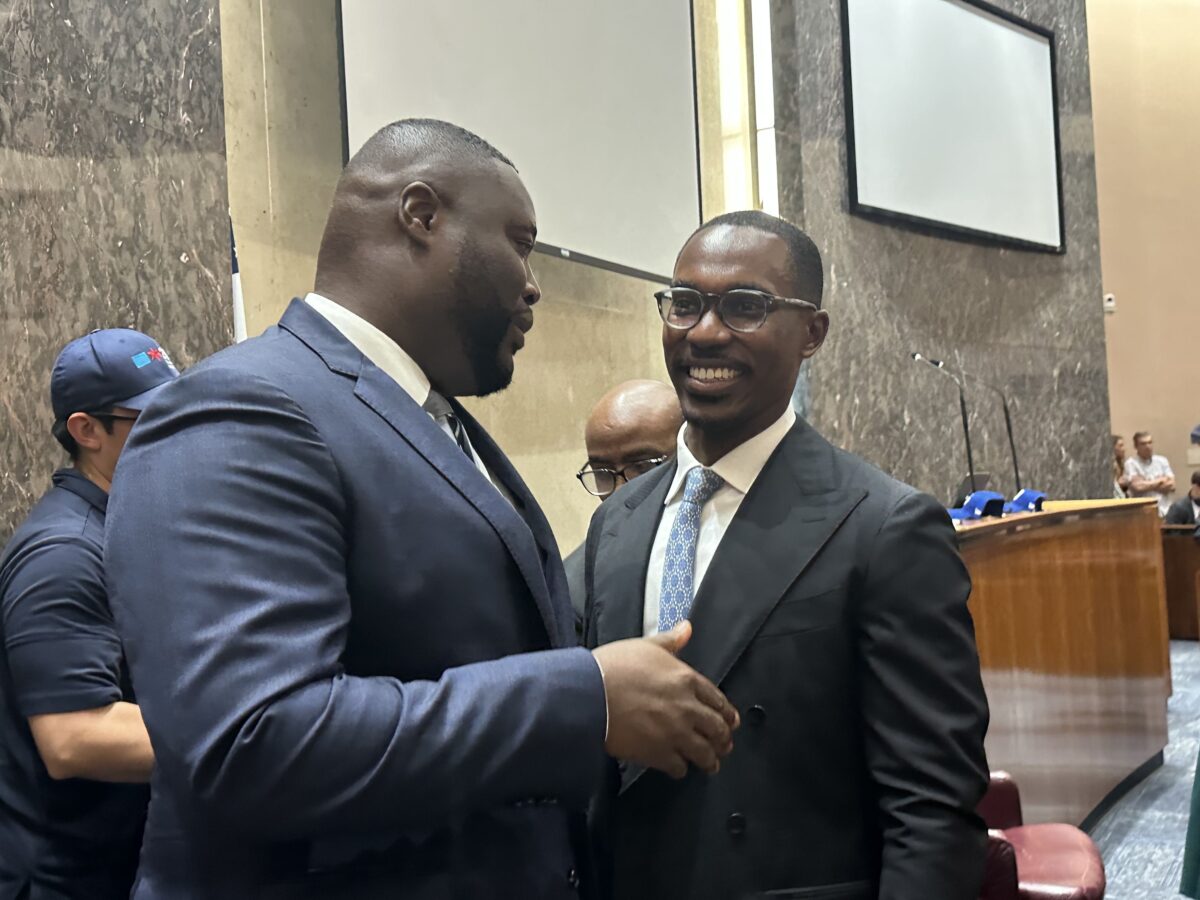
On Wednesday, 21st Ward Ald. Ronnie Mosley said the alternative budget wasn’t ready for prime time and came out against raising the garbage fee. At the same time, he bucked Johnson by stating “We cannot take on more unnecessary long-term debt or borrowing.”
In an interview with the Tribune, Mosley clarified that his comments referred to the mayor’s plan to reduce advance pension payments for the city’s public employee pension funds. The alders’ budget would increase those advanced payments by nearly $140 million. Johnson, meanwhile, has reiterated that the city lacks the necessary reserves to make those additional payments.
“The desire has always been to add the additional payment so that we can move towards solvency quicker. The motivation behind the initial ordinance was based upon the economic climate that just doesn’t exist anymore,” Johnson said at a press conference after the meeting. “As much as we all would desire to have that additional advancement in the budget, there’s not a real clear pathway, from what I’ve heard from other alders, of what an alternative would be to be able to achieve that.”
What a government shutdown would look like in Chicago is unclear; it has never experienced one. The city’s lawyers are examining the implications of a shutdown and what services would stop during that period.
Meanwhile, the Council is scheduled to meet nearly every day next week as it races against the clock to pass a budget before the shutdown deadline.
“This is unprecedented. We don’t have any history to draw upon and say, ‘Well, the last time we did it, this is what it looked like.’ We are not Congress, so we don’t have those types of continuing resolutions that are established procedures to use during a shutdown,” said 2nd Ward Ald. Brian Hopkins, who opposes the mayor’s budget. “We are literally going to have to make this up as we go along, and it won’t be pretty. I think that’s one reason we have to do everything to avoid this from happening.”
A ban on sales of products containing psychoactive THC derived from hemp at stores other than licensed marijuana dispensaries hit a snag when Alds. Rossana Rodriguez Sanchez (33rd Ward) and Byron Sigcho-Lopez (25th) deferred it until the next Council meeting. The ban, which would include products with Delta-8 and Delta-THC, would fine businesses up to $5,000 per offense.
A revamped curfew ordinance proposed by Hopkins met a similar fate when Ald. Jason Ervin (28th Ward) sent it to the Rules Committee, where unpopular legislation often goes to die. Hopkins had championed a controversial “snap” curfew in the spring, which the Council passed with 27 votes before Johnson vetoed it.
Leigh Giangreco is a freelance reporter based in Chicago. You can follow her work on Twitter/X @LeighGiangreco and at leighgiangreco.com.