
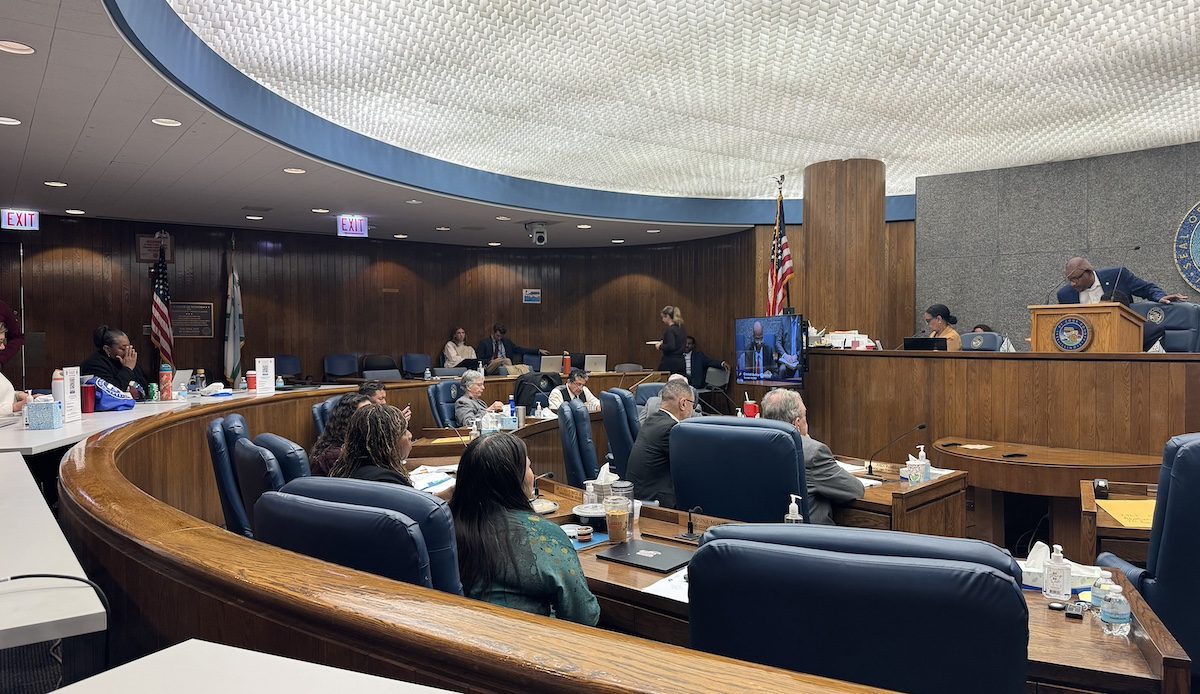
A growing spat between the Cook County Sheriff’s Office (CCSO) and the Office of the Independent Inspector General (OIIG) came to an uneasy stalemate last Tuesday at a Criminal Justice Committee meeting of the Cook County Board of Commissioners.
The Board created the OIIG in 2007, with the mission “to detect, deter and prevent corruption, fraud, waste, mismanagement, unlawful political discrimination and misconduct in the operation of Cook County government.” For years, the OIIG has referred complaints about CCSO employees to the sheriff’s Office of Professional Review (OPR), which handles internal investigations of misconduct. Earlier this year, the OIIG decided to review how OPR was handling those complaints.
“We had a good working relationship with OPR,” Inspector General Tirrell J. Paxton told the Weekly, “but I realized, we’re referring these complaints over and we don’t know what happens. It just didn’t sit right with me. There are some serious allegations.”
To fulfill their mission, the OIIG can collect facts, write reports, and share public findings. Finding issues with how OPR investigated a number of complaints, the OIIG issued a report to the CCSO in September with process recommendations to ensure better oversight and accountability of complaints against CCSO employees.
In the back and forth that followed, the CCSO rejected all recommendations and argued the OIIG didn’t have the legal authority to investigate how OPR handled complaints.
“I think [the sheriff] thought they could intimidate me,” Paxton said. “I think they want to keep things quiet.”
In a public statement, Paxton requested a hearing on whether the OIIG did in fact have the authority to review how the sheriff’s OPR handled complaints. Last Tuesday, the Criminal Justice Committee discussed a resolution for a hearing on OIIG oversight of the sheriff.
Nine members of the public waited through a two-hour delay to speak at the start of the meeting. All of them urged the County Board to address the effects of inadequate oversight on incarcerated people, such as jail deaths and unaddressed correctional officer misconduct.
Paxton then reiterated the OIIG’s stance and warned that at stake were the conditions experienced by people incarcerated in the jail. “The Sheriff’s Office refuses to accept the fact that there are troubling conditions that exist in the jail, which means there is little hope of change about independent oversight,” he said.
Commissioners deferred voting on the resolution, pushing discussion until at least December.
In the meantime, Paxton has created a new Public Safety Unit within his office that will focus entirely on independently investigating allegations against the CCSO. Activists have called for investment in independent oversight since a federal consent decree was lifted in 2017, for the first time in 43 years.
Below, the Weekly dives into the IG’s latest findings and explains what this legal battle means for the future of jail oversight in Cook County.
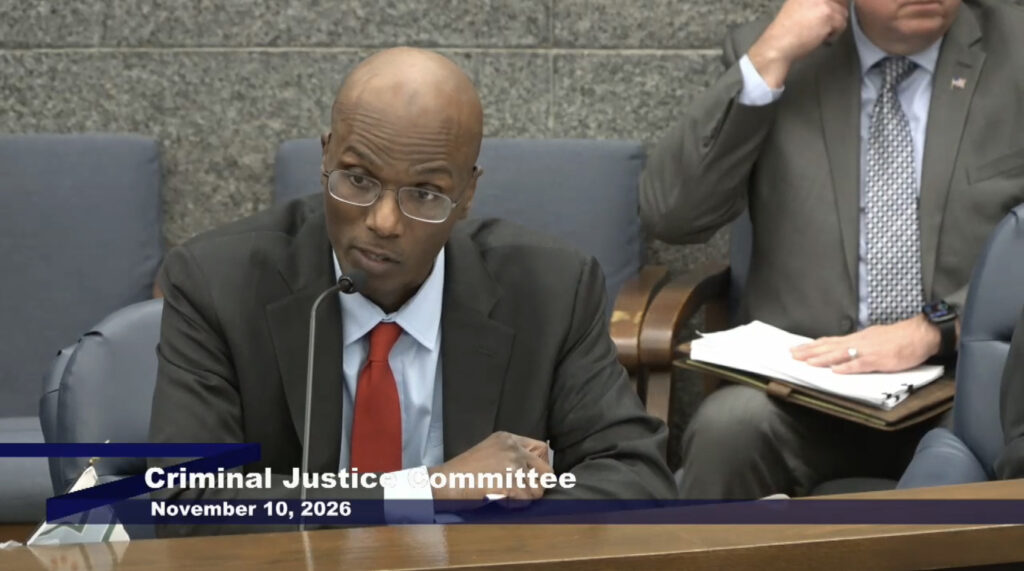
In February, Paxton decided to follow up on what happened to 164 complaints his office had referred to the sheriff’s Office of Professional Review (OPR), “to ensure that these referrals were received, processed, and resolved in an appropriate manner.” His office asked the sheriff about a sample of 15 cases. Reviewing those cases, “The OIIG found that OPR appropriately handled 9 (60%) of the 15 complaints. However, the OIIG found that OPR did not appropriately investigate 5 (33.3%) of the 15 complaints.”
One complaint in particular stood out to Paxton. “There are allegations a deputy showed up to work intoxicated, with a stolen weapon, and they didn’t even talk to the guy,” he told the Weekly. “They didn’t even talk to the supervisor. Then they marked the complaint as handled—that’s dangerous.”
Regarding this complaint, the OIIG review found that “interviews were not conducted, locker search requests were not made, or a just-cause breath analysis or drug tests were not performed on the officer.” After failing to reach the person who filed the complaint by phone and email, the CCSO concluded that “there was no evidence corroborating the complaint” and closed the investigation.
Based on their analysis of these sample cases, the OIIG made six recommendations to the CCSO, such as the establishment of formal checklists for OPR investigators to follow and “consistent procedures” when referring complaints to other departments.
“We can’t fire anyone, we can’t make direct changes to policy,” explained Paxton. “We conduct investigations and make recommendations. Our recommendations tend to be respected.”
The CCSO took issue with the OIIG’s findings. Referring to the complaint about an employee allegedly coming to work intoxicated and with a stolen firearm, for example, they wrote that the the complainant had provided a disconnected telephone number, “did not provide a date of occurrence, timeframe, or other specific information related to the alleged misconduct,” and that “without a timeframe, OPR determined further interviews were not merited and could not lead to additional evidence.”
CCSO also claimed that in issuing the report, the OIIG was stepping outside the bounds of its prescribed mission. “Never has the OIIG maintained they have the authority to conduct a review of OPR or issue a Public Statement against the CCSO,” they wrote to the OIIG.
Finally they concluded that the OIIG “did not possess the requisite information, data, understanding, wherewithal, and authority to make these recommendations” and rejected all of them.
On September 30, the OIIG published a document containing their exchange with the CCSO, and an additional statement calling for a public hearing and announcing a shift in relations with OPR.
“Because your office has rejected all of our recommendations to improve the process of investigating complaints, the OIIG will no longer refer complaints received regarding the Sheriff’s Office to OPR unless absolutely necessary. Instead, the OIIG will resolve these complaints.”
One month later, the OIIG sent another report to CCSO, this time containing findings of their own investigations into conditions at the jail. The report touched on nearly a dozen subjects, including issues with staffing and medical response times.
In their statement, the OIIG found that staff missing work is common, especially on weekends and holidays. On Mother’s Day Sunday of this year, 48% of scheduled staff did not come to work.
When there are staff shortages, a living area is sometimes put on “lockdown.” During lockdown, jailed people may be left locked in their cells all day and denied access to common areas. People incarcerated in the jail shared with the Weekly how this issue raised by the OIIG affects them.
“Sunday we was on lockdown because it was not enough officers here to operate,” Dominique told the Weekly in 2024. “This happened Sunday and it happened yesterday. That’s two times in a week. That’s unreasonable.”
Dominique recalled talking with a correctional officer about her colleagues calling off on weekends. “She said [she] didn’t like how other officers was being selfish by not coming to work on Sundays, because they know that’s when they really need officers.”
“It affects us,” Dominique went on. “The problem is we don’t get rec, because they have no officers to take us to the gym or to the yard. We don’t get religious services, because there’s no officer here to take us to the chaplain. We can’t use the microwave, because if it’s only one officer they can’t run a microwave. It affects us in so many ways.”
On Mother’s Day, Saint was on lockdown.
“I gotta make sure I call my family on Saturdays,” Saint said, calling a day early to say “‘Happy Mother’s Day,’ just case we locked in the cell.”
A spokesperson for CCSO wrote to the Weekly that staffing issues were due to “successive bargaining agreements and broad legal protections regarding the use of FMLA” and directed concerns to the County Board, which approved the collective bargaining agreement.
The OIIG also investigated the average wait times between a medical incident and when 911 was called.
Cermak is the jail’s on-site medical facility. When a jailed person has a medical emergency, they can be sent to Cermak or sent straight to an ambulance. The OIIG found that between the incident start and being in an ambulance, 35 minutes pass when 911 is called directly and 81 minutes pass when people are sent to on-site medical treatment at Cermak before 911 is called.
Based on this disparity, the OIIG made four recommendations: clear written criteria for calling 911, review of assessment policies, creating response-time expectations, and reviewing incidents with long times between the incident and calling an ambulance.
Disparities in medical response times can have real and deadly effects on medical situations in the jail. In July, the Weekly reported on the events surrounding the November 2025 death of Martinez Duncan, who spent 16 minutes in a burning cell before being dragged out by correctional officers.
According to a leaked incident report, 911 was not called until after Martinez had been taken out of his cell, handcuffed, and was throwing up “coffee grounds emesis.” Martinez died. Jeremiah Bush, who had been in the cell with Martinez, got out of the burning cell at 7:31pm and was not put in an ambulance to Mount Sinai hospital until 1:09am, a gap of 338 minutes.
The CCSO did not respond to most individual recommendations from the OIIG regarding response times. A spokesperson for CCSO wrote to the Weekly, “The report simply looks at response times without any understanding of the underlying medical issues of each individual case. For instance, an individual may be receiving appropriate care from on-site Cermak Health Services staff for a period of time, but 911 is later called after a downturn in the person’s condition.”
“I think what the IG has brought up is of great public interest, not just to the residents within the county jail, but to their family members outside” Commissioner Vásquez said during the Tuesday meeting.
“As long as [the Sheriff’s Office] thinks that ‘We’re fine. We got all the internal controls in place’—you’re fine, really?” Paxton asked, rhetorically, speaking with the Weekly. “How can you be fine when all these people are dying?”
In September, the Board deferred a different motion for external review of in-custody deaths. Meanwhile, the family of Cory Ulmer, who was beaten to death by correctional officers in 2024, has agreed to settle their wrongful death suit for a record $7.25 million. From 2014 to 2025, the County Board approved over $113 million for lawsuits against the CCSO.
Now, the OIIG is investing in external controls.
“Let me set up things just like the city,” Paxton said. In the city of Chicago, the Office of the Inspector General has 118 people focused on all of Chicago Government, including a police department of over 13,000 employees. In 2016, the Chicago Inspector General created a section dedicated to Public Safety focused on the Chicago Police Department, Civilian Office of Police Accountability, and the Chicago Police Board. Reports include a gang database review preceding limited changes in city policy and a search warrant inquiry following multiple highly-publicized wrong raids. The Chicago Inspector General also maintains multiple data dashboards on policing demonstrating geographic and racial disparities.
In the last two months, Paxton has established a county-level Public Safety Oversight Unit. With 25 full-time staff, the Inspector General oversees all county government including the more than 6,000 sheriff employees. On October 30, he requested a $600,000 budget increase, including five new investigator positions, three of whom would be in the new unit. Paxton said he’s committed to sustaining the Public Safety Oversight Unit whether his office receives additional funding or not.
Announcing the Public Safety Oversight Unit, the OIIG office wrote, “As a public agency, the Sheriff’s Office should embrace rather than reject scrutiny and recommendations for improvement.”
The CCSO is contesting the OIIG’s moves towards oversight. In their response to the OIIG’s September review, it wrote that “The OIIG’s actions are unauthorized by the Ordinance,” and in response to the October public statement, “the OIIG’s actions to issue a public statement appear unauthorized by the Ordinance.”
At the November 10 hearing, Commissioner Britton relayed “disagreement” from the sheriff with the OIIG’s position, and said the State’s Attorney’s Office (SAO) is writing a legal memo that may align with the sheriff’s argument. According to Commissioner Britton’s statements to the Board, there are “concerns” about the OIIG’s authority to investigate government departments that are both led by an elected official and have to exist under the Illinois Constitution, such as the CCSO and State’s Attorney’s Office. Commissioner Britton argued that the OIIG’s resolution should be deferred until the SAO could review the legal basis for the OIIG’s request.
An attorney for the OIIG responded to Britton by referring to the legal case Blanchard v. Berrios decided by the Illinois Supreme Court in 2012. There, the Cook County Assessor’s Office had refused to cooperate with the OIIG’s investigation. The State’s Attorney’s Office argued the Assessor is an elected official required by the Illinois Constitution and therefore outside of the OIIG’s authority. The Judge disagreed, finding that the OIIG had the power to investigate the elected Assessor. The Assessor appealed and lost. Finally, the Illinois Supreme Court ruled the OIIG’s power to investigate elected officials and file subpoenas constitutional.
Now, the CCSO is once again challenging the OIIG’s power to investigate elected officials and file subpoenas. “Almost 15 years later,” Paxton said, “and here you are with the Sheriff’s Office trying to do the same thing.”
The Board voted to defer the resolution until the next session in December, and asked for everyone with concerns to write their legal opinions so the OIIG can respond.
Paxton expressed confidence in his office’s legal position. But the presence of a debate concerns him. “If you’re going to misapply and misinterpret the law with our office of regulators—quasi-law-enforcement, full of lawyers—then the public is not safe.”
“Oversight and accountability are not bad words,” Chicago Police District Councilor Dion McGill told commissioners at the hearing. “You shouldn’t run from oversight. When you run from oversight, it tells you there’s something wrong.”
McGill shared that he spent much of his life as a U.S. Army soldier and public school teacher. “Oversight and accountability were cornerstones of the work I did … When I was in the classroom, a principal could pop up any time, come to my classroom to do a lesson. It’s not a problem because I’m squared away. That’s my responsibility—these kids are in my care.”
“Can we say the same about Cook County Jail?” McGill asked. “If we wandered over there right now, went through those walls, can we be assured that that institution and the people that work there are squared away right now? If the answer is not an emphatic yes, then there is a desperate need for more oversight and accountability.”
The OIIG’s reviews have opened a public dialogue about jail oversight. But they started with complaints filed by members of the public. “I trust the public has the right instincts on right and wrong,” Paxton said. “Send the Inspector General’s Office an email.”
Micah Clark Moody is a PhD candidate in Sociology at Northwestern University. She has investigated pretrial jailing systems in Michigan, Los Angeles, and Chicago.
Harley Pomper is a PhD student in social work at the University of Chicago. They organize across jail walls to report on carceral injustices and political repression.