
For the first time in the city’s history, Chicago has a fully elected Board of Education.
The board, founded in 1840, governs, organizes, and oversees the finances of the Chicago Public Schools system. By establishing policies, standards, and initiatives, it aims to provide a high-quality education to students across the city.
In January 2025, the board began the transition from a 7-member appointed board to a 21-member elected board with a hybrid board consisting of 11 mayor-appointed members, including the Board president, and 10 elected members representing citywide districts. Following the November 3 election, a fully elected board is set to take their seats in January 2027, and questions remain about how it will represent diverse communities of students, staff, and parents across Chicago.
South Side Weekly sat down with Mirelsie Velázquez to discuss how electoral politics are shaping the school board, the history of educational advocacy among Chicago’s Latine communities, and the importance of holding our representatives accountable.
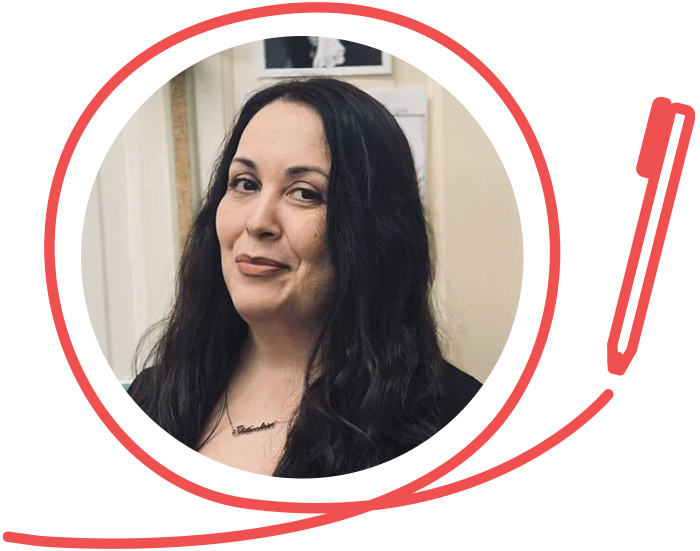
Mirelsie Velázquez is an associate professor of Latina/o studies, education policy, and organization leadership at the University of Illinois at Urbana-Champaign. She is the author of Puerto Rican Chicago: Schooling the City, 1940–1977.
Ellie Gilbert-Bair: What was significant about the shift from a hybrid model for the Board of Education, consisting of both mayor-appointed and locally elected members, to a fully elected board?
Mirelsie Velázquez: We want people to have a choice around who is representing their local schools. But I do think [the election] recreated how Chicago politics, in general, function. There was a lot of fighting across groups, and a lot of different interest groups trying to gain control and power.
I’m wondering, when the next election happens—whether for the school board president or for district representatives—how many people will be paying closer attention, and be a little more vocal about [their] hopes and plans for their community schools.
I think people are happy [the election] is done, but I really haven’t seen any celebration over what the election meant, because I think people are exhausted from the amount of information and misinformation they were getting about different individuals who were running. And we still don’t fully understand what the consequences of the election are going to be.
The hope is that, at the end of the day, the board becomes an extension of what community visions and values are around education.
Shed some light on the rivalry between “pro school choice” groups” and “pro teachers union” groups we saw during the election.
People define “school choice” very differently. Some of the critique of the “pro school choice” position is that people don’t want to see a continued expansion of charter schools in the city because of the consequences they can have on local neighborhood schools.
But school choice becomes an oversimplified way of talking about what’s happening in schools. For some people, “school choice” has to do with finances. For others, “school choice” has to do with charter schools.
The fight was really around control, not school choice. But people were conflating both things. Who was going to be able to control the school board overall—was it gonna be the teachers union, the mayor’s office, the local neighborhoods, certain equity groups?
I feel like what got lost in the conversation was parents and students. Even if [most] students weren’t able to vote—where was the student voice in this conversation? What kinds of conversations were parents having?
My concern is also that people are only seeing the teachers union and not thinking about the staff union, who had very different relationships with, at least, the two leading candidates for the presidency.
[Support staff] are also people who, socioeconomically, need more protection. They’re not earning as much as other people in the district. They might also be the parents of some of the children in their neighborhood schools. At the end of the day, sometimes they’re working closer, one-on-one, with students. My hope is that we’re paying attention to those individuals, who are also vulnerable when it comes to budget cuts, who are also experiencing workplace challenges.
Are there certain stakeholders whose interests may be better fought for as a result of the transition to a fully elected school board?
What was interesting to see was a lot of grassroots mobilizing—not for the presidency, but for the Board itself. We had a lot of people who have been parents of Chicago Public Schools students running for the Board, too, so my hope is that those voices are going to be amplified and protected.
I worry about not having enough Latina/Latino representation on the Board, and I’m hoping that the other [members] are not going to forget about Latino families, Latino students, and the needs of our bilingual, bicultural learners—not just Latino, but other bilingual, bicultural learners in the public school system—and create enough space for people to engage in conversations about providing equitable resources.
Say more about your worry about insufficient Latina/Latino representation.
It’s based on history—whose voices and which communities have been represented. It’s not just Latina/Latino communities. My hope is that other racialized communities—Black communities, Asian American communities—feel as though their needs are being met. They all have different historical relationships to schools and schooling.
I think about what our schools looked like as immigrant populations grew over the last few years. [Immigration] has a direct impact on teachers, too—many don’t have the resources to meet the learning needs of the students in front of them, especially when it comes to language, but in any of the specialized services they may need. We have to ask the question of how we’re going to better provide those services and resources for the students, but also provide those services and resources for the teachers, who are the ones interacting with them in classroom spaces.
Historically, we haven’t seen a cohesive approach to how we’re meeting the needs of Latina/Latino communities. It’s not a monolith—the needs of one community won’t translate to all Latinos. But we see this [neglect] across the city.
The history of the building of Little Village High School, for example, showed us how the needs of the Mexican-origin [community] are not always centered. We use money as a way to justify not providing what we should for our communities. You shouldn’t need a group of women engaging in a hunger strike to have a school built for the community.
Editor’s note: On May 13, 2001, 14 Little Village residents began a 19-day hunger strike demanding the construction of a new high school, which the city had put on hold, citing financial issues.
You’ve studied the educational history of Puerto Ricans in Chicago. How has the city’s relationship to Puerto Ricans and their education evolved over time?
If we look back to the 1940s, 1950s, and 1960s, the ways in which the city “dealt with” the Puerto Rican population in schools always centered language, even when research has shown us that language is not the primary factor in Puerto Rican students not connecting with schools.
The dropout rate for Puerto Ricans in the 1970s had reached over 70%. But language is not always the reason this is happening when we’re thinking about second- and third-generation Puerto Ricans in Chicago schools.
There’s been a history of the Puerto Rican community having to advocate for themselves and push the city to respond to their educational needs. We saw that with the building of Clemente High School. We saw that with a recruitment program that was targeting Puerto Rican teachers to come to Chicago in the 1970s.
My concern right now for the Puerto Rican community is that, as they continue to be pushed out of neighborhoods because of gentrification—Humboldt Park, Logan Square, and Belmont Cragin—we’re not keeping track of where these children are going.
At least when they were in schools in a Puerto Rican community, you had the support of a larger community who were pushing for increasing resources. But as the community starts dispersing, and their numbers aren’t as large as they were—especially in the Humboldt Park community in the 1970s and 1980s—there’s not going to be the same advocacy around meeting their needs.
We did see students come to Chicago after Hurricane Maria who had different types of needs. People weren’t asking questions enough about, not only how to serve their linguistic needs, but the trauma they were arriving in our schools with.
So my concern is that, when people move out of their neighborhood schools, that they’re not being thought about as a community with specific needs.
What will you be keeping an eye on as the newly elected school board members take their seats in January?
My main thing is holding people accountable. If you were campaigning around certain issues, or hoping to provide certain services, [we have to make sure] that you’re following through with it. And it doesn’t end there.
There were all these divergent ideologies, discourses, and narratives that were framing people’s election campaigns. At the end of the day, people have to return the question of what’s best for our children, and what’s best for communities at large.
My hope is that people are going to continue to show up to these meetings and start asking questions. Even if the representatives who won don’t reflect your views, how do you push them and advocate for your community so that you don’t get lost in the discourse, and you don’t have to wait until the next election cycle?
This interview was edited for clarity and length.
Do you have a topic you would like to ask an expert about? Email us at elliegilbertbair@southsideweekly.com.
Ellie Gilbert-Bair is the Weekly’s assistant managing editor.