

Last issue, the Weekly spoke with associate professor Kellee E. Warren to break down what presidential libraries are, why they matter, and how the Obama Presidential Center is distinct. This issue, Teresa Helena Moreno illuminates what information is, how it can show up in different types of archives and libraries, and how accessibility to information has been changing in the digital age.
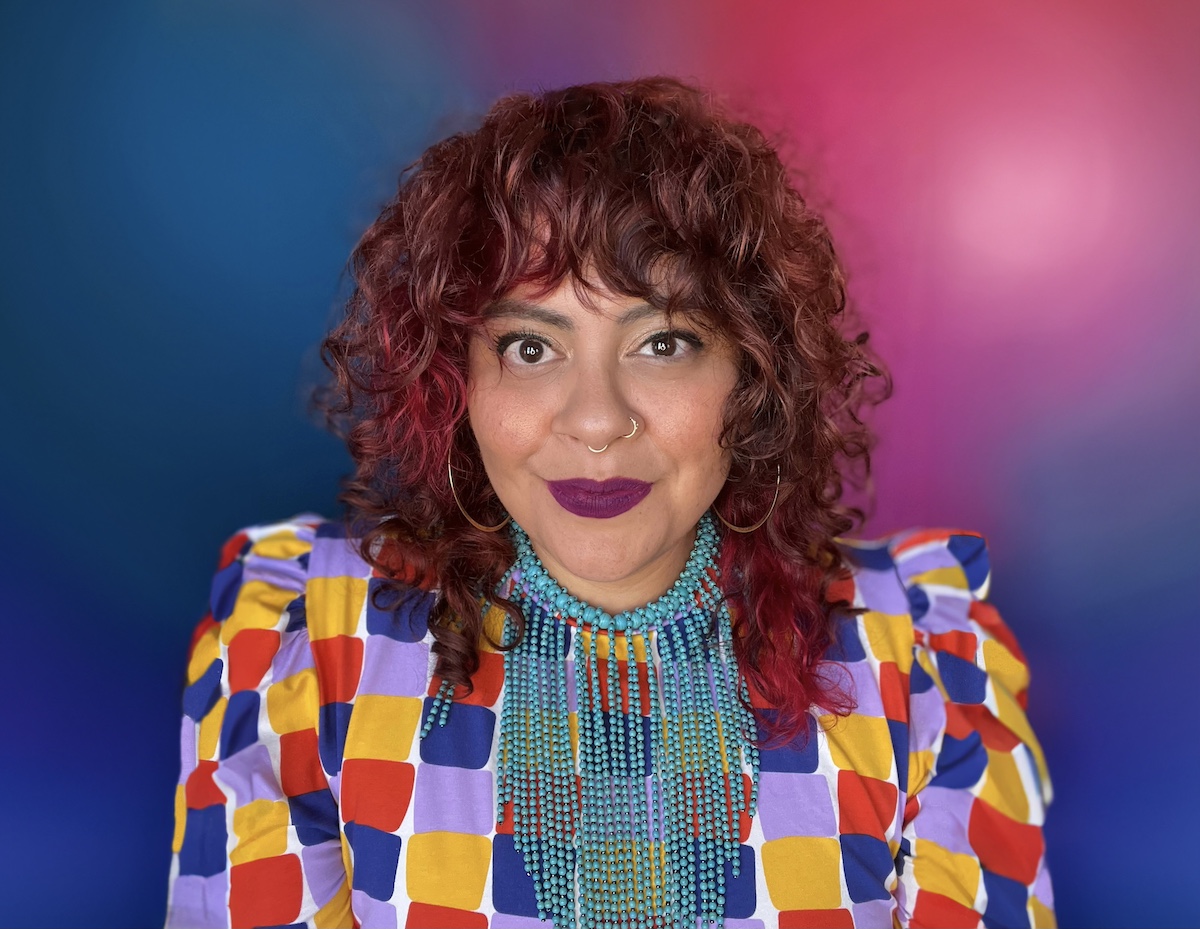
Teresa Helena Moreno is an associate professor and librarian at the University of Illinois Chicago. Her scholarship critically interrogates library practices and the role of libraries as cultural institutions. Through applying methodologies and theories found in feminist studies and ethnic studies, her interdisciplinary research critically examines the impact of libraries and information on the knowledge and intellectual traditions of the global majority. She has also developed information literacy pedagogies that ask educators and learners to critically engage information.
Ellie Gilbert-Bair: What are the differences between a library, an archive, and a museum?
Teresa Helena Moreno: The idea of a library, for people who aren’t in the world of libraries, can be really static. We typically think of our public library, but by the time you’re doing really intensive research—whether you’re a student, a university professor, a journalist, what have you—you start needing more kinds of information.
We sometimes don’t realize that there are many different types of libraries, and that those libraries all have different functions. [For example, public libraries offer public programming and services, while special collections contain niche research materials.] By the time you get to university libraries, or somewhere like the Obama Center, you might ask yourself, is that a library or a museum? That’s where the idea of an “archive” falls into the landscape.
Archives are like mini libraries inside of big research institutions. At the University of Illinois Chicago, we have the Richard J. Daley Collection, for instance, [which preserves materials documenting the political career and personal life of the 39th mayor of Chicago]. Archives are, in some ways, also like museums. We don’t just have “paper,” we have artifacts, photographs, and different kinds of ephemera.
Presidential libraries bring this style of library to the general public. We get context for who a U.S. president was and what was important to them, and the ability to do our own research. In a public library, there is stuff we can absolutely research, but we might not have access to cool [historical documents], or access to [a way of] understanding information that isn’t just about books.
What is significant about the complete digitization of the Obama Presidential Library, and the creation of a museum at the Center?
We are entering an era where archives are full of things that are “born digital.” That’s what we call it when the first time something is an “information object” [an identifiable unit of data], it’s digital.
The Obama Presidential Library also did work to digitize things. When we think about digital things, we think about them being easier to access, or that more people will have access to them. That’s because, typically, you have to go to a physical archive in order to look at the information [it holds], or even to look at the things that are available for people to research.
However, as somebody who spends a lot of time in archives, there is something very cool about seeing and touching physical things. I think [the Obama Foundation] really thought about this physical component when they created the Center, but it doesn’t always get translated as “information” to the general public. For example, researchers would look at the art that’s selected to go inside the building—that’s all information, that’s all researchable.
What is interesting to me is how they separate out what they’re thinking of as archival information, and how they’re looking at artifacts like clothing [which is on display at the museum]. As an art librarian, what is going on in Michelle Obama’s fashions is incredibly historically important. There’s so much information you can get from clothing, from what kinds of articles were available, from who made the clothing—it can tell us so much about the Obamas and the time period itself. So I wonder, what is [the Foundation’s] perspective? Maybe they’re thinking about what people are interested in.
Do you think the digitized library will pose any limitations to researchers?
We’re going to find out what the limitations are! I’m sure the librarians and library workers who’ve been working to digitize know what some of those things are, but there could be limitations to accessibility that we haven’t considered.
When we think about digital things, we often think, “yay, we don’t have square footage,” or “yay, we don’t have to worry about preserving paper.” But preserving the digital is its own animal. The technology, the servers, all of those things have their own temperament. So, we’ll see. Some things that are digital are harder to preserve, which not everyone thinks about. CDs, for example, are much harder to preserve than paper.
Over the next few years, the National Archives and Records Administration plans to close three of its facilities, including its Chicago center. Do you think there’s going to be a larger shift to digital archiving?
Yes and no. Digitizing things in archives is also about people power, and how many resources you have. Digitization allows different kinds of researchers to come in and have access, if you have Wi-Fi and access to a portal. But we already see disparities in whose information gets digitized for easy access, and whose doesn’t. And that’s often a question of who’s got money.
If you’re the Obama Foundation or if you were a president, you’re probably going to have the resources for digitization. There are other communities that exist in archives that will sit in archives without being digitized because they’ll consistently be deprioritized.
I want holistic information, and access points are super important. If having information digitized in a certain way means I can teach it to my students, and I can do the work to temper some of the scariness of doing something brand new like visiting an archive and talking to an archivist, it helps encourage people to go into a physical archive. There’s a part of me that’s always going to encourage that. There’s a little magic in seeing the stuff in real life.
This interview has been edited for clarity and length.
Do you have a topic you would like to ask an expert about? Email us at elliegilbertbair@southsideweekly.com.
Ellie Gilbert-Bair is the Weekly’s assistant managing editor.