

As a Colombian and Chilean immigrant kid growing up in Pilsen, I remember how inclusive it felt when I saw a mural near 18th Street and Western Avenue that explicitly denounced U.S. military intervention in South America. Across the wall, huge, bold letters read, “U.S. out of Colombia.”
Even then, the backdrop of murals in Pilsen streets read as testimonials of survival and a way to preserve memories in a community founded on resistance. It’s a neighborhood that helps light the way so you see parts of yourself you didn’t know existed.
During the 1970s, you could walk down 18th Street and listen to Grammy-winning Joan Sebastian, known for his jaripeo-style concerts while performing on his horse, serenading local residents. Before writing “The House on Mango Street,” her classic, a Chicago-based coming of age story, Sandra Cisneros worked as a teacher in the neighborhood at Latino Youth Alternative High School.
Pilsen is also the birthplace of one of the world’s most renowned graffiti crews, MUL, founded by C3PO & TEEL. MUL’s impact in the game is real enough to even have the legendary Queens rapper Nas shout them out on his last album, “Light-Years,” with DJ Premier on the song titled, “Writers,” an ode to the graffiti world. Currently, the neighborhood is strongly represented by writers like KOAL, MATR, SMORE & DONT on a global scale.
American journalist, James Foley (1973-2014), who covered international conflicts and was killed during the Syrian Civil War, also spent time in the neighborhood, and has his own memorial that sits across the street from Jumping Bean Café, which opened in Pilsen in 1994. The now staple cafe was founded by Eleazar Delgado at the corner of 18th and Bishop, in a space that was previously a barbershop.
I live down the the way from Casa Michoacán on Blue Island Avenue where the Coalición 10 de Marzo would rally organizers across the city, helping spark a national movement for immigrant civil rights in 2006, after former Wisconsin Congressman Sensenbrenner introduced a bill that would have made being undocumented a felony.
At the same time, Pilsen is also a neighborhood that’s home to six rival gangs in less than a two-mile stretch. When I was growing up, we didn’t flinch when we heard gunshots, we tried to guess what caliber the firearm was by the sound it made echoing down the block. We were outside so much that we were on a first name basis with the beat cops that would constantly patrol the neighborhood.
There was a radio station and arts center at the intersection of 18th Street, Loomis and Blue Island. Back then, RadioArte 90.5 was housed in the same building at Yollocali Arts Reach and future journalists, reporters, artists, DJs and even elected officials emerged from this youth-focused community space. It offered healthy ways to take a break from everything outside, and offered constructive outlets to make something positive from our teen angst. I hosted open mics, shows and put together sets that were broadcasted across the city. I learned that as a creative, I could earn the same respect as any other hustler from the neighborhood because it takes courage to believe that your craft has power. Similar to the courage all of us summoned just to walk home from school every day, go to the corner store, or to play at the park.
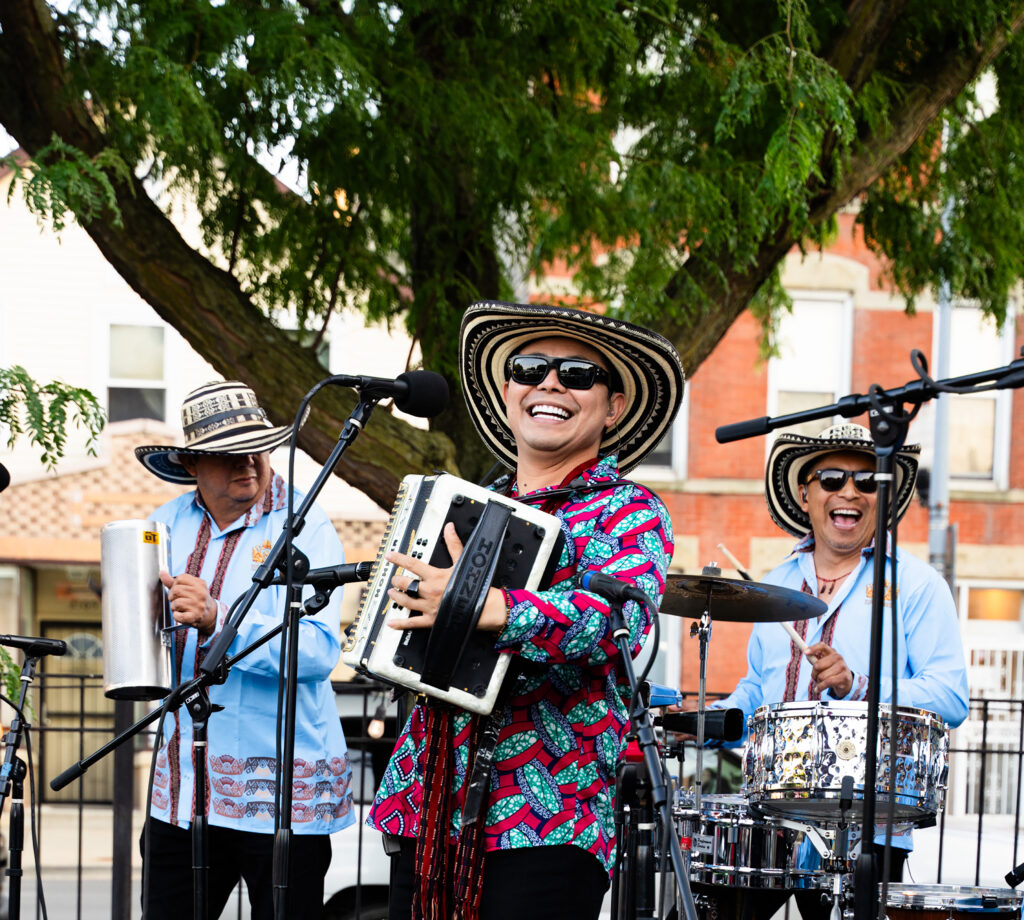
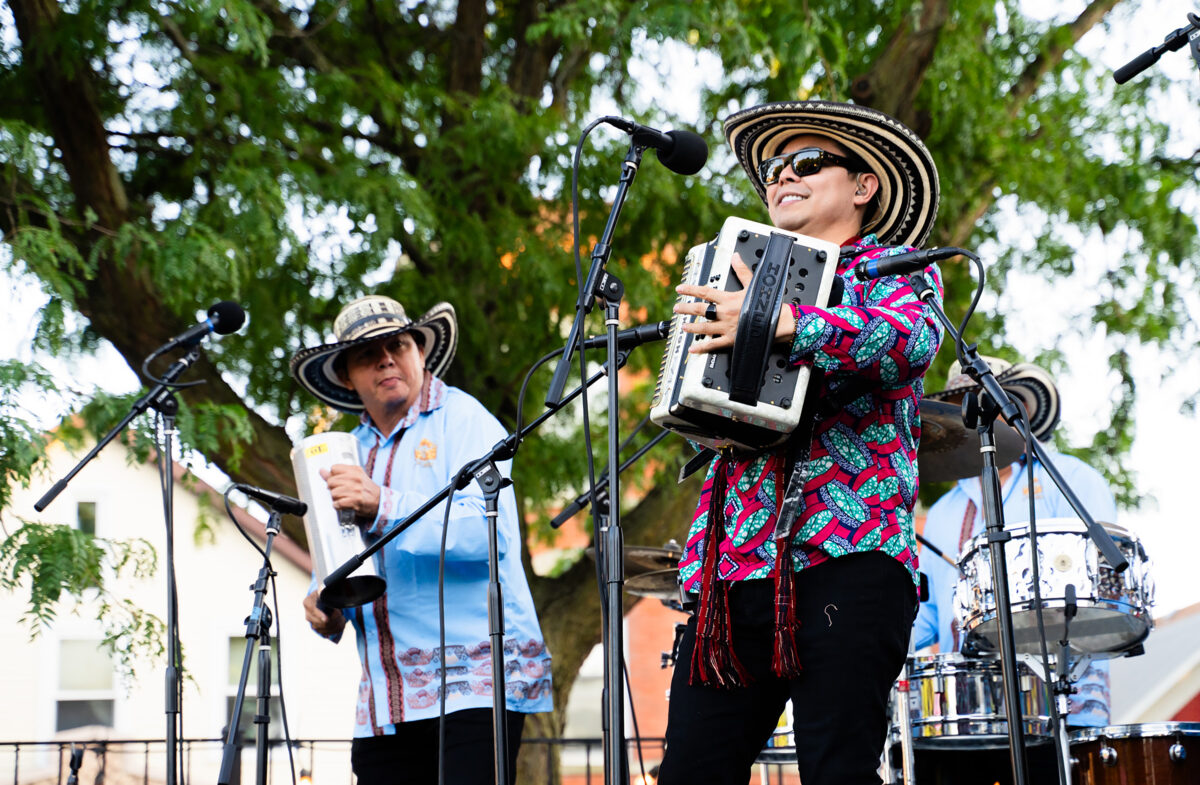
It’s a blessing that I learned these lessons in Pilsen; it has always been a cultural capital of the arts, resistance, and community organizing. 18th Street Casa de Cultura embodies a spirit that reminds me of Casa Aztlán: creating a safe space for youth arts education while curating cultural experiences rooted in and responsive to the side of the neighborhood that isn’t always made visible by social media trends. They honor and cultivate the legacy of artistic expression with a focus on families, children, youth, and educators. This past summer, 18th Street Casa de Cultura also hosted Mercadito, an outdoor weekly concert series featuring local vendors and musical guests ranging from DJ Illanoiz to Colombian musician Yeison Landero.
The community center is located at 2057 West 18th Street and includes a tiendita containing a variety of books, accessories, clothing, and games for all ages; a reference library, makerspace, and instrument zone for exploration; as well as a gallery space for multipurpose events. Casa de Cultura also facilitates Casa Ilumina down the block, which has programming aimed at addressing the structural harm in our communities by actively engaging in holistic healing and wellness practices grounded in ancestral transformative wisdom. Some of the activities here include yoga, meditation, healing circles, and herbalism workshops.
Recently Brooklyn Of recommended bars to visit in Pilsen and didn’t mention a single Mexican-owned establishment. Instead of being convinced that proximity to whiteness in a Mexican neighborhood is going to make you cooler, go to Caminos on a Friday night, buy steak tacos from Carniceria Maribel and get a cup of fresh cut fruit from Harrison Park’s street vendors.
Back in the 2010s, Gino’s East prematurely tried opening up across the street from the La Providencia corner store on 21st Street and ended up closing down shortly after because of the neighborhood’s loyalty to Benny’s Pizza and Pizza Nova. It’s vital we remember the importance of supporting local businesses that employ local residents and centralize commerce around tradition instead of associating progress with ethnic displacement.
Musicians, artists, writers, and creatives have gravitated towards Pilsen for decades. Some arrive out of a genuine interest in wanting to find an enclave that encourages growth while giving themselves the opportunity to rediscover and reinforce their identities. I love hearing a cumbia bassline rattle the trunk of a Chevy Caprice driving down the street and seeing street vendors every morning.
It still hurts when I see candles and flowers next to a memorial on a sidewalk. I don’t like seeing everyone’s rent get higher and higher every year because developers don’t stop building dead, tech, post-modern greyscale condos. We had an incredibly corrupt alderman for over two decades, and the current alderman is drowning in his own scandals. The neighborhood deserves better political leadership. Historically, the cultural workers in Pilsen have always done what the politicians were never capable of accomplishing—actually building community.
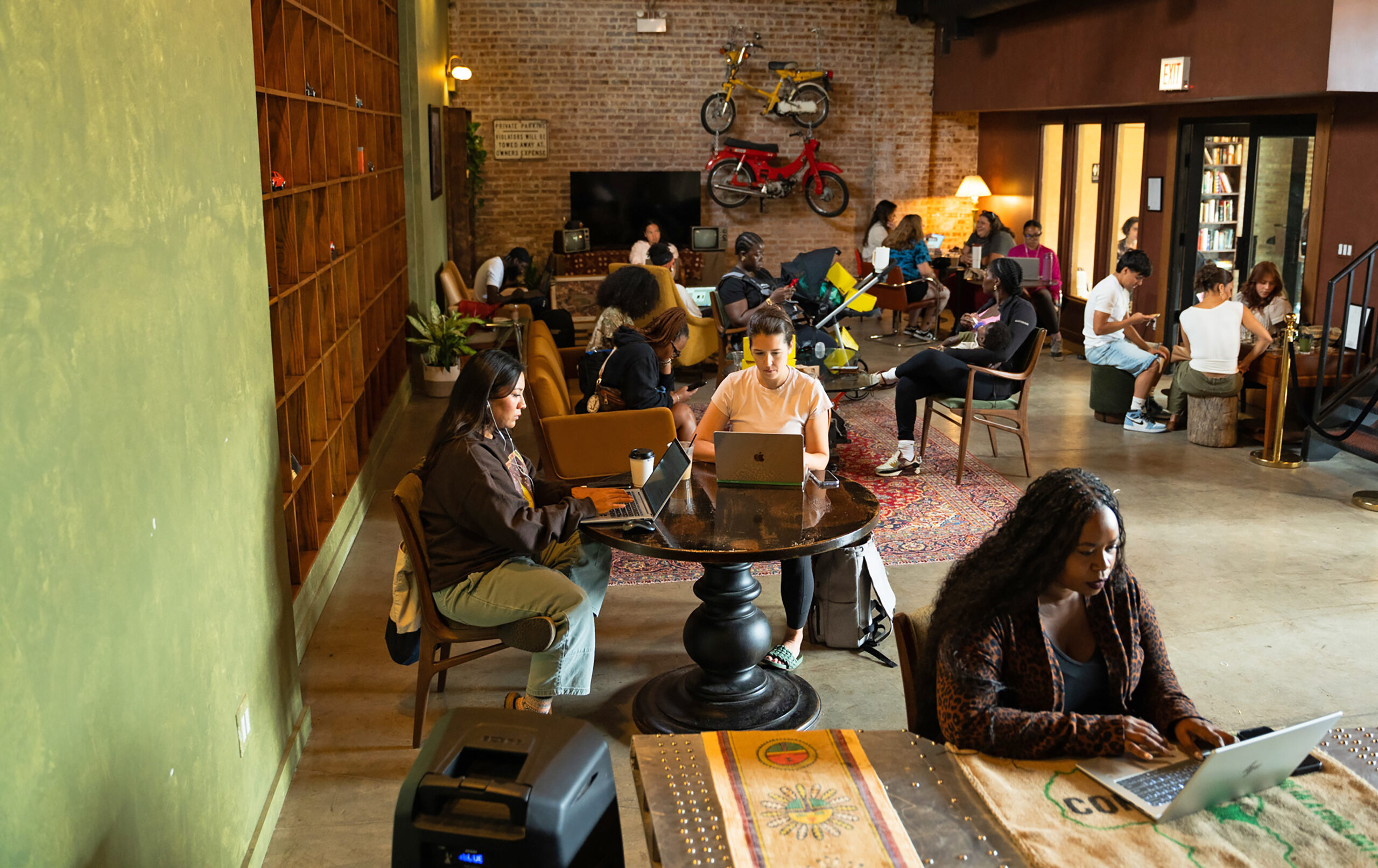
Cafe Jon is buzzing on a Friday afternoon in Pilsen, on September 18, 2026. Leading up to its opening, a series of pop-ups were hosted to get as much community feedback as possible. Credit: Mateo Zapata 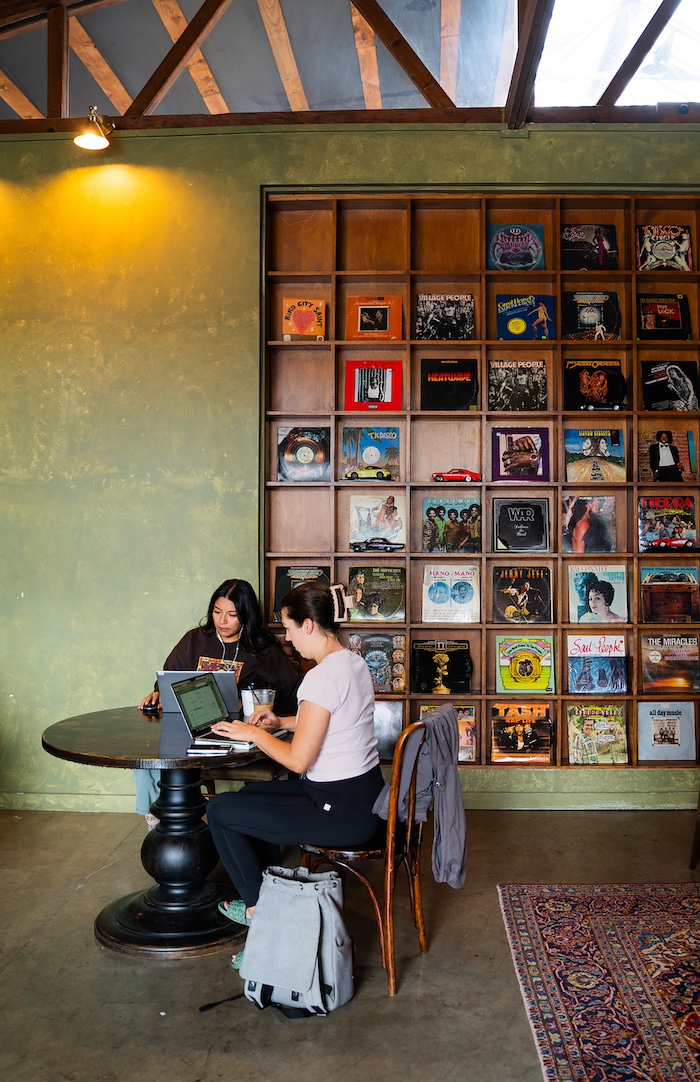
Patrons in front of a wall of vinyls at Cafe Jon, a coffee house and gallery space for convenings and co-working in Pilsen, on September 18, 2026. Credit: Mateo Zapata
Pilsen does that by building bridges that bring different communities together. A Mexican artist teaming up with a Black and Palestinian-owned tequila brand to open up a cafe is the kind of partnership I like seeing in the neighborhood. Cafe Jon represents a Black and Brown-built space that Chicago needs to recognize and support, as an example of unity. Felton Kizer, beverage director and co-founder of North Lawndale-based Monday coffee, also roasted an exclusive profile for Cafe Jon, located at 2002 W. 18th Street.
Pilsen will always be a part of my roots. I fell in love on 17th; was shot at on Cullerton way too many times; learned to play spades on 19th; took some of the best photos ever on Cermak; and I still think about people I’ve lost along the way when I pass by 21st.
My hope is for everyone here to give back to the neighborhood, in their own ways, to maintain its heart. When people ask where I’m from, I tell them 18th Street.
Mateo Zapata is a Chicago-based photojournalist and storyteller.