
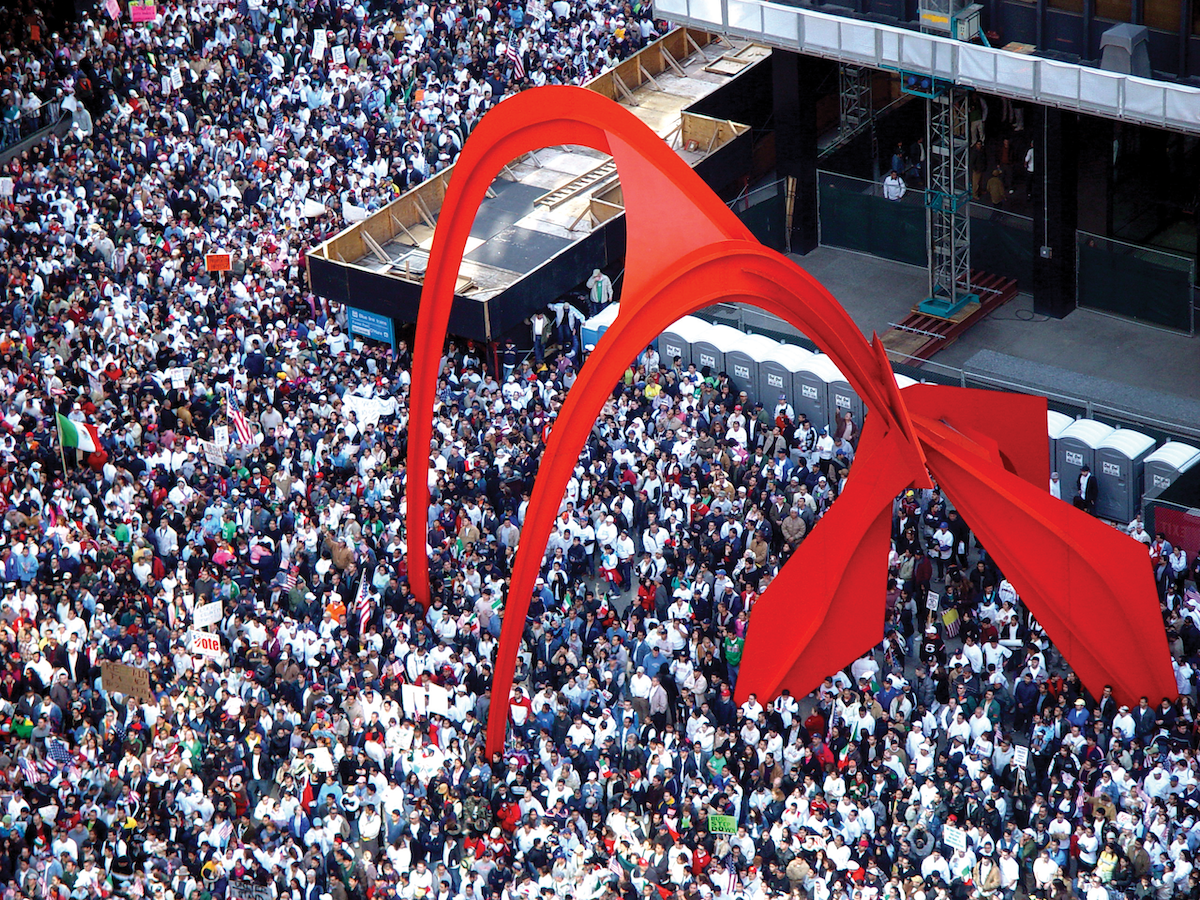
May Day began in Chicago, with the Haymarket Affair of 1886, and it has become a global day of observance in the labor movement, commonly referred to as International Workers Day.
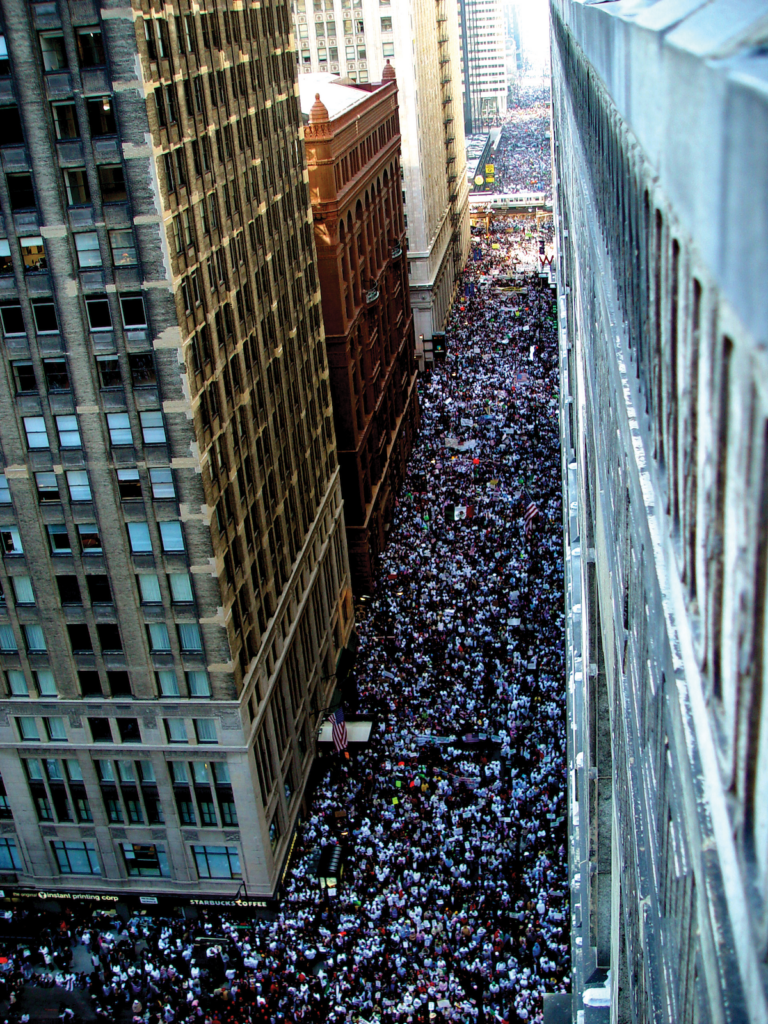
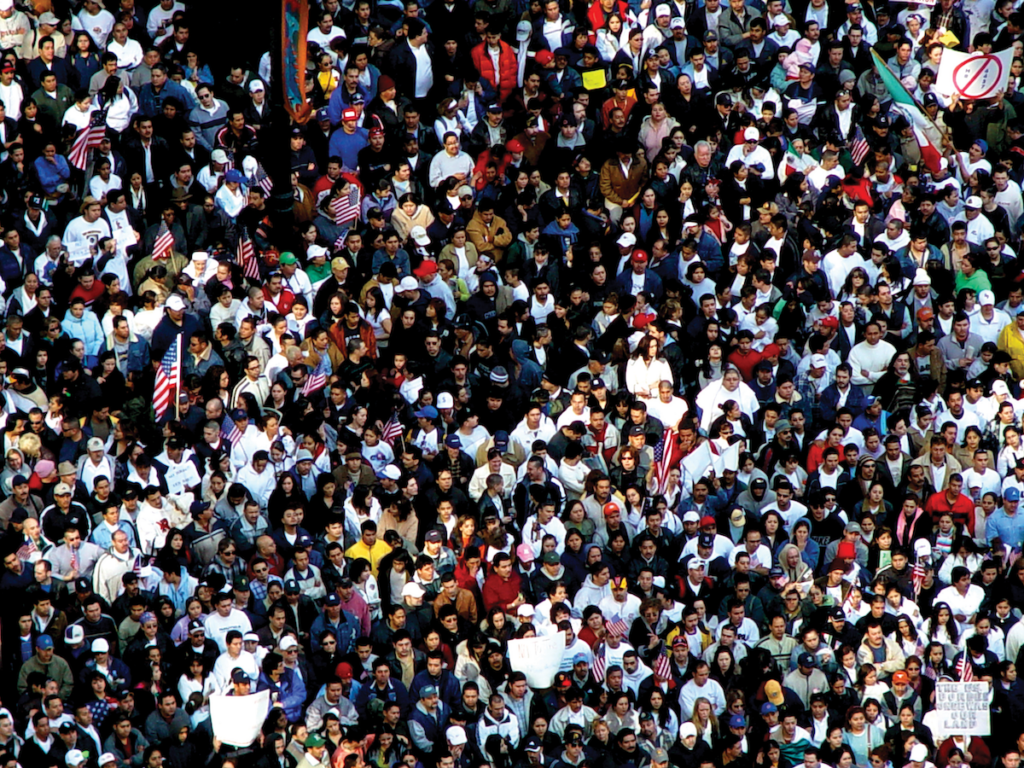
Twenty years ago, on May 1, 2006, workers in Chicago walked off their shifts, Mexican American students cut classes, and others engaged in economic boycotts to partake in a historic street demonstration. Between 400,000 and half a million people showed up, and paralyzed downtown. This protest resonated across major U.S. cities, and was described as the awakening of a sleeping giant and a “Day Without Immigrants.”
A series of relatively smaller marches built momentum for the massive march on May 1, 2006.
For instance, a March 10 demonstration in the Loop, organized by the local Comité 10 de marzo, galvanized people to get organized and attracted the attention of mainstream media. People were encouraged to miss work and school. One of the high schools in Little Village at the time, Farragut Career Academy, had about half of its students walk out after division, the Tribune reported. On May Day, it reported that 80 percent of students at Farragut and Benito Juarez high school in Pilsen walked out.
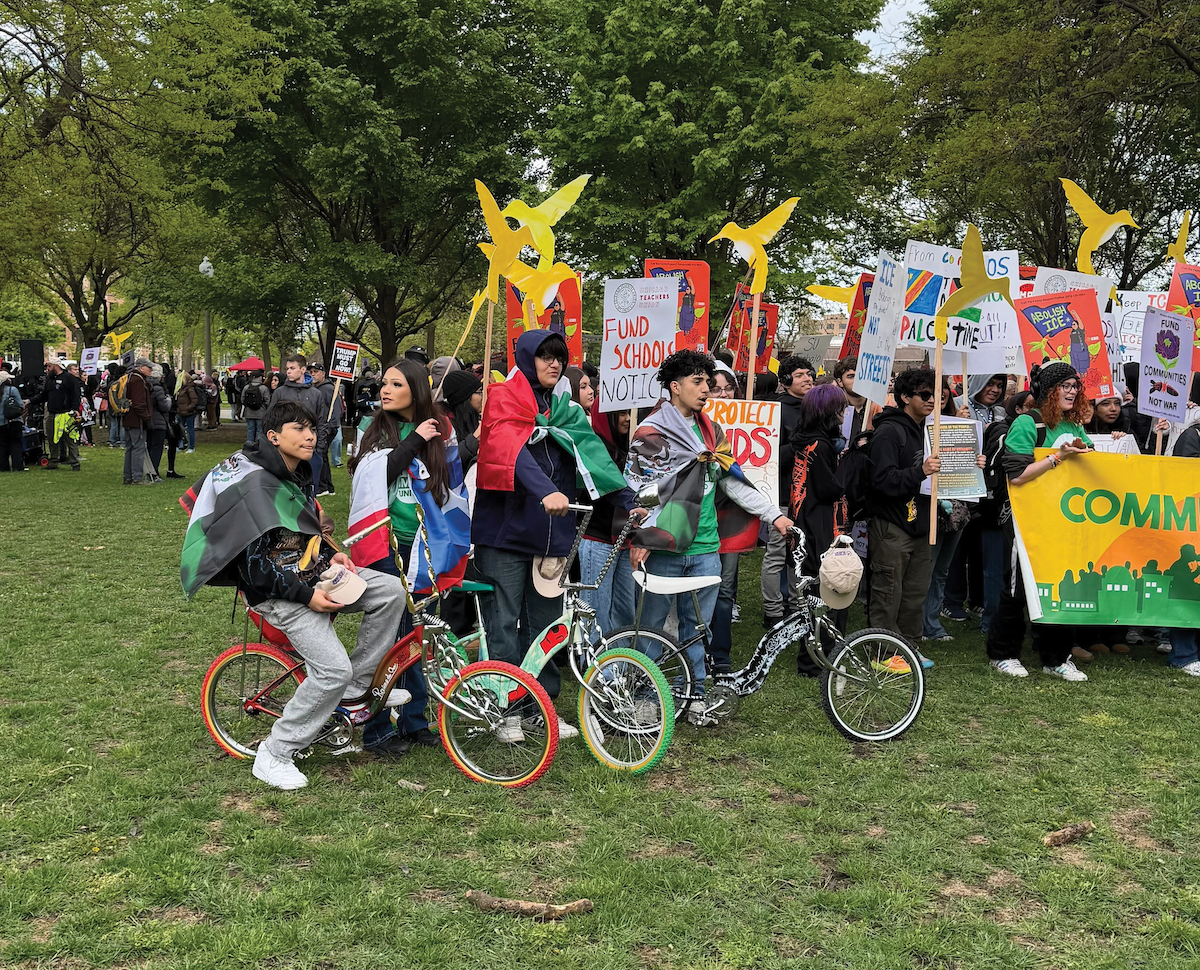
This year, thousands of Chicagoans took to the streets on May 1, one of more than 3,000 May Day events across the U.S., driven by demands against Trump and ICE, support for workers over billionaires, calls against the war in Iran, and solidarity with Palestine. Chicago Mayor Brandon Johnson was on the front lines of the march, as it took off from Union Park toward the Loop, at some point raising his fist in the air.
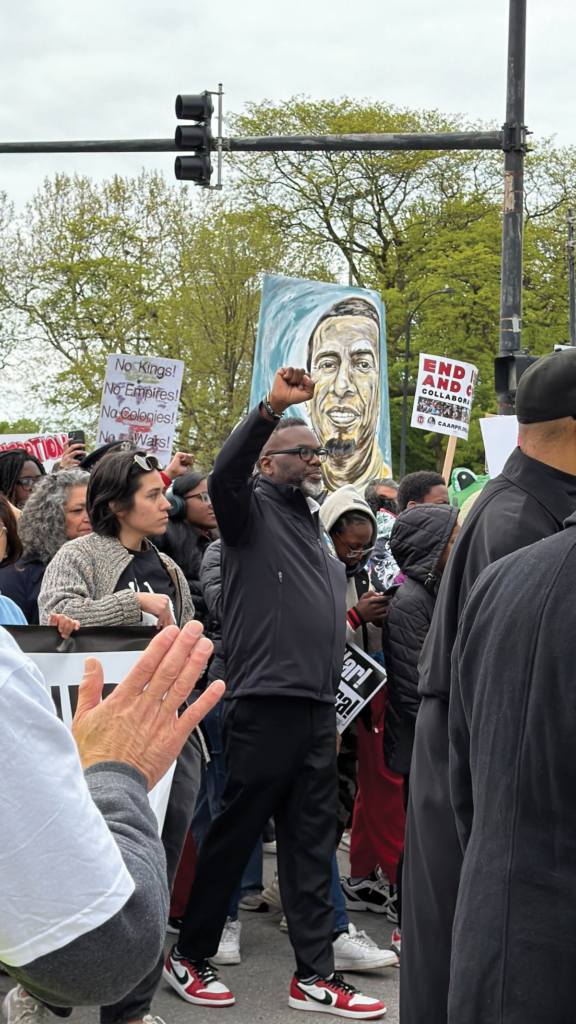
“Shout-out to all of the students in our Chicago Public Schools and our educators who have declared this day of civic action,” Johnson said that morning in reference to a new agreement between CPS and the Chicago Teachers Union to observe May 1 in and outside of class. “The labor movement is in good hands because we have students across this city that are raising awareness of what justice looks like, not just in Chicago but all over the world.”
Today’s scapegoating of immigrants by the Trump administration is familiar to those who remember the anti-immigrant and xenophobic climate under George W. Bush, that intensified in the period after 9/11 and activated massive mobilizations in 2006.
Although ICE and Border Patrol agents weren’t hunting down people in the ways that Operation Midway Blitz was carried out last summer, claiming the life of Silverio Villegas González and nearly killing Marimar Martínez, federal agents under the Bush administration instilled fear in immigrants by routinely raiding factories and working closely with Chicago police.
But a racist policy proposal, HR 4437, The Border Protection, Anti-terrorism, and Illegal Immigration Control Act of 2005, angered people towards action. The bill, (also known as the Sensenbrenner bill, named after its sponsor, Republican Congressperson Jim Sensenbrenner of Wisconsin) aimed to criminalize immigrant workers by making their unauthorized status a federal felony instead of a civil violation; threatened to charge anyone helping immigrants as smugglers who aided and abetted criminals; aimed to build hundreds of miles of the border wall; and, crucially, required employers to use a government database to verify their employees’ status.
Credit: Joseph Voves
In the end, the bill passed the House but did not pass the Senate, largely because of the widespread resistance that was made evident in the March 10 and May 1 marches.
“We set our egos aside—and acknowledged that, yes, as Mexicans, the prevailing sentiment among the Mexican hometown associations (federaciones) was that our government had forgotten us. That we didn’t matter enough. And that was an energy that needed to be channeled,” said José Luis Gutierrez, now executive director of Casa Michoacan DuPage, referring to about a dozen civic federaciones that represented immigrants from different Mexican states that became involved in 2006.
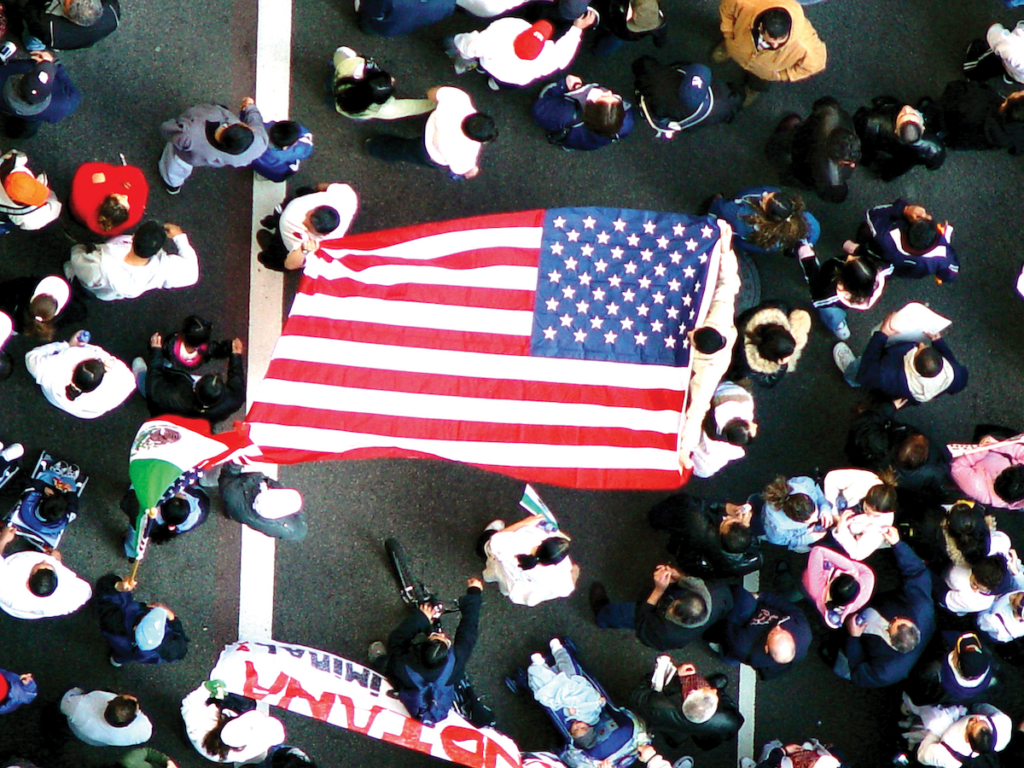
Moises Zavala was part of the United Food & Commercial Workers (UFCW), and he recalled attempting to get petition signatures for the Big Box Living Wage Ordinance that his union was rallying for, but only managing to get a few because the March 10 crowd was so packed that people were shoulder to shoulder. Local media estimated 100,000 people at the march.
Credit: Joseph Voves.
“The community has never mobilized in that way again,” said journalist and Arise Chicago organizer Jorge Mújica, who was part of the Comité 10 de marzo. “Radio played a role, the press played a role, and organizations played a role… There wasn’t an instinct to march as a means of mobilizing the community. There were other ways, but not marching. People forgot that taking to the streets was a vitally important way to demonstrate.”
Before the influence of social media, immigrant workers were mobilized while listening to Spanish radio in restaurant kitchens and factory floors. As the Weekly reported in a 2023 interview with former radio host Rafael Pulido “El Pistolero,” his morning program on La Que Buena 105.1 FM turned into an open forum for listeners to express their views and hear from legal experts and activists.
“Apart from telling people to go out and march, we also informed people about what else they could do,” Pulido said. “Who were their state representatives in their districts, that they could call, and what was their stance on the issue?”
There was coordination with activists in the western suburbs who joined the Chicago actions, and other cities who also participated. Only Los Angeles marches compared to Chicago in terms of numbers, but the media reported significant marches in New York, Washington state, Las Vegas, Miami, Orlando, San Francisco, Sacramento, Oakland, Atlanta, Denver, Phoenix, and New Orleans.
“How is it that we can pass those experiences on to today’s youth—and to today’s non-youth?” Zavala asked his contemporaries. “Because there are still people our age who say, ‘Oh, marches don’t actually accomplish anything.’ It’s as if they’ve forgotten or simply never made the connection. They failed to grasp the magnitude of the change we achieved… How can we replicate it?”
Laura Garza, the new executive director of labor group Arise Chicago, was involved in the Service Employees International Union (SEIU) Local 1 at the time, and she remembers that in the aftermath of the marches, there was a high sense of hope for what President Barack Obama could do for immigrants. They hoped for paths to permanent residency, and eventually citizenship.
“We were so damn happy that we had elected a progressive first Black president. And I think one of the mistakes that we made as organizers and in the labor movement [was] that we thought we elected the person that was gonna solve everything,” Garza said. “And we thought that politics was gonna be the only answer to all this because we talked about, ‘Hoy marchamos, mañana votamos’ (Today we march, tomorrow we vote). We voted. We registered a lot of people to vote, and here we are 20 years later.”
[“O]nly in unity can we win the liberation that we seek and deserve for workers’ rights, voting rights, immigrant rights, racial justice and economic justice,” said Lawrence Benito, the executive director of the Illinois Coalition for Immigrant and Refugee Rights (ICIRR) at this year’s May Day gathering. “This is a growing national movement to not only defend our communities, but also to fight for dignity, safety and justice.”
Credit: Jacqueline Serrato.
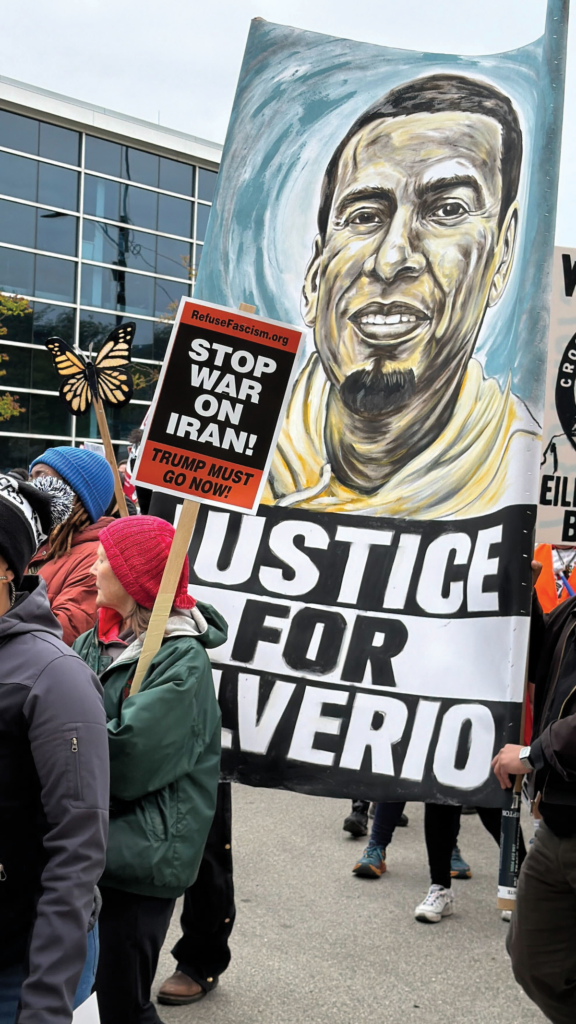
A spotlight of the march was a massive banner of a smiling Silverio Villegas González, a 38-year-old Mexican immigrant from Irimbo, Michoacán, and had lived in the Chicago area for nearly 20 years before he was killed by ICE agents. Unlike the ICE murders of Renee Good and Alex Pretty in Minnesota, Villegas González’s murder has gone without investigation. The banner was painted in acrylic by young people at a community art studio, Holiday Studios, in Brighton Park.
Artist and studio owner Gerardo Cazares said they depicted Villegas González because he was targeted “by federal agents operating without accountability, shielded by federal policy. Weeks earlier, DHS was promoting Manifest Destiny imagery—an ideology rooted in white supremacist expansion—and then a father from our community was killed after dropping off his children at school,” he said. “I used the BLM visual language in solidarity. This is our generation’s moment to demand justice.”
The Illinois Accountability Commission, a panel convened by Governor JB Pritzker to investigate Operation Midway Blitz, conducted numerous investigations, including more than 60 in-depth interviews with victims and witnesses about violent encounters during the siege. In a report published on April 30, the commission made recommendations and called out Cook County State’s Attorney Eileen O’Neill Burke.
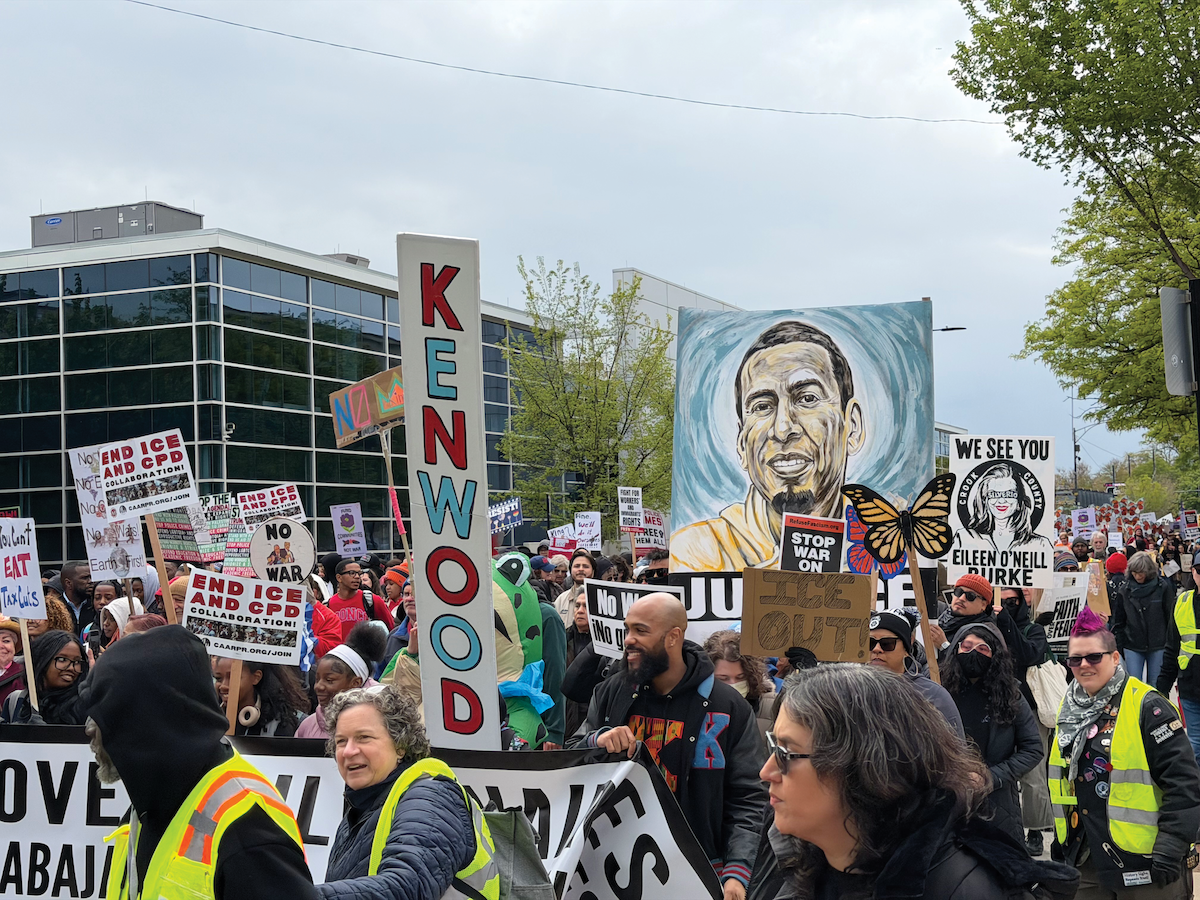
If Burke “doesn’t want to investigate,” said Judge Rubén Castillo, chair of the Illinois Accountability Commission, during a press conference, she should “step aside and let a special prosecutor come in and do what needs to be done.”
Jacqueline Serrato is editor emeritus at the Weekly and the former editor-in-chief.
Important coverage of the May Day march. Its inspiring to see so many people coming together to advocate for workers rights and immigrant justice. The 20-year milestone really puts into perspective how much has changed and how much still needs to be done.
kepo.ai