Located just steps from the Western Pink Line station, Casa Cafe initially appears to be a typical neighborhood taqueria with its bright orange walls and the scent of sizzling al pastor.
But follow the narrow hallway toward the back, and the dining room gives way to a dedicated DIY space that has become a vital lifeline for the South Side.
At 2025 South Western Avenue, this backroom is the vision of artist and organizer Francisco Garcia, who transformed the restaurant into a sanctuary for Chicago’s hardcore scene.
When intense Immigration and Customs Enforcement (ICE) activity threatened the taqueria’s stability last year, Garcia’s high-energy shows provided the necessary influx of patrons to keep the business afloat. Today, the venue is a bustling hub where the walls are draped in flags from Latin America and tables are piled high with band merchandise.
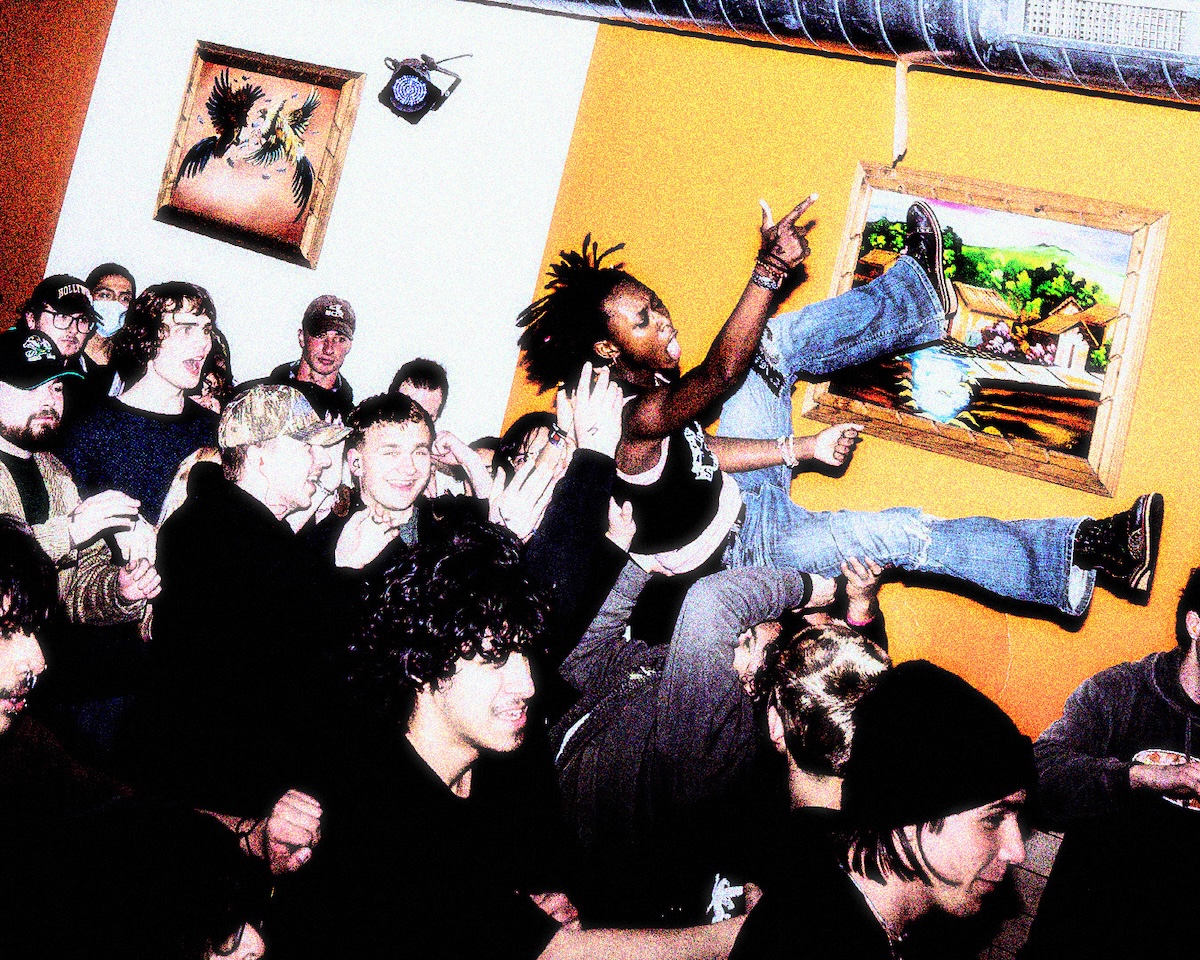
On show nights, the space is an explosion of kinetic energy as fans from all walks of life converge for the raw intensity of the mosh pit. This collective movement—a chaotic but communal release of tension—defines the atmosphere.
In between sets, the crowd migrates back to the front to rehydrate and refuel on tacos, creating a seamless synergy between subculture, commerce, and community. On these nights, it’s easy to see that Casa Cafe is a defiant, beating heart of local culture.
Francisco Garcia’s DIY Vision
For Garcia, the journey to becoming the curator of one of the South Side’s most resilient DIY spaces began with a search for belonging.
After years of navigating scenes that didn’t quite feel like home, Garcia found his calling during the pandemic, shifting from a fan in the crowd to the primary architect behind the “Poncho shows,” shows curated by Garcia at Casa Cafe.
A Pilsen resident and a regular at the café, Garcia’s vision was sparked in 2020 when he noticed a “salon for rent” sign posted by Casa Cafe.
“I also go there to eat and thought it would be cool to have a Latino bill at a Mexican restaurant, to [create] shows for the people and for the community,” Garcia said.
Garcia noted that the energy from the booked bands was electric, with performers often feeling a genuine sense of honor to take the stage and treating Casa Cafe as a venue where they have to play.
“People see Casa like that [now], which is really awesome,” he said.
Garcia said the shows at the café have helped the business stay afloat, too.
During a period of intense ICE activity at the end of last year, Casa Cafe’s foot traffic plummeted as neighbors were too fearful to leave their homes.
Garcia’s shows proved to be a financial turning point; a single event draws over 100 people, transforming a nearly empty restaurant into a packed venue and providing the critical revenue needed to keep the business afloat.
“It’s helped them so much…We created a system for them [for show days], and they work around that,” Garcia said. “Now [Casa Cafe] can provide more hours for [their workers]…They’re able to make a living off that, which is awesome.”
Finding a Home at Casa Cafe
DURTNAP, a six-piece powerhouse in Casa Cafe’s live rotation, defines their sound as a high-energy fusion of nu-metal and hardcore. The current DURTNAP lineup consists of vocalist Efrain Avila, bassist Jesse Nieves, drummer Anthony Ramirez, DJ and vocalist Cam Dwyer, and guitarists Danny Delghingaro and Ben Yarmo.
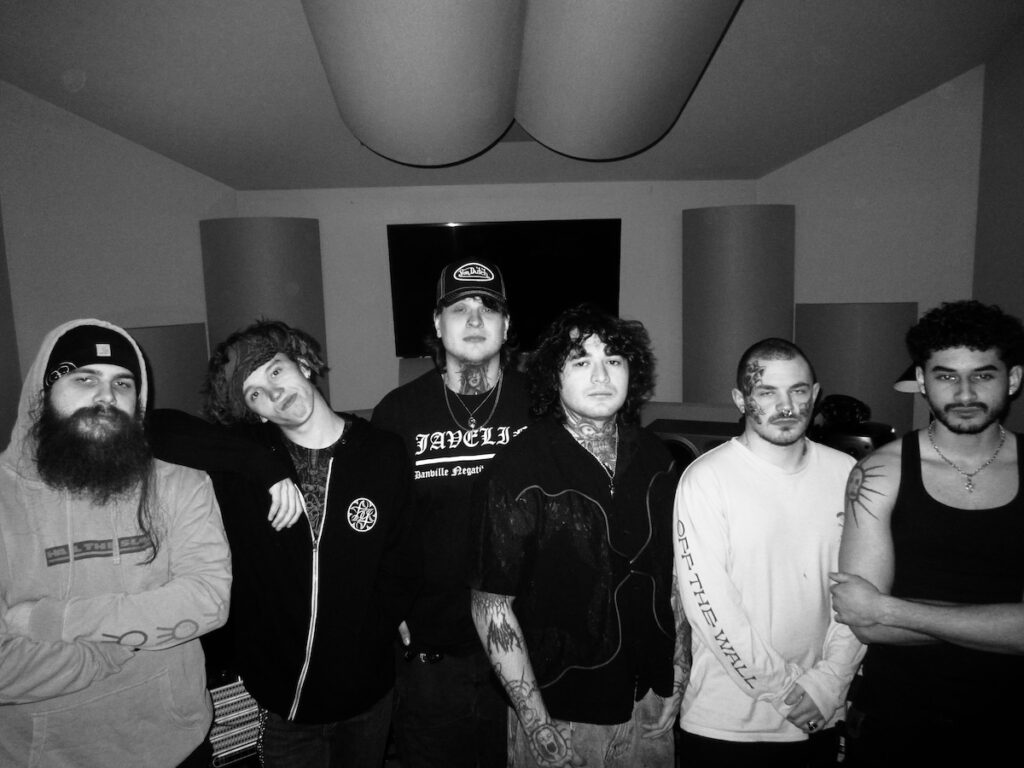
While the band first discovered the venue last September through an invitation from Garcia, they’ve stayed for the community it anchors.
“A lot of the crowd is actually pretty local,” Avila said, highlighting Cafe’s role as a genuine neighborhood fixture.
Dwyer attributes the venue’s draw to more than just the music, pointing to the food and the recent addition of a dedicated stage in the backroom as game changers.
The Struggle for DIY Longevity
That sense of meaning is rare in a city where underground venues are often fleeting.
The recent closure of The VCR after a nine-year run highlights this fragility, marking the end of a North Side DIY staple that balanced professional-grade recording with a welcoming, homegrown atmosphere.
Yarmo explained that Chicago’s DIY scene frequently suffers from a lack of stability.
“Over the years, it’ll be one that’s big, and then it’ll just kind of move on to the next one, and the next one,” Yarmo said.
He credits Cafe’s longevity to the professional synergy behind the scenes: “I know that Poncho [Garcia] and the business owners have a really solid relationship, and that’s a lot more than most people can say for other DIY venues.”
Beyond professional ties, the venue wins on practical accessibility.
Avila observed that while many DIY spaces are tucked away in hard-to-reach corners of the city, Casa Cafe offers an anchor to the South Side—a region where music venues of any kind, not just independent ones, are notably scarce.
“Casa is right there,” Avila said. “You can just take the Pink Line.”
Cultivating the Next Generation
This accessibility serves a vital purpose for the local culture.
“I think it’s huge now, because a lot of bands are coming from [the South Side], especially a lot of Chicano ones, and it’s showing that a lot of people like these smaller spaces where they can get their voices heard because not every band is just gonna pop up at Sub T for their first show or Cobra lounge,” Dwyer said.
At the center of this ecosystem is Garcia, whose influence is best measured by the trust the community places in his name. In an era where underground shows can be hit-or-miss, a “Poncho show” at Casa Cafe carries a gold-standard guarantee.
“He puts his name behind it…you gotta really have faith and trust in yourself to put your name behind it. But he decides to put himself forward,” Avila said.
Though Garcia’s roots are firmly planted in Chicano hardcore, his vision for shows at Casa Cafe has expanded to include a diverse array of genres. As a multifaceted artist himself, he understands the “grind” and intentionally creates a low barrier to entry for those following in his footsteps. From organizing $5 showcases for new and upcoming acts to fundraising, he works to ensure that the South Side is not just a place where music happens—it is a place where artists are nurtured.
Cafe operates as a multilayered hub where the roles of performer, patron, and organizer often blur. This synergy is personified by Keni Adekuie and Diego Ayala, a senior and junior at Columbia College Chicago and members of the straight-edge band ACHE.
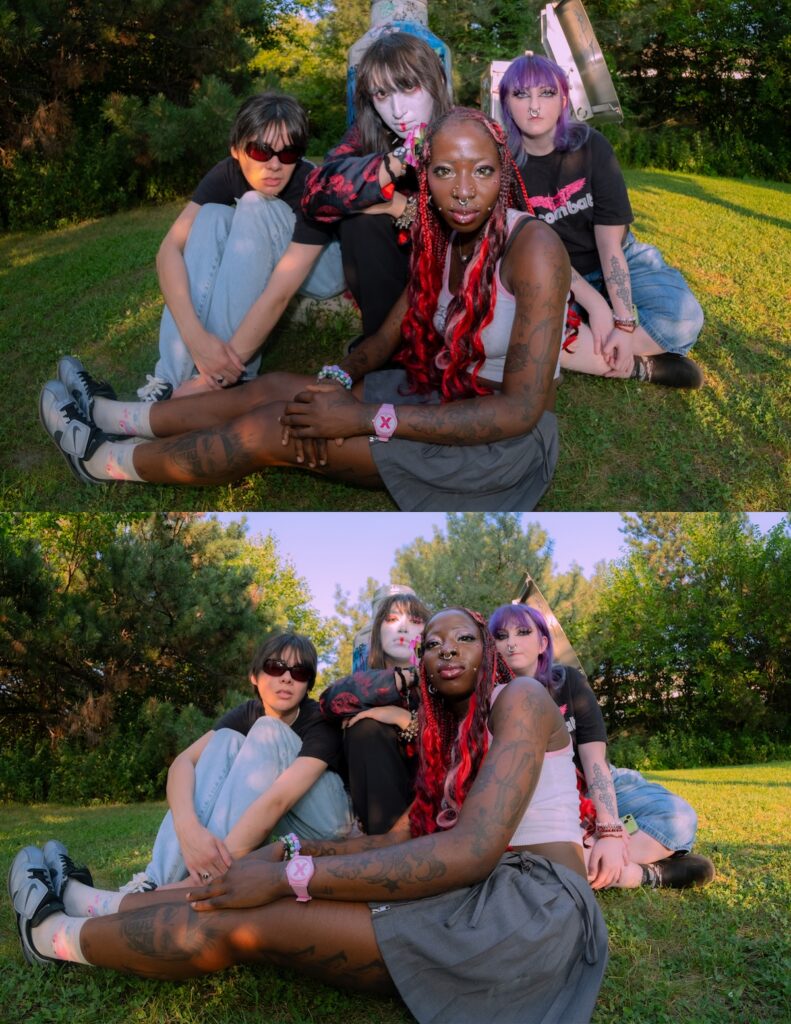
A regular fixture on Cafe’s stage, ACHE’s sound leans heavily into the “youth crew” aesthetic—a high-octane subgenre of punk defined by anthemic energy and socially conscious lyrics. Their music champions a drug-free, vegetarian lifestyle, but their message is rooted in something even more personal: unity.
For vocalist Adekuie, who moved from Nigeria to the United States in 2013, the current political climate underscores the need for such spaces.
“Yes, I have my citizenship; yes, I am American, but at the end of the day, I am not from here,” Adekuie said. “It’s terrifying, but also, now more than ever, we need to stand together as a community.”
Adekuie and Ayala first experienced Casa Cafe from the floor, attending their first show as patrons in 2024. Adekuie, who’s navigated the DIY circuit in Chicago since they were 17 years old, has seen firsthand how fleeting these spaces can be.
“They last maybe a year max; they get shut down and close,” Adekuie said.
While most underground venues struggle to survive, she highlighted Cafe as a rare, lasting staple that only improves with time.
ACHE debuted their demo at Casa last December, an experience Ayala describes as a “vibe” where the line between performers and crowd completely disappeared.
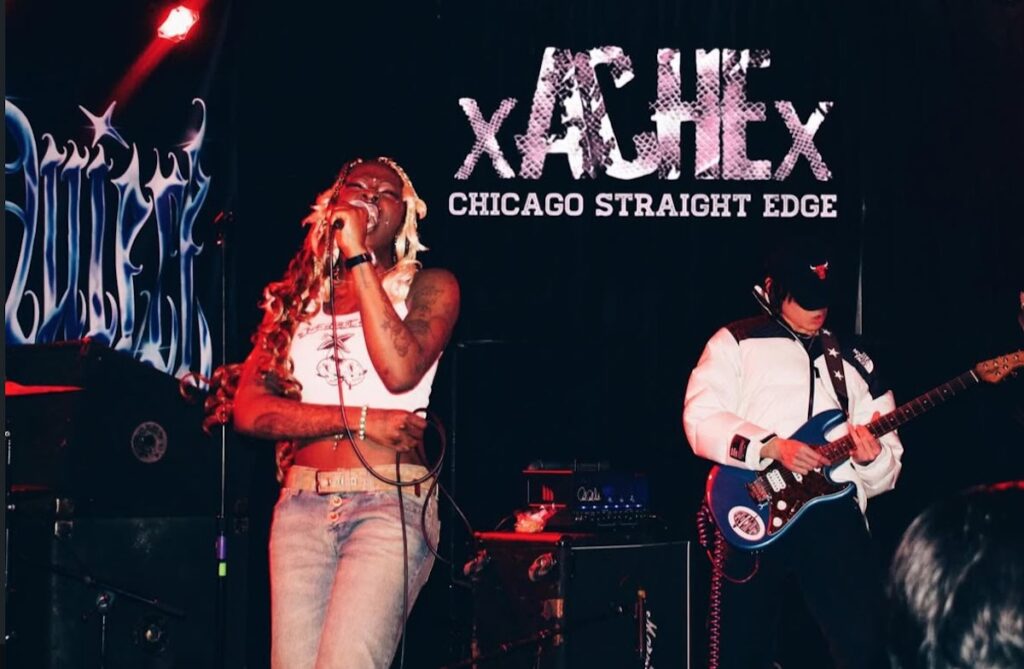
“There’s a stage, but you don’t feel separated,” Ayala said. “People actually want to talk; people grab tacos—it’s really welcoming compared to other DIY venues.”
Casa Cafe’s welcoming atmosphere translates into direct local impact through regularly curated benefit shows.
From “A Very Merry CONTEMPTmas,” a 2025 toy drive for Chicago children’s hospitals, to recent fundraisers supporting families impacted by ICE, the venue transforms the stage into a platform for social change.
Adekuie notes that this spirit of giving extends beyond organized drives.
“Casa still benefits even when there isn’t a specific drive going on,” she said. “People will buy a water bottle and tell them to keep the change. Sometimes I just put money in the tip jar.”
The Architect of the Scene
As fellow South Siders, the members of ACHE see Casa Cafe’s growth as a victory for a neighborhood often overlooked by the broader music scene.
“There are so many venues that get shut down way too fast [on the South Side], or we have to travel all the way North,” Ayala said.
He attributes much of Casa Cafe’s success to the tireless work of Poncho (Garcia).
“Genuinely, it’s understated how much he does for the community,” Ayala said, pointing to the unseen labor required to keep a DIY space thriving. “He wants to put on local bands; he wants to help the community.”
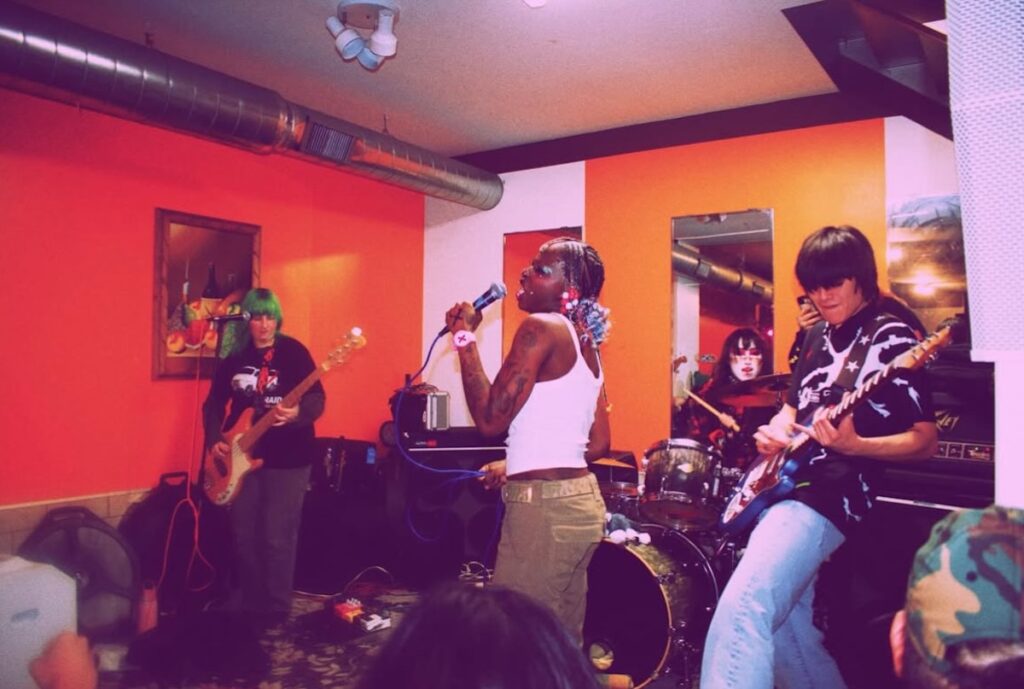
Credit: Kaelah Serrano | @stargvzingg
Whether it’s through high-energy performances, financial contributions to social causes, or simple acts of generosity at the counter, the café fosters an environment where everyone—from the person on the mic to the person behind the register—is invested in each other’s success.
With a fully booked summer at Casa Cafe, Garcia aims to evolve the venue’s identity by diversifying the lineup and attracting larger-scale talent.
“We got some exciting new bands coming. I would like to add bigger bands or different genres,” Garcia said.To stay updated with upcoming shows, you can visit Casa Cafe on Instagram.
Amaris Edwards is a Chicago-based freelance journalist and storyteller dedicated to covering the narratives of South and West Side communities. A former City Bureau Civic Reporting Fellow, her work spans staff reporting and multimedia production with outlets like The Columbia Chronicle, True Star, and Block Club Chicago. Amaris leverages her background in poetry and local activism to center South and Westside communities, mutual aid, and youth experiences.