

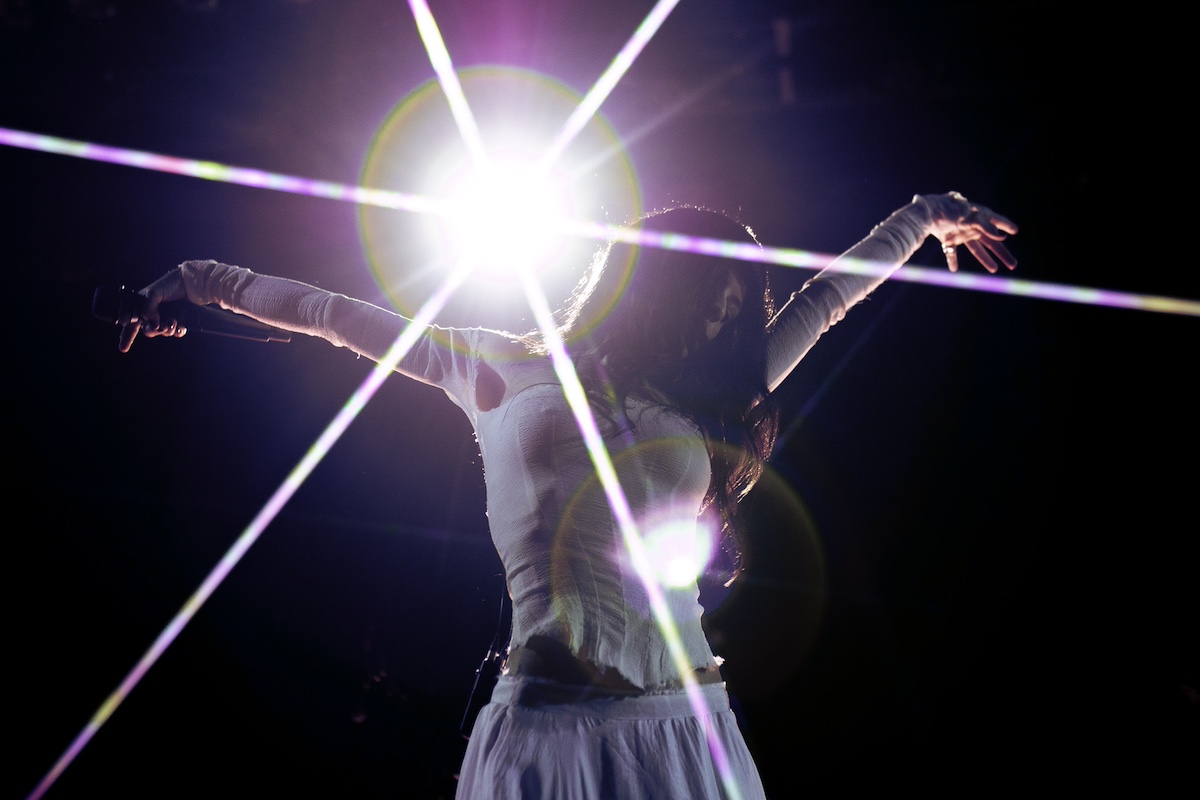
At exactly 11:11, making every wish in the room come true, Maria Zardoya emerged from the fog in a white flowy dress, singing in a sotto voice. Known as the vocalist of alternative pop band The María’s, Zardoya performed at Lollapalooza’s official aftershow on Thursday, July 30, as Not For Radio, her solo project. Hosted by Wrigleyville’s Metro, the stage was dressed with moss and droopy lily lamps, transporting us into the middle of Zardoya’s forest, the visual language motif present in her 2025 debut album Melt.
Zardoya’s performance was featured at one of the many official and unofficial Lolla aftershows that helped define the four-day festival, and create more intimate musical moments for festival attendees and Chicago residents alike.
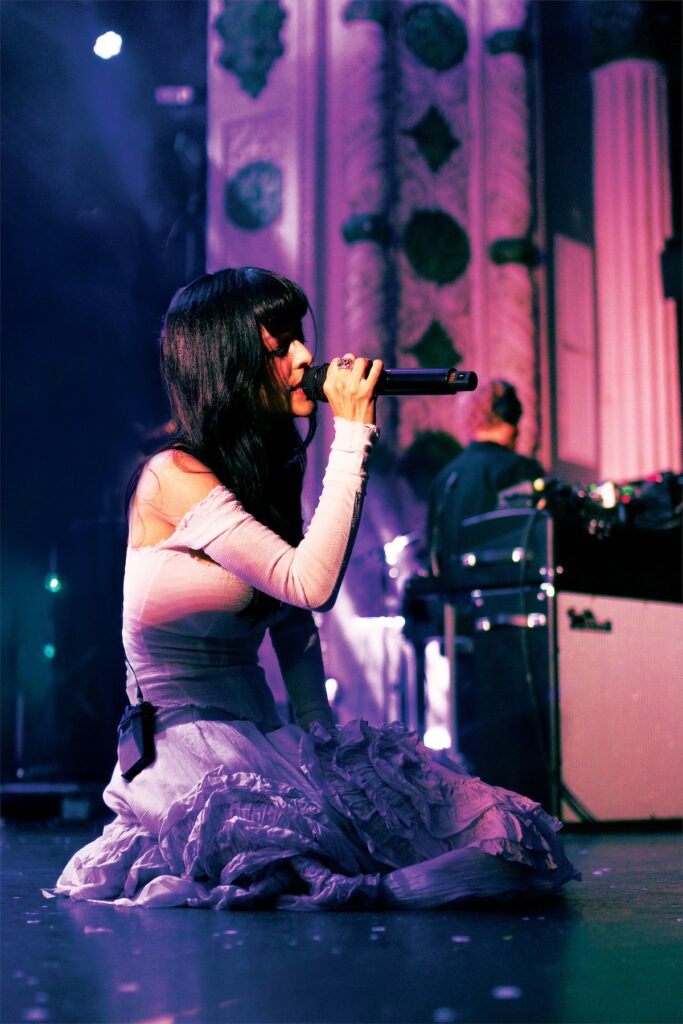
The sold-out show on Thursday offered a preview of Not For Radio before performing on the second day of Lolla at the Allianz Stage. The third-largest stage of the festival can easily accommodate 20,000 people—providing a contrast to the show’s intimate allure. On the Metro stage, Zardoya was joined by a cellist and pianist. Couples and achy hearts swayed to “Back To You,” its hauntingly gorgeous piano intro sending chills down our spines.
On the same night, in the neighboring neighborhood of Lake View, Pilsen-based artist Rudy De Anda opened the night at Schubas with his bolero, “Los Canarios,” a love ballad that De Anda said captures the soulful elements of his sound and felt like a fitting prelude to 54Ultra’s headlining set.
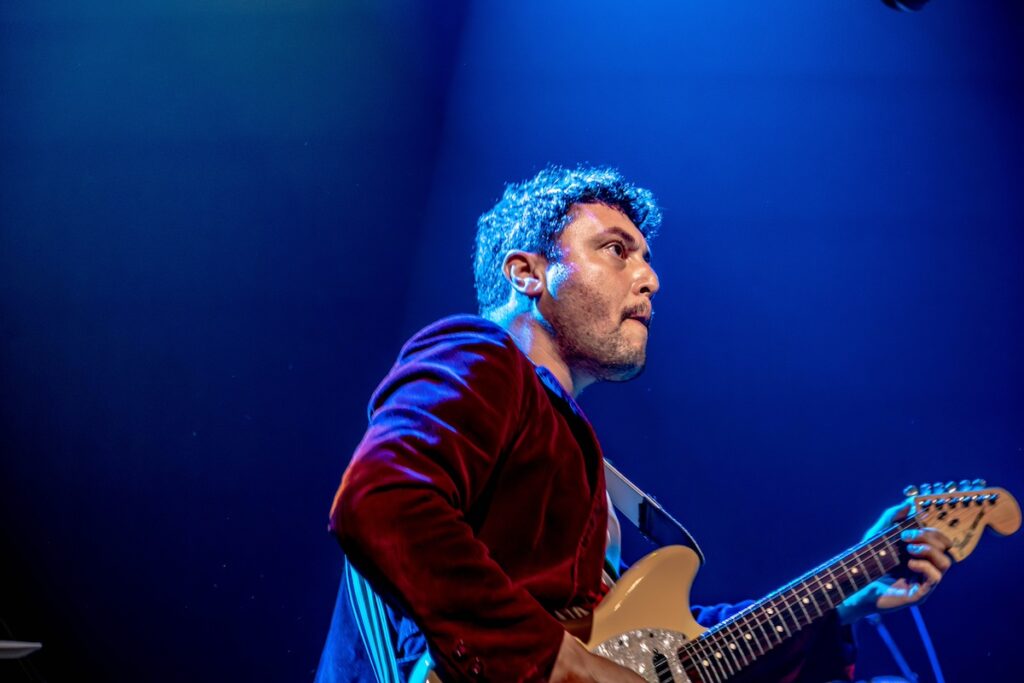
“We have a mutual drummer—Chris Sanchez shout-out because it was his birthday that night—so it just truly was like a love fest,” De Anda said. “The crowd was having fun. Everything about it was just 10 out of 10.”
De Anda said those are his favorite kind of performances, the events where artists on the bill flow seamlessly into each other. It’s not the first time De Anda and the New Jersey artist have shared a stage; they ran it back from their January show at Lincoln Hall.
For De Anda, the Lolla aftershow marked his first performance back from a Central American tour with post-punk outfit San Charbel, where he played the guitar. He took the opportunity to announce a new project.
“I started a new band, and you might hear some new music soon,” De Anda said with a grin. “We’re called Rudo y sus Cursis, and it’s just kind of like an alter ego, you could say. It’s still me, still us. But what you’re gonna hear is a little bit different than that soul sound, R&B sound.”
De Anda is leaning further into cumbia with his new band concept, building on an influence that has already surfaced throughout his music. Tracks like “Helado,” from his 2020 album Tender Epoch, carry notes of psychedelic cumbia, while “Miel” has become a cumbia rendition in his live sets. He brought that version to the Lolla aftershow. De Anda will be at Thalia Hall at the end of this month for the Free For All supporting Saturday headliner Trish Toledo, a soulies singer from California. The Long Beach in him says to “bring your lowriders.”
Thalia Hall also hosted several Lolla aftershows including South Sider Ric Wilson’s opening set for alternative R&B artist Amber Mark. Wilson, an official Lolla artist, was added to the festival lineup a week before and scheduled to perform on the Bud Light main stage Saturday. Unfortunately, due to the rain and festival delays, his set was canceled.
Another South Side venue that held aftershows was the Ramova in Bridgeport. Legendary rapper Freddie Gibs had a near sold-out show at the Ramova, delivering a stellar performance.
“Freddie Gibbs, he is a hip-hop legend from Gary, Indiana. So having him on the South Side was a great experience because we could bring a lot of family and friends, and also fans from the area that grew up listening to him to the theater,” said Luke Manning, Ramova’s talent booker.
In collaboration with C3 Presents, which produces Lollapalooza, Ramova hosted three aftershows, including sets from two EDM acts, Worship and Notion. Both performed on the festival’s emblematic Perry stage. Manning said hosting aftershows gave fans an opportunity to experience the South Side, while supporting an independent venue.
“Being an independent venue, we get to interact with the community and hear the community’s thoughts, and it’s special because it’s bringing arts and culture to the neighborhood,” Manning said. “You can find any of our owners and management on the floor [at] pretty much every show.”
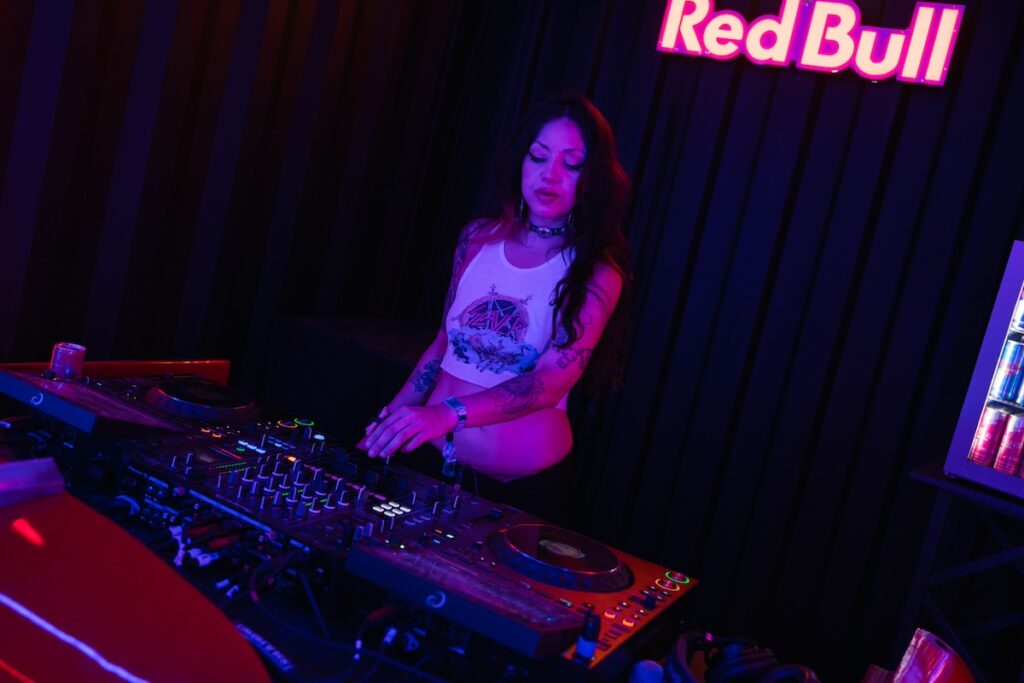
Inside the festival, activations from popular brands like Patron, Toyota and Red Bull featured local DJs. Inside the Red Bull activation, which resembled a car wash, Flores Negras had to turn down the bass.
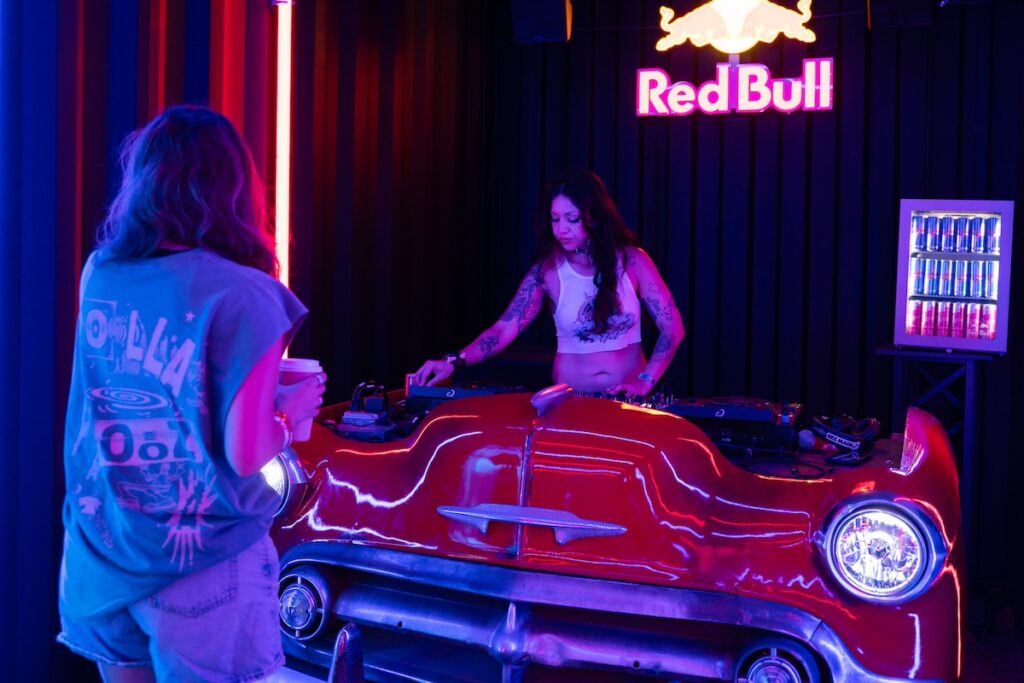
“The bass was so heavy that the lights fell off,” Flores Negras recalled, noting that the volume was not even turned up all the way.
For Flores Negras, activations can be a powerful way to put the people already doing the work in Chicago’s music industry in the spotlight. She pointed to her friend DJ Gonzo, a South Sider who has thrown several dance parties of his own, and coordinated the Jack Daniel’s pop-up at Lolla throughout the entire festival.
“Those activation stages are super cool because they’re visually really awesome,” Flores said. “Check out an activation stage because it’s going to be somebody that is going to be an up-and-coming DJ—a local DJ.”
On the last day of the festival, the underground queen blessed the Red Bull decks, bringing the same energy she pours into Chicago’s music scene through her raves and goth cumbia parties. The cozy setting allowed her to explore a softer side of her sound, saving her harder edge for later this month, when she’ll open the Expansions stage at ARC Music Festival on its second day. She’s also saving it for her own afterparty, Cruel Summer, which will follow the festival and be hosted by her production company, Mictlan. For now, she’s taking in her well-deserved seat at the table.
“It’s a dream,” Flores Negras said. “I’ve been going to concerts and stuff since I was five, and my dad and my tias, they would take me out to fests and concerts. So it’s just something that I’ve always dreamed of. It’s pretty wild, honestly, to be able to reach those things and to be a part of those things.”
Jocelyn Martinez-Rosales is a Mexican American independent journalist from Belmont Cragin covering music and culture. She is also a senior editor at the Weekly.