

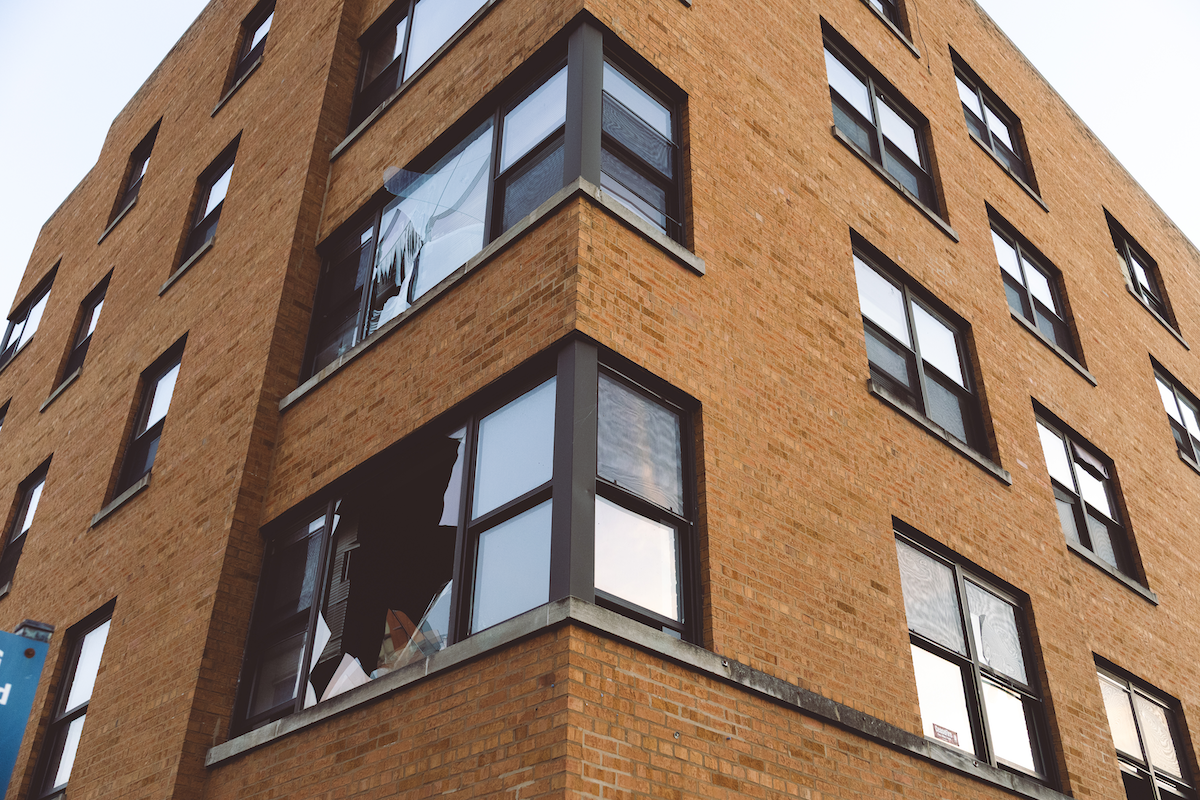
On September 30, 2025, federal immigration agents conducted a midnight raid of an apartment complex at 7500 S. South Shore Drive, descending from a helicopter, climbing over fences, and knocking down doors.
They rounded up dozens of people, including José Miguel Jiménez, who would spend the next four months in federal custody before being released to Mexico.
More than seven months after that fateful raid, which set the tone for much of the Trump Administration’s violent “Midway Blitz” through Chicagoland, Miguel Jiménez is seeking what justice he can. He’s one of 17 victims of the South Shore raid—including six minors and two U.S. citizens—who are now pursuing against the Department of Homeland Security (DHS). They are joined by an additional South Shore resident arrested by federal agents a week before the raid, with his special needs son; his apartment was allegedly “completely destroyed” in the aftermath.
Jonathan Manes, an attorney with the MacArthur Justice Center who is representing the 18 claimants, said each of their complaints seeks $5 million in damages. Even so, Miguel Jiménez said he doesn’t expect much from the federal government. Speaking from Guanajuato, Mexico, where he now resides, he said he doesn’t want much from the feds either. He wants nobody else to go through what he went through.
“I want people to see this is not about national security,” Miguel Jiménez told South Side Weekly. “It’s a racial thing.”
Before and During the Raid
Miguel Jiménez’s claim states that about a month prior to the raid, individuals “who appeared to be tradespeople” went through the South Shore complex marking certain doors with an “X.” The marked doors, the complaint alleges, all demarcated units occupied by Latine residents.
“Mr. Jiménez later learned from other residents that the supposed tradespeople had identified themselves as agents of the federal government,” his complaint states.
Miguel Jiménez’s complaint further states that an agent with a Mexican accent told him “we don’t want you here in this country,” and that agents broke the City of Chicago ID card he provided them.
His and the other raid victims’ complaints were filed under the Federal Tort Claims Act (FTCA) by the MacArthur Justice Center, the Mexican American Legal Defense and Educational Fund (MALDEF), the University of Chicago Immigrants’ Rights Clinic (IRC), and the National Immigrant Justice Center (NIJC). Only five of the filings list their claimants’ full names; in the rest, names have been redacted or, in the case of the minor claimants, referred to with initials.
Manes, with the MacArthur Justice Center, said some clients’ names were redacted because they still live in the United States and fear retaliation. Pablo Moreno, an attorney with MALDEF, clarified that about half of the claimants remain in the U.S.
“With this administration, the cruelty is often the point,” Manes said.
The 18 filings—one of which was filed on behalf of an infant U.S. citizen—are replete with allegations of cruelty, besides the racism Miguel Jiménez said he experienced during the raid and while in custody. The complaint of one person whose name was redacted states that, before agents with long guns entered the claimant’s bedroom during the raid, a large black dog came in, biting his leg, hip, and left hand. When agents began moving him, the complaint states, he was still bleeding “profusely.”
The complaint for “Y.P.,” sixteen years old at the time of the raid, describes an agent leading him into a bedroom in the apartment complex and closing the door.
“While inside the bedroom, [redacted] and Y.P could hear horrible screams and pounding sounds coming from the living room,” the complaint states. “[Redacted] and Y.P. suspected that the agents were still beating some of the detainees on the other side of the door and causing them terrible pain.”
A complaint for another claimant, Norelly Eugenia Mejías Caceres, describes agents “placing a hot metal object on her chest while she was lying on the floor” after the agents had forcibly removed her, her partner, and her then-six year old son from their apartment. Mejías Caceres’ complaint says she was separated from her son and partner—also claimants—and that agents did not offer to take her to see her son until after she complied with their efforts to take her photo with a smartphone. Federal immigration agents have used the facial recognition app Mobile Fortify to identify people while conducting their operations.
Poor Conditions in Detention
The night of the raid was only the start of the ordeal for many of the claimants, per their complaints. Some report spending days, weeks, or even months in detention, being moved from Chicago to facilities in Indiana, Kentucky, Texas, and Louisiana. The complaints describe poor conditions while in detention, from low quality food to unsanitary bathrooms to abusive guards.
“We’ve been treated less than human. Everyone in the jail, the officers, they look at you like you’re nothing,” Miguel Jiménez said.
Several complaints describe raid victims being moved through the Immigration and Customs Enforcement (ICE) facility in Broadview, Illinois. The Broadview facility became the subject of a federal class action alleging inhumane conditions before District Judge Robert Gettleman issued a court order mandating improvements. Two other complaints describe claimants spending three weeks at the Dilley Immigration Processing Center in Texas, where additional allegations of poor conditions and mistreatment, particularly of children, abound. Manes said the detentions amounted to a tactic, to pressure detainees to agree to deportation.
“Sometimes it’s very explicit. ‘If you don’t want to be detained anymore, sign these papers,’” he said.
During court hearings over conditions at the Broadview ICE facility last November, former immigration detainees also described being pressured into signing forms for deportation. DHS has also publicly encouraged immigrants to self-deport with offers of money exit bonuses and the forgiveness of unpaid immigration-related fines.
“Illegal aliens who register for voluntary self-departure through the CBP Home Mobile App will receive cost-free travel, a $2,600 exit bonus, and forgiveness of any failure to depart fines. Illegal aliens requesting assistance will have a timely departure arranged for them,” the department’s website states.
Manes, however, said he was unaware of anyone who has actually received money for voluntary departure from the U.S.
“Our clients did not,” he said.
Lasting Effects, Including Trauma and Loss of Property
Those claimants who remained in the United States also faced lingering impacts from the raid. The front entrance of the South Shore building was left open to the street in the immediate aftermath of the raid; the complaints for one family of claimants states that after being released from detention, they returned to the building to find their home “ransacked.”
“The family lost their clothing, television, the children’s tablets, and all their belongings that remained in the apartment,” the complaint for an 11-year-old claimant going by J.S.D.L states.
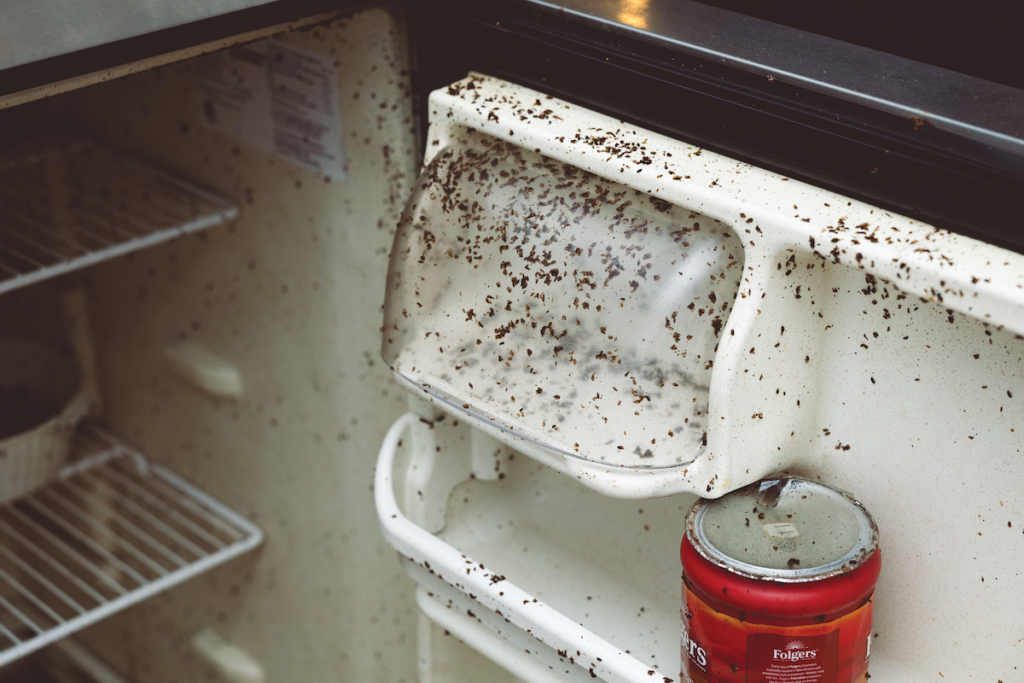
The inside of the 7500 South Shore Drive apartment complex in the aftermath of the September 2025 raid of the building. Credit: Caeli Kean 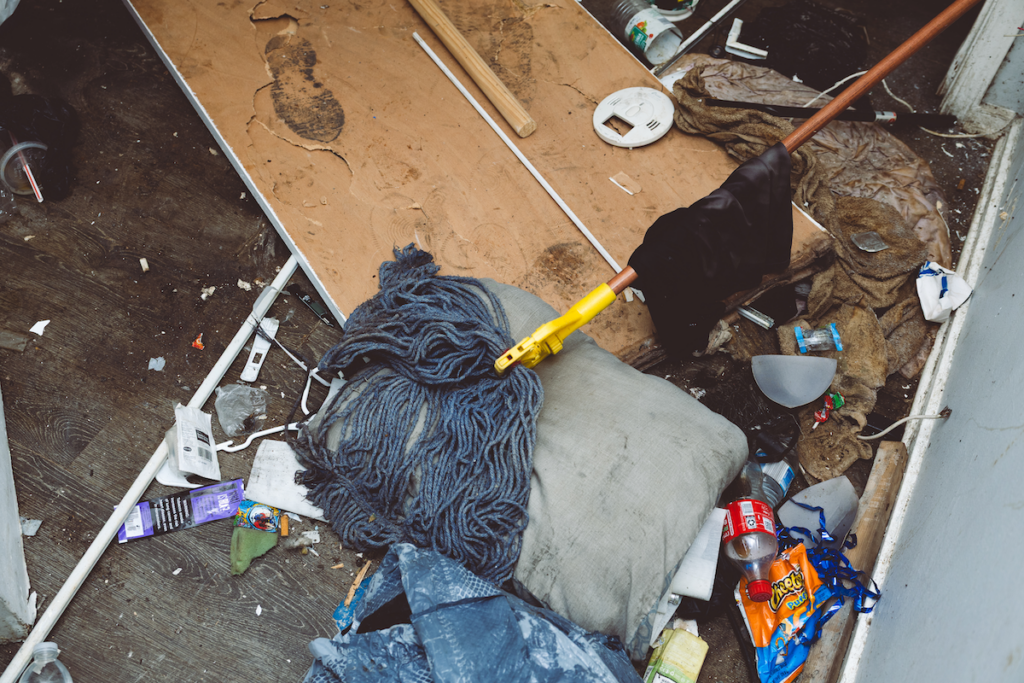
The inside of the 7500 South Shore Drive apartment complex in the aftermath of the September 2025 raid of the building. Credit: Caeli Kean 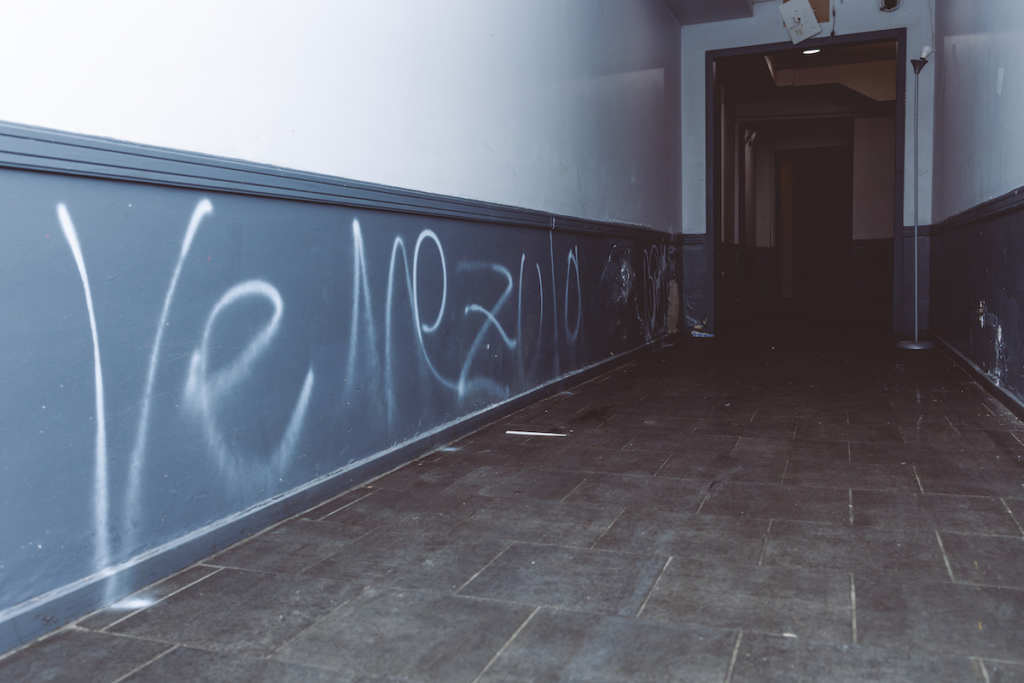
The inside of the 7500 South Shore Drive apartment complex in the aftermath of the September 2025 raid of the building. Credit: Caeli Kean
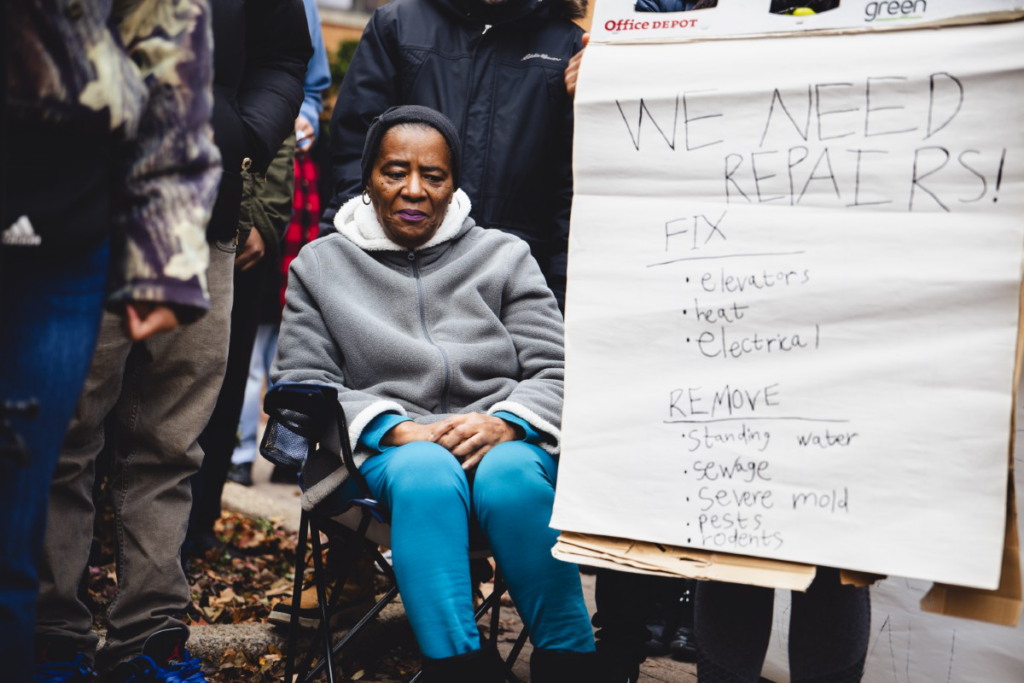
Conditions at the South Shore property had been poor even before the raid, and legal authorities in Cook County decided it was no longer safely habitable in the aftermath. Though the remaining tenants announced in November they were forming a tenants’ union, they received a court order to vacate the building in December. In a December court filing, Cook County Judge Debra A. Seaton cited “the extreme nature of the deplorable conditions of the property.”
The Illinois Department of Human Rights has since filed a discrimination charge against the owner and managers of the South Shore property, alleging that they colluded with federal authorities to instigate the raid.
“Shore building management sought to intimidate and coerce the building’s Black and Hispanic tenants into leaving their apartment units, based on stereotypes about Venezuelan immigrants, effectively, constructively evicting them,” the charge states.
Former DHS Assistant Secretary Tricia McLoughlin posted on X on October 6, 2025 that during the raid, “law enforcement arrested multiple Tren de Aragua members and domestic terrorists,” referencing the Venezuelan gang that the Trump administration has repeatedly railed against.
However, Manes and Moreno both said McLoughlin’s assertions were false.
“No one arrested in the raid that day has been charged with anything related to Tren de Agua,” he said.
Miguel Jiménez also corroborated that in the months prior to the raid, he had heard about the South Shore property management trying to push people out.
“The building was very deteriorated, so they wanted to kick everyone out,” he said.
Miguel Jiménez now says he has no intention of returning to the United States anytime soon, though he fears for family members still present in the country. He told South Side Weekly he now operates a coffee shop in Mexico, and despite receiving some financial support from family and friends, he was “starting from zero again.”
Seeking Redress and Repair
Filing administrative tort complaints under the Federal Tort Claims Act is the first step to securing raid victims compensation for the ordeal endured by Miguel Jiménez and the other South Shore claimants. Federal law states that further legal action against a federal agency can only be pursued if the agency denies the claims or fails to respond to them within six months. Attorneys for Marimar Martinez, a U.S. citizen and Chicago resident whom Border Patrol agent Charles Exum shot in October 2025, announced this February they were also filing claims under the Federal Tort Claims Act.
Moreno said he was hopeful DHS would respond, but he also acknowledged the possibility that the former South Shore residents may need to take their claims to federal court. Manes said he was not “holding [his] breath” that the government would respond in six months’ time.
In the immediate aftermath of the raid that saw Miguel Jiménez removed from Chicago, former Border Patrol commander Greg Bovino deemed himself and his fellow immigration enforcement agents “the good guy gang.”
What Miguel Jiménez thought about those comments by Bovino, he said he couldn’t mention in an interview.
Dave Byrnes is a Chicago-born independent journalist covering the Trump administration’s anti-immigration campaign. He currently lives in Lincoln Square but is a lifelong White Sox fan.
This is a powerful piece. Stories of resilience deserve more attention.