
This story was originally published by Truthout and Waging Nonviolence.
Honest, paywall-free news is rare. Please support our boldly independent journalism with a donation of any size.
The broad strokes of the midterms are clear: A massive repudiation of MAGA’s fascist wave has ended the Donald Trump 2.0 era of congressional complicity with his authoritarian takeover. Trump’s lame duck presidency now begins.
This lopsided electoral rejection is historically rare: Flipping control of both the House and Senate in a midterm has only occurred three times since World War II (in 1946, 1994, and 2006). The breakthroughs are astounding: the first Native American governor and senator, five Black governors, the first majority of Democratic governors in 16 years, and critical down-ballot wins like the first Democrat to win as Texan oil regulator since 1990 and the first openly transgender state legislator in Alabama.
Authoritarians do not do well when trapped — and with a famously norm-busting president, anything is possible. But, critically, election deniers like Darline Graham and Greg Abbott are conceding their races. Trump is already saying he’s “absolutely willing” to accept the results and told CBS, “Congratulations to the Democrats, and I look forward to working with you for the good of our country.”
So what do we do now?
1. It’s OK to Exhale
These midterms have left me, like many, with abundant free-floating anxieties. The “what if” scenarios have been abundant—and while some of the most extreme versions did not happen, the federal government was weaponized against the election system like never before.
Because the times have been so rough, it can be hard to exhale and accept a win, especially since elections are not material changes—they are promissory notes that the future may be different. Until January 3, we live under the same dangerous authoritarian government, even if the atmosphere has changed.
Before I advocate for you to breathe, let’s affirm all the many hard reasons to not exhale. The wins were not universal, as some big losses cut deep. There’s a reality that all of this is ephemeral if Democrats cannot govern a policy of change—if we only manage an economic status quo it will disillusion and likely result in yet another whiplash election in the other direction. And it’s hard to breathe in a dizzying moment.
The country looked at fascism and fully rejected it.
Further, the attacks on elections were treasonous. I won’t list the complete litany of federal assaults—but we have a Department of Justice captured by authoritarian forces using its power nakedly for partisan goals. The far right openly prepared sham legal theories to refuse certification of Democratic representatives. While we did not get systematic federal law enforcement terror at polls, we saw National Guard throughout Washington, D.C. We still have too many election officials committed to the Big Lie. And ongoing structural impediments to a fair election are consequential: In Mississippi, the Senate margin remains tiny while any win may be marred by equipment trouble, poll changes, and voters unexpectedly removed by data purges from the voting rolls.
Notably, the election maps themselves have been gerrymandered by racists to ensure power—though their greed led to multiple losses in these redistricted seats. (Groups like Black Voters Matter deserve a huge shout-out for fighting in the South and in races Democrats had abandoned.)
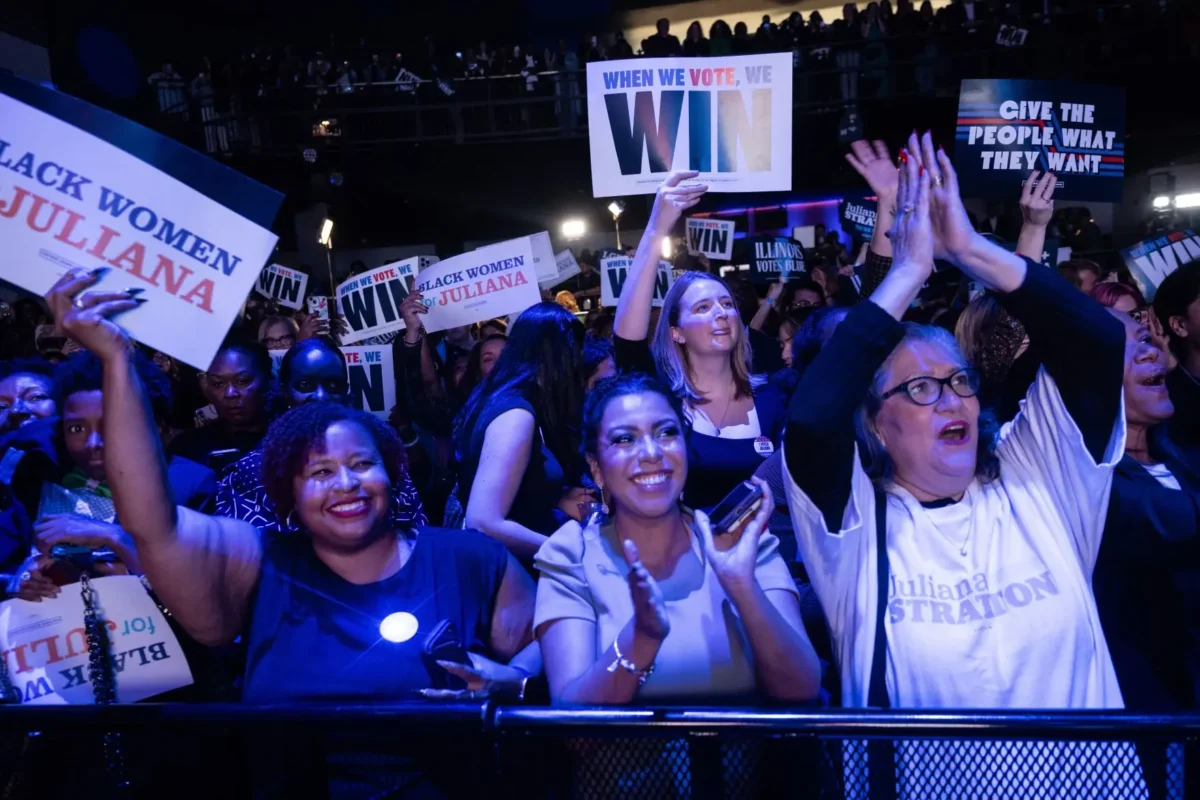
Despite all that, we managed a pro-democracy win that was too big to rig. The country delivered a shellacking to MAGA politics—an encouraging sign for all of us who are hoping for a better future. Ultimately, the election proceeded with voters refusing to be intimidated.
Buddhists remind me we can take a breath anytime. But this moment seems as good a moment as any, especially when we remind ourselves that exhaling isn’t signaling that things are over. Exhales are how our body gets in tune with this moment and releases the latest tension. Bracing doesn’t make us wiser, just tenser.
So really, take five breaths right now. As you breathe, read in a poem by Jarod Anderson:
You can be still while the world is whirling.
You can be silent while your heart is thundering.
You can be alone while your memory is teeming.
You can live forever in the span of a moment.
You can grow kindness in the soil of hatred.
You can decide purpose. You can decide victory.
2. Celebrate Our Unsung Heroes
As we breathe in—exhale and inhale—it’s worthwhile to remember the overwhelming number of people standing up to authoritarianism right now.
Media have focused on tariffs, affordability, and the Iran war as the defining issues of the midterms. But, as usual, they’ve skipped over the resistance that has taken root in this country. People lost their livelihoods exposing this regime’s corruption and risked their lives resisting ICE.
We got to this moment thanks to many unsung people.
Here we could begin listing thousands upon thousands of names. The list would include top election officials in all 50 states who refused to be cowed by the DOJ’s threats to arrest them for doing their jobs. (Some of them are quite hilarious, like Oregon’s Secretary of State Tobias Read, who mocked the DOJ hacks who misspelled his name: “My name is spelled R-E-A-D, as in ‘read the Constitution.’”) But those names extend deep through the electoral ecosystem, with many officials running extreme training scenarios steeling themselves against federal overreach, like Boulder’s County Clerk and Recorder Molly Fitzpatrick, and others coming up with creative solutions, like Georgia’s Irwin County Election Supervisor Ethan Compton who added “panic buttons” for poll workers to get immediate backup support.
Recognizing how election officials remain under attack, Protect Our Election set up a way to thank them online, and the National Conference on Citizenship created Election Hero Day as a “national celebration recognizing the tremendous contributions” of election officials.
But, of course, credit extends beyond officials. It goes to people like Keith Odom, a 62-year-old forklift driver, who joined over 5,000 at the “All Roads Lead to the South” rally in May, pushing back against the Supreme Court’s Callais decision undoing civil rights legislation. Credit is due to organizers like Chanae Jackson of Florida for All and Bill Hogseth of Grassroots Organizing Western Wisconsin, and Cassandra Welchlin of Mississippi Black Women’s Roundtable, which collectively trained thousands of election defenders.
All that worked mattered greatly to avoid the worst scenarios.
When the FBI raided the Ohio Organizing Collaborative—a get-out-the-vote community group in Ohio working primarily with people of color—it could have broken. Instead its director, Prentiss Haney, struck a defiant public stance, naming the raid for what it was: “a political act to try and intimidate people from voting.” The Ohio Organizing Collaborative kept going—and was backed by allies across the nation under the banner of “Hands Off Ohio.”
Despite all the threats, voters voted. And that’s thanks to Tobias, Ethan, Molly, Keith, Chanae, Bill, Cassandra, Prentiss, and the tens of thousands who fought to keep the election fairer despite the authoritarian attempts to subvert them.
Civil resistance researcher Hardy Merriman developed a helpful framework for understanding the full election cycle in authoritarian times. It’s four steps: Fight, Win, Prove, Enforce. Fight for every legal voter to vote. Win pro-democracy electoral victories. Prove what actually happened and expose manipulation. And finally: Enforce the will of the voters—and stop any attempt to overturn it.
We don’t get to where we are right now without successfully moving through these early phases—Fight and Win. Take a moment to consider how you’ll appreciate those unheralded heroes—because you can be guaranteed the punditry class largely won’t do them justice.
3. We Are Entering the “Prove” Phase: Count Every Valid Vote
The election was decisive, but it’s not over. The current phase of battle includes wrangling over ballot counts—and making sure those counts are understood as significant despite all the shenanigans.
Anyone in or near a closely contested race can help in this phase by volunteering to cure ballots—the process of helping fix ballots with minor imperfections like a missing signature. Rules vary widely, so contact a local election or campaign office or find efforts at We Are Ground Control.
As of Wednesday afternoon, Mississippi is still one of the hottest of these races, with Scott Colom on track to win narrowly if a clean election process unfolds, a challenge given the state’s messy, rickety election verification process. The Colom campaign feels confident that they will win.
Our job remains to be grounded in facts. Turn to trusted, verified reporting, like Votebeat or Brennan Center for Justice. Pause before sharing any election information and try to verify its authenticity. And we must remind ourselves that this win was not inevitable, it was despite—despite DOJ lawsuits, despite ICE threats, despite gerrymandering, despite consistent attacks on voters, and despite the many ways the federal government tried to keep voters from voting.
While Trump, Vance, and MAGA will make up lies, what happens next will depend in part on what their potential accomplices will do. Some groups like May Day Strong are wisely pressuring corporate targets now, knowing that corporate accomplices make disenfranchisement much easier. They’ve notched some important wins: For example, the entire city of Culver City, California, approved the Business for Democracy Pledge, pledging public business opposition to any post-election shenanigans.
Which reminds us that proving the results doesn’t just happen in courtrooms and elections—it happens in the streets, too.
4. Don’t Be Scared of Taking to the Streets
A key lesson here comes from the 2000 presidential contest between George W. Bush and Al Gore. Folks who are old enough will remember that it came down to Florida, which was decided by a margin of a few hundred votes out of the 6 million that were cast. As the recount began, paid Republican operatives screamed and pounded on doors of the Miami-Dade counting office, intimidating staffers and causing a halt to the recount. A history-changing moment unfolded: Democratic operatives told activists to not go into the streets and protest—trust the courts, they said. The courts sided with Bush, cleared the way to never count the ballots, and the legal coup was cemented. (Three members of today’s Supreme Court were part of that Republican effort to halt the recount.)
The No Kings movement just proved the value of going to the streets. Its organizers experimented with gathering folks for Vote Early Day, to help surge turnout. Indications are this was very critical for the win. A TargetSmart analysis compared places with and without the No Kings Early Day mobilizations. The results were remarkable: a 19 percent increase in turnout for early voting occurred where the mobilizations were planned.
So coupling street heat with elections boosted energy and turnout.
The pattern affirms what we learned from Serbia and Brazil—in both countries, an unprecedented number of people voted and overcame huge challenges with a drumbeat of protests leading up to the elections. Serbia experienced a record 70 percent turnout and Brazil’s Lula won the largest number of votes in Brazilian history.
A recent detailed review concludes that anti-ICE and pro-immigrant actions have reached historic levels, even in Trump-won counties. It cites research linking bases of support activated by protests and how they translate into previous midterm outcomes. The authors ask the question: “Will historic protests against ICE shape the midterms?” It appears they did.
So while our election infrastructure appears to be holding, our readiness to take to the streets only strengthens our hand. Local Indivisible and 50501 chapters have plans to hold upbeat “count every vote” rallies (you can find ones in your area on Mobilize). This is wise because it creates a narrative counterweight — especially as MAGA is expected to fill the narrative field with garbage.
Famously, in 2024, Philadelphia responded to Trump’s outrageous threats against the people counting the vote by holding an upbeat dance party outside of the Philadelphia Convention Center—a visible demonstration of countering ugly fear and threats with joy and life.
5. Get Ready If We Need to “Enforce”
Trump and Vance have developed a narrative about fraud that they could use to discredit selective election results. We know the DOJ is captured completely by Trump and subject to his whims.
We are not out of the authoritarian woods, and the big-tent attitude that got us here is still required, even as tensions are going to arise over strategy and direction.
We know Trump is too impulsive not to do something. Reading exactly what he’ll do and where is an exercise in reading tea leaves, but it appears more likely he’s following the path of victimhood, attacking Republicans for their lack of loyalty. Alongside telling the New York Times that he “look[s] forward to working with” Democrats, Trump has posted furiously on Truth Social. He has been attacking Greg Abbott for losing because he was a Republican In Name Only, or RINO, writing “FoxNews bears responsibility for these losses,” and asserting that the Republican Party as a whole would have won if he were on the ballot.
Alaska remains another state to watch, given MAGA’s claims that Alaska was stolen. For now the courts have rejected the DOJ’s Alaska gambit to force the state to refuse certification if the Republican candidate for Senate loses. And the drumbeat to stop Alaska’s certification has been dulled underneath the electoral avalanche that has descended on the Republican Party.
Losing appears to be increasing Republican in-fighting. That’s understandable, since Trump is clearly no longer the mighty savior he once appeared to them to be. They, too, need to adjust to the new reality of the end of Trump 2.0 and discover what life under lame-duck Trump is like.
Part of the Enforce phase also means getting the message of the elections right. The most dominant message needs to be that the country looked at fascism and fully rejected it. This door must remain closed—and now we turn our attention to debating how we solve people’s pocketbook issues such that we don’t have a return to fascist populism.
Here are three actions to stay prepared:
- Each person in a state with yet-to-be-called races or candidates who have not conceded should find if there are local ways to help with ballot curing and tracking their own state’s certification dates. If you’re not in one of those states, get ready to act in solidarity with other states.
- Circle January 3 as a key date to anchor our planning—that’s when Congress is seated and our “end date” of the election cycle.
- Get your list of people that you would want to go into the streets with. There likely are local groups you can connect with.
So if you haven’t already: Write down the names of three or four people you would be willing to go into the streets with if something happens. Talk now about how you will contact one another, how you will make decisions, and what kinds of actions you are prepared to take. Agree on basic commitments: stay nonviolent, check information before acting on it, look after one another, and do not let a rumor become the plan.
To help demonstrators get plugged into a national response, No Kings has set up an election pledge for people to join a mass nonviolent action in rapid response to election disruption and subversion if needed. Mass calls are already prepped for nationwide updates and mobilizations: On Nov. 4 there is a No Kings Mass Call and on Nov. 5 there will be a Working Families Party Mass Call. If you’re looking for more guidance on forming election protection groups, Hold the Line and Strike Ready offer trainings and resources.
6. And Then There’s the “Sustain” Phase
Activist Nadine Bloch has helpfully added a fifth phase to Hardy’s model: Since the elections are not an endpoint, we must Sustain—which is about sustaining the energy and movement for the long-haul pressure campaigns that come after. We still have a whole body of work in front of us.
One tempting mistake is to waste the bulk of our ammunition against each other. We are not out of the authoritarian woods, and the big-tent attitude that got us here is still required, even as tensions are going to fray over strategy and direction.
Still, some reckonings are overdue. In Florida, mainstream Democrats were shocked by Angie Nixon’s primary win and canceled their planned unity rally. Her loss in the general election stings, especially because her organizing juggernaut defied centrist expectations and lifted turnout and down-ballot wins across the state. Running progressives did not, as some folks worry, result in devastating losses — quite the opposite.
Still it’s unhelpful for anyone to get cocky and claim the American public has embraced their entire platform. This was less a blue wave and more a red repudiation.
This period of lame-duck Trump presidency remains precarious as progressives, centrists, populists, and anyone at all still have the chance to prove they have ideas that help people’s pocketbooks. Regular folks still want practical problem-solving but know the system needs more than tweaks to get there.
With Democrats locked out of the executive branch, some policies remain out of reach. We have to communicate that often—so people do not lose sight of the need for a 2028 win and get needlessly discouraged that this moment does not result in faster change.
That means constantly telling a compelling story about the structural problems we face so that the solutions become more evident, while also showing that government can work. Think of Mamdani’s constant videos about the big challenges we face, paired with solving everyday problems like fixing potholes. We got into this authoritarian mess because of much bigger issues than Trump: The social isolation. The drive of capitalism to pull wealth from the Earth and our own pockets. The way politics drives wedges between communities.
All these problems require big structural fixes and strengthening local civic relationships. There is work everywhere and, as Bloch reminds us, the election is not an end but a beginning.
It’s important that we be ready to advocate for new policies that get us out of the forever gerrymandering wars. Restoring the Voting Rights Act, for a start. Protect Democracy is pushing for proportional representation, both because it provides a pathway to meaningful alternative parties, which we desperately need, and because it also allows states to be more representative of their population. Plus, it can be implemented without a change in the Constitution.
We’ll need these kinds of bootstrapping solutions that move us closer to the democracy we have always deserved. Thankfully a range of groups are trying to help us fill this need: Issue One has been gathering policymakers to create legislation to steer money out of politics and reduce executive overreach—which did not start with the Trump administration. Go From Here is aiming to grow multiracial working-class power using new rights, legal rules, and governing strategies. Democracy Revival Center has been offering trainings called “How to Fix Our Broken System.” They offer a set of options on what we can do to get out of the authoritarian doom loop, echoing ideas like proportional representation, expanding the courts, and subjecting judges to actual ethical guidelines.
These are important structural fixes that need to be joined with policies that directly speak to the “affordability” crisis. This crisis, just newly discovered by the media, has been around for my entire lifetime—folks struggling to get by on wages that are too low amid health care costs that are too high. Pollsters tell us “Medicare for All” and other ways of saying guaranteed health care for everyone in the U.S. keep growing in popularity.
This Sustain work isn’t just big national policies. There is a lot that needs to be done in our local communities to reengage civil society and experiment with new versions of community to rebuild trust and repair. I’ve been inspired by many groups, like Michelle Alexander and Nyle Fort’s Spirit of Justice, which is experimenting with new religious formations, and Common Justice, which is modeling alternatives to incarceration in New York City that are victim-centered and result in a stronger community—not the diminished one offered by the carceral state.
All this to say, it took a lot to end this devastating chapter of Trump 2.0. Now let’s exhale, appreciate the unsung folks behind this historic win, and roll up our sleeves—there’s much work to be done in this next chapter.
This piece was co-published with Waging Nonviolence.
Daniel Hunter coaches and trains movements across the globe and is a founder of Choose Democracy. He is the current director of Freedom Trainers, which has led trainings across the U.S. in anti-authoritarianism. He has trained extensively with ethnic minorities in Burma, pastors in Sierra Leone, and independence activists in northeast India. He has written multiple books, including What Will You Do If Trump Wins, Climate Resistance Handbook, and Building a Movement to End the New Jim Crow.