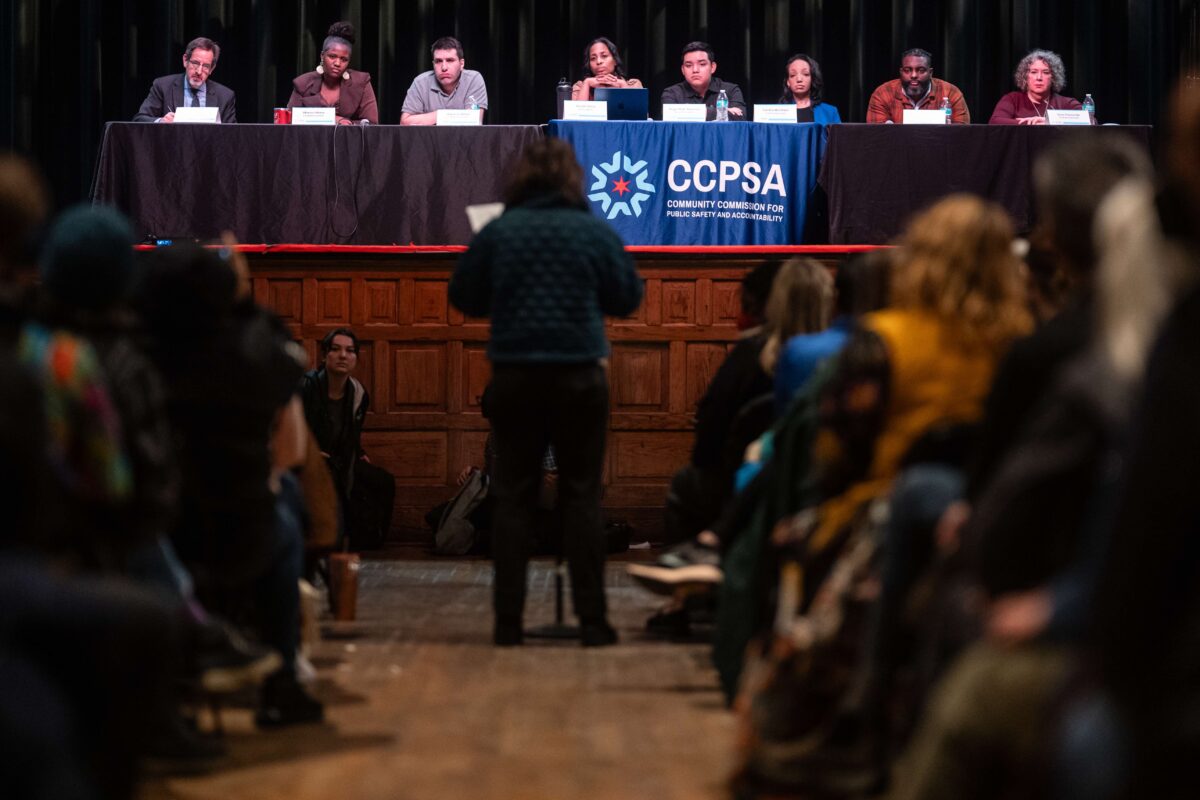
About 500 people packed Thalia Hall in Pilsen on Thursday night amid a torrential downpour to voice their frustration with the Community Commission on Public Safety and Accountability (CCPSA) for not holding a hearing to probe allegations of cooperation by Chicago police with federal immigration agents sooner.
Since June 2025, Chicago police officers have responded to the scenes of federal immigration actions multiple times, raising questions about whether they violated Chicago’s Welcoming City Ordinance or the state’s TRUST Act. Both laws prohibit officers from assisting with immigration enforcement.
At the meeting, which at times grew raucous as audience members chanted and shouted down CCPSA members, speakers described police setting protective perimeters around federal agents’ operations—which is expressly banned by the TRUST Act—preventing rapid responders from following agents, arresting protesters, and in one instance even hugging an agent.
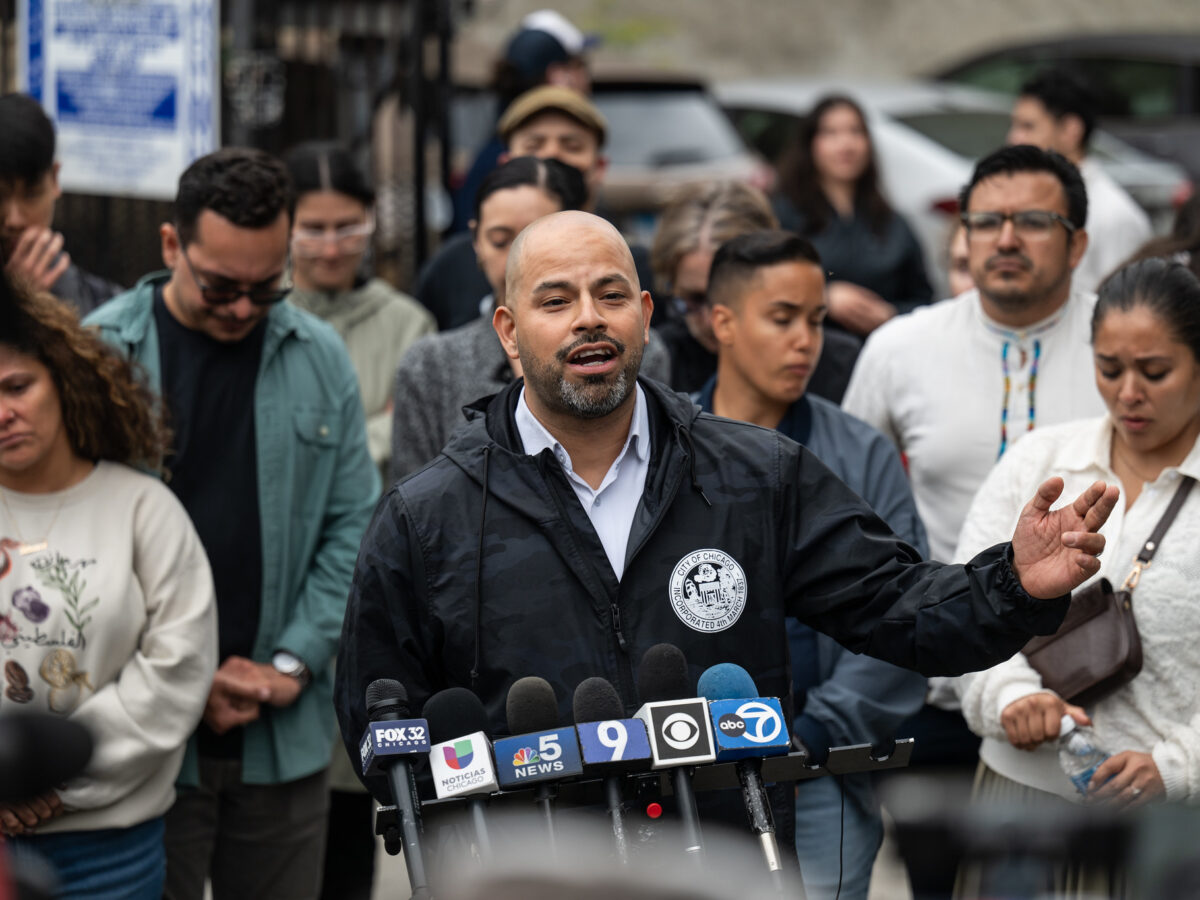
The meeting was scheduled after Police District Council (PDC) members gathered more than 2,000 signatures in a petition drive. The 2021 city ordinance that established the CCPSA along with the city’s twenty-two PDCs requires the commission to hold a special meeting if a petition outlining the subject matter to be discussed gathers at least that many signatures. At a press conference before the meeting, 10th (Ogden) PDC member Elianne Bahena said the meeting was being held because people “organized and demanded to be heard.”
Leonardo Quintero, a member of the 12th PDC on the Near West Side, said the petition became necessary after the CCPSA took too long to respond to a November 13 letter signed by a majority of district councilors requesting a formal hearing into CPD cooperation with federal agents.
“We wanted all twenty-two [police district] commanders to be there, so we could get answers regarding what they’re telling their subordinates, what they’re telling their teams, what they’re telling each district,” Quintero told the Weekly. “We wanted the ability to question them, similar to how Congress holds hearings, where we’re able to question them,” as well as to give community members an opportunity to voice their concerns.
Quintero said CCPSA commissioners told him that they wouldn’t be able to hold a hearing until the spring because their hands were full with certain legally required duties such as setting yearly goals for the police superintendent and Civilian Office of Police Accountability (COPA). District council members thought that wasn’t soon enough, given Customs and Border Patrol (CBP) Commander Greg Bovino’s threat to return to Chicago in force in March, and launched the petition drive to compel the CCPSA to hold a meeting sooner.
Commissioners and PDC members separately confirmed they were in talks about the hearing even as the petition drive was unfolding. Quintero said that Bovino’s social media post thanking Chicago police for their “assistance” after police pulled over a rapid responder who was following agents on December 17 heightened the urgency around holding a hearing. District council members delivered the petitions the following day.
CCPSA President Remel Terry told the Weekly that the commission was “actively working with [district councilors] and being responsive to their needs” before they received the petitions. She said that organizing a hearing with all twenty-two district commanders, getting relevant data, and researching the potential policy changes at their disposal would take time. “What we wanted to ensure is that we were not only having a hearing, but having an understanding,” she said. “Because to say that you want twenty-two police commanders [to attend], what does that actually mean?”
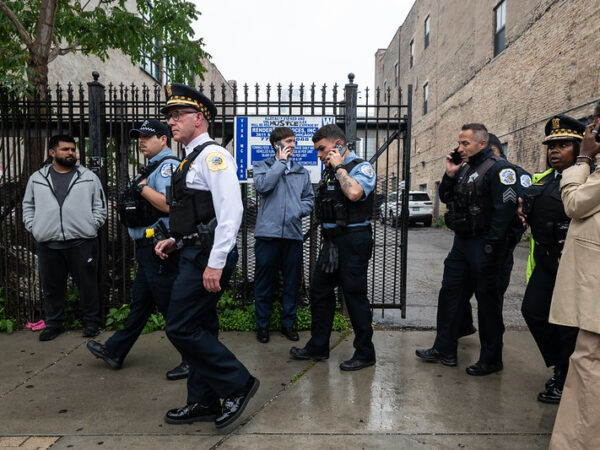
At Thursday’s meeting, Ald. Andre Vasquez (40th Ward) was among several elected officials who delivered remarks. He pointed out that the meeting was held 218 days after Chicago police officers responded to an Immigration and Customs Enforcement (ICE) facility in the South Loop on June 4 after agents arrested residents who’d arrived to check in. The department denied its officers had any knowledge federal agents were arresting immigrants prior to their arrival. But calls obtained by the Weekly in July showed a police captain in the department’s fusion center knew federal agents were asking for help. A department spokesperson stated at the time that its officers established a traffic perimeter around the scene but claimed it was not a violation of the TRUST Act.
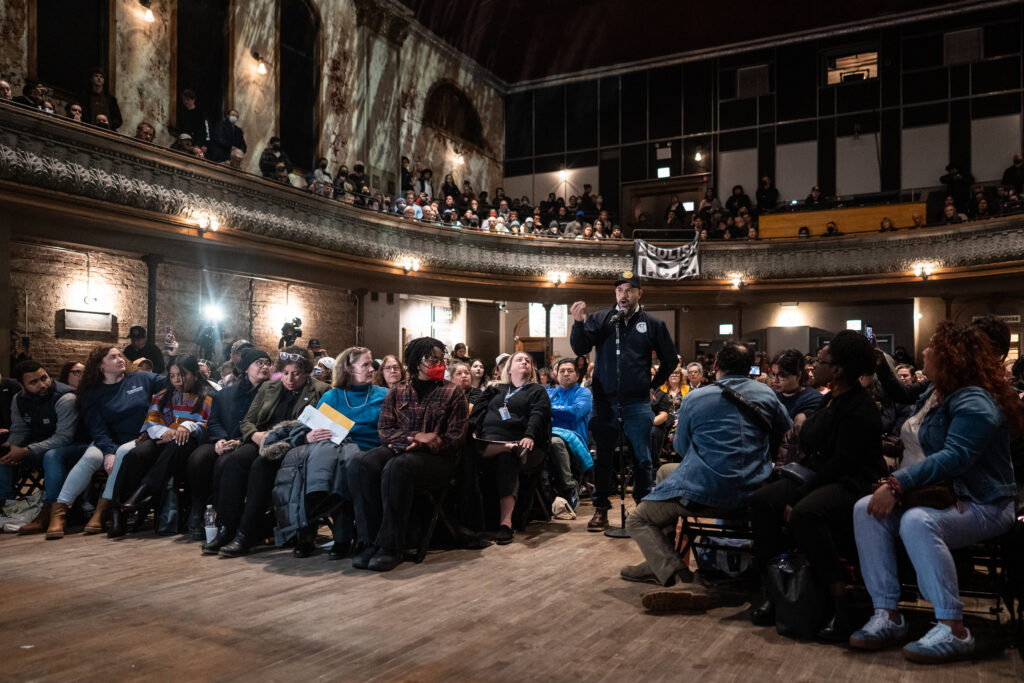
“Now, the reason why I mentioned 218 days is that’s how long it’s [been] happening, and there has not been a hearing by the CCPSA related to ICE,” Vasquez said. The crowd roared in agreement. Vasquez added that the City Council’s Committee on Immigrant and Refugee Rights, which he chairs, held a hearing soon after the South Loop incident, and admonished the CCPSA for not holding one.
In other well-documented instances, CPD officers have apparently responded to the scenes of federal activity in ways that may have violated the Welcoming City Ordinance or TRUST Act.
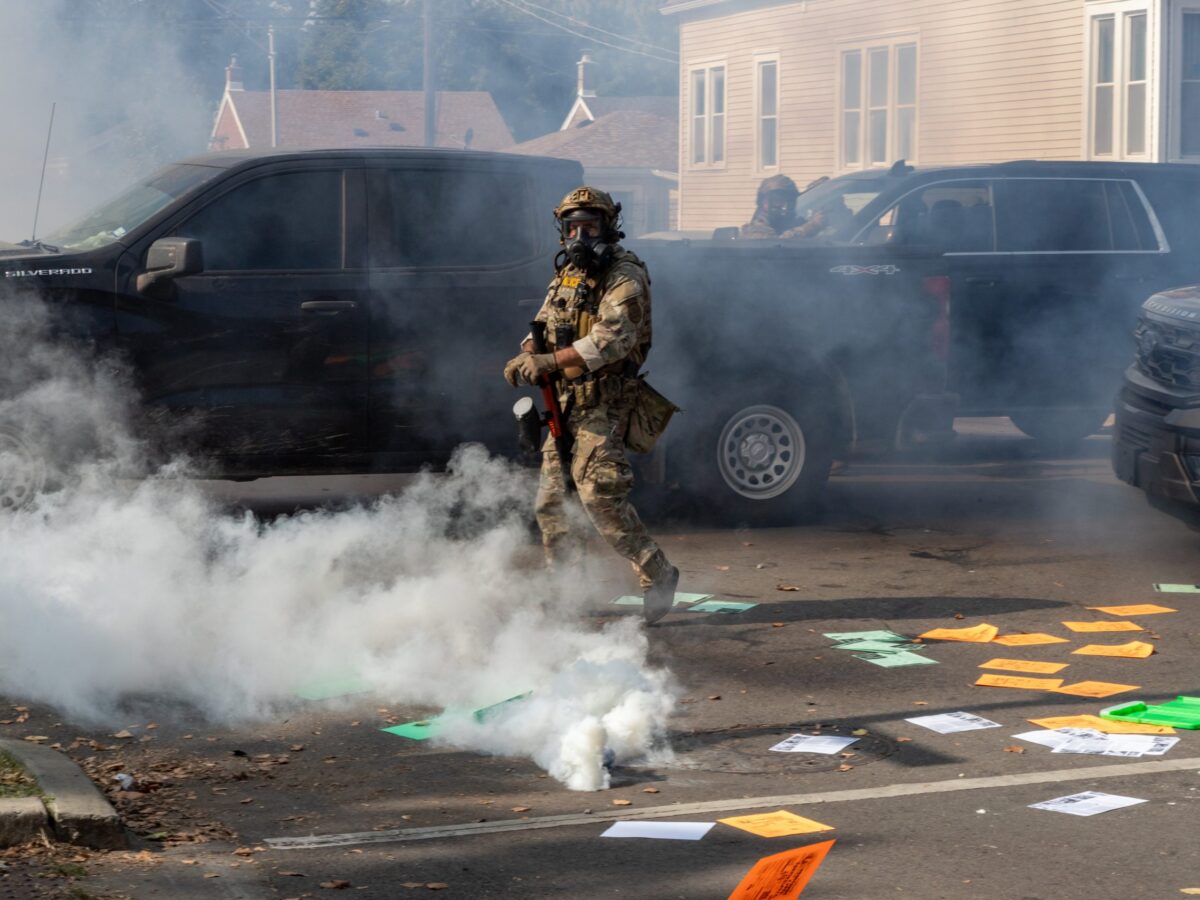
On October 4, after CBP agents shot Marimar Martínez five times, seriously wounding the thirty-year-old rapid responder who’d been tailing them, a crowd gathered to protest. Police officers arrived and established a protective perimeter around the agents, who fired pepper balls at civilians and threw at least a dozen canisters of tear gas, engulfing police and residents alike. Multiple speakers at the meeting cited that incident as an example of CPD assisting agents in a potential violation of the law.
Jax Lopez, who works as a constituent services coordinator for Ald. Michael Rodriguez’s 22nd Ward office (where Bahena is chief of staff), described an incident in which he and Bahena were detained by ICE agents on October 22.
“From the back of the car that we were handcuffed and thrown into, we saw CPD appear suddenly, where they were pushing back rapid response workers and government officials,” and ultimately helped ICE escape the scene, he said. “It sends a very clear message, not just to our community but to ICE, that CPD is willing to violate Chicago’s Welcoming City Ordinance, and they’re willing to break the law when it benefits them, just by saying it’s for ‘public safety.’”
Several speakers also described a November 8 incident in which residents confronted federal agents on the Southwest Side. “I witnessed Chicago police using excessive force against community members standing next to me, literally next to me, on 23rd and Sawyer in Little Village,” said Mayra Macias, a Back of the Yards resident. “In one instance, I counted up to ten officers pushing one man to the ground.” She said the police were violent even after ICE agents left the scene.
On December 17, after a rapid responder followed a caravan of CBP agents, including Bovino, up DuSable Lake Shore Drive, CPD officers pulled him over and prevented him from following them. The Tribune obtained a 911 call made by Border Patrol that shows a dispatcher telling the agent “help is on the way.”
Some of the incidents residents described at the meeting were also mentioned in complaints submitted to the City Council’s Committee on Immigrant and Refugee Rights, which set up an online form in November for residents to report potential violations of the Welcoming City Ordinance. Last year, nine complaints were filed, according to documents obtained by the Weekly via a public-records request. One mentions federal agents using the 24th (Rogers Park) Police District parking lot, an allegation Vasquez echoed during the meeting. Three describe police officers forming a “caravan” with Border Patrol vehicles on DuSable Lake Shore Drive and escorting them all the way to Evanston on December 17.
The CCPSA has a number of oversight options at its disposal to hold the police department accountable. The commission can draft new policies or amend existing ones, as it did when it abolished CPD’s error-ridden gang database in 2023. It can haul CPD Superintendent Larry Snelling before the commission for questioning, as district council members have requested. And should the superintendent fail to adequately rein in officers, the CCPSA can, by a two-thirds vote of no confidence, begin a process that could result in his dismissal.
“Let this be the first step,” Bahena said during the press conference. “District Council members are asking for a public hearing that includes Superintendent Snelling, all twenty-two district commanders, and delivers clear answers.”
Jim Daley was the Weekly’s investigations editor from 2023 to 2026.