

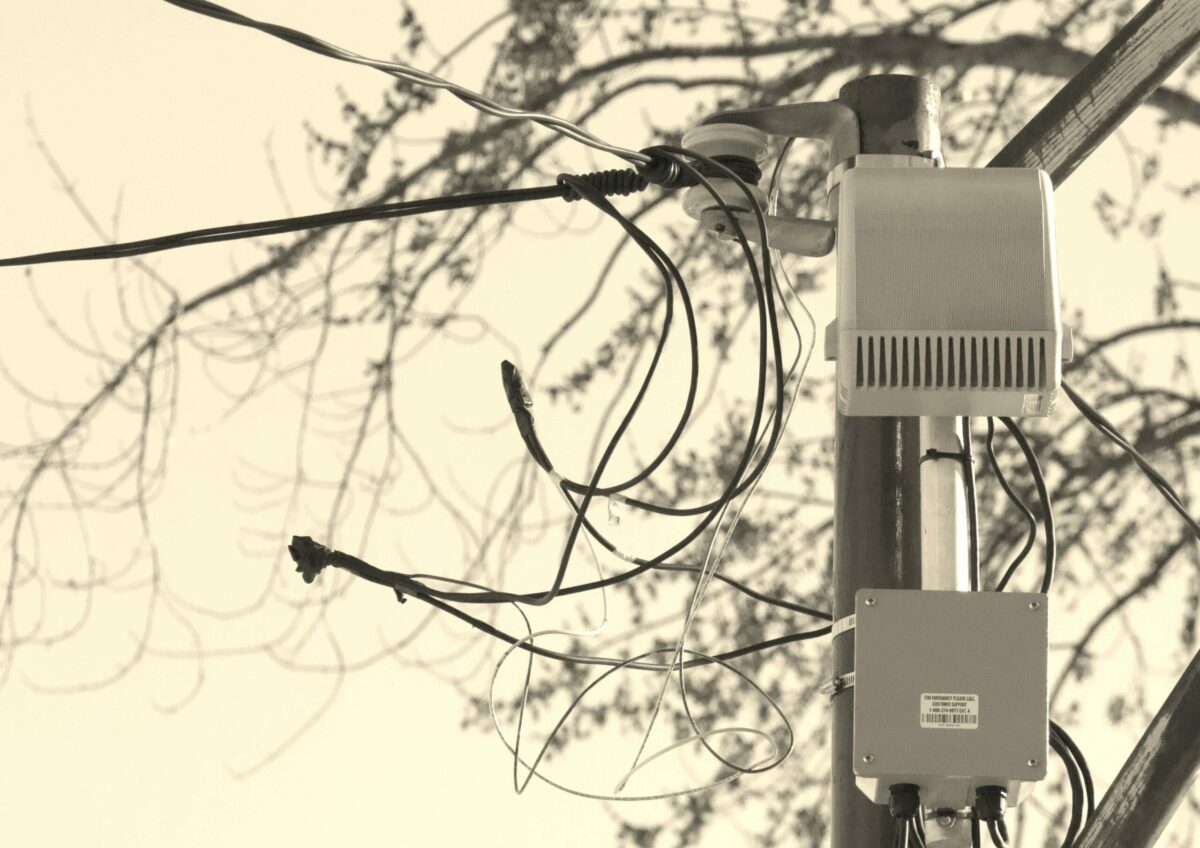
At midnight on Sunday, SoundThinking, the company formerly known as ShotSpotter, stopped providing gunshot alerts to Chicago police.
The technology, which the City first signed a contract for in 2018, was deployed in twelve police districts on the South and West Sides and one on the far Northwest Side. In February, Mayor Brandon Johnson made good on a campaign promise by announcing that he would cancel the City’s contract with the company. Johnson agreed to an extension of the contract through September (and the August DNC) followed by a sixty-day “transition period,” according to SoundThinking. The Mayor’s Office has been unclear on what precisely that transition entails.
CPD Superintendent Larry Snelling, who was hand-picked by Johnson; Community Commission for Public Safety and Accountability President Anthony Driver; a significant majority of City Council members; and the editorial boards of the Sun-Times and Tribune all vehemently disagreed with the mayor’s decision to cancel ShotSpotter.
Undeterred, Johnson forged ahead—but he also announced a new Request for Information (RFI) for “first responder technology” on Friday, though the mayor was vague about whether this could result in ShotSpotter returning or another gunshot-technology company taking its place. On Monday, the City issued an RFI for “law enforcement technology.”
On Monday, the Weekly spoke to Deputy Mayor for Community Safety Garien Gatewood about ShotSpotter, recent efforts by the Mayor’s Office to reduce violence, and the future of public safety in Chicago. Before joining the Mayor’s Office last summer, Gatewood was the director of the Illinois Justice Project, a nonprofit focused on reforming the legal system. As deputy mayor, he has led the rollout of Johnson’s “People’s Plan for Community Safety,” which has included community outreach events and plans to invest in violence-impacted people of “Highest Promise.”
The following transcript has been edited for clarity and length.
In February, a WBEZ reporter asked Mayor Johnson if he was considering any other gunshot-detection vendors, and he flatly said, “No.” Now he’s issued an RFI for other technology. Can you discuss how and why the mayor’s position has evolved?
I think the evolution has come from us wanting to see what else is out there, not necessarily committing to another gunshot-detection technology, but we need to see what is in the marketplace to see if there is a fit for the City of Chicago. And quite frankly, I think it’s important to put an RFI out to explore what options are there.
Why not issue that RFI much sooner?
We went through a process of looking at our options on what would make the most sense. We don’t ever want to be an administration that rushes things. We’re going to take our time to make sure we get these things right. So in the process of getting this right, we had a lot of conversations with community members, some members of law enforcement, and folks in and outside of the administration, to understand what options and recommendations are in front of us. And we wanted to make an informed decision by issuing an RFI, given the timeline throughout the decommission phase, because the RFI closes before that phase is over.
We have multiple police districts in the city that do not have ShotSpotter, and they seem to be doing just fine. So we can replicate that work, as the mayor has mentioned multiple times, by investing more in communities that have been disinvested in.
What does the sixty-day transition period entail?
We’ll be working out the rest of that later today, and we can come back to you on that one, because we’re going to work on the specifics of that literally in the next hour. [Editor’s note: The Mayor’s Office did not respond to follow-up requests for clarification.]
This spring, the Weekly reported that in several municipalities where ShotSpotter contracts were canceled or expired, the company’s sensors remained active, and in some cases provided alerts to police departments. What is the administration doing to ensure the sensors are actually turned off in Chicago?
In our discussions with [SoundThinking] on decommission and what these next steps are, we’ll make it abundantly clear that we don’t want them listening in on the City of Chicago once this deal is done.

From TikTok to Chicago Fashion Week: A South Side Artist Centering Whimsy and Choice
or 23-year-old licensed cosmetologist Jordan Wyer, hair styling is more than routine maintenance; it is an art form rooted in self-expression, identity and personal anatomy. Operating as a “Whimsical Color and Freestyle Specialist,” the South Sider has carved out a distinct domain, specializing in bold colors, intricate ombrés, raccoon tails, and freestyle braiding. Now based…
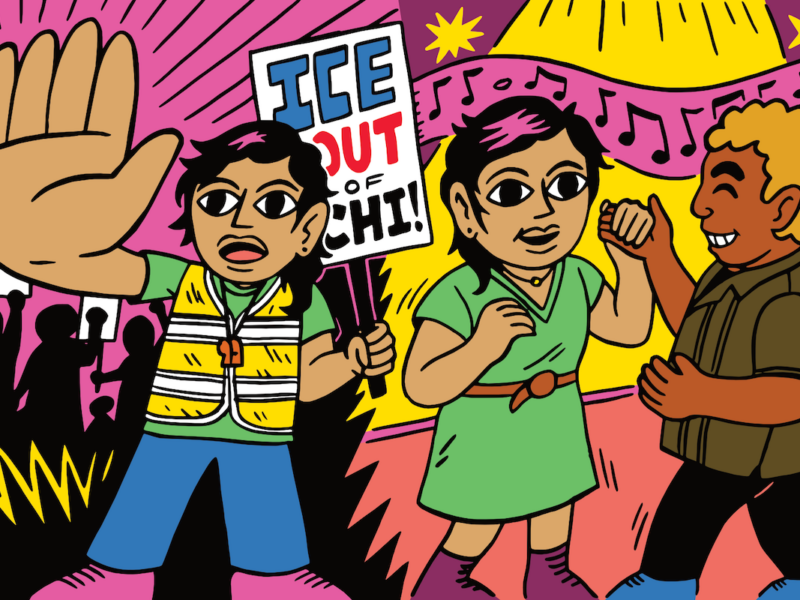
Todo está en llamas
“Todo está en llamas, pero todos los que amo están haciendo cosas hermosas y tratando de hacer que la vida valga la pena, y sé que no tengo que creer en todo, pero creo en eso”. — Nikita Gill sas son las palabras que me repetí una y otra vez durante la mayor parte de…
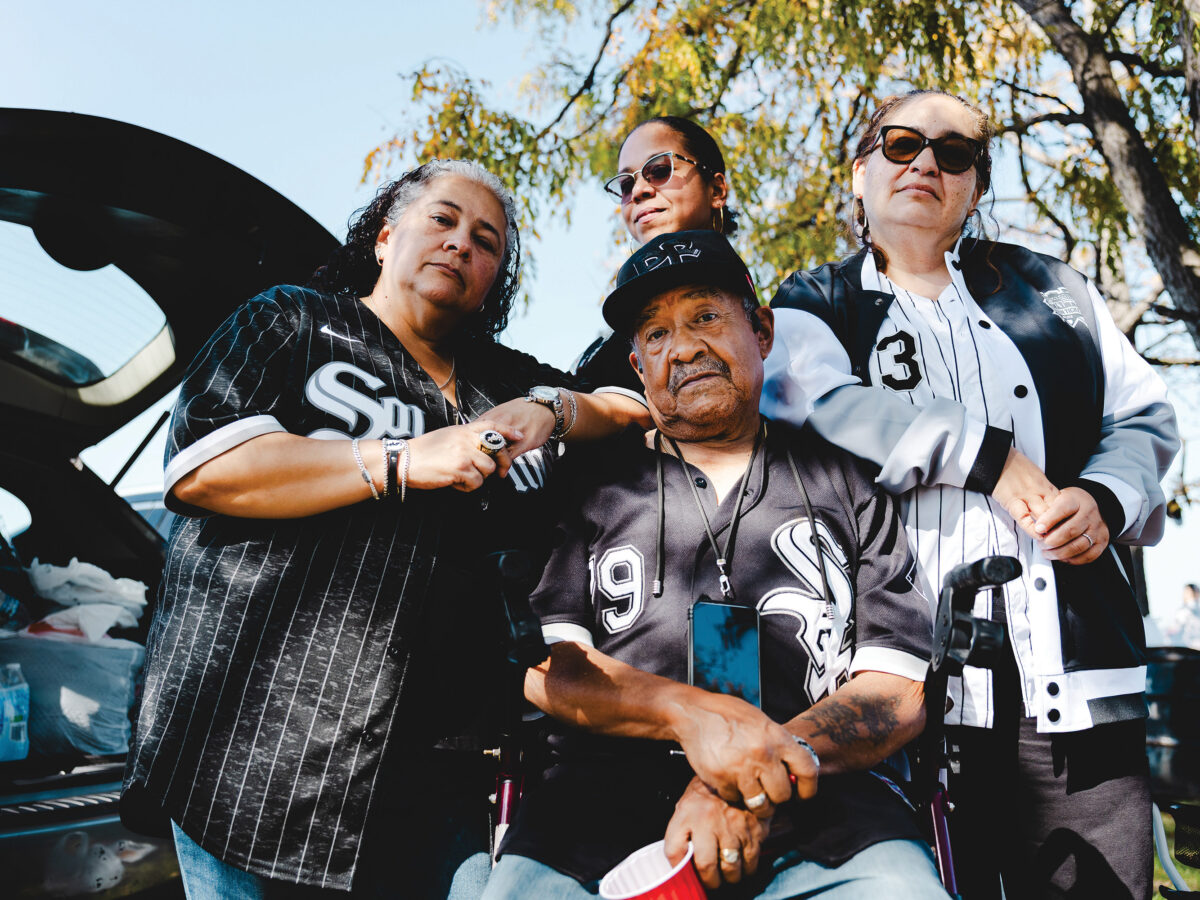
Sox Drop Two Straight at Home, Head to Decisive Game Five in Cleveland
he 2026 White Sox season remains a wild ride, to the very end of the American League Division Series (ALDS). After a pair of deflating losses in front of sold-out Rate Field crowds on Wednesday and Thursday nights in Chicago, the Pale Hose will play a winner-take-all game five in the ALDS against the Cleveland…
What has your office been doing to encourage residents to dial 911 and get more engaged with community safety?
That effort has included community engagement, not only from our People’s Plan [for Community Safety] quarterly meetings, but from some of the other work that we’ve been doing on the ground, and also some community engagement we’ve been able to do alongside the police department. Now that work is going to have to intensify. We’ll have a quarterly People’s Safety update on October 8 in the Austin neighborhood, and we will have updates on CPD there.
But a big push is going to be at that level of connectivity that is needed from community members to call 911, and a big push to make sure folks are getting the responses they’re looking for. My team has been leading an effort to train people on 311 requests; some of the folks who call 911 should really be reaching out to 311.
Something we’re exploring now is, what are the 911 calls for service that we are seeing…so we can deploy additional resources in those spaces? So, what do we do when some areas are having a spike in gender-based violence calls? How do we lean on our partners in the community to dispatch resources? So again, we’re trying to be more proactive and more comprehensive than we’ve been in the past.
How do the administration’s Take Back the Block events fit into the plan? How are you measuring the success of those events?
Ultimately, they’re almost a template for what the People’s Plan can be in particular blocks. So, we take a four-block radius and hit it hard with sidewalk repairs, light repairs, cleaning, and an increased presence from our police department, and our partners on the ground, and we bring the mayor out there. He has his entire administration showing up for folks on these blocks. That is a microcosm of what the People’s Plan is.
Not only did we show up on those days that we took back the blocks, we had the infrastructure departments, the CPD, our community-based organizations out there the entire week leading up to it, and then my team has had follow-ups with those blocks to address some of the needs that folks have highlighted.
How do you balance advocating for a long-term vision for community safety with responding to the immediate needs of people who live in communities plagued by gun violence?
I think we have been in a place where we have been remarkably fortunate, because of the partnerships that we actually do have with the CPD. And I’ll tell you why that’s important. By every objective measure, if it wasn’t Mayor Brandon Johnson, people would look at our [crime] numbers compared to last year, and they would say, objectively, across the board, with crime we have been successful. There is a close to 10% decrease from last year in homicides, which had a 13% decrease the year before. We put together a robbery task force that included folks from all departments inside CPD and also our teams, and we’ve seen a massive decrease in robberies. We’ve also seen a massive decrease in thefts. [Editor’s note: The City’s violence reduction dashboard shows that homicides have decreased 9.1% since 2023, in line with national trends, while robberies have decreased 10.9% and carjackings are down 21.7%. Aggravated battery, aggravated assault, and multi-victim shootings are up, however.]
We created a rapid-response team at the beginning of the summer because we saw the number of mass shootings and the number of tender-age children that were shot throughout Chicago. So our teams put together a protocol to respond to that. We had to activate that protocol forty times over the summer. Our teams and departments worked together to activate victim services for those folks. We had multiple departments who never played a role in safety before showing up to the people in the City of Chicago, and that is the story that we have to tell them.
Jim Daley was the Weekly’s investigations editor from 2023 to 2026.
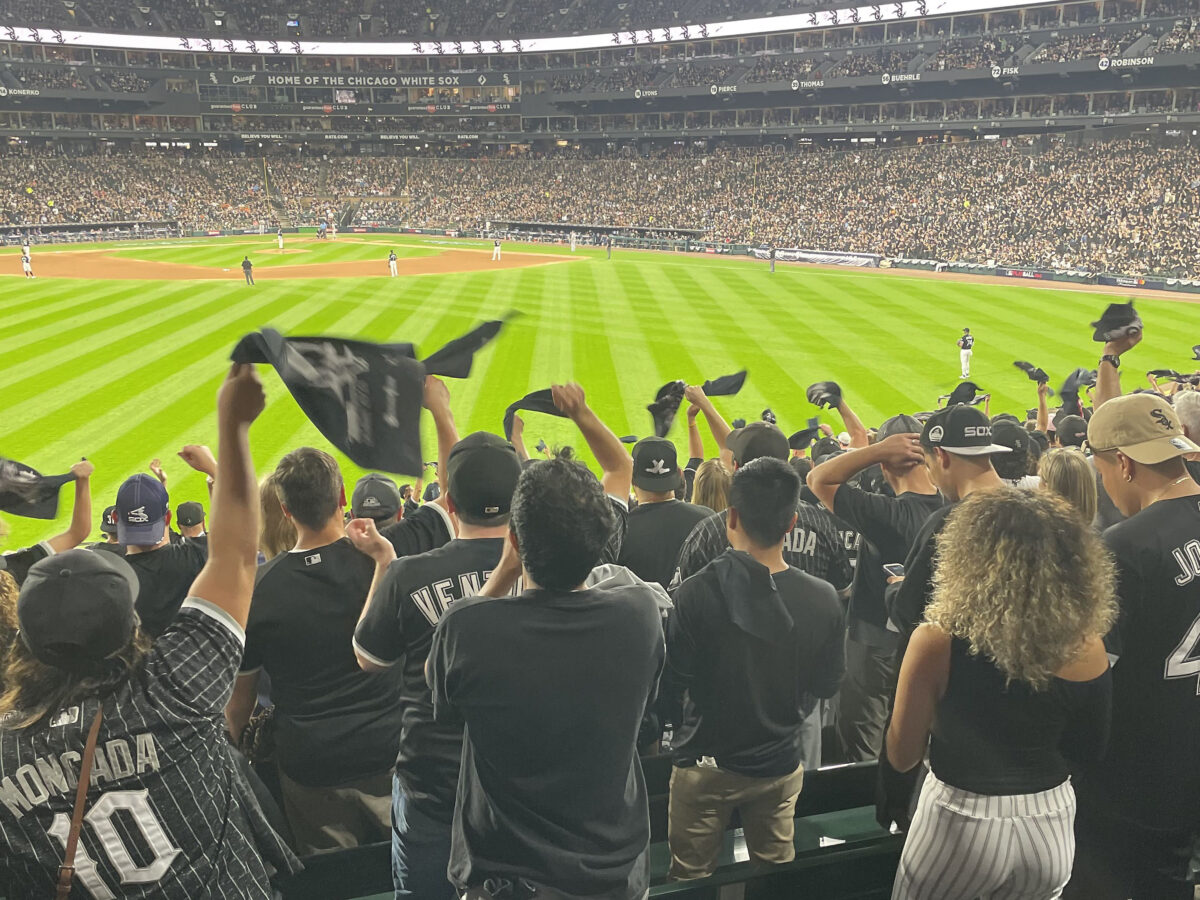
Clutch Hitting and Nasty Pitching Power the Sox to a 1-0 Series Lead in the ALDS
s the White Sox took a 1-0 lead in the American League Division Series against the Cleveland Guardians, with a thrilling 3-0 victory on Saturday, October 3, the winds of change continue to stir for South Side baseball fans. Before their showdown with Cleveland, the team’s 2-0 series sweep in Houston against the AL West…
Everything is On Fire
Everything is on fire, but everyone I love is doing beautiful things, and trying to make life worth living, and I know I don’t have to believe in everything, but I believe in that. — Nikita Gill hose are the words I repeated to myself over and over again for most of 2025. I repeated…
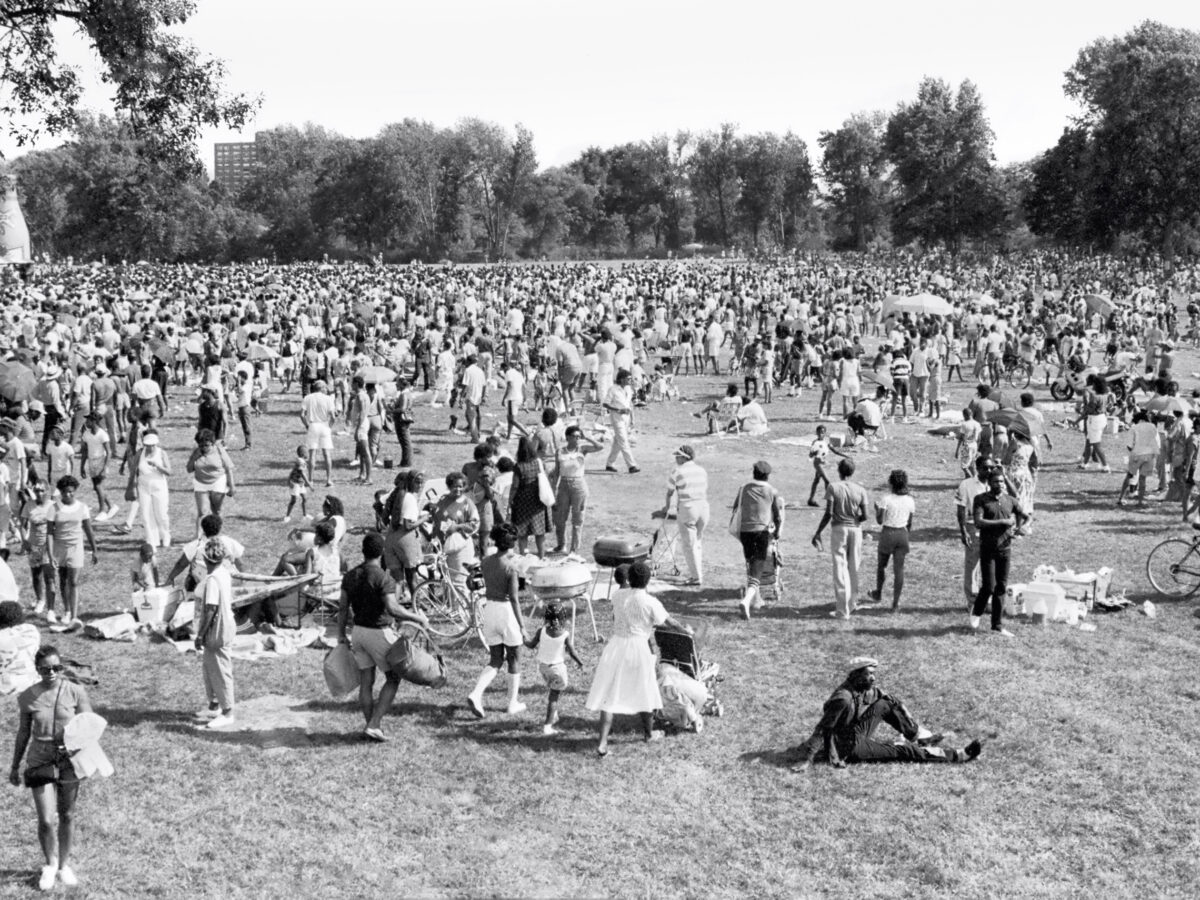
A Slow and Steady Disaster
gasped out loud the first time I saw one of Rose Blouin’s photos. In the summer of 1987, Blouin, a local photographer, set out to Washington Park almost every day to photograph the beautiful and the mundane. Picnics, festivals, baseball games, couples cuddling in the grass. The photos are astounding. My poet brain loves them…