

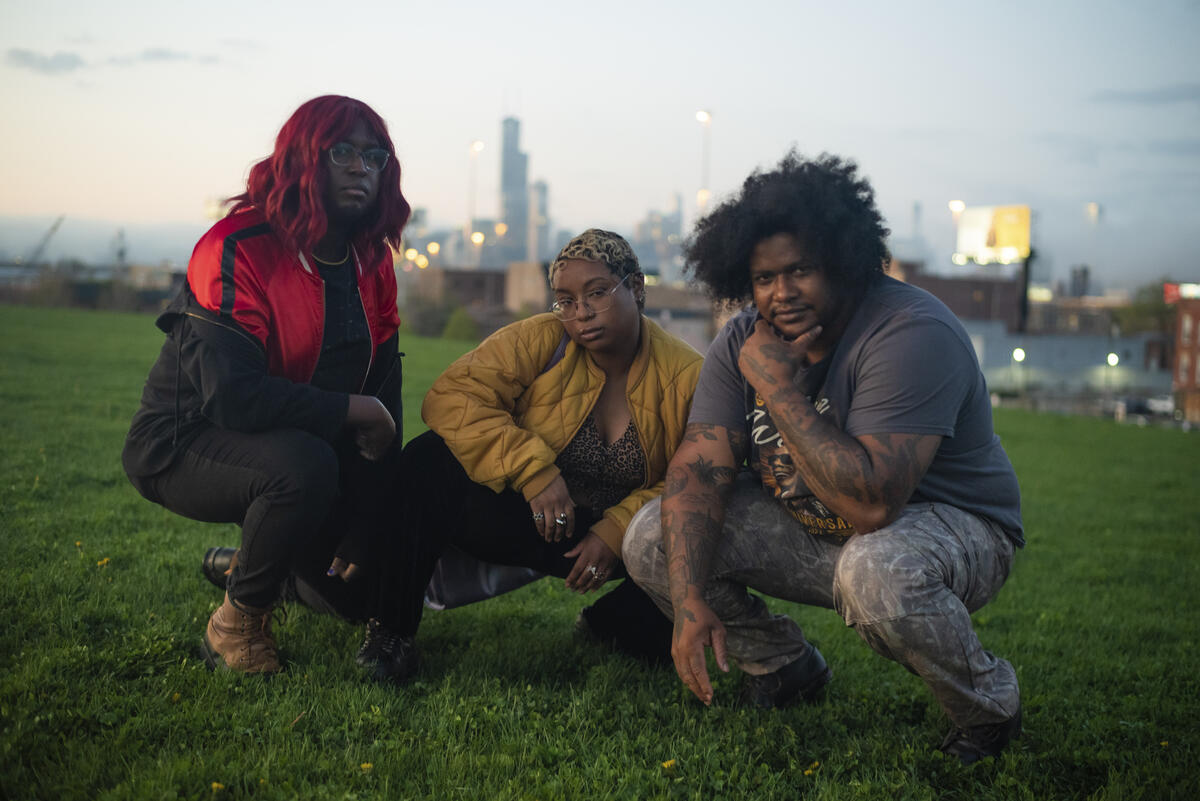
Punk rock has always been a space for outcasts. But while white bands have long been the face of punk rock in Chicago, small collectives of Black, Latine, and indigenous musicians—many of them queer and politically active—are carving out platforms for themselves within the DIY punk rock scene.
Bands like the politically provocative Bussy Kween Power Trip—all of whom are Black and queer—and queer and racially diverse groups like Directrix, Daylong Sigh, and Faerie Dream, are among the Chicago acts who have emerged in these politically dire times. These musicians have found a refuge in punk rock and are creating ways to invite other Black people, especially queer and trans Black people, in as well.
“Punk rock becomes a place to reconsider my family history, reconsider what family even means,” said Maat Wilson, a Black woman and lead singer of Directrix. “It is a community-oriented feeling generator that I feel is important to get a lot of emotional, political stress out and into the community so it doesn’t feel so isolating.”
Directrix, a four-person band of color led by Maat, is one of the newer rock bands in Chicago. Stylistically, they’re a more emo and grungier band, in the spirit of Fall Out Boy meets Sum 41 with a politically radicalized twist. The Chicago-based group released their latest EP Halotherapy in July 2025.
“It’s counterculture, it’s revolutionary, it’s existing in spite of society saying you shouldn’t exist,” said Zino Ukulu, bassist for Daylong Sigh, a four-person queer punk/alt rock band of color led by singer/songwriter Aaron Christian Cruz, who identifies as non-binary. Ukulu said queer people of color are drawn to punk rock because of this. Being a Black queer person, often considered “strange” in a heteronormative society, even amongst other Black people, is peak counterculture.
“I embody that strangeness, that uniqueness. And so it’s really funny having punk and rock having its roots in Blackness and still be strange, or weird, or on the edge. And I kind of had to learn to love that. And me stepping into my light will allow other people to step into their light too,” Ukulu said.
The small but lively scene was on full display at Bussy Kween Power Trip’s (BKPT) April 13 headlining show at Cafe Mustache. Lead singer Brianna Tong (B), bass guitarist K, and drummer Darien Williams erupted the dimly lit dive bar in a sea of brooding, colorful lights, and musical rage with songs from their independent album Coming With The Strap.
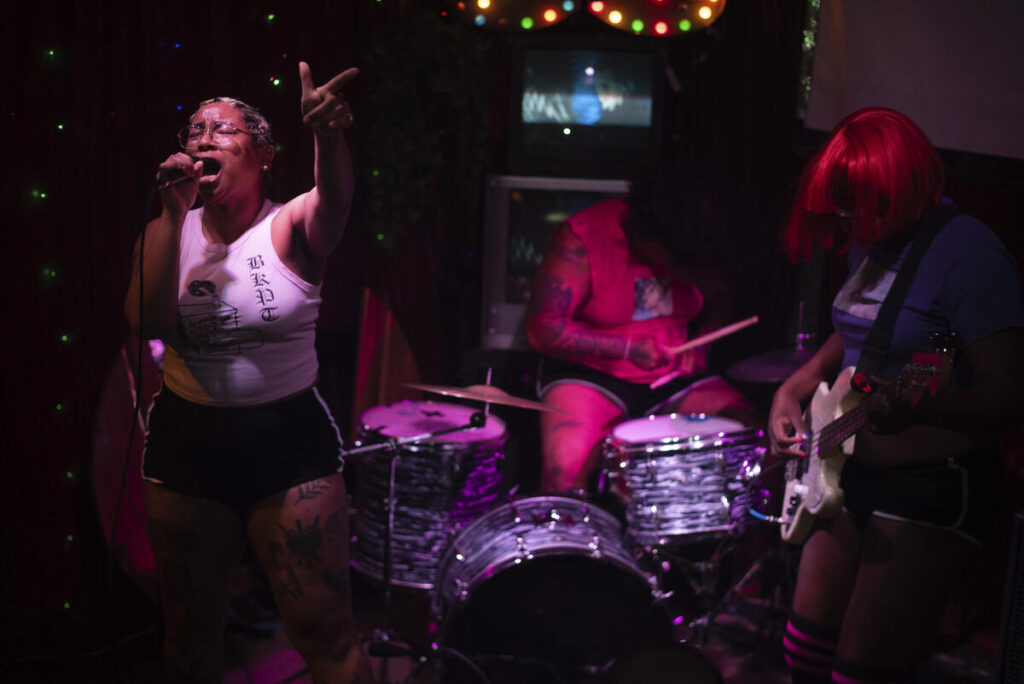
Bussy Kween Power Trip began in 2019 with B and K, who were then members of another band, Cordoba. Back then, the Black punk rock scene was anchored in a broader Black DIY scene comprising indie rappers, singers, rockers, and activists. While not all sectors of the scene overlapped, many musicians and creatives would congregate at the Black, Brown, and Indigenous Crew Punk Fest.
By B’s account, in 2019, a former music colleague asked if she and K wanted to start a Black punk band. When it was time for them to connect, the colleague ghosted them. Eventually, B, K, and former drummer PT would form the first iteration of Bussy (B) Kween (K) Power Trip (PT). After PT left the band in 2023, BKPT rotated through several drummers before finding Williams, who first played with the band in 2024.
Asha Adisa is a solo punk artist who was one of the supporters in the audience at Cafe Mustache. For them, Black people making punk rock is more than performing songs and having fun. Being a Black punk artist also means reclaiming the revolutionary music that Black artists have been pioneering since Sister Rosetta Tharpe in the late 30s.
“Black people doing punk music, rock music, guitar bass music, it’s more than just music, it’s more than just performing and having fun,” said Adisa. “It is that, but it’s also a mission of reclaiming the music as our own because it came from us. It’s ours, and it belongs to us. We deserve to do it. And the white boys that look at us like we’re crazy at every show we fucking do, they can suck it to be honest. We do it to show we can do it better than them, every time.”
There are distinct disparities between Black and white punk rock bands in Chicago. Chicago’s notorious history of racial and neighborhood segregation means that Black and POC parts of the punk scene are segregated from the predominantly white parts of it. The white punk scene has historically had more visibility and patronage from local and national journalists and the record industry. Williams said that BKPT operates in a unique space as one of the only all-Black and queer punk bands in Chicago that frequently performs.
“We’re one of the only bands that are Black and playing punk music. There’s younger kids and older bands who have existed, but we operate a very unique space as one of the only [all Black and queer] bands doing it right now,” said Williams.
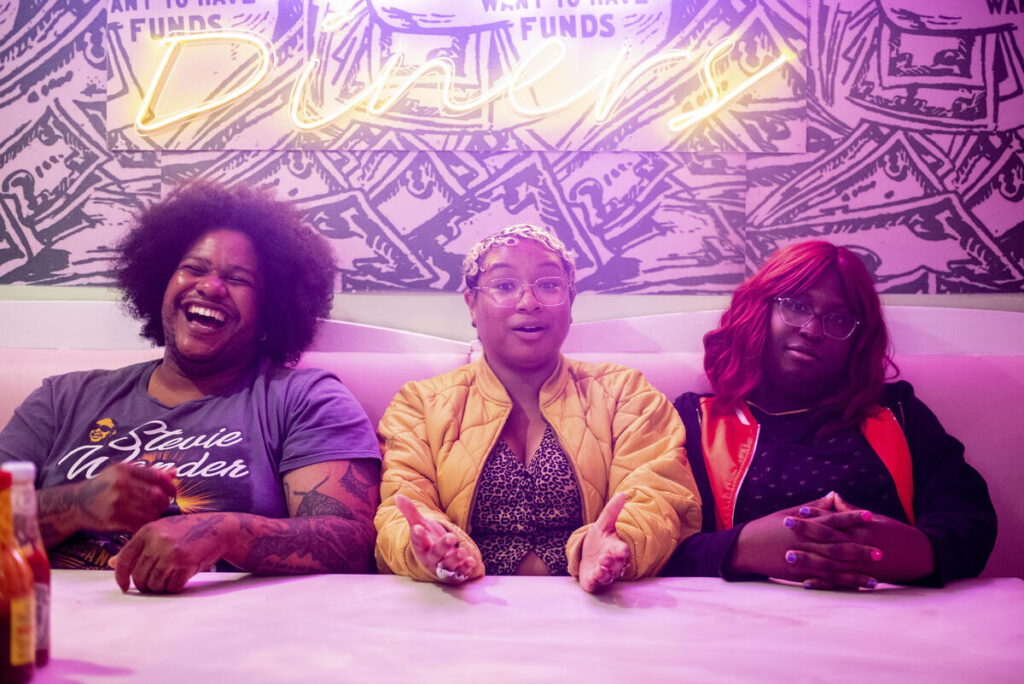
Bussy Kween Power Trip after enjoying a meal during our conversation at Stussy’s Diner on April 13, 2026. Credit: Mark P. Braboy 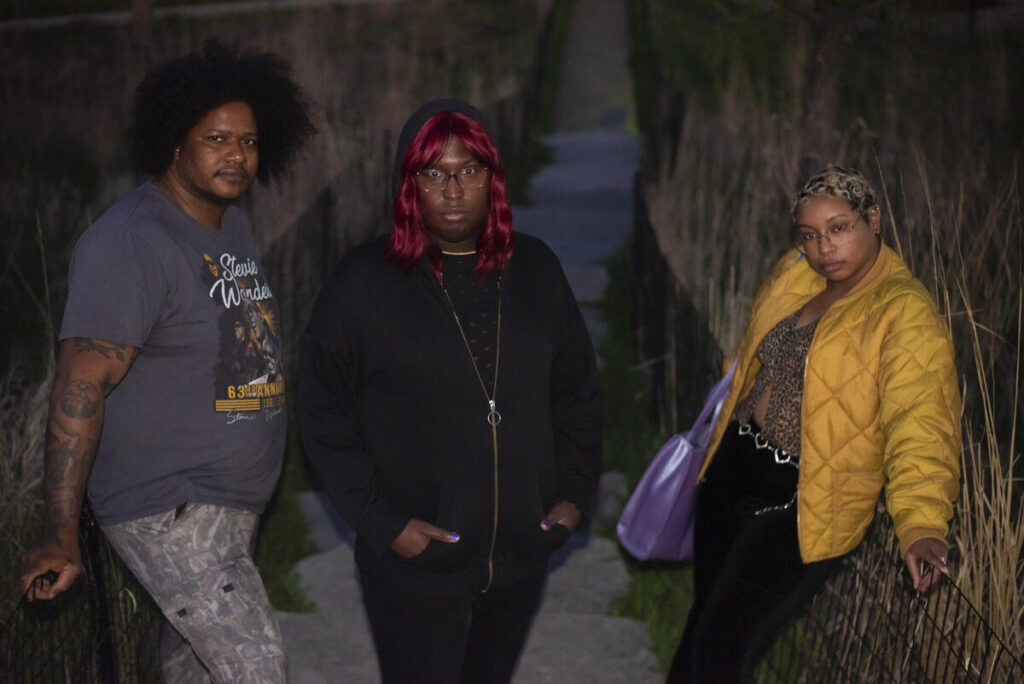
Bussy Kween Power Trip in Bronzeville on April 16, 2026. Credit: Mark P. Braboy 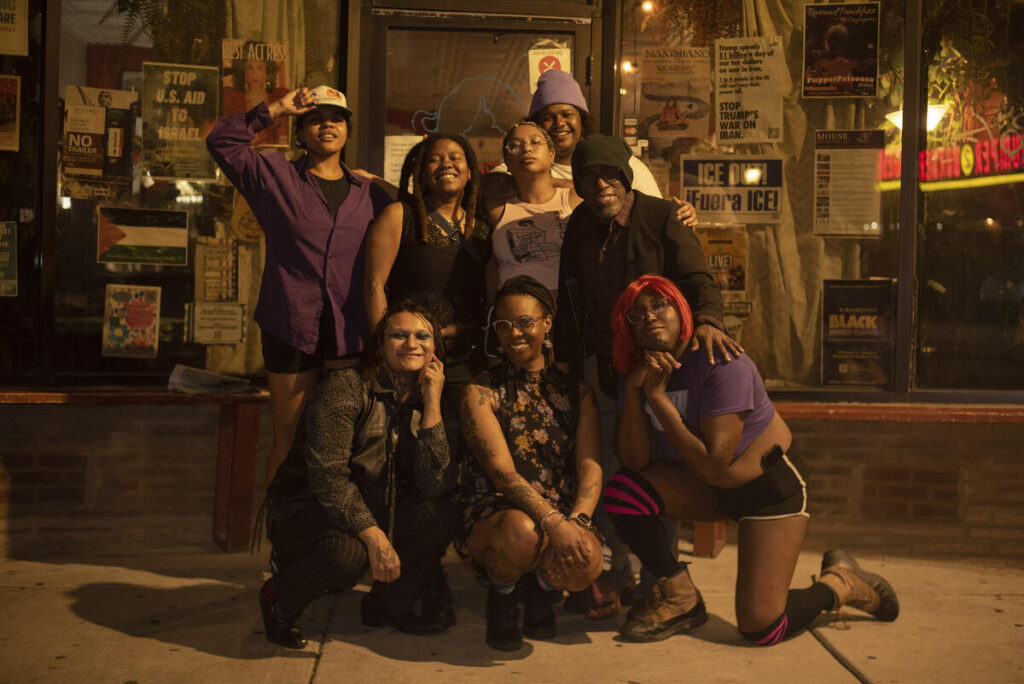
Bands BTKP, Daylong Sigh, Directrix, and Dr. Charles Joseph Smith connecting after BTKP’s show at Cafe Mustache on April 13, 2026. Credit: Mark P. Braboy 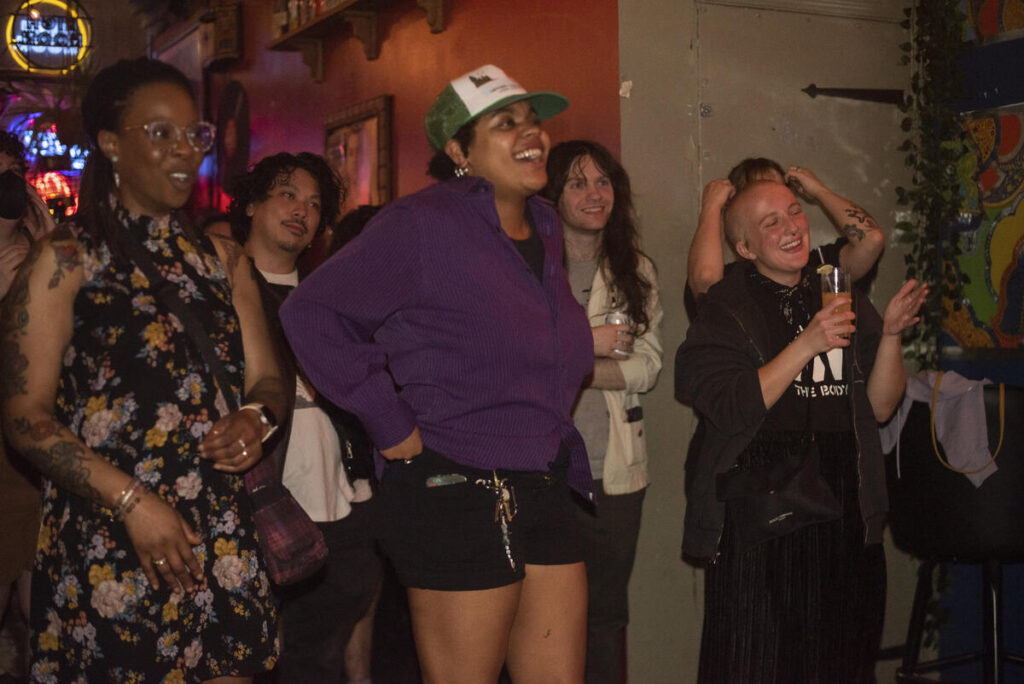
Artists, fans, and supporters of the Black and Brown punk scene enjoying Black Pussy Kween’s raging performance at Cafe Mustache on April 13, 2026. Credit: Mark P. Braboy
Then there are the financial disparities that working-class bands in general, let alone Black bands, face. Many, like BKPT, work full-time jobs to afford the expensive costs of instruments and tour life, making it unfeasible for those who did not come from a musical family or a financially secure background.
“If you’re poor, it’s hard to be in bands. You got to really love it,” said K.
“A lot of stuff you have to front money for,” B added. “There’s just so few venues on the South Side and the West Side. You’re basically going to need a car because you’re going to Logan Square. It’s very hard to have a child and do this. A lot of the things that are keeping Black and Brown people down in the city apply everywhere, but especially music,” she said.
“A lot of venues are just looking to make money; they don’t care about the art,” said Williams. “A lot of venues, their goal is just to sell drinks and have bands that bring in people, and not give them any of the cut of the money they bring in. And a lot of venues aren’t interested in cultivating community. There is a lack of spaces that are interested in building a scene, but building a scene takes time and money.”
K and B say that there used to be a time when venues were more generous with their earnings. That was until the COVID-19 pandemic critically impacted Chicago nightlife.
Still, the Black punk scene in Chicago is thriving. B said that new bands are emerging across Chicago, inspiring a new generation to find their voice in a new era of rock.
“Although we’re having less Black bands, punk bands here now, I do think—Directrix has been around for a couple years, Faerie Dream just started last year. I do think we might be entering a new resurgence because the young people are so much more down to listen to alternative music now. They’re just down with a bunch more alternative shit—being gay and trans, they/them pronouns,” said B.
Some evolving trends within local and national hip hop also give the band hope. For instance, BKPT credits the late South Suburban superstar Juice WRLD for serving as a renewed entry point for listeners, connecting hip hop to punk rock. B said that Juice WRLD particularly helped introduce a younger crop of listeners to its emo elements, but added that the scene needs a figure akin to superstar rapper Megan Thee Stallion, who (among other things) has introduced some of her audience to anime.
In K’s opinion, punk rock’s cathartic rage can easily translate to kids of color in Chicago. In their day job as a teaching artist for the Park District, they want to introduce kids to punk rock, offering new musical outlets to channel powerful emotions.
“There’s a lot of anger in young kids, and young kids are open,” said K. “I’m trying to spend the next 10 years being the sneaky person that’s like, ‘Hey kids, you want to get in on this anti-establishment music that’s very heavy and rocky and bass-y, and we have this whole history of making it, and you own it.’ To get them into something else because I don’t know many mainstream, punk-flavored genres that have a fascination with death.”
Ukulu reiterated the political necessity of the music. “It’s just the message to come out. It’s the reason to keep going, and also, it’s time for revolution right now, and we all feel that in our bones,” she said. “And so what is our part in that revolution? Are we the voices that tell each other what’s going on? Are we the healing spots that help each other when we’re broken from protesting on the street? What is our role? I feel like music kind of bridges it all together.”
Mark P. Braboy is an award-winning multimedia journalist from the Southeast Side who covers culture, music, and cannabis.
Those outdoor shots are at Palmisano Park in Bridgeport, not Bronzeville.